Kirjojen hintavertailu – 12 903 735 kirjaa ja 27 kauppaa

Kirjailija

Luciana S. Esteves

Kirjat ja teokset yhdessä paikassa: 5 kirjaa, julkaisuja vuosilta 2001–2014, suosituimpiin kuuluu Living with Florida's Atlantic Beaches. Vertaile teosten hintoja ja tarkista saatavuus suomalaisista kirjakaupoista.

5 kirjaa

Kirjojen julkaisuvuodet: 2001–2014.

Living with Florida's Atlantic Beaches

Living with Florida's Atlantic Beaches

David M. Bush; William J. Neal; Norma J. Longo; Kenyon C. Lindeman; Deborah F. Pilkey; Luciana S. Esteves; John D. Congleton; Orrin H. Pilkey

Duke University Press
2004
sidottu
From Amelia Island just south of Georgia to Key West's southern tip, beaches are one of Florida's greatest assets. Yet these beaches are in danger: rapid structural development on a highly erodible coast make them vulnerable to some of nature's greatest storms. The same development that has been driven by the attraction of beautiful beaches and coastal amenities now threatens those very resources. In turn, coastal structures are at risk from sea-level rise, shoreline retreat, winter storms, and hurricanes. Most of the methods for reducing losses associated with storms protect property only in the short term-at a growing cost in dollars and loss of natural habitat in the long term. Living with Florida's Atlantic Beaches is a guide to mitigating or reducing losses of property, human life, and natural resources by living with, rather than just at, the shore. This illustrated volume provides an introduction to coastal processes and geology as well as a brief history of coastal hazards and short-sighted human responses. This is the first volume in the Living with the Shore series to discuss the significant long-term impact of dredge-and-fill beach construction on living marine resources. Guidance is provided for long-term risk reduction in the form of tips on storm-resistant construction and site evaluation; maps for evaluating relative vulnerability to hazards are also included. A brief review of coastal regulations will help property owners understand and navigate the various permit requirements for developing coastal property. Living with Florida's Atlantic Beaches is an invaluable source of information for everyone from the curious beach visitor to the community planner, from the prudent property investor to the decision-making public official.
Living with Florida's Atlantic Beaches

Living with Florida's Atlantic Beaches

David M. Bush; William J. Neal; Norma J. Longo; Kenyon C. Lindeman; Deborah F. Pilkey; Luciana S. Esteves; John D. Congleton; Orrin H. Pilkey

Duke University Press
2004
pokkari
From Amelia Island just south of Georgia to Key West's southern tip, beaches are one of Florida's greatest assets. Yet these beaches are in danger: rapid structural development on a highly erodible coast make them vulnerable to some of nature's greatest storms. The same development that has been driven by the attraction of beautiful beaches and coastal amenities now threatens those very resources. In turn, coastal structures are at risk from sea-level rise, shoreline retreat, winter storms, and hurricanes. Most of the methods for reducing losses associated with storms protect property only in the short term-at a growing cost in dollars and loss of natural habitat in the long term. Living with Florida's Atlantic Beaches is a guide to mitigating or reducing losses of property, human life, and natural resources by living with, rather than just at, the shore. This illustrated volume provides an introduction to coastal processes and geology as well as a brief history of coastal hazards and short-sighted human responses. This is the first volume in the Living with the Shore series to discuss the significant long-term impact of dredge-and-fill beach construction on living marine resources. Guidance is provided for long-term risk reduction in the form of tips on storm-resistant construction and site evaluation; maps for evaluating relative vulnerability to hazards are also included. A brief review of coastal regulations will help property owners understand and navigate the various permit requirements for developing coastal property. Living with Florida's Atlantic Beaches is an invaluable source of information for everyone from the curious beach visitor to the community planner, from the prudent property investor to the decision-making public official.
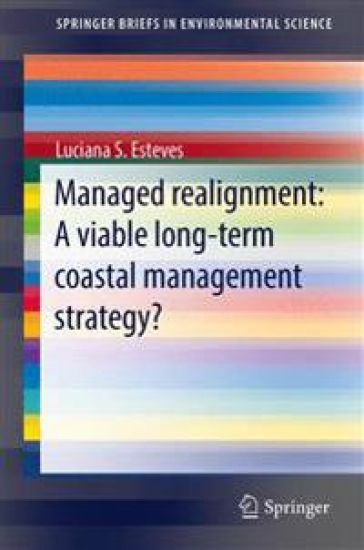
Managed Realignment : A Viable Long-Term Coastal Management Strategy?
Managed realignment has been a preferred coastal management strategy in England in the 21st century and has also been increasingly implemented elsewhere. Climate change and environmental and financial concerns have led to a shift from the traditional ‘hold-the-line’ approach of coastal protection towards more flexible soft engineering options. Managed realignment is a relatively new soft engineering alternative aiming to provide sustainable flood risk management with added environmental and socio-economic benefits by creating space for coastal habitats to develop more dynamically. The natural adaptive capacity of coastal habitats and the ecosystem services they provide underpin the sustainability of managed realignment. However, many definitions of managed realignment exist and the understanding of what the term actually represents in practice has evolved through time and varies regionally. This book clarifies the definitions and terminology used in the literature and proposes that managed realignment is used as a general term that encompasses the many different methods of implementation worldwide, including: removal, breach and realignment of defences; controlled tidal restoration (which includes regulated tidal exchange and controlled reduced tide); and managed retreat. These methods of implementation are explained and illustrated with examples from around the world. In addition to a general overview of emerging policies and current practices, specific chapters discuss approaches adopted in different locations, including the Netherlands, the UK and Maui (USA). The UK experience is presented from the perspectives of three sectors: the National Trust (a charity organisation that owns 10% of the coastline of England and Wales), the Environment Agency (the organisation responsible for implementing government policy concerning flood and erosion risk) and a private consultant involved in the planning, design and delivery of managed realignmentprojects. Taking a wider perspective to consider the range of implementation methods, the viability of managed realignment as a long-term coastal management strategy is discussed. Recent national and regional strategies worldwide give managed realignment an increasing role in climate change and flood risk management. Gaining stakeholders and public support is fundamental for the success of emerging coastal management strategies. However, public perception and stakeholders engagement are often cited as a factor limiting the wider uptake of managed realignment. Results from a recent survey are used to benchmark the current thinking about the potential, the performance and the limitations of managed realignment in the UK and elsewhere. Current opinions about managed realignment are often not clearly defined, partly due to many projects being relatively recent. There is a general perception of great potential to provide sustainable flood risk management with added environmental benefits. However, the views of stakeholders are considerably more negative and notably contrast with the views of practitioners and researchers. The only clear and dominant agreement across all groups of respondents is that better understanding about the long-term evolution of sites is needed.
Living on the Edge of the Gulf

Living on the Edge of the Gulf

David M. Bush; Norma J. Longo; William J. Neal; Luciana S. Esteves; Orrin H. Pilkey; Deborah F. Pilkey; Craig A. Webb

Duke University Press
2001
sidottu
The Gulf coast of Florida and Alabama is a fragile combination of barrier islands, low-lying marshes, and highly erodable mainland shores. In addition to sea-level rise, winter storms, and altered sediment supplies, hurricanes frequently damage or destroy the human developments and infrastructures that line this coast. Indeed, a single storm can cause billions of dollars in losses. Memories of such hurricanes as Camille, Frederic, Opal, and Andrew cause great concern for residents and property owners alike; events of equal magnitude are always just beyond the horizon and the uninformed have much to lose. The authors of Living on the Edge of the Gulf seek to counteract potential loss by providing an illustrated introduction to coastal processes, a history of hazards for the region, and risk-reduction guidance in the form of site evaluations, community mitigation techniques, and storm-resistant construction practices. Risk maps that focus on individual coastal beaches are designed to assist property owners, community planners, and officials in prudent decision making, while a review of coastal regulations helps owners to understand and navigate various permit requirements. This latest book in the Living with the Shore series replaces the earlier guide Living with the West Florida Shore and supplements the Alabama portion of Living with the Alabama/Mississippi Shore.
Living on the Edge of the Gulf

Living on the Edge of the Gulf

David M. Bush; Norma J. Longo; William J. Neal; Luciana S. Esteves; Orrin H. Pilkey; Deborah F. Pilkey; Craig A. Webb

Duke University Press
2001
pokkari
The Gulf coast of Florida and Alabama is a fragile combination of barrier islands, low-lying marshes, and highly erodable mainland shores. In addition to sea-level rise, winter storms, and altered sediment supplies, hurricanes frequently damage or destroy the human developments and infrastructures that line this coast. Indeed, a single storm can cause billions of dollars in losses. Memories of such hurricanes as Camille, Frederic, Opal, and Andrew cause great concern for residents and property owners alike; events of equal magnitude are always just beyond the horizon and the uninformed have much to lose. The authors of Living on the Edge of the Gulf seek to counteract potential loss by providing an illustrated introduction to coastal processes, a history of hazards for the region, and risk-reduction guidance in the form of site evaluations, community mitigation techniques, and storm-resistant construction practices. Risk maps that focus on individual coastal beaches are designed to assist property owners, community planners, and officials in prudent decision making, while a review of coastal regulations helps owners to understand and navigate various permit requirements. This latest book in the Living with the Shore series replaces the earlier guide Living with the West Florida Shore and supplements the Alabama portion of Living with the Alabama/Mississippi Shore.