Kirjailija
Lucius Annaeus Seneca
Kirjat ja teokset yhdessä paikassa: 301 kirjaa, julkaisuja vuosilta 1884–2026, suosituimpiin kuuluu A Treatise of Clemency by Lucius Annæus Seneca the Philosopher. Address'd to Nero in the Beginning of His Reign. Done Into English by Sir Roger l'Estrange.. Vertaile teosten hintoja ja tarkista saatavuus suomalaisista kirjakaupoista.
301 kirjaa
Kirjojen julkaisuvuodet: 1884–2026.
The Tenne Tragedies Of Seneca Translated Into English
Lucius Annaeus Seneca; John (INT) Leigh
Kessinger Pub
2007
pokkari
The Epistles Of Lucius Annaeus Seneca V1
Lucius Annaeus Seneca; Thomas Morell
KESSINGER PUBLISHING, LLC
2007
nidottu
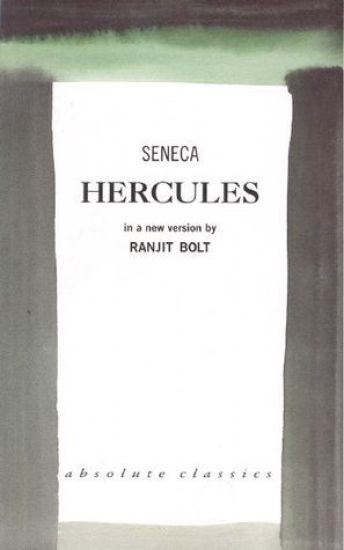
"Juno, wife of Jove (Jupiter) is jealous of Alcmene, mother of Hercules by Jove, and has been persecuting Hercules by imposing labours on him, through her intermediary, the tyrant Eurystheus. The final labour, which Hercules has just completed, was the bringing up of Cereberus, the three-headed watchdog of the Underworld, up to the world above. To do this, Hercules has achieved the astonishing feat, never before accomplished, of returning from the realm of Death. Juno has now decided that sine labours cannot break Hercules, she will turn his own strength against him, by driving him mad when he returns to his home town of Thebes. In his madness, he will commit atrocities that will preclude his ascension into Heaven, which Juno is determined to prevent. "
First published by Macmillan in 1910 and frequently reprinted thereafter, this selection includes the Latin text of Letters 5, 7, 11, 12, 15, 18, 21, 27, 28, 33, 40, 43, 44, 47, 51, 53-57, 63, 76-80, 82, 84, 86-88, 90, 107, 108, 114 and 122. Three introductory chapters trace the history of Latin prose style, comment on Seneca's own language and style, and give an account of Seneca's critics and admirers from ancient times to the twentieth century. The edition includes explanatory English notes on the Latin text.
Seneca's Phaedra occupies an important and influential position in the tradition of European drama. This new edition concentrates on the dramatic qualities of Phaedra and examines the Greek and Roman background to the play, particularly Seneca's use of Euripides and Ovid, and its philosophical elements grounded in Seneca's Stoicism. The introduction also discusses dramatic and rhetorical presentation, aspects of style including imagery and the transmission of the text. An unusual feature is the treatment of the influence of the Phaedra story in later European literature and music. The commentary examines Seneca's language in detail and looks at his use of earlier poetic models (Virgil and Ovid) as well as plot, characterisation and his use of myth. Although principally for students of Latin literature, this new edition will also be of interest to historians of drama and comparative literature.
The Satyricon and Seneca the Apocolocyntosis
Petronius Arbiter; Lucius Annaeus Seneca; J. P. (TRN) Sullivan
Penguin Classics
1986
pokkari
Perhaps the strangest - and most strikingly modern - work to survive from the ancient world, The Satyricon relates the hilarious mock epic adventures of the impotent Encolpius, and his struggle to regain virility. Here Petronius brilliantly brings to life the courtesans, legacy-hunters, pompous professors and dissolute priestesses of the age - and, above all, Trimalchio, the archetypal self-made millionaire whose pretentious vulgarity on an insanely grand scale makes him one of the great comic characters in literature. Seneca's The Apocolocyntosis, a malicious skit on 'the deification of Claudius the Clod', was designed by the author to ingratiate himself with Nero, who was Claudius' successor. Together, the two provide a powerful insight into a darkly fascinating period of Roman history.
The Gourdification of Claudius the God has instant and lasting appeal. It is a uniquely surviving specimen of prose-and-verse satire from the Roman world - and satire, a Roman speciality, is one of the few types of ancient literature to survive, and thrive, in modern society. Its author, Seneca, was not only gifted with intellectual virtuosity, but, at the time of writing, was the precarious power behind the throne of the dangerously developing Nero. Claudius, the target of his malicious wit, remains the most controversial of the first twelve imperial Caesars. The English version facing the text makes the work available to the general reader who may not have any Latin. The text, which is based on a critical examination of all the manuscripts, will be indispensable to scholars. The commentary, which is the first on this scale to have been written in English, is primarily addressed to university and other students.
The Stoic Philosophy of Seneca: Essays and Letters
Lucius Annaeus Seneca
W. W. Norton Company
1968
nidottu
In The Stoic Philosophy of Seneca, representative selections from Seneca's writings offer the reader an excellent introduction to the range of his work. The selections are drawn from the essays, or dialogues, and the "Consolations;" from the treatises, of which "On Clemency," addressed to the young Nero, is included here; and from the Letters to Lucilius, which have to do not only with philosophical subjects but also with Seneca's personal experiences, such as journeys and visits. Moses Hadas has selected letters and essays which reveal Seneca's major philosophical themes--the relationship of the individual to society and to the gods; the meaning of pain and misfortune; man's attitudes to change, time, and death; and the nature of the highest good and of the happy life. In his Introduction, Professor Hadas discusses Seneca's life and work, tracing the history of his reputation; comments on Seneca's style; and outlines the origins and tenets of Stoicism.
L. Annaei Senecae Divi Claudii apotheosis per saturam quae apocolocyntosis vulgo dicitur
Lucius Annaeus Seneca
de Gruyter
1926
sidottu