Kirjojen hintavertailu – 12 859 826 kirjaa ja 27 kauppaa

Kirjailija

Lucius Annaeus Seneca

Kirjat ja teokset yhdessä paikassa: 301 kirjaa, julkaisuja vuosilta 1884–2026, suosituimpiin kuuluu A Treatise of Clemency by Lucius Annæus Seneca the Philosopher. Address'd to Nero in the Beginning of His Reign. Done Into English by Sir Roger l'Estrange.. Vertaile teosten hintoja ja tarkista saatavuus suomalaisista kirjakaupoista.

301 kirjaa

Kirjojen julkaisuvuodet: 1884–2026.

Vom glückseligen Leben (Großdruck)

Vom glückseligen Leben (Großdruck)

Lucius Annaeus Seneca

Henricus
2019
sidottu
Lucius Annaeus Seneca: Vom gl ckseligen Leben und andere Schriften Lesefreundlicher Gro druck in 16-pt-Schrift Gro format, 210 x 297 mm Berliner Ausgabe, 2019 Durchgesehener Neusatz mit einer Biographie des Autors bearbeitet und eingerichtet von Theodor Borken Vom gl ckseligen Leben: Entstanden etwa 58/59 n. Chr. Erstdruck in: Opera, herausgegeben von M. Moravus, 1. Band, Neapel 1475. Erste deutsche bersetzung durch M. Herr unter dem Titel Von dem seligen Leben in: Sittliche Zuchtb cher, Stra burg 1536. Der Text folgt der bersetzung durch Albert Forbiger von 1867. Trostschrift an seine Mutter Helvia: Entstanden 41 n. Chr. Erstdruck in: Opera, herausgegeben von M. Moravus, 1. Band, Neapel 1475. Erste deutsche bersetzung durch M. Herr unter dem Titel Ein Trostbuch zu seiner Mutter Albina in: Sittliche Zuchtb cher, Stra burg 1536. Der Text folgt der bersetzung durch Albert Forbiger von 1867. Trostschrift an Marcia: Entstanden etwa zwischen 37 und 41 n. Chr. Erstdruck in: Opera, herausgegeben von M. Moravus, 1. Band, Neapel 1475. Erste deutsche bersetzung durch M. Herr unter dem Titel Ein Trostb chlin zu der Martia in: Sittliche Zuchtb cher, Stra burg 1536. Der Text folgt der bersetzung durch Albert Forbiger von 1867. Trostschrift an Polybius: Entstanden wahrscheinlich 43 n. Chr. Erstdruck in: Opera, herausgegeben von M. Moravus, 1. Band, Neapel 1475. Erste deutsche bersetzung durch M. Herr unter dem Titel Ein Trostb chlin zum Polybio in: Sittliche Zuchtb cher, Stra burg 1536. Der Text folgt der bersetzung durch Albert Forbiger von 1867. Da der Text nur fragmentarisch berliefert ist, wurde er in einigen Handschriften Senecas Traktat Vom gl ckselige Leben als Kapitel 20 ff. angeh ngt. Darauf bezieht sich die in Klammern gesetzte zweite Z hlung in r mischen Zahlen. Textgrundlage ist die Ausgabe: Seneca: Ausgew hlte Schriften. bersetzt und erl utert von Albert Forbiger, Stuttgart: Hoffmann, 1867. Umschlaggestaltung von Thomas Schultz-Overhage un

Vom glückseligen Leben (Großdruck)

Vom glückseligen Leben (Großdruck)

Lucius Annaeus Seneca

Henricus
2019
pokkari
Lucius Annaeus Seneca: Vom gl ckseligen Leben und andere Schriften Lesefreundlicher Gro druck in 16-pt-Schrift Gro format, 210 x 297 mm Berliner Ausgabe, 2019 Durchgesehener Neusatz mit einer Biographie des Autors bearbeitet und eingerichtet von Theodor Borken Vom gl ckseligen Leben: Entstanden etwa 58/59 n. Chr. Erstdruck in: Opera, herausgegeben von M. Moravus, 1. Band, Neapel 1475. Erste deutsche bersetzung durch M. Herr unter dem Titel Von dem seligen Leben in: Sittliche Zuchtb cher, Stra burg 1536. Der Text folgt der bersetzung durch Albert Forbiger von 1867. Trostschrift an seine Mutter Helvia: Entstanden 41 n. Chr. Erstdruck in: Opera, herausgegeben von M. Moravus, 1. Band, Neapel 1475. Erste deutsche bersetzung durch M. Herr unter dem Titel Ein Trostbuch zu seiner Mutter Albina in: Sittliche Zuchtb cher, Stra burg 1536. Der Text folgt der bersetzung durch Albert Forbiger von 1867. Trostschrift an Marcia: Entstanden etwa zwischen 37 und 41 n. Chr. Erstdruck in: Opera, herausgegeben von M. Moravus, 1. Band, Neapel 1475. Erste deutsche bersetzung durch M. Herr unter dem Titel Ein Trostb chlin zu der Martia in: Sittliche Zuchtb cher, Stra burg 1536. Der Text folgt der bersetzung durch Albert Forbiger von 1867. Trostschrift an Polybius: Entstanden wahrscheinlich 43 n. Chr. Erstdruck in: Opera, herausgegeben von M. Moravus, 1. Band, Neapel 1475. Erste deutsche bersetzung durch M. Herr unter dem Titel Ein Trostb chlin zum Polybio in: Sittliche Zuchtb cher, Stra burg 1536. Der Text folgt der bersetzung durch Albert Forbiger von 1867. Da der Text nur fragmentarisch berliefert ist, wurde er in einigen Handschriften Senecas Traktat Vom gl ckselige Leben als Kapitel 20 ff. angeh ngt. Darauf bezieht sich die in Klammern gesetzte zweite Z hlung in r mischen Zahlen. Textgrundlage ist die Ausgabe: Seneca: Ausgew hlte Schriften. bersetzt und erl utert von Albert Forbiger, Stuttgart: Hoffmann, 1867. Umschlaggestaltung von Thomas Schultz-Overhage un
Thebaiden

Thebaiden

Lucius Annaeus Seneca; oversat af Sebastian Maskell Andersen

Forlaget Atalante IVS
2019
pokkari
Senecas drama Thebaiden (også kendt som det noget misvisende Fønikerinderne), som her for første gang er oversat til dansk, udspiller sig i tiden efter Sofokles’ Kong Ødipus og lige før begivenhederne i Aischylos’ De Syv mod Theben. Ødipus, der har erkendt sin synd og revet øjnene ud på sig selv, har forladt Theben, men er endnu ikke undsluppet konflikten, der raser i den forbandede slægt. Det er et studium i ekstremt selvhad og magtsyge. Dramaet overholder ingen af de traditionelle konventioner og har en meget åben slutning, hvad har fået kritikere til at betragte det som ufærdigt. Ikke desto mindre er det spændende læsning, som med sit blodige billedsprog på én gang fascinerer og frastøder. Sebastian Maskell Andersen (f. 1979) har en cand. mag. i latinsk middelalderfilologi og underviser på Helsingør Gymnasium og Folkeuniversitet i København.
Seneca's Letters from a Stoic

Seneca's Letters from a Stoic

Lucius Annaeus Seneca

WWW.Bnpublishing.com
2018
sidottu

Halvin toimitettuna 36,30 €

As chief advisor to the emperor Nero, Lucius Annaeus Seneca was most influential in ancient Rome as a power behind the throne. His lasting fame derives from his writings on Stoic ideology, in which philosophy is a practical form of self-improvement rather than a matter of argument or wordplay. Seneca's letters to a young friend advise action rather than reflection, addressing the issues that confront every generation: how to achieve a good life; how to avoid corruption and self-indulgence; and how to live without fear of death. For several years of his turbulent life, Seneca was the guiding hand of the Roman Empire. His inspired reasoning derived mainly from the Stoic principles, which had originally been developed some centuries earlier in Athens. This selection of Seneca's letters shows him upholding the austere ethical ideals of Stoicism--the wisdom of the self-possessed person immune to overmastering emotions and life's setbacks--while valuing friendship and the courage of ordinary men, and criticizing the harsh treatment of slaves and the cruelties in the gladiatorial arena. The humanity and wit revealed in Seneca's interpretation of Stoicism is a moving and inspiring declaration of the dignity of the individual mind.
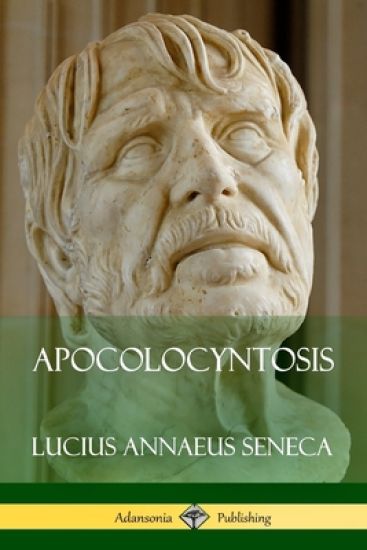
Apocolocyntosis

Apocolocyntosis

Lucius Annaeus Seneca

Createspace Independent Publishing Platform
2018
nidottu
The Apocolocyntosis is a political satire on the Roman emperor Claudius, probably written by Seneca the Younger. The work traces the death of Claudius, his ascent to heaven and judgment by the gods, and his eventual descent to Hades. At each turn, of course, Seneca mocks the late emperor's personal failings, most notably his arrogant cruelty and his inarticulateness. After Mercury persuades Clotho to kill the emperor, Claudius walks to Mount Olympus, where he convinces Hercules to let the gods hear his suit for deification in a session of the divine senate. Proceedings are in Claudius' favor until Augustus delivers a long and sincere speech listing some of Claudius' most notorious crimes.
Apocolocyntosis (Hardcover)

Apocolocyntosis (Hardcover)

Lucius Annaeus Seneca

Lulu.com
2018
sidottu
This hardcover edition of Seneca's Apocolocyntosis contains the authoritative translation of W. H. D. Rouse, complete with notes. The Apocolocyntosis by Seneca is a satire aimed at the Roman Emperor Claudius. Together with Petronius's Satyricon, it holds the distinction of being the only surviving satire of the Menippean genre of classical antiquity. The title is a play upon words, with the term ""apotheosis"" connoting the process in which dead Roman emperors were recognized as Gods. Intended as a comedy, the play chronicles the death of the Emperor Claudius, and his rise toward the heavens. However, the Gods cast judgment that he should instead descend to Hades - a sentence which Claudius contests, by appealing to the God Hercules. Thereafter begins a drama in the divine court, wherein Claudius's deeds are examined by several figures in the Greek Pantheon. Unfortunately, the speeches of each of the Gods sitting at court have been lost to time, though the plot of the Apocolocyntosis survives.
Apocolocyntosis

Apocolocyntosis

Lucius Annaeus Seneca

Lulu.com
2018
pokkari
This edition of Seneca's Apocolocyntosis contains the authoritative translation of W. H. D. Rouse, complete with notes. The Apocolocyntosis by Seneca is a satire aimed at the Roman Emperor Claudius. Together with Petronius's Satyricon, it holds the distinction of being the only surviving satire of the Menippean genre of classical antiquity. The title is a play upon words, with the term ""apotheosis,"" connoting the process in which dead Roman emperors were recognized as Gods. Intended as a comedy, the play chronicles the death of the Emperor Claudius, and his rise toward the heavens. However, the Gods cast judgment that he should instead descend to Hades - a sentence which Claudius contests, by appealing to the God Hercules. Thereafter begins a drama in the divine court, wherein Claudius deeds are held up and examined by several figures in the Greek Pantheon. Unfortunately, the speeches of each of the Gods sitting at court have been lost to time, though the plot of the Apocolocyntosis survives.
The Epistles of Lucius Annæus Seneca, Wherein, Particularly, the Tenets of the Antient Philosophers are Contrasted With the Divine Precepts of the Gospel, With Regard to the Moral Duties of Mankind. In two Volumes of 2; Volume 1
The 18th century was a wealth of knowledge, exploration and rapidly growing technology and expanding record-keeping made possible by advances in the printing press. In its determination to preserve the century of revolution, Gale initiated a revolution of its own: digitization of epic proportions to preserve these invaluable works in the largest archive of its kind. Now for the first time these high-quality digital copies of original 18th century manuscripts are available in print, making them highly accessible to libraries, undergraduate students, and independent scholars. The Age of Enlightenment profoundly enriched religious and philosophical understanding and continues to influence present-day thinking. Works collected here include masterpieces by David Hume, Immanuel Kant, and Jean-Jacques Rousseau, as well as religious sermons and moral debates on the issues of the day, such as the slave trade. The Age of Reason saw conflict between Protestantism and Catholicism transformed into one between faith and logic -- a debate that continues in the twenty-first century.++++The below data was compiled from various identification fields in the bibliographic record of this title. This data is provided as an additional tool in helping to insure edition identification: ++++British LibraryT100868In this edition, in both volumes, there is a semi-colon after "Seneca" and the imprint includes "G. G. J. and J. Robinson." London: printed by W. Woodfall; and sold by G. G. J. and J. Robinson, 1786. 2v.; 4
A new Translation of the Morals of Seneca

A new Translation of the Morals of Seneca

Lucius Annaeus Seneca

Gale Ecco, Print Editions
2018
sidottu
The 18th century was a wealth of knowledge, exploration and rapidly growing technology and expanding record-keeping made possible by advances in the printing press. In its determination to preserve the century of revolution, Gale initiated a revolution of its own: digitization of epic proportions to preserve these invaluable works in the largest archive of its kind. Now for the first time these high-quality digital copies of original 18th century manuscripts are available in print, making them highly accessible to libraries, undergraduate students, and independent scholars. The Age of Enlightenment profoundly enriched religious and philosophical understanding and continues to influence present-day thinking. Works collected here include masterpieces by David Hume, Immanuel Kant, and Jean-Jacques Rousseau, as well as religious sermons and moral debates on the issues of the day, such as the slave trade. The Age of Reason saw conflict between Protestantism and Catholicism transformed into one between faith and logic -- a debate that continues in the twenty-first century.++++The below data was compiled from various identification fields in the bibliographic record of this title. This data is provided as an additional tool in helping to insure edition identification: ++++British LibraryN007842London: printed for T. Osborne; and J. Hildyard, at York, 1745. 10], xvi,388p.; 12
The Epistles of Lucius Annæus Seneca, Wherein, Particularly, the Tenets of the Antient Philosophers are Contrasted With the Divine Precepts of the Gospel, With Regard to the Moral Duties of Mankind. In two Volumes of 2; Volume 2
The 18th century was a wealth of knowledge, exploration and rapidly growing technology and expanding record-keeping made possible by advances in the printing press. In its determination to preserve the century of revolution, Gale initiated a revolution of its own: digitization of epic proportions to preserve these invaluable works in the largest archive of its kind. Now for the first time these high-quality digital copies of original 18th century manuscripts are available in print, making them highly accessible to libraries, undergraduate students, and independent scholars. The Age of Enlightenment profoundly enriched religious and philosophical understanding and continues to influence present-day thinking. Works collected here include masterpieces by David Hume, Immanuel Kant, and Jean-Jacques Rousseau, as well as religious sermons and moral debates on the issues of the day, such as the slave trade. The Age of Reason saw conflict between Protestantism and Catholicism transformed into one between faith and logic -- a debate that continues in the twenty-first century.++++The below data was compiled from various identification fields in the bibliographic record of this title. This data is provided as an additional tool in helping to insure edition identification: ++++British LibraryT100868In this edition, in both volumes, there is a semi-colon after "Seneca" and the imprint includes "G. G. J. and J. Robinson". London: printed by W. Woodfall; and sold by G. G. J. and J. Robinson, 1786. 2v.; 4
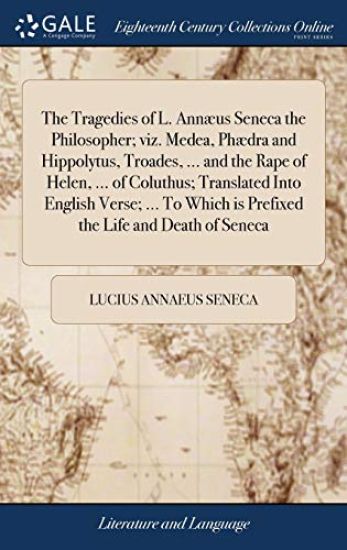
The Tragedies of L. Annæus Seneca the Philosopher; viz. Medea, Phædra and Hippolytus, Troades, ... and the Rape of Helen, ... of Coluthus; Translated Into English Verse; ... To Which is Prefixed the Life and Death of Seneca
The 18th century was a wealth of knowledge, exploration and rapidly growing technology and expanding record-keeping made possible by advances in the printing press. In its determination to preserve the century of revolution, Gale initiated a revolution of its own: digitization of epic proportions to preserve these invaluable works in the largest archive of its kind. Now for the first time these high-quality digital copies of original 18th century manuscripts are available in print, making them highly accessible to libraries, undergraduate students, and independent scholars. Western literary study flows out of eighteenth-century works by Alexander Pope, Daniel Defoe, Henry Fielding, Frances Burney, Denis Diderot, Johann Gottfried Herder, Johann Wolfgang von Goethe, and others. Experience the birth of the modern novel, or compare the development of language using dictionaries and grammar discourses. ++++The below data was compiled from various identification fields in the bibliographic record of this title. This data is provided as an additional tool in helping to insure edition identification: ++++British LibraryT100883The titles of the plays are bracketted together on the titlepage following "viz." - Horizontal chain-lines. With two final advertisement leaves. Each tragedy and 'The rape of Helen' has a separate dated titlepage. A reissue, with a new titlepage, of 'TLondon: printed for S. Smith and B. Walford, 1702. 16], xxxix, 9],377, 23]p., plates: ill.port.; 8
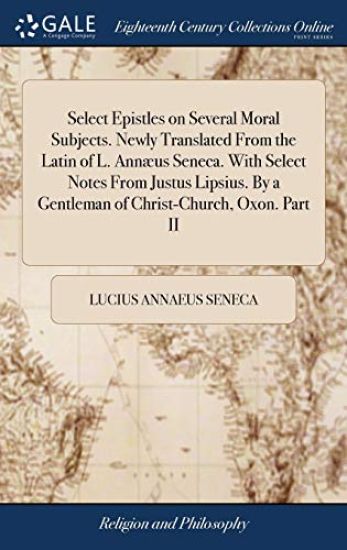
Select Epistles on Several Moral Subjects. Newly Translated From the Latin of L. Annæus Seneca. With Select Notes From Justus Lipsius. By a Gentleman of Christ-Church, Oxon. Part II
The 18th century was a wealth of knowledge, exploration and rapidly growing technology and expanding record-keeping made possible by advances in the printing press. In its determination to preserve the century of revolution, Gale initiated a revolution of its own: digitization of epic proportions to preserve these invaluable works in the largest archive of its kind. Now for the first time these high-quality digital copies of original 18th century manuscripts are available in print, making them highly accessible to libraries, undergraduate students, and independent scholars. The Age of Enlightenment profoundly enriched religious and philosophical understanding and continues to influence present-day thinking. Works collected here include masterpieces by David Hume, Immanuel Kant, and Jean-Jacques Rousseau, as well as religious sermons and moral debates on the issues of the day, such as the slave trade. The Age of Reason saw conflict between Protestantism and Catholicism transformed into one between faith and logic -- a debate that continues in the twenty-first century.++++The below data was compiled from various identification fields in the bibliographic record of this title. This data is provided as an additional tool in helping to insure edition identification: ++++British LibraryN036413With a half-title preceded by a preliminary leaf of contents to parts 1 and 2, and a final advertisement leaf. London: printed for C. Rivington, 1740. 4], viii,72, 2]p.; 8
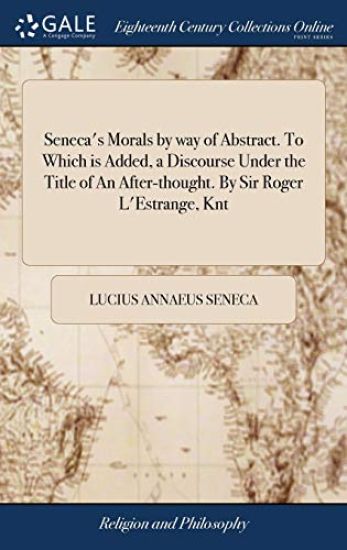
Seneca's Morals by Way of Abstract. to Which Is Added, a Discourse Under the Title of an After-Thought. by Sir Roger l'Estrange, Knt
The 18th century was a wealth of knowledge, exploration and rapidly growing technology and expanding record-keeping made possible by advances in the printing press. In its determination to preserve the century of revolution, Gale initiated a revolution of its own: digitization of epic proportions to preserve these invaluable works in the largest archive of its kind. Now for the first time these high-quality digital copies of original 18th century manuscripts are available in print, making them highly accessible to libraries, undergraduate students, and independent scholars. The Age of Enlightenment profoundly enriched religious and philosophical understanding and continues to influence present-day thinking. Works collected here include masterpieces by David Hume, Immanuel Kant, and Jean-Jacques Rousseau, as well as religious sermons and moral debates on the issues of the day, such as the slave trade. The Age of Reason saw conflict between Protestantism and Catholicism transformed into one between faith and logic -- a debate that continues in the twenty-first century.++++The below data was compiled from various identification fields in the bibliographic record of this title. This data is provided as an additional tool in helping to insure edition identification: ++++British LibraryT134872The imprint may be false?. London: printed for John Thompson, 1764. 26],354p.; 12
OEuvres De Malherbe; Volume 5

OEuvres De Malherbe; Volume 5

Lucius Annaeus Seneca

Palala Press
2018
pokkari
This work has been selected by scholars as being culturally important, and is part of the knowledge base of civilization as we know it. This work was reproduced from the original artifact, and remains as true to the original work as possible. Therefore, you will see the original copyright references, library stamps (as most of these works have been housed in our most important libraries around the world), and other notations in the work. This work is in the public domain in the United States of America, and possibly other nations. Within the United States, you may freely copy and distribute this work, as no entity (individual or corporate) has a copyright on the body of the work. As a reproduction of a historical artifact, this work may contain missing or blurred pages, poor pictures, errant marks, etc. Scholars believe, and we concur, that this work is important enough to be preserved, reproduced, and made generally available to the public. We appreciate your support of the preservation process, and thank you for being an important part of keeping this knowledge alive and relevant.