Kirjojen hintavertailu – 12 859 819 kirjaa ja 27 kauppaa

Kirjailija

Lucius Apuleius

Kirjat ja teokset yhdessä paikassa: 35 kirjaa, julkaisuja vuosilta 2007–2025, suosituimpiin kuuluu Eros & Psyche, A Poem By R. Bridges, Done Into Engl. From The Lat. Of Apuleius. Vertaile teosten hintoja ja tarkista saatavuus suomalaisista kirjakaupoista.

35 kirjaa

Kirjojen julkaisuvuodet: 2007–2025.

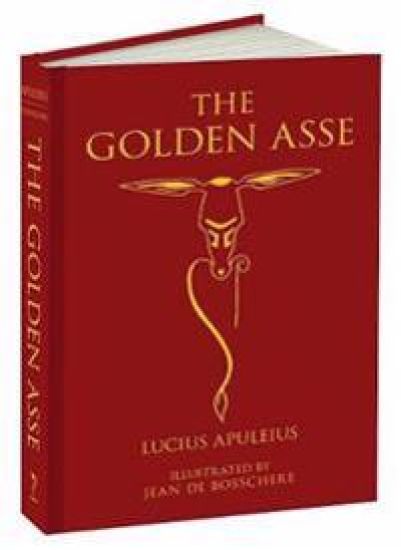
The Golden Ass (Warbler Classics Illustrated Edition)
The Golden Ass, originally titled The Metamorphoses of Apuleius, is the only ancient Roman novel in Latin to have survived in full. This bawdy, frolicsome, and richly imaginative tale follows the curious Lucius, a young man from Madaurus (also the hometown of the author, Apuleius), whose fascination with magic leads him into trouble. Attempting to transform into a bird through a spell, Lucius is instead turned into an ass, setting off a long and eventful journey-both literal and metaphorical. Along the way, Lucius encounters a series of humorous, tragic, and magical tales, woven into the novel's narrative fabric. Ultimately, it is the intervention of the goddess Isis that restores him to his human form, and he becomes a devoted member of her cult. This timeless work offers readers a glimpse into the ancient world through a mix of farce, philosophy, and mysticism, making it a timeless favorite for two thousand years. Jack Lindsay's version is the first English translation to include risqu passages that were previously either omitted or rendered in Latin. This Warbler Classics edition features sixteen exquisite images by Jean de Bossch re, which first appeared in a limited edition of The Golden Ass in 1923.

Metamorfoser : eller Den gyllene åsnan

Metamorfoser : eller Den gyllene åsnan

Lucius Apuleius

Vertigo Förlag
2024
sidottu
Metamorfoser : eller den gyllene åsnan av Apuleius (124 180) är den enda romerska romanen som finns bevarad i sin helhet. Här skildras ynglingen Lucius förvandling till åsna och de sällsamma upplevelser som följer på en sådan metamorfos, varvat med mustiga myter om hur Thelyphron förlorade öron och näsa, om Sokrates och häxorna, och om Amor och Psyche. Trots att nästan tvåtusen år har passerat sedan Apuleius skrev detta verk med övernaturliga och mystiska inslag varvat med satir och synd, förstår vi det viktiga han har att berätta. Översättningen är gjord av KG Johansson som också har skrivit efterordet.
The Golden Asse (Edition2023)

The Golden Asse (Edition2023)

Lucius Apuleius

Double 9 Books LLP
2023
nidottu
"The Golden Asse" is an ancient classical story book written by Lucius Apuleius. The plot revolves spherical Lucius, a younger man who experiments with magic and is transformed right into a donkey. As a donkey, Lucius embarks on a sequence of strange and frequently fun adventures, encountering witches, robbers, and one-of-a-kind magical animals along the way. Apuleius makes use of Lucius' voyage to have a examine topics of metamorphosis, preference, and the hunt of information. The story is steeped with allegory and symbolism, with the donkey representing humanity's base goals and foibles. At its essence, "The Golden Ass" is a sarcastic examine Roman society and its vices. Apuleius makes use of wit and irony to mock the elite's duplicity and excesses, on the same time as concurrently education moral training about the dangers of gluttony and folly. Despite its historic origins, "The Golden Ass" is a timeless and tasty piece of literature that captivates readers with super imagery, witty wordplay, and irreverent humor. It maintains to encourage diversifications and interpretations in a variety of media, solidifying its vicinity as an international literary conventional.
The Golden Asse: The Metamorphoses of Apuleius

The Golden Asse: The Metamorphoses of Apuleius

Lucius Apuleius

Createspace Independent Publishing Platform
2017
nidottu
The Golden Asseby Lucius Apuleius "Africanus"Translated byWilliam AdlingtonThe Metamorphoses of Apuleius--which St. Augustine referred to as The Golden Ass (Asinus aureus--is the only ancient Roman novel in Latin to survive in its entirety. The prologue establishes an audience and a speaker, who defines himself by location, education, and occupation. The narrator journeys to Thessaly on business. On the way, he runs into Aristomenes and an unnamed traveler. The unnamed traveler refuses to believe Aristomenes' story. The narrator scolds the unnamed traveler and tells a short story about a sword swallower. He promises Aristomenes a free lunch if he will retell his tale. The narrator believes Aristomenes' tale and becomes more eager to learn about magic. The narrator arrives at Hypata, where he stays with Milo, a family friend and miser, and his wife Pamphile. Photis, Milo's servant, takes the narrator to the baths, after which the narrator goes to the marketplace. There, he buys some fish and runs into his old friend Pytheas, who is now a magistrate. Pytheas reveals the narrator's name as Lucius. Pytheas says that Lucius overpaid for the fish and humiliates the fish-monger by trampling on the fish. Lucius returns to Milo's house, hungry and empty-handed. Milo asks Lucius about his life, his friends, and his wanderings. Lucius goes to sleep hungry.
The Golden Ass

The Golden Ass

Lucius Apuleius

Createspace Independent Publishing Platform
2017
nidottu
The story follows Lucius, a young man of good birth, as he disports himself in the cities and along the roads of Thessaly. This is a wonderful tale abounding in lusty incident, curious adventure and bawdy wit.
Golden Asse

Golden Asse

Lucius Apuleius

Dover Publications Inc.
2016
sidottu
Written in the second century A. D., this picaresque classic is the ancient world's only surviving complete novel. Concerning an inquisitive young man transformed into an ass by a magic potion, the narrative digresses into other tales of love, intrigue, and witchcraft a story-within-a-story technique that inspired many later authors, including Boccaccio, Cervantes, and Rabelais. This lavish hardcover edition reproduces the John Lane/Bodley Head version, first published in London in 1923. William Adlington's highly readable 16th-century translation from Latin to English is enhanced by 16 full-page plates, eight in color, and numerous black-and-white images by noted illustrator Jean de Bosschere."
Des reisenden Lucius erotische Abenteuer, tierische Leiden und schließliche Erlösung
Der heute gel ufige Titel des Romans Der goldene Esel (Asinus aureus) ist erst in der Sp tantike (beim Theologen und Philosophen Augustinus) bezeugt. Ebenfalls ist der Roman unter dem Titel Metamorphosen (Verwandlungen) bekannt. Der Roman geh rt - wie Petrons Satyricon - zu den bedeutendsten und gleichzeitig unterhaltsamsten Romanen der Weltliteratur. Verfasst wurde er um 160 n. Chr. von Apuleius aus Madauros (im heutigen Algerien). In der Erz hlung wird Lucius, der aus dem griechischen Korinth stammende Romanheld, infolge seiner ausgepr gten Neugier, als er unbedingt hinter die Geheimnisse der Magie gelangen m chte, auf einer Reise durch den hexenbev lkerten Norden Griechenlands im Zusammenhang mit einem amour sen Abenteuer versehentlich in einen Esel verwandelt. Als Esel beh lt er seine menschliche Wahrnehmung und sein menschliches Denken bei, seine erw hnte Neugier und seine ausgepr gten erotischen Neigungen lassen ihn in ein Abenteuer nach dem anderen geraten ... Von diesem Roman voller Spritzigkeit und Verve existiert bisher keine moderne deutsche bersetzung, welche die Lebendigkeit und Zeitlosigkeit des fantastischen wie satiresken Panoramas dieses Werkes sowie die Buntheit und Flottheit der meisterlich lebendigen Sprachkunst seines Autors in die heutige Zeit angemessen und kongenial hineinholt. Dies wird mit der vorliegenden bertragung endlich nachgeholt.