Kirjojen hintavertailu – 12 859 818 kirjaa ja 27 kauppaa

Kirjailija

Lucius Burckhardt

Kirjat ja teokset yhdessä paikassa: 12 kirjaa, julkaisuja vuosilta 2004–2026, suosituimpiin kuuluu Building – A Process. Vertaile teosten hintoja ja tarkista saatavuus suomalaisista kirjakaupoista.

12 kirjaa

Kirjojen julkaisuvuodet: 2004–2026.

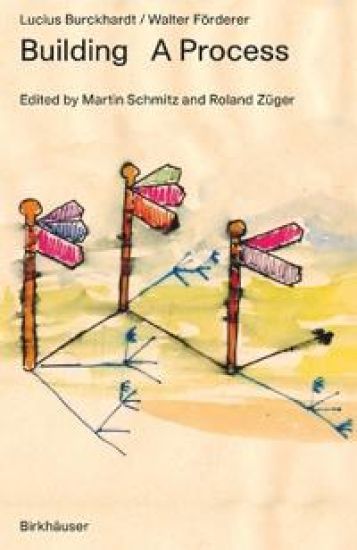
Building – A Process

Building – A Process

Lucius Burckhardt; Walter Förderer

Birkhauser
2026
isokokoinen pokkari
Sociologist Lucius Burckhardt and architect Walter Maria Förderer may seem an unlikely pair, yet their 1968 book Building – A Process reveals a shared vision: architecture as an ongoing, political, and cultural negotiation. By shifting attention to the phases before construction and after completion, they challenge the idea of new buildings as “clean solutions” and highlight flexibility, conflict, and user agency. In ten concise chapters, they question preservation dogmas and argue for hybrid, adaptable architectures. This renewed edition underscores their lasting insight: the future of sustainability lies in cultivating a culture of transformation. For the first time, the book is now available in English. A plea for the long-term use of buildings Strategies for utilization that begin at the planning stage Pathways to sustainably leverage existing potential

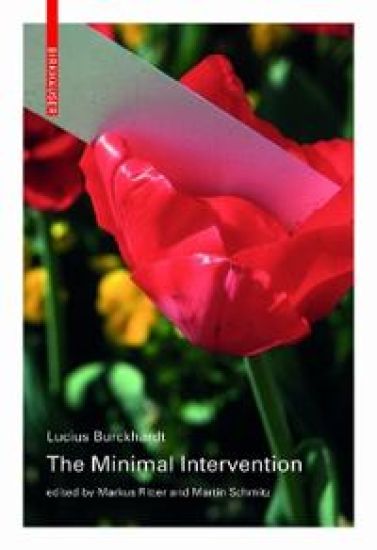
The Minimal Intervention

The Minimal Intervention

Lucius Burckhardt

Birkhauser
2022
isokokoinen pokkari
The mind’s eye as a design principle Lucius Burckhardt (1925–2003) outlined his theory of the “smallest possible intervention” back in the early 1980s. The idea of minimal intervention runs through his entire oeuvre, from his critique of urbanism to the science of walking. The “smallest possible intervention” denotes a planning theory that assumes two “views” within landscape design: that which is actually visible and that in our mind’s eye. The theory of the minimal intervention means not interfering excessively with the existing landscape, but instead working with the landscape in our minds to develop an aesthetic understanding of the environment. In this book, available for the first time in English, the Swiss sociologist applies this formula to many areas of design. Intellectual distillation of Lucius Burckhardt’s theories available for the first time in English Exploration of the relationships between planning and building Rationalization and needs
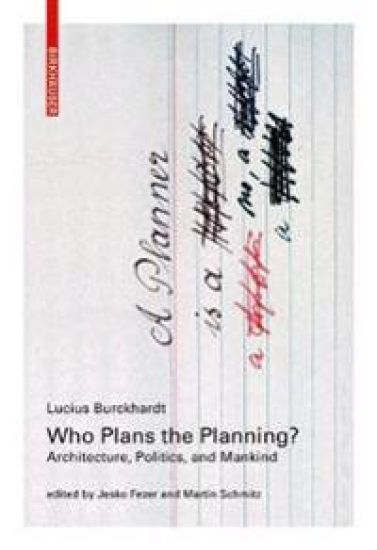
Who Plans the Planning?

Who Plans the Planning?

Lucius Burckhardt

Birkhauser
2019
isokokoinen pokkari
From the 1950s, Lucius Burckhardt (1925–2003) focused on planning, design, and construction in a democracy. His astute observations and critical analysis have had a fundamental effect on the design of our environment, on teaching in the architectural/planning professions, and on our understanding of what "city" means. His research, which – between mighty commercial interests and conflicting political aspirations focuses on the benefit for the entire population – is indispensable when and wherever buildings are planned, designed, built, and inhabited. With a new selection of texts, this book ploughs a furrow through Lucius Burckhardt’s theory of planning.
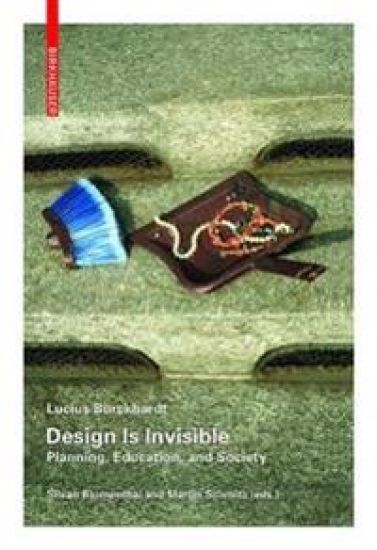
Design Is Invisible

Design Is Invisible

Lucius Burckhardt

Birkhauser
2017
isokokoinen pokkari
With Design is Invisible, Lucius Burckhardt was one of the first to point out that factors that are invisible can be integrated – they determine the use of objects and should be part of the design. What is the use of the most attractive tramway if it does not operate at night? Burckhardt expands on the meaning of design, in this case by including the timetable, which can also be optimized. The relevance of these articles dating from between 1965 and 1999 can be appreciated today in the current debate on architecture. Problems arising from social polarization, rural depopulation, and migration can only be resolved on an interdisciplinary basis. The articles, for the first time available in English, finally allow access to key source texts for the purpose of international debate.
Why is Landscape Beautiful?

Why is Landscape Beautiful?

Lucius Burckhardt

Birkhauser
2015
isokokoinen pokkari
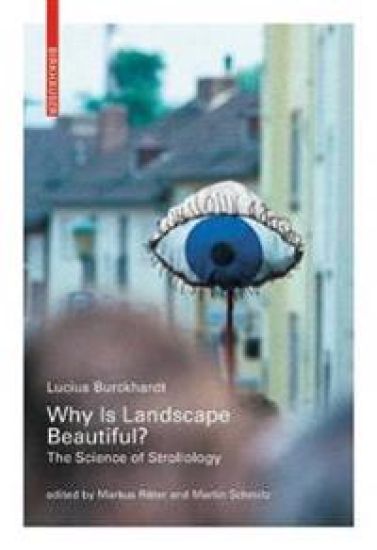
Lucius Burckhardt (1925-2003) taught architectural theory at Kassel University and, in the 1980s, coined the term "Promenadology" or the science of Strollology and developed this into a complex and far-sighted planning and design discipline. Given that "the landscape" as an idea only exists in our heads, Burckhardt's writings (and drawings) are not so much concerned with beautiful vistas, but focus instead on the multi-faceted interaction a simple walk-taker has with his environment. To those who observe the environment with their eyes wide open, interesting questions will arise again and again; for example, why "city" and "country" can no longer be separated so easily in the face of progressive urbanization. Or why we consider a viaduct to be beautiful, but a nuclear power station an intrusion. And also, why gardens are works of art and should therefore be appraised as such. This book contains 28 texts by the design and planning critic, for the first time in English, with the focus on landscapes, gardens as an art form and the science of strollology.
Warum ist Landschaft schön?

Warum ist Landschaft schön?

Lucius Burckhardt

Schmitz, Martin Verlag
2006
nidottu
Lucius Burckhardt begründete in den 1980er Jahren die Promenadologie, die Spaziergangswissenschaft oder engl. auch Strollology. Das neue Fach entwickelte er zu einer komplexen und weitblickenden Planungs- und Gestaltungswissenschaft. Die Promenadologie ist der Ausgangspunkt für eine realistische Haltung zur Wahrnehmung und Wirklichkeit, für ein anderes Verständnis von Landschaft und urbanem Raum, sowie für eine neue Architektur und Planung. Dieses Buch führt anhand einer Auswahl der Texte von Lucius Burckhardt über Landschaft, Natur und Ästhetik in die Grundlagen und die Theorie der Spaziergangswissenschaft ein.
Wer plant die Planung?

Wer plant die Planung?

Lucius Burckhardt

Schmitz, Martin Verlag
2004
nidottu
Lucius Burckhardt (1925 - 2003) setzte sich seit den 1950er Jahren mit dem Planen und Bauen in der Demokratie auseinander. Seine scharfen Beobachtungen und kritischen Analysen haben die Gestaltung unserer Umwelt, die Lehre in den planenden Berufen und das Verständnis von Stadt grundlegend beeinflußt. Zwischen mächtigen ökonomischen Interessen und widerstreitenden politischen Ansprüchen werden seine Forschungen für das Wohl einer Gesamtbevölkerung unentbehrlich sein, wann immer geplant, gestaltet, gebaut und gewohnt wird. Dieses Buch ordnet eine Auswahl seiner Texte neu und legt einen Pfad durch die Planungstheorie von Lucius Burckhardt.