Kirjojen hintavertailu – 12 903 733 kirjaa ja 27 kauppaa

Kirjailija

Lucy Johnstone

Kirjat ja teokset yhdessä paikassa: 8 kirjaa, julkaisuja vuosilta 2013–2024, suosituimpiin kuuluu A Straight Talking Introduction to Psychiatric Diagnosis (second edition). Vertaile teosten hintoja ja tarkista saatavuus suomalaisista kirjakaupoista.

8 kirjaa

Kirjojen julkaisuvuodet: 2013–2024.

En enkel innføring i makt-trussel-mening-rammeverket

En enkel innføring i makt-trussel-mening-rammeverket

Lucy Johnstone; Mary Boyle

Fagbokforlaget
2024
nidottu
Oversatt og med forord av Trond F. Aarre Psykiatrisk diagnostikk bygger på grundig beskrivelse og klassifikasjon av psykiske plager. Plagene blir oppfattet som uttrykk for at noe er galt, avvikende eller unormalt med individet. De psykiske lidelsene som blir diagnostisert, blir forstått og behandlet som om de var vanlige sykdommer. Målet for innsatsen er å få svar på spørsmålet «Hva feiler det deg?». Makt–trussel–mening-rammeverket (The Power Threat Meaning Framework) ble utviklet og presentert av en gruppe britiske psykologer i 2018, og vakte raskt stor interesse verden over. Ved å snu problemstillingen og heller spørre «Hva har skjedd med deg?» tilbyr rammeverket en normaliserende tilnærming som ikke sorterer mennesker ut fra hvilke konkrete plager de har, men ut fra hvilke omstendigheter som ga opphavet til dem. Istedenfor å granske de enkelte plagene for å finne ut hva som er galt med personen, vil rammeverket lede oss mot en forståelse av hvordan maktforhold fører til en opplevelse av trussel og naturlige reaksjoner på det. Håpet er at rammeverket vil hjelpe den enkelte til å skape et narrativ som gir håp og fremmer bedring uten å gi personen en pasientidentitet. I denne boken presenterer psykologene Mary Boyle og Lucy Johnstone makt–trussel–mening-rammeverket på en lett tilgjengelig måte som gir leserne en god innføring både i den praktiske bruken av rammeverket og det faglige grunnlaget det hviler på. Psykiater Trond F. Aarre har oversatt den fra engelsk og skrevet et forord til denne norske utgaven.

Makt-trussel-mening-rammeverket

Makt-trussel-mening-rammeverket

Lucy Johnstone; Mary Boyle

Bps Books
2023
pokkari
Med dette presenteres en norsk oversettelse av The Power Threat Meaning Framework (PTMF), p norsk kalt Makt-trussel-mening-rammeverket (MTM-rammeverket eller MTMR), f rst utgitt i januar 2018 av The British Psychological Society, Division of Clinical Psychology. Det gj res mye godt psykisk helsearbeid, og det er et tverrpolitisk m l utvikle tjenestene ytterligere gjennom medbestemmelse og kt oppmerksomhet p betydningen av relasjoner og nettverk. Nasjonalt senter for erfaringskompetanse innen psykisk helse arbeider for at erfaringsbasert kunnskap skal tas i bruk i tjenestene p psykisk helse- og rusfeltet. Vi opplever kende forst else for den kunnskapen som kommer fra levde liv. De livserfaringer vi gj r oss, p virker alle sider ved helsen v r. MTMR er et konseptuelt alternativ til en diagnostisk modell for psykiske vanskeligheter. Utfordringer og v rem ter som innenfor et diagnostisk rammeverk vil forst s som symptomer p sykdom, forst s i MTMR som menneskelige responser og uttrykk som gir grunnlag for utforske og forst emosjonell smerte, fortvilelse, uvanlige opplevelser og v rem ter. Personers utfordringer og v rem ter forst s i dette rammeverket alts ikke som patologi, men som et uttrykk for mestrings- og overlevelsesmekanismer som har en mening, og som m forst s p bakgrunn av den relasjonelle, sosiale og samfunnsmessige konteksten. The Power Threat Meaning Framework-dokumentet foreligger i to versjoner: et hoveddokument p over 400 sider og et oversiktsdokument (dette dokumentet) p vel 150 sider, som beskriver prinsippene i MTMR. For en detaljert fremstilling av de filosofiske prinsippene og forskningen som underst tter MTMR, henvises til den engelske hovedpublikasjonen. Noen engelske begreper lar seg ikke enkelt oversette. Med forfatternes tillatelse har vi i slike tilfeller f yd til forklarende fotnoter eller beholdt det engelske begrepet i parentes. Eksempler p dette: Meaning i konteksten makt, trussel, mening betyr ikke oppfatning, men den betydning man tillegger en hendelse. Distress har ikke en enkel, entydig oversettelse. Her har vi valgt emosjonell smerte eller bare smerte, fortvilelse, noen ganger n d, krise eller ulykkelighet. Agency blir av enkelte forskere oversatt til agentskap. Vi har valgt bruke akt rskap eller styring i eget liv. Der betegnelser p psykiatriske diagnoser er brukt i teksten, har vi fulgt faglige konvensjoner som kan v re litt ulike i Norge og i Storbritannia. Eksempelvis er borderline personality disorder oversatt til emosjonelt ustabil personlighetsforstyrrelse, som er en mer vanlig brukt betegnelse i Norge. Der det henvises til spesifikke ICD-diagnoser, har vi selvsagt benyttet de gjeldende begrepene. Dokumentet forener fag- og erfaringskunnskap ved at personer med egenerfaring, i dokumentet betegnet som overlevere (eng: survivors), har v rt tungt representert i arbeidet. Overlever som betegnelse kan ha en dobbel betydning. Den kan enten henspille p en person som har gjennomlevd vanskeligheter og kommet over dem, eller den kan ha en mer kritisk betydning av en som har overlevd p tross av behandlingen vedkommende har f tt. Vi regner med at denne dobbeltheten er tilsiktet og har beholdt overlever-begrepet i oversettelsen. Vi mener at rammeverket, til tross for nasjonale ulikheter av b de organisatorisk, spr klig og kulturell art, har relevans med sine allmennmenneskelige beskrivelser, ogs i en norsk kontekst.
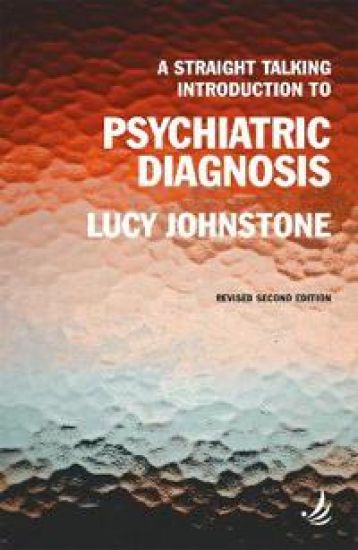
A Straight Talking Introduction to Psychiatric Diagnosis (second edition)
Do you need your psychiatric diagnosis? This book will help you decide. In this second, updated edition of a best-selling title, Lucy Johnstone revisits the revolution that is underway in mental health. No one doubts that people’s distress is very real – but are they actually suffering from illnesses that need a diagnosis? In today’s world, where mental health is a crucial topic, this might seem an odd question. And yet even the authors of the diagnostic manuals are admitting that these categories are not supported by evidence. No one has been able to identify the ‘chemical imbalances’ that are said to cause distress. No one can reliably distinguish one ‘mental illness’ from another. And the more labels and pills we offer, the faster the increase in mental health problems. Something is badly wrong. Johnstone shows that we need to change the question from ‘What’s wrong with you?’ to ‘What’s happened to you?’ Distress, even its severe forms, arises out of our lives and relationships. Narratives and personal stories show us this truth, whereas labels obscure it. The book ends with a new, hard-hitting analysis of the political, economic and social forces that drive the diagnostic model. In our increasingly competitive, unequal and fragmented world, we are all struggling. We are told the answer lies in finding the right diagnosis. We are encouraged to talk about our ‘mental health’ instead of the conditions of our lives. And increasingly, we ourselves seek out labels which reassure us that our feelings of shame, failure and difference are not our fault. Indeed, as Johnstone shows, we are not to blame. But nor will the rapid spread of diagnostic labels provide an answer. There are better ways forward. This book is about choice. It is about demystifying one of the most influential myths of our age and giving people the information to make up their own minds. It opens up hope and new ways forward for anyone who has been given a diagnostic label.
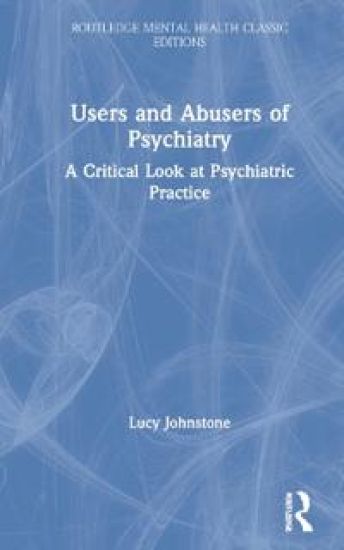
Users and Abusers of Psychiatry

Users and Abusers of Psychiatry

Lucy Johnstone

Routledge
2021
sidottu
Users and Abusers of Psychiatry is a radically different, critical account of day-to-day practice in psychiatric settings. Using real-life examples and her own experience as a clinical psychologist, Lucy Johnstone argues that the traditional way of treating mental distress can often exacerbate people's original difficulties, leaving them powerless and re-traumatised. She draws on a range of evidence to present a very different understanding of psychiatric breakdown than that found in standard medical textbooks, and to suggest new ways forward. The extended introduction to this Classic Edition brings the book up to date by revisiting its themes and tracing the changes in mental health practice over the last three decades. The book’s accessibility and clarity have ensured that it remains a classic in a growing field, and it is as relevant today as when it was first published. Users and Abusers of Psychiatry is a challenging but ultimately inspiring read for all who are involved in mental health – whether as professionals, students, service users, relatives or interested lay people.
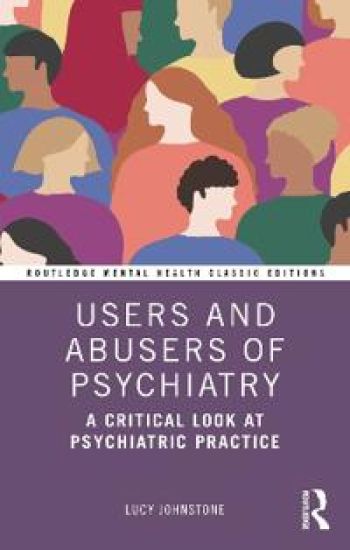
Users and Abusers of Psychiatry

Users and Abusers of Psychiatry

Lucy Johnstone

Routledge
2021
nidottu
Users and Abusers of Psychiatry is a radically different, critical account of day-to-day practice in psychiatric settings. Using real-life examples and her own experience as a clinical psychologist, Lucy Johnstone argues that the traditional way of treating mental distress can often exacerbate people's original difficulties, leaving them powerless and re-traumatised. She draws on a range of evidence to present a very different understanding of psychiatric breakdown than that found in standard medical textbooks, and to suggest new ways forward. The extended introduction to this Classic Edition brings the book up to date by revisiting its themes and tracing the changes in mental health practice over the last three decades. The book’s accessibility and clarity have ensured that it remains a classic in a growing field, and it is as relevant today as when it was first published. Users and Abusers of Psychiatry is a challenging but ultimately inspiring read for all who are involved in mental health – whether as professionals, students, service users, relatives or interested lay people.
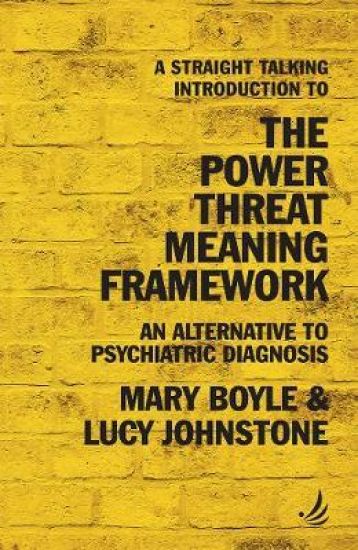
A Straight Talking Introduction to the Power Threat Meaning Framework

A Straight Talking Introduction to the Power Threat Meaning Framework

Mary Boyle; Lucy Johnstone

PCCS Books
2020
pokkari

Halvin toimitettuna 26,80 €

The current mainstream way of describing psychological and emotional distress assumes it is the result of medical illnesses that need diagnosing and treating. This book summarises a powerful alternative to psychiatric diagnosis that asks not 'What's wrong with you?' but 'What's happened to you?' The Power Threat Meaning Framework (PTMF) was co-produced by a core group of psychologists and service users and launched in 2018, prompting considerable interest in the UK and worldwide. It argues that emotional distress, unusual experiences and many forms of troubled or troubling behaviour are understandable when viewed in the context of a person's life and circumstances, the cultural and social norms we are expected to live up to and the degree to which we are exposed to trauma, abuse, injustice and inequality. The PTMF offers all of us the tools to create new, hopeful narratives about the reasons for our distress that are not based on psychiatric diagnosis and to find ways forward as individuals, families, social groups and whole societies.
Formulation in Psychology and Psychotherapy

Formulation in Psychology and Psychotherapy

Lucy Johnstone; Rudi Dallos

Routledge
2013
sidottu
The first edition of Formulation in Psychology and Psychotherapy caught the wave of growing interest in formulation in a clinical context. This completely updated and revised edition summarises recent practice, research, developments and debates while retaining the features that made the first a leading text in the field. It contains new chapters on personal construct formulation, formulation in health settings, and the innovative practice of using formulation in teams. The book sees formulation as a dynamic process which explores personal meaning collaboratively and reflectively, taking account of relational and social contexts. Two case studies, one adult and one child, illustrate the use of formulation from the perspectives of expert clinicians from six different theoretical positions. The book encourages the reader to take a constructively critical perspective on the many philosophical, professional and ethical debates raised by the process of formulating people’s problems. Among the issues explored are:The social and political context of formulationFormulation in relation to psychiatric diagnosisThe limitations of formulationControversies and debates about formulationThis readable and comprehensive guide to the field provides a clear, up to date and thought-provoking overview of formulation from a number of perspectives, essential for clinicians working in all areas of mental health and social care, psychology, therapy and counselling.
Formulation in Psychology and Psychotherapy

Formulation in Psychology and Psychotherapy

Lucy Johnstone; Rudi Dallos

Routledge
2013
nidottu
The first edition of Formulation in Psychology and Psychotherapy caught the wave of growing interest in formulation in a clinical context. This completely updated and revised edition summarises recent practice, research, developments and debates while retaining the features that made the first a leading text in the field. It contains new chapters on personal construct formulation, formulation in health settings, and the innovative practice of using formulation in teams. The book sees formulation as a dynamic process which explores personal meaning collaboratively and reflectively, taking account of relational and social contexts. Two case studies, one adult and one child, illustrate the use of formulation from the perspectives of expert clinicians from six different theoretical positions. The book encourages the reader to take a constructively critical perspective on the many philosophical, professional and ethical debates raised by the process of formulating people’s problems. Among the issues explored are:The social and political context of formulationFormulation in relation to psychiatric diagnosisThe limitations of formulationControversies and debates about formulationThis readable and comprehensive guide to the field provides a clear, up to date and thought-provoking overview of formulation from a number of perspectives, essential for clinicians working in all areas of mental health and social care, psychology, therapy and counselling.