Kirjojen hintavertailu – 12 859 818 kirjaa ja 27 kauppaa

Kirjailija

Lucy Pickering

Kirjat ja teokset yhdessä paikassa: 4 kirjaa, julkaisuja vuosilta 2018–2023, suosituimpiin kuuluu Eye Tracking in Linguistics. Vertaile teosten hintoja ja tarkista saatavuus suomalaisista kirjakaupoista.

4 kirjaa

Kirjojen julkaisuvuodet: 2018–2023.

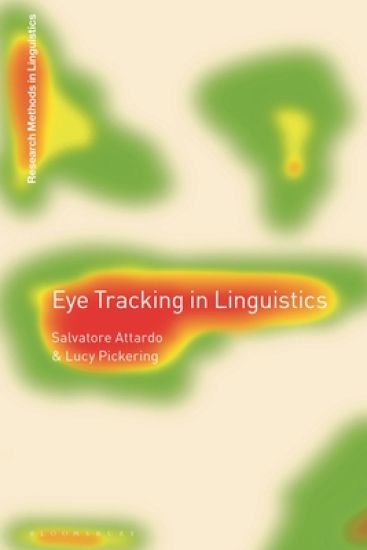
Eye Tracking in Linguistics

Eye Tracking in Linguistics

Salvatore Attardo; Lucy Pickering

BLOOMSBURY PUBLISHING PLC
2023
sidottu
What is eye tracking? Why is it important for linguistics? How can I use it in my own research project? Answering these questions and more, this book guides you through one of the most exciting and innovative research methods in the field of linguistics. Divided into three parts, the chapters first offer an historical introduction and a foundational overview to the neurology and physiology of the eye and the common measurements and tools used in eye tracking. They then provide a guide to the applications of eye tracking most pertinent to linguists (reading, the visual-world paradigm, social eye tracking, and classroom applications), followed by a step-by-step process to plan, execute, analyze and report your research project in eye tracking. The book covers topics such as reading, lexical and syntactic processing, mind wandering, second language acquisition, and AAC devices, and includes statistical tools and how to write up results. Each chapter also includes self-study questions and a range of applied case studies. Supported by a glossary of key terms, suggestions for further reading, and material to aid self-study, Eye Tracking in Linguistics is the only book you need to provide a solid foundation for your own research project.
Eye Tracking in Linguistics

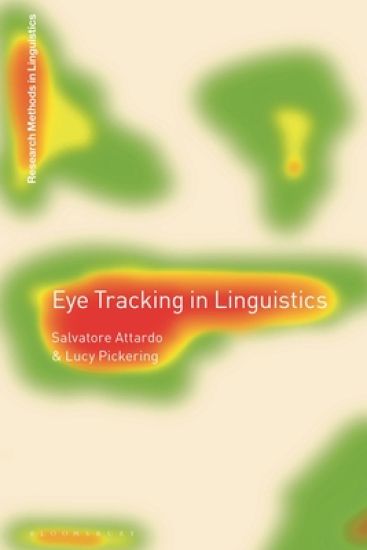
Eye Tracking in Linguistics

Salvatore Attardo; Lucy Pickering

BLOOMSBURY PUBLISHING PLC
2023
nidottu
What is eye tracking? Why is it important for linguistics? How can I use it in my own research project? Answering these questions and more, this book guides you through one of the most exciting and innovative research methods in the field of linguistics. Divided into three parts, the chapters first offer an historical introduction and a foundational overview to the neurology and physiology of the eye and the common measurements and tools used in eye tracking. They then provide a guide to the applications of eye tracking most pertinent to linguists (reading, the visual-world paradigm, social eye tracking, and classroom applications), followed by a step-by-step process to plan, execute, analyze and report your research project in eye tracking. The book covers topics such as reading, lexical and syntactic processing, mind wandering, second language acquisition, and AAC devices, and includes statistical tools and how to write up results. Each chapter also includes self-study questions and a range of applied case studies. Supported by a glossary of key terms, suggestions for further reading, and material to aid self-study, Eye Tracking in Linguistics is the only book you need to provide a solid foundation for your own research project.
Pragmatics and its Applications to TESOL and SLA

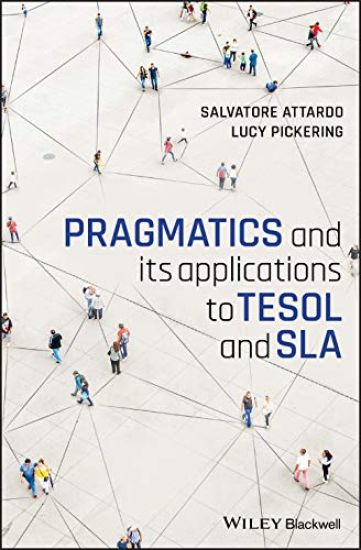
Pragmatics and its Applications to TESOL and SLA

Salvatore Attardo; Lucy Pickering

Wiley-Blackwell
2021
nidottu
A concise introduction to the field of theoretical pragmatics and its applications in second language acquisition and English-language instruction Pragmatics and its Applications to TESOL and SLA offers an in-depth description of key areas of linguistic pragmatics and a review of how those topics can be applied to pedagogy in the fields of second language acquisition (SLA) and teaching English to speakers of other languages (TESOL). This book is an excellent resource for students and professionals who have an interest in teaching pragmatics (speech acts, the cooperative principle, deixis, politeness theory, and more) in second language contexts. This book introduces technical terminology and concepts—including the fundamentals of semantics and semiotics—in simple language, and it provides illuminating examples, making it an excellent choice for readers with an elementary linguistics background who wish to further their knowledge of pragmatics. It also covers more advanced pragmatics topics, including stance, indexicality, and pragmatic appropriateness. Key features include: A comprehensive introduction to pragmatics, covering meaning, speech acts, the cooperation principle, politeness, metapragmatics, and moreA unique orientation toward practical application in second language acquisition studies and English-language instructionTwo-part chapters clearly separating theoretical introductions from concrete, real-world applications of the theoryThorough coverage that is accessible to both students and professionals currently teaching English to speakers of other languages, including sample lesson plansPractical chapters on the interface between pragmatics and teaching, and on research design Pragmatics and its Applications to TESOL and SLA is a comprehensive and coherent introduction, perfect for students, researchers, and scholars of pragmatics, second language acquisition, language teaching, and intercultural communication. It is also an excellent resource for professionals in the field of English-language education.
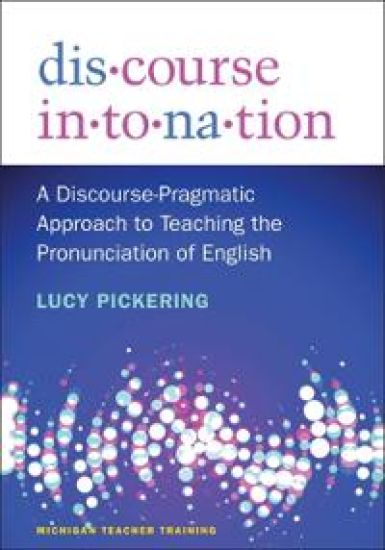
Discourse Intonation

Discourse Intonation

Lucy Pickering

The University of Michigan Press
2018
nidottu
This textbook is an accessible introduction to discourse intonation for ESL/EFL instructors, whether practicing or in pre-service graduate programs. Because intonation is used to form impressions about a speaker’s attitude, it is crucial that instructors understand the details of the underlying linguistic system so that they can help students avoid the more common intonation-related pitfalls they experience when communicating in an academic setting. This textbook relies heavily on the Brazil model; chapters are organized around different parts of that model and how they can be most effectively taught. Readers will learn the conventions underlying, for example, how we group words in prosodic units, how we understand turn-taking cues in conversation, and how we assess whether someone is feeling angry or sad. This text features Check Your Learning sections, discussion questions, and hands-on activities at the end of every chapter. Chapters 3-9 also include a section on pedagogical implications. Some of the example sentences that illustrate intonation have accompanying short audio (MP3) files, which can be found online at www.press.umich.edu/elt/compsite/DI.