Kirjojen hintavertailu – 12 859 819 kirjaa ja 27 kauppaa
Kirjailija
Ludovico Maria Sinistrari
Kirjat ja teokset yhdessä paikassa: 12 kirjaa, julkaisuja vuosilta 2009–2024, suosituimpiin kuuluu Demoniality. Vertaile teosten hintoja ja tarkista saatavuus suomalaisista kirjakaupoista.
De la d monialit des animaux incubes et succubes, un livre classique, a t consid r comme important tout au long de l'histoire de l'humanit , et pour que cet ouvrage ne soit jamais oubli , chez Alpha Editions, nous avons fait des efforts pour sa pr servation en r ditant ce livre dans un format moderne pour les g n rations pr sentes et futures. Tout ce livre a t reformat , retap et con u. Ces livres ne sont pas constitu s de copies num ris es de leur oeuvre originale et le texte est donc clair et lisible.
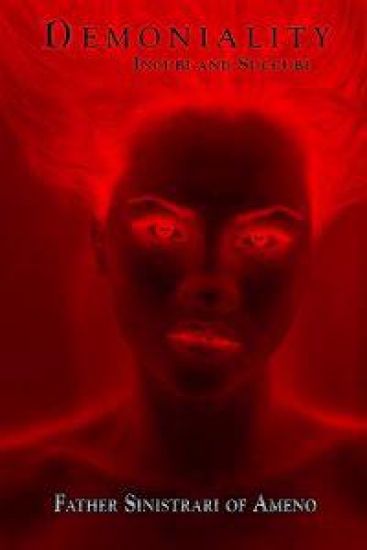
This 17th century treatise on demonology, written by the respected theologian, Catholic priest, and exorcist, Rev. Father Sinistrari, examines a particular class of spirits known as the incubus and succubus. These minor demons crave sex and often attack their victims while they sleep. Though incubus and succubus are considered less dangerous than possessing demons, they can be relentless in pursuit of their desire and grow violent when resisted. Demoniality advances novel theories about occult biology, claiming demons can reanimate corpses to have sex and impregnate victims with demonic seed to produce offspring who are "tall, hardy, bold and wicked." An expert on witchcraft and sexual sin, Rev. Father Sinistrari included sections on related phenomena, including: bestiality, necrophilia, demonic pacts, witchcraft, witches' marks, devil worship and magical beings such as fauns, centaurs and elves. Father Sinistrari was a learned Franciscan Friar who used deductive reasoning to examine the characteristics of the spirit world. For example, do demons have mass? He concludes they do, but determines they are porous-allowing for their supernatural feats of passing through objects and appearing from nowhere. He also classified the demonic spirits by their actions, explaining that some seek out corrupt pacts with witches or wizards, while others are parasitic and indiscriminately attack the innocent. As a primer on demonic behavior, Demonality is extremely detailed. Father Sinistrari was schooled in the sciences of the time, including herbalism, alchemy, elements, humors and the symptoms of witchcraft-even serving as an advisor to the notorious Inquisition. Because of this, he focuses on diagnoses and remedies to expel the pests, using his alchemical knowledge to devise herbal formulas for countering a demon's specific elemental nature. These elaborate herbal recipes are similar to the elixirs found in a magician's grimoire or a witch's book of shadows. The title of the book is a play on the word bestiality, which conveys Father Sinistrari's belief that copulating with demons is, similarly, a sinful act and a crime. But while incubus and succubus are spirits doing evil deeds, Father Sinistrari is not dismissive of their salvation. He advances the theological argument that these minor demons have souls, and can be saved from damnation. He distinguishes them from the more vulgar type that tend to possess humans in terrifying displays. As proof, he shows how this latter class of demon greatly fears religious relics, while incubus and succubus do not object when in their presence: clear evidence, according to Sinistrari, that they are not damned, but are likely in limbo. As a prominent exorcist of his time, Father Sinistrari encountered victims of demonic activity on a regular basis. Many of the afflicted were, ironically, nuns and priests in the service of God or people under their care. In one story, a young maiden of noble birth is romantically pursued by a spirit that, out of frustration with her chastity, finally attacks her. Another story involves a nun who disappeared to her cell where two voices are heard along with groaning and the creaking of her bed. A rival nun drilled a hole through the partition to see an attractive young man lying with her sister who mysteriously disappeared when the two were confronted. References to demonic attack were carved into stone four thousand years ago long before Jesus Christ, the greatest exorcist of them all, walked the earth. As Christianity took hold, encounters with these entities were often laid out in moral terms. Father Sinistrari took a different approach: applying reason to understand this curious phenomenon along with theology, history and science. The result is this interesting treatise.
This 17th century treatise on demonology, written by the respected theologian, Catholic priest, and exorcist, Rev. Father Sinistrari, examines a particular class of spirits known as the incubus and succubus. These minor demons crave sex and often attack their victims while they sleep. Though incubus and succubus are considered less dangerous than possessing demons, they can be relentless in pursuit of their desire and grow violent when resisted. Demoniality advances novel theories about occult biology, claiming demons can reanimate corpses to have sex and impregnate victims with demonic seed to produce offspring who are "tall, hardy, bold and wicked." An expert on witchcraft and sexual sin, Rev. Father Sinistrari included sections on related phenomena, including: bestiality, necrophilia, demonic pacts, witchcraft, witches' marks, devil worship and magical beings such as fauns, centaurs and elves. Father Sinistrari was a learned Franciscan Friar who used deductive reasoning to examine the characteristics of the spirit world. For example, do demons have mass? He concludes they do, but determines they are porous-allowing for their supernatural feats of passing through objects and appearing from nowhere. He also classified the demonic spirits by their actions, explaining that some seek out corrupt pacts with witches or wizards, while others are parasitic and indiscriminately attack the innocent. As a primer on demonic behavior, Demonality is extremely detailed. Father Sinistrari was schooled in the sciences of the time, including herbalism, alchemy, elements, humors and the symptoms of witchcraft-even serving as an advisor to the notorious Inquisition. Because of this, he focuses on diagnoses and remedies to expel the pests, using his alchemical knowledge to devise herbal formulas for countering a demon's specific elemental nature. These elaborate herbal recipes are similar to the elixirs found in a magician's grimoire or a witch's book of shadows. The title of the book is a play on the word bestiality, which conveys Father Sinistrari's belief that copulating with demons is, similarly, a sinful act and a crime. But while incubus and succubus are spirits doing evil deeds, Father Sinistrari is not dismissive of their salvation. He advances the theological argument that these minor demons have souls, and can be saved from damnation. He distinguishes them from the more vulgar type that tend to possess humans in terrifying displays. As proof, he shows how this latter class of demon greatly fears religious relics, while incubus and succubus do not object when in their presence: clear evidence, according to Sinistrari, that they are not damned, but are likely in limbo. As a prominent exorcist of his time, Father Sinistrari encountered victims of demonic activity on a regular basis. Many of the afflicted were, ironically, nuns and priests in the service of God or people under their care. In one story, a young maiden of noble birth is romantically pursued by a spirit that, out of frustration with her chastity, finally attacks her. Another story involves a nun who disappeared to her cell where two voices are heard along with groaning and the creaking of her bed. A rival nun drilled a hole through the partition and saw an attractive young man lying with her sister who mysteriously disappeared when the two were confronted. References to demonic attack were carved into stone four thousand years ago long before Jesus Christ, the greatest exorcist of them all, walked the earth. As Christianity took hold, encounters with these entities were often laid out in moral terms. Father Sinistrari took a different approach: applying reason to understand this curious phenomenon along with theology, history and science. The result is this interesting treatise.
O padre Ludovico Maria Sinistrari nasceu na It lia, na localidade de Ameno, regi o de Novara, no dia 26 de fevereiro de 1622. Estudou letras em P via e entrou para a Ordem dos Franciscanos em 1647. Foi professor de filosofia e teologia, desfrutando de algum renome, mas interessou-se principalmente pelo estudo do direito (tanto can nico quanto civil). Foi consultor do Supremo Tribunal da Santa Inquisi o, em Roma, e encarregado da reda o dos novos estatutos da sua Ordem, falecendo em 6 de mar o de 1701. Seu "Tratado da Sodomia", que integrava uma grande obra sobre os delitos e as penas (publicada em 1700), basicamente um manual de consulta para os confessores, a fim de orient -los na puni o desse crime - um dos mais graves, do ponto de vista da Igreja Cat lica. Riqu ssima fonte de informa es para soci logos, juristas e historiadores, esse tratado se notabiliza pela grande aten o conferida sodomia praticada ativamente pelas mulheres (por interm dio do clit ris).