Kirjojen hintavertailu – 12 903 725 kirjaa ja 27 kauppaa

Kirjailija

Ludvig Beckman

Kirjat ja teokset yhdessä paikassa: 9 kirjaa, julkaisuja vuosilta 2001–2025, suosituimpiin kuuluu Den rimliga integrationen. Vertaile teosten hintoja ja tarkista saatavuus suomalaisista kirjakaupoista.

9 kirjaa

Kirjojen julkaisuvuodet: 2001–2025.

Fundamentala frågor: Konstitutionella utmaningar i förändringens tid

Fundamentala frågor: Konstitutionella utmaningar i förändringens tid

Shirin Ahlbäck Öberg; Ludvig Beckman; Johan Hirschfeldt; Anna Jonsson Cornell; Johannes Lindvall; Jan Teorell; Henrik Wenander

Fri Tanke
2025
sidottu
Det finns frågor som kan tyckas så givna att man knappt ska behöva tänka på dem. Den svenska konstitutionen tillhör säkerligen en sådan. Men i länder inte långt från vårt eget, som Ungern och Polen, har konstitutionen rivits upp alarmerande snabbt och med stora konsekvenser som följd. Villkoren för vår demokratiska offentlighet befinner sig i förändring. Och när hjulen snurrar allt snabbare, anklagas författningen stundtals för att inte hänga med. Måste vi slå vakt om grundlagen – eller anpassa den till en ny verklighet? Fundamentala frågor är en angelägen och prövande samling texter som värnar om nyanser i en samtid som ofta präglas av kravet på att välja sida. I åtta bidrag från några av landets mest insatta akademiker och yrkesutövare kokas frågorna ner till sin essens.

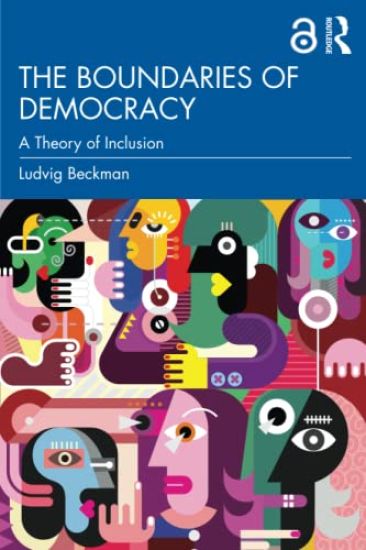
The Boundaries of Democracy

The Boundaries of Democracy

Ludvig Beckman

TAYLOR FRANCIS LTD
2022
sidottu
This book provides a general theory of democratic inclusion for the present world. It presents an original contribution to our understanding of the democratic ideal by explaining how democratic inclusion can apply to individuals in a variety of contexts: the workplace, social clubs, religious institutions, the family, and, of course, the state. The book explores the problem of democratic inclusion, what it means to be subject to de facto authority, how this conception translates into legal systems, and the relationship between territorial claims by the state, and law’s claim to legitimate authority. The volume will be of interest to scholars and researchers of politics, especially political theory and democracy.
The Boundaries of Democracy

The Boundaries of Democracy

Ludvig Beckman

TAYLOR FRANCIS LTD
2022
nidottu

Halvin toimitettuna 52,20 €

This book provides a general theory of democratic inclusion for the present world. It presents an original contribution to our understanding of the democratic ideal by explaining how democratic inclusion can apply to individuals in a variety of contexts: the workplace, social clubs, religious institutions, the family, and, of course, the state. The book explores the problem of democratic inclusion, what it means to be subject to de facto authority, how this conception translates into legal systems, and the relationship between territorial claims by the state, and law’s claim to legitimate authority. The volume will be of interest to scholars and researchers of politics, especially political theory and democracy.
All makt åt folket : om en bortglömd idé
Från höger och vänster framträder just nu rörelser i Sverige och i många andra länder som anser sig tala för folket. Att all politisk makt utgår från folket kallas med ett hävdvunnet uttryck för folksuveränitet och är den självklara utgångspunkten i en demokrati. Men vilka är ”folket” i folkstyret? En förvirrande situation har uppstått där föreställningen om det suveräna folket underblåser kritiken mot demokratins, folkstyrets, organisering. Så hur kan och bör vi förstå demokratins löfte om att makten utgår från folket? All makt åt folket ger läsaren ögonöppnande perspektiv och redskap till ett kritiskt – och självkritiskt – granskande av demokratins mest grundläggande princip.
The Liberal State and the Politics of Virtue
At the start of the new millennium there has been a growing awareness that traditional political institutions and ideologies do not correspond to the demands and aspirations held by many individuals and groups. Ideals and interests previously without much impact on the political debate have gained access to the public arena. These new claims include demands for recognition of homosexuals and their rights, affirmation of the particularities of indigenous peoples, sensitivity to the cultures and languages of immigrants, respect for children and their needs, solidarity with people of the developing countries and their fight for independence, care for nature, animals, attention to the social status of women, and so on. As a consequence, many governments now regulate and support many different conceptions of the good life and its virtues. In this volume, schematically divided into two parts, Ludvig Beckman challenges the common view that support for the good life, the politics of virtue, is in conflict with liberal principles. In clear, analytical language he addresses the question of what a state should do. Chapter 1 attempts to specify the meaning of "liberalism"; chapter 2 discusses the meaning of tolerance and makes more specific the notion of "virtue"; chapters 3 and 4 assess ethical and political liberalism as exemplified by the writings of Ronald Dworkin and John Rawls. In part two, chapter 5 discusses the clash between norms of justice and conceptions of virtue in the family; chapter 6 explores the meaning of the idea of an ethically neutral state; chapter 7 explores three different arguments for the neutral state as found in the work of Ronald Dworkin; chapter 8 presents an analysis of the idea of the neutral state with the theory of John Rawls put under scrutiny; chapter 9 explains why the attempt to justify the neutral state by referring to modified skepticism fails and proposes a distinction between being skeptical and being critical. Participating in the current debate on communitarianism, The Liberal State and the Politics of Virtue will be particularly interesting to people engaged in the public debate on ethics, morality and the state. It will also be of interest to teachers and researchers in the fields of politics and philosophy.
Den rimliga integrationen

Den rimliga integrationen

Ludvig Beckman

Dialogos Förlag
2011
nidottu
I Sverige och i många länder talas det om vikten av integration. Men vilka är det som behöver integreras och vad kan integration betyda i ett demokratiskt samhälle? I denna bok analyseras en rad definitioner av och påståenden om vad integration innebär. En del har hävdat att integration kan betyda precis vad som helst. Andra har hävdat att integration handlar om en gemensam identitet och att motverka sociala klyftor mellan invånarna. I en tid av ökad migration och mångfald måste dessa frågor emellertid ständigt ställas på nytt. Vilka likheter, vilken likabehandling, hur mycket tillsammans kräver integrationen av invånarna i ett samhälle? Det behövs en ny förståelse av integration en rimlig integration. I boken försvaras uppfattningen att integrationen handlar om relationerna mellan invånarna i ett samhälle: den handlar om att leva tillsammans som jämlikar. Ludvig Beckman är docent i statsvetenskap vid Stockholms universitet.
Texter i samtida politisk teori

Texter i samtida politisk teori

Maria Carbin; Jouni Reinikainen; Maria Wendt Höjer; Ulf Mörkenstam; Sofia Näsström; Ludvig Beckman

Liber
2009
nidottu
Hur bör samhället bäst organiseras? Det övergripande syftet med den här antologin är att presentera ett antal originaltexter som återspeglar den samtida debatten. Frågor om relationen mellan demokrati och globalisering, om det mångkulturella samhället och om sexualiserat våld mot kvinnor har det senaste decenniet fått allt större utrymme i den offentliga debatten. Ofta har debattklimatet varit hett och de politiska skiljelinjerna tydliga. Antologin Texter i samtida politisk teori aktualiserar bl.a. dessa frågor ur ett teoretiskt perspektiv. Om författarnaBokens samtliga redaktörer är verksamma vid Statsvetenskapliga institutionen, Stockholms universitet.
Grundbok i idéanalys - Det kritiska studiet av politiska texter och idéer
Överallt där diskussion förs om vad staten bör och inte bör göra, vad frihet och rättvisa är, varför lagar bör ändras, stiftas eller avskaffas, pågår en strid mellan politiska idéer och föreställningar. Politiska idéer formar människors övertygelser, sympatier och strävanden och har utan tvekan stor betydelse för samhällets utveckling. Därför är det angeläget att analysera och kritiskt granska de politiska budskap som framförs. Men för att inte hemfalla till retorik eller ogrundat tyckande kräver analysen en metod, en teknik. Det är avgörande skillnad mellan att framföra politiska budskap och att granska dem, mellan att argumentera för en politisk ideologi och att studera ideologiernas argumentation. Det finns alltså goda skäl att uppmärksamma innebörden av idéanalys som en metod varmed politiska texter och uttalanden kan studeras på ett mer systematiskt sätt. Boken vänder sig till universitets- och högskolestuderande i statskunskap och praktisk filosofi men är naturligtvis en vägledning till ökat kritiskt tänkande för vem som än önskar sig det.
The Liberal State and the Politics of Virtue

The Liberal State and the Politics of Virtue

Ludvig Beckman

Transaction Publishers
2001
sidottu
At the start of the new millennium there has been a growing awareness that traditional political institutions and ideologies do not correspond to the demands and aspirations held by many individuals and groups. Ideals and interests previously without much impact on the political debate have gained access to the public arena. These new claims include demands for recognition of homosexuals and their rights, affirmation of the particularities of indigenous peoples, sensitivity to the cultures and languages of immigrants, respect for children and their needs, solidarity with people of the developing countries and their fight for independence, care for nature, animals, attention to the social status of women, and so on. As a consequence, many governments now regulate and support many different conceptions of the good life and its virtues. In this volume, schematically divided into two parts, Ludvig Beckman challenges the common view that support for the good life, the politics of virtue, is in conflict with liberal principles. In clear, analytical language he addresses the question of what a state should do. Chapter 1 attempts to specify the meaning of "liberalism"; chapter 2 discusses the meaning of tolerance and makes more specific the notion of "virtue"; chapters 3 and 4 assess ethical and political liberalism as exemplified by the writings of Ronald Dworkin and John Rawls. In part two, chapter 5 discusses the clash between norms of justice and conceptions of virtue in the family; chapter 6 explores the meaning of the idea of an ethically neutral state; chapter 7 explores three different arguments for the neutral state as found in the work of Ronald Dworkin; chapter 8 presents an analysis of the idea of the neutral state with the theory of John Rawls put under scrutiny; chapter 9 explains why the attempt to justify the neutral state by referring to modified skepticism fails and proposes a distinction between being skeptical and being critical. Participating in the current debate on communitarianism, The Liberal State and the Politics of Virtue will be particularly interesting to people engaged in the public debate on ethics, morality and the state. It will also be of interest to teachers and researchers in the fields of politics and philosophy.