
Kirjailija
Ludwig Hohl
Kirjat ja teokset yhdessä paikassa: 8 kirjaa, julkaisuja vuosilta 2022–2024, suosituimpiin kuuluu The Notes. Vertaile teosten hintoja ja tarkista saatavuus suomalaisista kirjakaupoista.
8 kirjaa
Kirjojen julkaisuvuodet: 2022–2024.


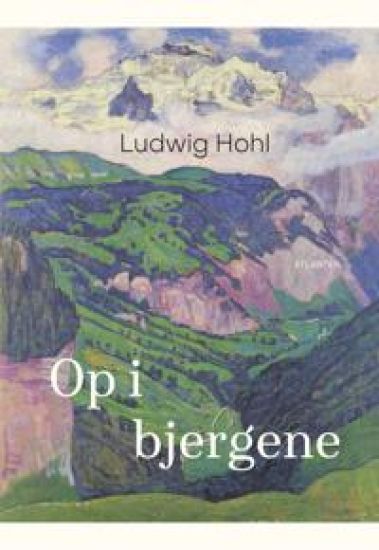
Var kærligheden til hende større end den til bjergene? Det var en anderledes form for kærlighed. Bjergenehavde han nu, eller rettere: De havde ham. De omgavham, hele vejen rundt; glitrede i det almægtige solskinog ragede op i det uvisse. I schweiziske Ludwig Hohls (1904-1980) lille roman Op i bjergene møder vi Ull og Johann, der har sat sig for at bestige et bjerg i Alperne. De er meget forskellige, de to. Ull er en god bjergbestiger, Johann en da°rlig; Ull er handlekraftig, Johann melankolsk; Ull har modet til at fortsatte, Johann vender om. Herfra følger vi de to: Ull pa° vej op og Johann pa° vej ned.
A collection of illuminating observations on life and art, from an acclaimed Swiss modernist “[Tess Lewis’s] translation is worthy of her willfully demanding subject, leaping between what Hohl calls the ‘incandescence’ of the aphorism and, in his dream narratives and miniature fairy tales, a shadowy beauty reminiscent of his better-known compatriot Robert Walser.”—Max Norman, Wall Street Journal “The Notes should be celebrated: it is wonderful that this volume of [Hohl’s] compact, aphoristic observations has finally arrived in English.”—Alexandra Sattler, Arts Fuse Revered by Bertolt Brecht and Max Frisch as one of Switzerland’s most commanding writers, Ludwig Hohl spent most of his waking hours with a pen in hand, collecting quotes from others and recording ruminations of his own. Composed between 1934 and 1936 during his residence in the Netherlands in a state of “extreme spiritual desolation,” The Notes is Hohl’s magnum opus: an assemblage of his epiphany-like observations, disparate in subject yet threaded together by a relentless exploration of the nature and origins of creativity. Inspired by Spinoza, Goethe, and many others, The Notes contends with the purpose of work, the vitality of art, and the inevitability of death—a valiant, uncompromising exercise in hope against the devastating backdrop of twentieth-century Europe. This abridged edition, expertly translated by Tess Lewis and with an illuminating foreword by Joshua Cohen, introduces the reader to this remarkable work and its writer.