

Kirjailija
Ludwig Mises
Kirjat ja teokset yhdessä paikassa: 26 kirjaa, julkaisuja vuosilta 1932–2023, suosituimpiin kuuluu Interventionism. Vertaile teosten hintoja ja tarkista saatavuus suomalaisista kirjakaupoista.
26 kirjaa
Kirjojen julkaisuvuodet: 1932–2023.

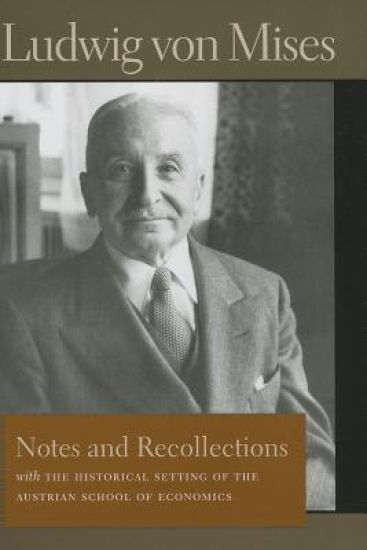
Published for the first time together in one volume is Ludwig von Mises's Notes and Recollections with The Historical Setting of the Austrian School of Economics. Written between 1940 and 1941, shortly after he arrived in the United States, Notes and Recollections is in effect Mises's pre-1940 intellectual autobiography. This work reveals how Mises developed his theories, wrote his books, lectured, and taught; it describes his life in Vienna and the people with whom he worked. He also discusses his activities as an adviser to Austrian government officials and his frustrations in attempting to keep inflation and communist and Nazi ideas from destroying the Austrian economy. The Historical Setting of the Austrian School of Economics is an essay originally published in English in 1969 that reveals Mises's intellectual development in the context of the origins of the Austrian School. It serves as a good introduction to the theory and history of the Austrian School. As Mises explains in these two works, his viewpoint that modern economics is based on subjective value and marginal-utility theory separated him from classical economists such as Adam Smith, David Ricardo, and John Stuart Mill.
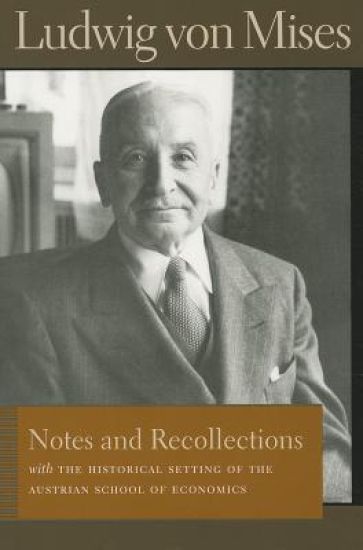
Published for the first time together in one volume is Ludwig von Mises's Notes and Recollections with The Historical Setting of the Austrian School of Economics. Written between 1940 and 1941, shortly after he arrived in the United States, Notes and Recollections is in effect Mises's pre-1940 intellectual autobiography. This work reveals how Mises developed his theories, wrote his books, lectured, and taught; it describes his life in Vienna and the people with whom he worked. He also discusses his activities as an adviser to Austrian government officials and his frustrations in attempting to keep inflation and communist and Nazi ideas from destroying the Austrian economy. The Historical Setting of the Austrian School of Economics is an essay originally published in English in 1969 that reveals Mises's intellectual development in the context of the origins of the Austrian School. It serves as a good introduction to the theory and history of the Austrian School. As Mises explains in these two works, his viewpoint that modern economics is based on subjective value and marginal-utility theory separated him from classical economists such as Adam Smith, David Ricardo, and John Stuart Mill.
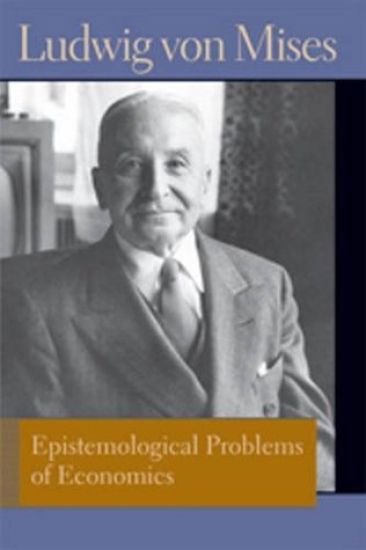
Epistemological Problems of Economics
Ludwig Mises; Bettina Bien Greaves
Liberty Fund Inc
2013
sidottu
First published in German in 1933 and in English in 1960, Epistemological Problems of Economics presents Ludwig von Mises's views on the logical and epistemological features of social interpretation as well as his argument that the Austrian theory of value is the core element of a general theory of human behavior that transcends traditional limitations of economic science. Epistemological Problems of Economics presents the first outline of Mises's general science of human action, and may, therefore, be of special interest to individuals with knowledge in sociology or philosophy or those who are seeking a suitable initiation to Mises's thought. This volume is unique among Mises's works in that it contains a collection of essays in which he contested the theories of intellectuals he respected, such as Carl Menger, Eugen von Böhm-Bawerk, and Max Weber. Mises describes how value theory applies to human action at all times and places, as opposed to economic theory, which applies only to human action guided by economic calculation.
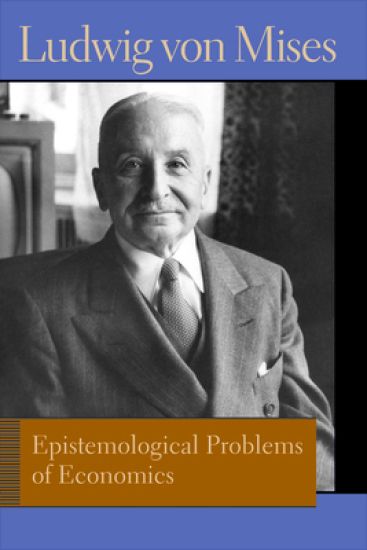
Epistemological Problems of Economics
Ludwig Mises; Bettina Bien Greaves
Liberty Fund Inc
2013
nidottu
First published in German in 1933 and in English in 1960, Epistemological Problems of Economics presents Ludwig von Mises's views on the logical and epistemological features of social interpretation as well as his argument that the Austrian theory of value is the core element of a general theory of human behavior that transcends traditional limitations of economic science. Epistemological Problems of Economics presents the first outline of Mises's general science of human action, and may, therefore, be of special interest to individuals with knowledge in sociology or philosophy or those who are seeking a suitable initiation to Mises's thought. This volume is unique among Mises's works in that it contains a collection of essays in which he contested the theories of intellectuals he respected, such as Carl Menger, Eugen von Böhm-Bawerk, and Max Weber. Mises describes how value theory applies to human action at all times and places, as opposed to economic theory, which applies only to human action guided by economic calculation.
On the Manipulation of Money & Credit
Ludwig Mises; Bettina Bien Greaves
Liberty Fund Inc
2011
sidottu
Published by Liberty Fund for the first time in English, "On the Manipulation of Money and Credit" consists primarily of three pieces on monetary theory written by Ludwig von Mises between 1923 and 1931. As a precursor to Human Action, Mises's magnum opus, this volume includes some of his most important contributions to trade-cycle theory. The first essay, "Stabilization of the Monetary Unit from the Viewpoint of Theory" written in 1923 during a period of German hyperinflation, discusses the consequences of the fluctuating purchasing power of paper money and explores such ideas as the outcome of inflation, that is, the result of the increase in the amount of money, and an emancipation of monetary value from the influence of government. Written in 1928, the second essay, "Monetary Stabilization and Cyclical Policy" critiques schemes for stabilising prices and for "measuring" purchasing power. The third selection is a speech Mises gave in 1931, "The Causes of the Economic Crisis". It explores the nature and role of the market and cyclical changes in business conditions.
On the Manipulation of Money & Credit
Ludwig Mises; Bettina Bien Greaves
Liberty Fund Inc
2011
nidottu
Published by Liberty Fund for the first time in English, "On the Manipulation of Money and Credit" consists primarily of three pieces on monetary theory written by Ludwig von Mises between 1923 and 1931. As a precursor to Human Action, Mises's magnum opus, this volume includes some of his most important contributions to trade-cycle theory. The first essay, "Stabilization of the Monetary Unit from the Viewpoint of Theory" written in 1923 during a period of German hyperinflation, discusses the consequences of the fluctuating purchasing power of paper money and explores such ideas as the outcome of inflation, that is, the result of the increase in the amount of money, and an emancipation of monetary value from the influence of government. Written in 1928, the second essay, "Monetary Stabilization and Cyclical Policy" critiques schemes for stabilising prices and for "measuring" purchasing power. The third selection is a speech Mises gave in 1931, "The Causes of the Economic Crisis". It explores the nature and role of the market and cyclical changes in business conditions.
Published in 1944, during World War II, Omnipotent Government was Mises's first book written and published after he arrived in the United States. In this volume Mises provides in economic terms an explanation of the international conflicts that caused both world wars. Although written more than half a century ago, Mises's main theme still stands: government interference in the economy leads to conflicts and wars. According to Mises, the last and best hope for peace is liberalism -- the philosophy of liberty, free markets, limited government, and democracy.
Interventionism provides Mises's analysis of the problems of government interference in business from the Austrian-school perspective. Written in 1940, before the United States was officially involved in World War II, this book offers a rare insight into the war economies of Hitler's Germany and Mussolini's Italy. Mises criticises the pre-World War II democratic governments for favouring socialism and interventionism over capitalist methods of production. Mises contends that government's economic role should be limited because of the negative political and social consequences of the economic policy of interventionism.
"Economic Policy" contains six lectures Ludwig von Mises delivered in 1959 at the Centro de Estudios Sobre la Libertad in Argentina. The lectures were posthumously transcribed by Mises's wife, Margit, and edited by George Koether, a student and long-time friend of Mises. This volume serves as an excellent introduction to what Mises sees as the simple truths of history in terms of economic principles. In straightforward language, Mises explains topics such as capitalism, socialism, interventionism, inflation, foreign investment, and economic policies and ideas.
In this anthology, Mises offers an articulate and accessible introduction to and critique of two topics he considers especially important: inflation and government interventionism. According to Mises, inflation, that is monetary expansion, is destructive; it destroys savings and investment, which are the basis for production and prosperity. Government controls and economic planning never accomplish what their proponents intend. Mises consistently argues that the solution to government intervention is free markets and free enterprise, which call for reforming government. For that, ideas must be changed to "let the market system work". There is no better "planning for freedom" than this.
4 books in slipcase. Mises attributes the tremendous technological progress and the consequent increase in wealth and general welfare in the last two centuries to the introduction of liberal government policies based on free-market economic teachings, creating an economic and political environment which permits individuals to pursue their respective goals in freedom and peace. Mises also explains the futility and counter-productiveness of government attempts to regulate, control, and equalise all people's circumstances: "Men are born unequal and... it is precisely their inequality that generates social cooperation and civilisation."
Originally published by Yale University Press in 1944, 'Bureaucracy' is a classic fundamental examination of the nature of bureaucracies and free markets in juxtaposition to various political systems. 'Bureaucracy' contrasts the two forms of economic management -- that of a free market economy and that of a bureaucracy. In the market economy entrepreneurs are driven to serve consumers by their desire to earn profits and to avoid losses. In a bureaucracy, the managers must comply with orders issued by the legislative body under which they operate; they may not spend without authorisation and they may not deviate from the path prescribed by law. Writing in an age of exuberant socialism, Ludwig von Mises here lucidly demonstrates how the efficiencies of private ownership and control of public good production ultimately trump the guesswork of publicly administered 'planning' through codes and 'officialdom'. Although Mises aptly critiques bureaucracy and expounds thoroughly upon the immense power of law-like codes of commissions and administrations, he does not condemn nor dismiss bureaucracy but rather frames its proper bounds within constitutional democratic governments.
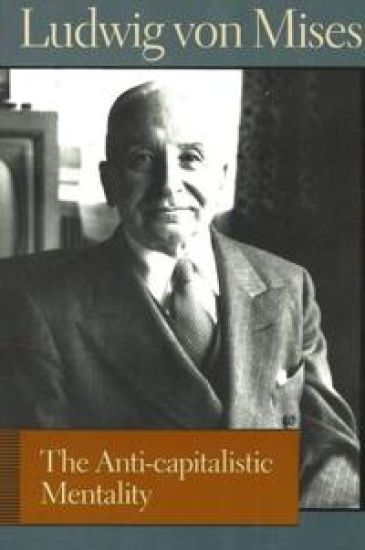
In The Anti-capitalistic Mentality, the respected economist Ludwig von Mises plainly explains the causes of the irrational fear and hatred many intellectuals and others feel for capitalism. In five concise chapters, he traces the causation of the misunderstandings and resultant fears that cause resistance to economic development and social change. He enumerates and rebuts the economic arguments against and the psychological and social objections to economic freedom in the form of capitalism. Written during the heyday of twentieth-century socialism, this work provides the reader with lucid and compelling insights into human reactions to capitalism.
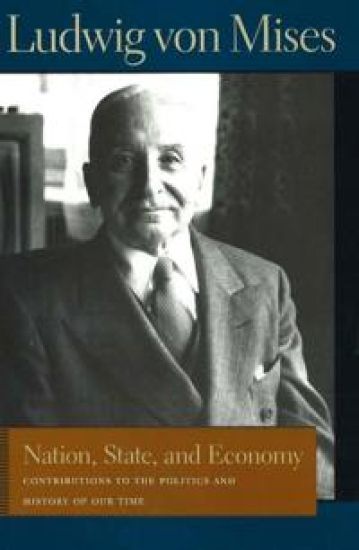
Published less than a year after Austria's defeat in World War I, "Nation, State, and Economy", examines and compares pre-war and post-war economic conditions and explicates Mises's theory that each country's prosperity supports rather than undercuts the prosperity of other countries. Mises's humanitarian recommendations in this book, born from a classical liberal perspective, provide a striking example of how supposedly "hardnosed" economic theory, based on the reality of experience, is in fact far more supportive of human flourishing than seemingly more "idealistic" but actually impractical social theories. Specifically, Mises warned of the consequences of the punitive terms of the Treaty of Versailles by victors more interested in punishing their defeated enemies than in building a Europe that would be able to meet the challenges of the future. With the benefit of hindsight we see how different European and world history might have been.
Published less than a year after Austria's defeat in World War I, "Nation, State, and Economy", examines and compares pre-war and post-war economic conditions and explicates Mises's theory that each country's prosperity supports rather than undercuts the prosperity of other countries. Mises's humanitarian recommendations in this book, born from a classical liberal perspective, provide a striking example of how supposedly "hardnosed" economic theory, based on the reality of experience, is in fact far more supportive of human flourishing than seemingly more "idealistic" but actually impractical social theories. Specifically, Mises warned of the consequences of the punitive terms of the Treaty of Versailles by victors more interested in punishing their defeated enemies than in building a Europe that would be able to meet the challenges of the future. With the benefit of hindsight we see how different European and world history might have been.
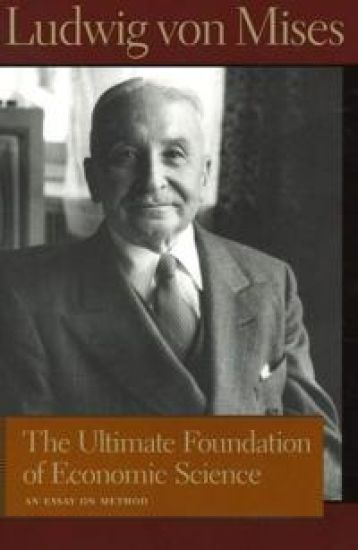
Written toward the end of Mises's life, his last monograph, The Ultimate Foundation of Economic Science, returned to science, economics as a science based on human action. Mises believed that, since the publication of Human Action, economists and scientists alike had misinterpreted the idea of economics as a science by deeming it epistemological positivism -- that they believed that the "science" basis was still more rooted in philosophy than in actual science. In this volume, Mises argued that economics is a science because human action is a natural order of life and that it is the actions of humans that determine markets and capital decisions. Since Mises believed these links could be proven scientifically, he concluded that economics, with its basis on that human action, is indeed a science in its own right and not an ideology or a metaphysical doctrine. What has been described as his most passionate work, The Ultimate Foundation of Economic Science brings together all of the themes from Mises's previous work.
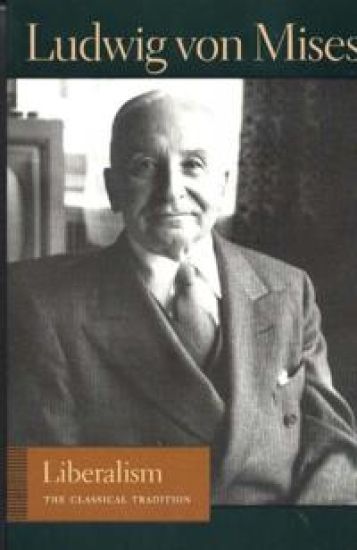
Presents the theoretical and practical arguments for liberalism. The term comes from the Latin word 'liber' (free). Mises defines liberalism as 'the liberal doctrine of the harmony of the rightly understood interests of all members of a free society founded on the principle of private ownership of the means of production'. The foundation of liberalism, Mises says, rests on an understanding and appreciation of the institution of private property, social cooperation, the freedom idea, ethics and morality, democracy and the legitimate role of government. Liberalism is not a political party. The liberal program offers no special privileges to anyone; it aims at securing equality under law for everyone, so as to allow equal opportunity to all human beings to make their own choices and decisions. The role of government should be limited to protecting the lives, property, and freedom of its citizens to pursue their own ends and goals.
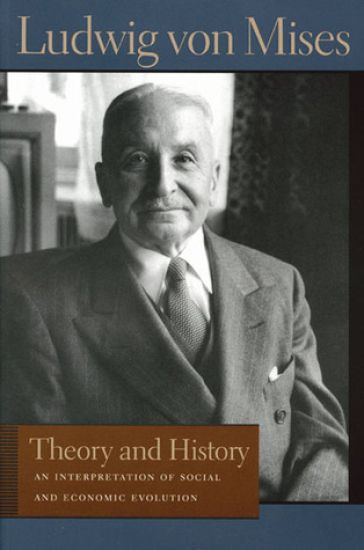
Ludwig von Mises was the leading exponent of the Austrian School of economics throughout most of the twentieth century. He has long been regarded as a most knowledgeable and respected economist, even though his teachings were generally outside the 'mainstream'. THEORY AND HISTORY is primarily a critique of Karl Marx, his materialism, and his prediction of the inevitability of socialism. Marx attributes the creation of tools and machines, as well as the economic structure of society, to undefined 'material productive forces'; Mises rejects this materialistic view; he points out that tools and machines are actually created by individuals acting on the basis of non-materialistic ideas. This book discusses the theory of economics, i.e., the study of purposive human action, and with history, the record of the past actions of individuals. All actions are determined by ideas. Thoughts and ideas are 'real things', Mises writes. "Although intangible and immaterial, they are factors in bringing about changes in the realm, of tangible and material things." Rather than rejecting the study of historical change as a 'useless pastime', Mises considers it of the utmost practical importance. "History looks backward into the past, but the lesson it teaches concerns things to come." History opens the mind to an understanding of human nature, increases wisdom, and distinguishes civilized man from the barbarian. Moreover, historical knowledge is of the utmost importance in helping to anticipate and plan for the future. Though THEORY AND HISTORY may not be studied as often as other, more popular Mises works, it provides great insight into Mises's fundamental thoughts and is a fascinating exploration of human action.