Kirjojen hintavertailu – 12 903 725 kirjaa ja 27 kauppaa

Kirjailija

Luigi Boscolo

Kirjat ja teokset yhdessä paikassa: 5 kirjaa, julkaisuja vuosilta 1987–2019, suosituimpiin kuuluu Milan Systemic Family Therapy. Vertaile teosten hintoja ja tarkista saatavuus suomalaisista kirjakaupoista.

5 kirjaa

Kirjojen julkaisuvuodet: 1987–2019.

Systemic Therapy with Individuals

Systemic Therapy with Individuals

Luigi Boscolo; Paolo Bertrando

Routledge
2019
sidottu
The authors describe the work they are doing with individual clients in Milan. Locating themselves clearly within the tradition of the Milan approach and more recent social constructionist and narrative influences, and articulating continually a broad systemic framework emphasizing meaning problems in context and relationship, they introduc
The Times of Time

The Times of Time

Luigi Boscolo; Paolo Bertrando

Routledge
2019
nidottu
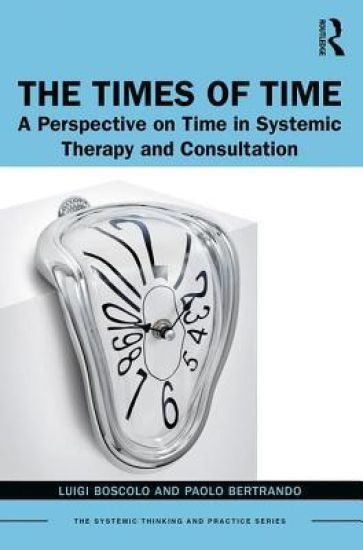
This is the most comprehensive study of the role of time in psychotherapy. It illustrates how time is experienced in different ways – individual time, family time, and social time – and how time can act as an invaluable metaphor in shaping clinical practice within a systemic approach, while maintaining connections with other approaches, such as psychoanalysis and cognitive therapies. A seminal volume on this topic, the book looks at issues such as the duration of therapy; the relevance of past, present, and future in therapy; and the balance of memory and oblivion. It also includes a discussion of how time is framed in other disciplines, including sociology, history, and psychopathology, whilst exploring the concept in practical terms through case vignettes and complete case histories, including the transcripts of actual sessions. The reader is thus given a set of guidelines for dealing with time issues in therapy from a systemic perspective. Originally published in 1993, the book has been updated to create a dialogue with contemporary theoretical debates, as well as social and technological changes. It will fascinate all psychotherapists, particularly those interested in a systemic practice.

The Times of Time

The Times of Time

Luigi Boscolo; Paolo Bertrando

Routledge
2019
sidottu
This is the most comprehensive study of the role of time in psychotherapy. It illustrates how time is experienced in different ways – individual time, family time, and social time – and how time can act as an invaluable metaphor in shaping clinical practice within a systemic approach, while maintaining connections with other approaches, such as psychoanalysis and cognitive therapies. A seminal volume on this topic, the book looks at issues such as the duration of therapy; the relevance of past, present, and future in therapy; and the balance of memory and oblivion. It also includes a discussion of how time is framed in other disciplines, including sociology, history, and psychopathology, whilst exploring the concept in practical terms through case vignettes and complete case histories, including the transcripts of actual sessions. The reader is thus given a set of guidelines for dealing with time issues in therapy from a systemic perspective. Originally published in 1993, the book has been updated to create a dialogue with contemporary theoretical debates, as well as social and technological changes. It will fascinate all psychotherapists, particularly those interested in a systemic practice.
Paradox and Counterparadox

Paradox and Counterparadox

Mara Selvini Palazzoli; Luigi Boscolo

Jason Aronson Inc. Publishers
1994
nidottu

Halvin toimitettuna 102,30 €

Paradox and Counterparadox introduces the English-speaking public to the first results of a research plan drawn up my the Milan Center for Family Studies at the end of 1971 and put into practice at the beginning of 1972. The book reports the therapeutic work carried out by the authors with fifteen families, five with children presenting serious psychotic disturbances, and ten with young adults diagnosed as schizophrenics in acute phase. Though accepting the Bleulerian term schizophrenia, by now in general use, the authors have used it to indicate not the sickness of an individual–as in the traditional medical model–but a peculiar pattern of communication inseparable from the other patterns of communication observable in the natural group (in this case, the family) in which it manifests itself. Starting from the position that modern sciences concerned with communication emphasize the central role of paradox as the source of paralyzing disturbances as well as of creative transformations, the authors demonstrate that it is possible to intervene in a family in schizophrenic transaction by devising original and paradoxical methods in order to release the action-pattern from disturbance to transformation. The counterparadoxes generated in this process, illustrated through a great number of examples, are rigorously analyzed in accordance with the conceptual models provided by general systems theory, by cybernetics, and by the pragmatics of human communication. The reader will recognize, in the cases presented, the stimulating originality and efficacy of this approach, one whose interest exceeds the purely clinical and which offers new points of departure for an ecologic vision of human relationships. A Jason Aronson Book
Milan Systemic Family Therapy

Milan Systemic Family Therapy

Gianfranco Cecchin; Luigi Boscolo; Lynn Hoffman; Peggy Penn

Basic Books
1987
sidottu
This long-awaited book is the first to offer a complete and clear presentation of the therapy of the Milan Associates, Luigi Boscolo and Gianfranco Cecchin. Based on cybernetic theory, their work has had dramatic success in helping families change behaviour. This practical and enlightening book uses clinical cases and the fascinating conversations among the four authors to examine the relationship between Milan theory and practice. Transcripts of sessions conducted by Boscolo and Cecchin,which include a family that is hiding a history of incest and one dominated by an anorectic girl,provide vivid examples of family interaction and therapeutic imagination. In the accompanying conversations with Boscolo and Cecchin about these sessions, Hoffman and Penn take us behind the scenes to show how the therapists think through and conduct their therapy. These highly readable conversations clarify the essentials of the therapy, including hypothesizing, circular questioning, positive connotation, and crafting interventions. Like Milan therapy itself, the interviews are recursive new ideas about the therapy feed back into the conversations and stimulate further revelations. A lengthy introduction sets the Milan approach in historical context, and introductions to the individual cases highlight the main ideas.