Kirjojen hintavertailu – 12 859 818 kirjaa ja 27 kauppaa

Kirjailija

Luis Camnitzer

Kirjat ja teokset yhdessä paikassa: 6 kirjaa, julkaisuja vuosilta 2003–2023, suosituimpiin kuuluu América Latina 1960-2013. Vertaile teosten hintoja ja tarkista saatavuus suomalaisista kirjakaupoista.

6 kirjaa

Kirjojen julkaisuvuodet: 2003–2023.

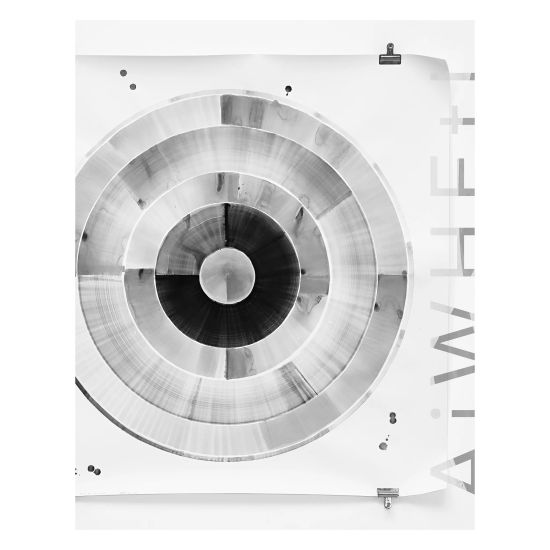
Sophie Tottie : Aiwhetl (catalogue and related works)

Sophie Tottie : Aiwhetl (catalogue and related works)

Mårten Arndtzén; Magnus Bons; Connie Butler; Luis Camnitzer; Sophie Tottie

Art and Theory
2023
nidottu
In Sophie Tottie s recent work re-workings of previous work, text material and leftover products like paint and brush cleaner are incorporated and reused in new work. Tottie s works function as prisms that weigh, measure, and materialize something that seems to belong to an inner, intangible reality but which manifests itself in an outer material and physical existence. The work in AiWHEtL circles around the act of learning, where one main question is not what it is about but how it works. The book includes four texts that discuss Tottie's work from the 1990s up to the present a work that is not a conglomeration of facts and an end point, but which remodels through actions, ongoing contemplation and re-evaluations of what has been said and done. I Sophie Totties senaste arbeten används omarbetningar av tidigare arbeten, textmaterial och restprodukter som penseltvätt i nya arbeten. Totties konst fungerar som ett slags prismor som väger in, mäter och materialiserar det som kan tyckas tillhöra en inre, opåtaglig verklighet med en yttre materiell och fysisk tillvaro. AiWHEtL utgår från ett lärande där frågan inte är vad något handlar om utan hur det fungerar. Boken innehåller fyra texter som diskuterar Totties arbete från 90-talet till idag ett arbete som inte är ett konglomerat av fakta och en slutpunkt utan något som omdanar i handlingar, pågående betraktande och omprövande av det som gjorts och sagts.
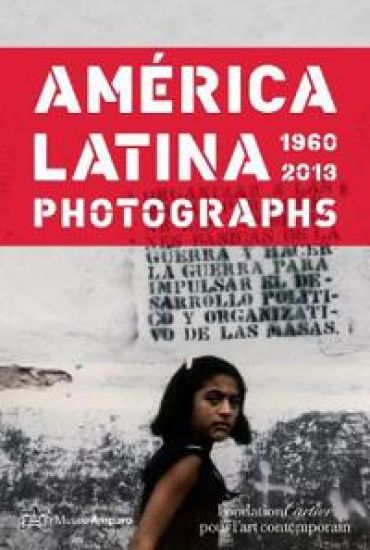
América Latina 1960-2013

América Latina 1960-2013

Luis Camnitzer; Alfonso Morales Carrillo

Fondation Cartier pour l'art contemporain
2013
sidottu
From 19 November 2013 to 6 April 2014, the Fondation Cartier pour l’art contemporain will be showing America Latina 1960-2013, organized in collaboration with the Amparo Museum in Puebla (Mexico). The exhibition offers a new perspective on Latin American photography from 1960 to today, focusing on the relationship between text and the photographic image. Bringing together more than seventy artists from eleven different countries, it shows the great diversity of photographic practices by presenting the work of documentary photographers as well as that of contemporary artists who appropriate the medium in different ways. This catalogue of the exhibition offers a vast panorama of the artistic production of the last fifty years. Including over 400 black-and-white and color reproductions, it explores the wealth of photographic work while shedding light on the historical and artistic context that spawned it. In addition to scholarly texts and artist bios, descriptions of works and a detailed timeline provide a deeper understanding of the visual languages specific to the continent. Chronicling the vital legacy of Latin American artists, the book shows the scope of their influence beyond their cultural and geographical territory.
On Art, Artists, Latin America, and Other Utopias

On Art, Artists, Latin America, and Other Utopias

Luis Camnitzer

University of Texas Press
2009
sidottu
Artist, educator, curator, and critic Luis Camnitzer has been writing about contemporary art ever since he left his native Uruguay in 1964 for a fellowship in New York City. As a transplant from the "periphery" to the "center," Camnitzer has had to confront fundamental questions about making art in the Americas, asking himself and others: What is "Latin American art"? How does it relate (if it does) to art created in the centers of New York and Europe? What is the role of the artist in exile? Writing about issues of such personal, cultural, and indeed political import has long been an integral part of Camnitzer's artistic project, a way of developing an idiosyncratic art history in which to work out his own place in the picture. This volume gathers Camnitzer's most thought-provoking essays-"texts written to make something happen," in the words of volume editor Rachel Weiss. They elaborate themes that appear persistently throughout Camnitzer's work: art world systems versus an art of commitment; artistic genealogies and how they are consecrated; and, most insistently, the possibilities for artistic agency. The theme of "translation" informs the texts in the first part of the book, with Camnitzer asking such questions as "What is Latin America, and who asks the question? Who is the artist, there and here?" The texts in the second section are more historically than geographically oriented, exploring little-known moments, works, and events that compose the legacy that Camnitzer draws on and offers to his readers.
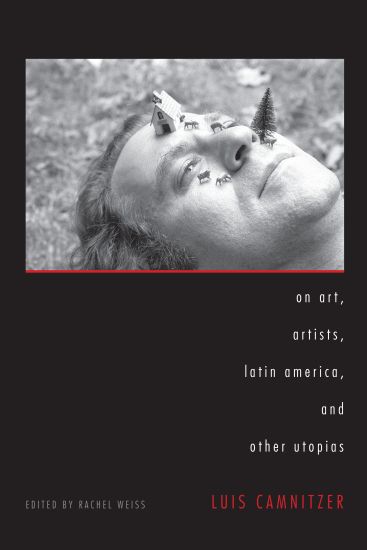
On Art, Artists, Latin America, and Other Utopias

On Art, Artists, Latin America, and Other Utopias

Luis Camnitzer

University of Texas Press
2009
nidottu
Artist, educator, curator, and critic Luis Camnitzer has been writing about contemporary art ever since he left his native Uruguay in 1964 for a fellowship in New York City. As a transplant from the "periphery" to the "center," Camnitzer has had to confront fundamental questions about making art in the Americas, asking himself and others: What is "Latin American art"? How does it relate (if it does) to art created in the centers of New York and Europe? What is the role of the artist in exile? Writing about issues of such personal, cultural, and indeed political import has long been an integral part of Camnitzer's artistic project, a way of developing an idiosyncratic art history in which to work out his own place in the picture. This volume gathers Camnitzer's most thought-provoking essays-"texts written to make something happen," in the words of volume editor Rachel Weiss. They elaborate themes that appear persistently throughout Camnitzer's work: art world systems versus an art of commitment; artistic genealogies and how they are consecrated; and, most insistently, the possibilities for artistic agency. The theme of "translation" informs the texts in the first part of the book, with Camnitzer asking such questions as "What is Latin America, and who asks the question? Who is the artist, there and here?" The texts in the second section are more historically than geographically oriented, exploring little-known moments, works, and events that compose the legacy that Camnitzer draws on and offers to his readers.
Conceptualism in Latin American Art

Conceptualism in Latin American Art

Luis Camnitzer

University of Texas Press
2007
pokkari
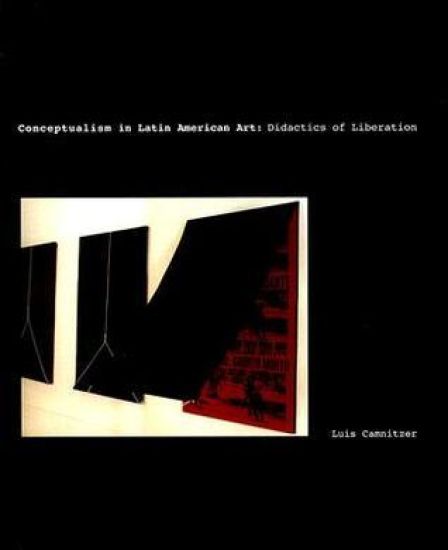
Conceptualism played a different role in Latin American art during the 1960s and 1970s than in Europe and the United States, where conceptualist artists predominantly sought to challenge the primacy of the art object and art institutions, as well as the commercialization of art. Latin American artists turned to conceptualism as a vehicle for radically questioning the very nature of art itself, as well as art's role in responding to societal needs and crises in conjunction with politics, poetry, and pedagogy. Because of this distinctive agenda, Latin American conceptualism must be viewed and understood in its own right, not as a derivative of Euroamerican models. In this book, one of Latin America's foremost conceptualist artists, Luis Camnitzer, offers a firsthand account of conceptualism in Latin American art. Placing the evolution of conceptualism within the history Latin America, he explores conceptualism as a strategy, rather than a style, in Latin American culture. He shows how the roots of conceptualism reach back to the early nineteenth century in the work of Símon Rodríguez, Símon Bolívar's tutor. Camnitzer then follows conceptualism to the point where art crossed into politics, as with the Argentinian group Tucumán arde in 1968, and where politics crossed into art, as with the Tupamaro movement in Uruguay during the 1960s and early 1970s. Camnitzer concludes by investigating how, after 1970, conceptualist manifestations returned to the fold of more conventional art and describes some of the consequences that followed when art evolved from being a political tool to become what is known as "political art."
New Art of Cuba

New Art of Cuba

Luis Camnitzer

University of Texas Press
2003
pokkari
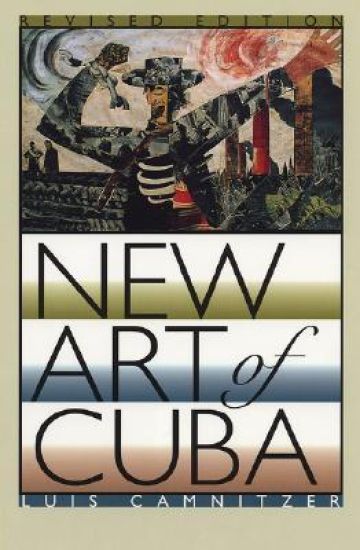
Starting with the groundbreaking 1981 exhibit called "Volumen I," New Art of Cuba provided the first comprehensive look at the works of the first generation of Cuban artists completely shaped by the 1959 revolution. This revised edition includes a new epilogue that discusses developments in Cuban art since the book's publication in 1994, including the exodus of artists in the early 1990s, the effects of the new dollar economy on the status of artists, and the shift away from socialist themes to more personal concerns in the artists' works. Twenty-four new color plates augment the more than 200 b&w illustrations of the original volume.