Kirjojen hintavertailu – 12 859 828 kirjaa ja 27 kauppaa

Kirjailija

Luis Servén

Kirjat ja teokset yhdessä paikassa: 3 kirjaa, julkaisuja vuosilta 2004–2006, suosituimpiin kuuluu Lessons from NAFTA. Vertaile teosten hintoja ja tarkista saatavuus suomalaisista kirjakaupoista.

Nimi esiintyy myös muodoissa: Luis Serven

3 kirjaa

Kirjojen julkaisuvuodet: 2004–2006.

Poverty Reduction and Growth

Poverty Reduction and Growth

Guillermo E. Perry; Luis Serven; William F. Maloney

World Bank Publications
2006
nidottu
That raising income levels alleviates poverty, and that growth can be more or less effective in doing so, is well known and has received renewed attention in the search for pro-poor growth. What is less well explored is the reverse channel - that poverty may, in fact, be part of the reason for a country's poor growth performance. This report is about the existence of these vicious circles in Latin America and about the alternatives to convert them into virtuous circles in which poverty reduction and high growth reinforce each other.
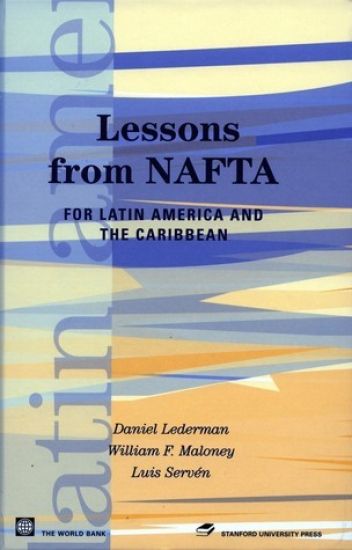
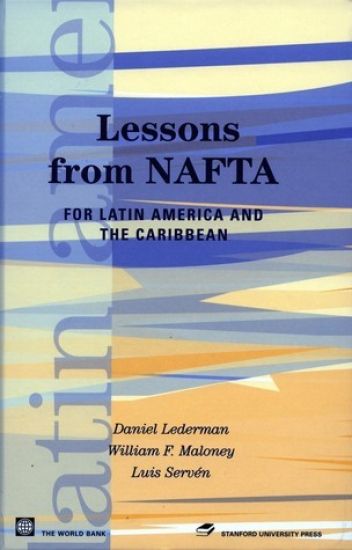
Lessons from NAFTA

Lessons from NAFTA

Daniel Lederman; William F. Maloney; Luis Servén

Stanford University Press
2004
sidottu
Analyzing the experience of Mexico under the North American Free Trade Agreement (NAFTA), the authors draw lessons for other countries considering free trade agreements with the United States. The authors conclude that NAFTA raised external trade and foreign investment inflows and had a modest effect on Mexico's average income per person. It is likely that NAFTA also helped achieve a modest reduction in poverty and an improvement in job quality. However, major obstacles remain to Mexico's long term development-NAFTA is not enough. The main lesson for other countries is that free trade agreements offer opportunities to accelerate economic growth, but do not guarantee it.
Lessons from NAFTA

Lessons from NAFTA

Daniel Lederman; William F. Maloney; Luis Servén

Stanford University Press
2004
pokkari
Analyzing the experience of Mexico under the North American Free Trade Agreement (NAFTA), the authors draw lessons for other countries considering free trade agreements with the United States. The authors conclude that NAFTA raised external trade and foreign investment inflows and had a modest effect on Mexico's average income per person. It is likely that NAFTA also helped achieve a modest reduction in poverty and an improvement in job quality. However, major obstacles remain to Mexico's long term development-NAFTA is not enough. The main lesson for other countries is that free trade agreements offer opportunities to accelerate economic growth, but do not guarantee it.