Kirjojen hintavertailu – 12 859 826 kirjaa ja 27 kauppaa
Kirjailija
Luis Vaz De Camoes
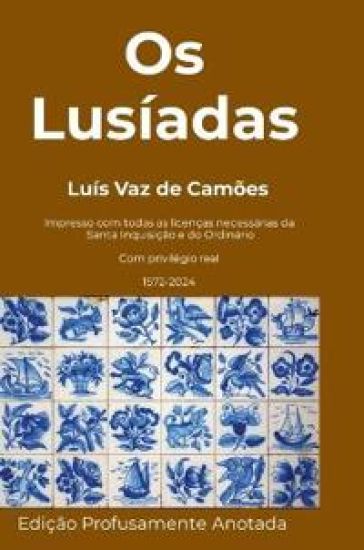
Kirjat ja teokset yhdessä paikassa: 14 kirjaa, julkaisuja vuosilta 1973–2024, suosituimpiin kuuluu Os Lusíadas. Vertaile teosten hintoja ja tarkista saatavuus suomalaisista kirjakaupoista.
Nimi esiintyy myös muodoissa: Luís Vaz de Camoes, Luís Vaz de Camões, Luis Vaz de Camões
16th century poet Lu s Vaz de Cam es is widely considered as Portugal's greatest classical poet. Most likely born in Lisbon around 1524, Lu s Vaz de Cam es received a formal education, possibly from the University of Coimbra. While his family was poor, his heritage was noble and thus Lu s Vaz de Cam es was able to gain admittance to the court of John III where his career as a poet began. In the 1550s he traveled to the east, passing through the same regions that Vasco da Gama had sailed. It is about this time that he likely began writing his magnum opus, "The Lusiads". First published in 1572, this epic poem, which is frequently compared to Virgil's "Aeneid", relates the Portuguese explorer Vasco da Gama's discovery of the maritime route to India by way of Cape of Good Hope. Composed of over 1100 stanzas in ten books, "The Lusiads" is to this day widely regarded as the most important literary work of the Portuguese language. This edition is printed on premium acid-free paper and follows the translation of William Julius Mickle.
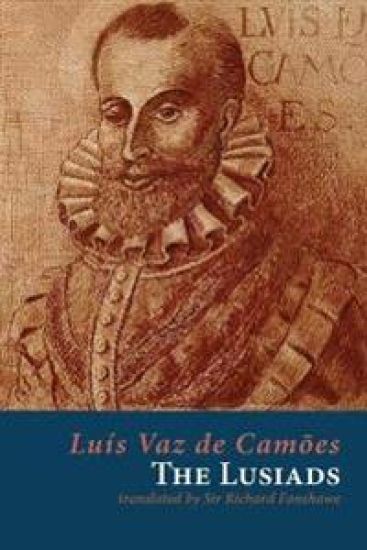
Camoes (ca.1524/25-1580) is the national poet of Portugal, with a status in the Lusophone world akin to that of Shakespeare, Dante, Cervantes and Goethe elsewhere. A wonderful lyric poet, and also an occasional dramatist, his masterpiece is Os Lusiadas (The Lusiads), an epic poem on the beginnings of the Portuguese maritime empire, for which the author himself had fought as a common soldier - in North Africa - where he lost an eye in battle, in India, in southern Africa, the Red Sea, India and Macau - where the grotto in which he wrote some of the poem is a tourist attraction. As Dante took Virgil as his guide in the Divine Comedy, so Camoes uses the great navigator, Vasco da Gama, as his tutelary spirit, while also aping Virgil's approach in the Aeneid, fashioning a national epic on the empire's origins in much the same way as Virgil had done for the Rome of Augustus. The translation here, dating from 1655, is one of the great translations of the 17th century, made while Sir Richard Fanshawe (1608-1666), a supporter of Charles I and Charles II, was under house arrest during the Cromwellian inter-regnum. Fanshawe also translated two Spanish plays and a number of Spanish sonnets from the period around 1600-1630, with some of the finest being from the baroque master Luis de Gongora. Unlike many of his successors, Fanshawe tries to stay close to the original, occasionally at the cost of having to twist the English to fit the rhyme and metre, the target language having, even in this more flexible era, far fewer resources for rhyme than the Portuguese. The results, nonetheless, are something of a monument, giving voice to a very long and complex poem and making it work, almost, as an English epic. Fanshawe, when not at his desk, was an accomplished diplomat, having served in the Madrid embassy and, after the Restoration, as Ambassador in Lisbon, where he negotiated the marriage of Charles II to Catherine of Braganza.
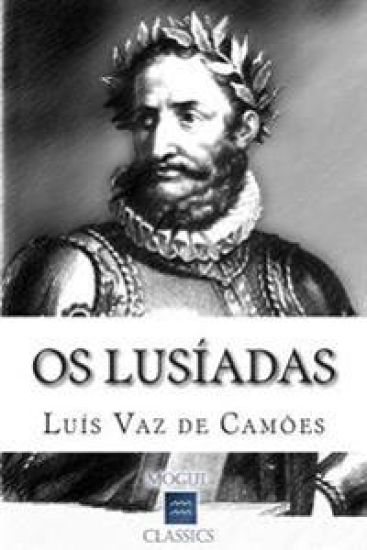
Bem-vindo ao maravilhoso mundo de Lu s Vaz de Cam es. Nesta edi o cl ssica do seu romance Os Lus adas, trazemos at si a melhor edi o esta imortal pe a Os Lus adas. Os Lus adas uma obra po tica do escritor Lu s Vaz de Cam es, considerada a epopeia portuguesa por excel ncia. Provavelmente conclu da em 1556, foi publicada pela primeira vez em 1572. A ac o central da obra a descoberta do caminho mar timo para a ndia por Vasco da Gama, volta da qual se v o descrevendo outros epis dios da hist ria de Portugal, glorificando o povo portugu s. Os Lus adas, como j a Eneida, uma epopeia grandiosa, um poema pico genu no, um olhar sobre a constru o duma orgulhosa na o. Esperamos que tenha tanto prazer a ler esta obra cl ssica quanto aquele que n s, Mogul Classics, tivemos a trazer-lha at si.
Bem-vindo ao universo extraordin rio de Lu s Vaz de Cam es, um dos maiores vultos da literatura Luso-Brasileira de sempre. Nesta edi o de Os Lus adas, trazemos at si a melhor edi o esta admir vel pe a liter ria imortal. Os Lus adas uma obra po tica do escritor Lu s Vaz de Cam es, considerada a epopeia portuguesa por excel ncia. Provavelmente conclu da em 1556, foi publicada pela primeira vez em 1572. A ac o central da obra a descoberta do caminho mar timo para a ndia por Vasco da Gama, volta da qual se v o descrevendo outros epis dios da hist ria de Portugal, glorificando o povo portugu s. Os Lus adas, como j a Eneida, uma epopeia grandiosa, um poema pico genu no, um olhar sobre a constru o duma orgulhosa na o. Esperamos que tenha tanto prazer a ler esta obra cl ssica quanto aquele que n s, Cascais Classic Editions, tivemos a trazer-lha at si.
Os Lus adas is a Portuguese epic poem by Lu s Vaz de Cam es. It is written in Homeric fashion and focuses mainly on a fantastical interpretation of the Portuguese voyages of discovery during the 15th and 16th centuries. Os Lus adas is often regarded as Portugal's national epic, much in the way as Virgil's Aeneid was for the Ancient Romans, as well as Homer's Iliad and Odyssey for the Ancient Greeks. It was first printed in 1572, three years after the author returned from the Indies. The poem consists of ten cantos written in the decasyllabic ottava rima with the most important part, the arrival in India, at the beginning of Canto VII.
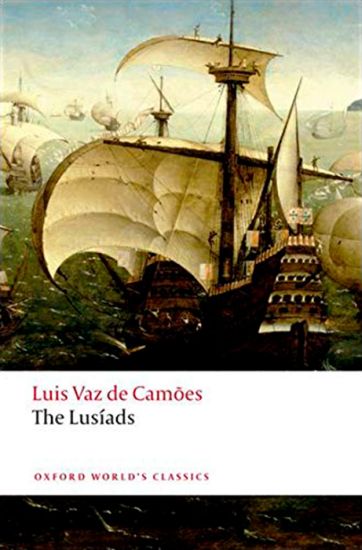
First published in 1572, The Lusiads is one of the greatest epic poems of the Renaissance, immortalizing Portugal's voyages of discovery with an unrivalled freshness of observation. At the centre of The Lusiads is Vasco da Gama's pioneer voyage via southern Africa to India in 1497-98. The first European artist to cross the equator, Camoes's narrative reflects the novelty and fascination of that original encounter with Africa, India and the Far East. The poem's twin symbols are the Cross and the Astrolabe, and its celebration of a turning point in mankind's knowledge of the world unites the old map of the heavens with the newly discovered terrain on earth. Yet it speaks powerfully, too, of the precariousness of power, and of the rise and decline of nationhood, threatened not only from without by enemies, but from within by loss of integrity and vision. The first translation of The Lusiads for almost half a century, this new edition is complemented by an illuminating introduction and extensive notes. ABOUT THE SERIES: For over 100 years Oxford World's Classics has made available the widest range of literature from around the globe. Each affordable volume reflects Oxford's commitment to scholarship, providing the most accurate text plus a wealth of other valuable features, including expert introductions by leading authorities, helpful notes to clarify the text, up-to-date bibliographies for further study, and much more.
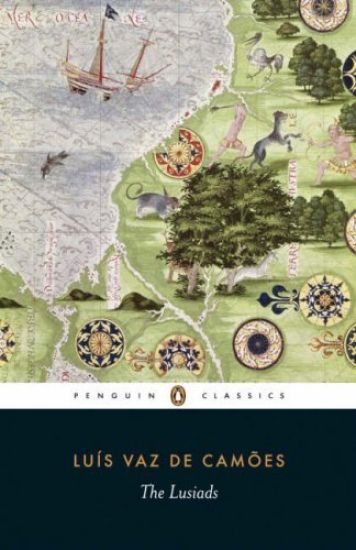
First published in 1572, The Lusiads is one of the greatest epic poems of the Renaissance, immortalizing Portugal's voyages of discovery with an unrivalled freshness of observation. At the centre of The Lusiads is Vasco da Gama's pioneer voyage via southern Africa to India in 1497-98. The first European artist to cross the equator, Camoes's narrative reflects the novelty and fascination of that original encounter with Africa, India and the Far East. The poem's twin symbols are the Cross and the Astrolabe, and its celebration of a turning point in mankind's knowledge of the world unites the old map of the heavens with the newly discovered terrain on earth. Yet it speaks powerfully, too, of the precariousness of power, and of the rise and decline of nationhood, threatened not only from without by enemies, but from within by loss of integrity and vision.