Kirjojen hintavertailu – 12 903 724 kirjaa ja 27 kauppaa

Kirjailija

Luiz Velho

Kirjat ja teokset yhdessä paikassa: 14 kirjaa, julkaisuja vuosilta 2002–2024, suosituimpiin kuuluu Computer Graphics. Vertaile teosten hintoja ja tarkista saatavuus suomalaisista kirjakaupoista.

14 kirjaa

Kirjojen julkaisuvuodet: 2002–2024.

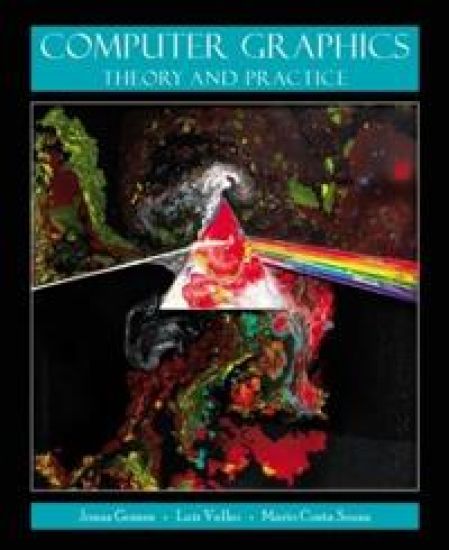
Computer Graphics

Computer Graphics

Jonas Gomes; Luiz Velho; Mario Costa Sousa

A K Peters
2012
sidottu
Computer Graphics: Theory and Practice provides a complete and integrated introduction to this area. The book only requires basic knowledge of calculus and linear algebra, making it an accessible introductory text for students. It focuses on conceptual aspects of computer graphics, covering fundamental mathematical theories and models and the inherent problems in implementing them. In so doing, the book introduces readers to the core challenges of the field and provides suggestions for further reading and studying on various topics. For each conceptual problem described, solution strategies are compared and presented in algorithmic form. This book, along with its companion Design and Implementation of 3D Graphics Systems, gives readers a full understanding of the principles and practices of implementing 3D graphics systems.
Introduction to Visual Effects

Introduction to Visual Effects

Bruno Madeira; Luiz Velho

TAYLOR FRANCIS LTD
2024
nidottu
Introduction to Visual Effects: A Computational Approach is the first single introduction to the computational and mathematical aspects of visual effects, incorporating both computer vision and graphics. The book also provides the readers with the source code to a library, enabling them to follow the chapters directly and build up a complete visual effects platform. The book covers the basic approaches to camera pose estimation, global illumination, and image-based lighting, and includes chapters on the virtual camera, optimization and computer vision, path tracing and many more. Key features include: Introduction to projective geometry, image-based lighting (IBL), global illumination solved by the Monte Carlo method (Pathtracing), an explanation of a set of optimization methods, and the techniques used for calibrating one, two, and many cameras, including how to use the RANSAC algorithm in order to make the process robust, and providing code to be implemented using the Gnu Scientific Library. C/C++ code using the OpenCV library, to be used in the process of tracking points on a movie (an important step for the matchmove process), and in the construction of modeling tools for visual effects. A simple model of the Bidirectional Reflectance Distribution Function (BRDF) of surfaces and the differential rendering method, allowing the reader to generate consistent shadows, supported by a code that can be used in combination with a software like Luminance HDR.
Introduction to Visual Effects

Introduction to Visual Effects

Bruno Madeira; Luiz Velho

TAYLOR FRANCIS LTD
2022
sidottu
Introduction to Visual Effects: A Computational Approach is the first single introduction to the computational and mathematical aspects of visual effects, incorporating both computer vision and graphics. The book also provides the readers with the source code to a library, enabling them to follow the chapters directly and build up a complete visual effects platform. The book covers the basic approaches to camera pose estimation, global illumination, and image-based lighting, and includes chapters on the virtual camera, optimization and computer vision, path tracing and many more. Key features include: Introduction to projective geometry, image-based lighting (IBL), global illumination solved by the Monte Carlo method (Pathtracing), an explanation of a set of optimization methods, and the techniques used for calibrating one, two, and many cameras, including how to use the RANSAC algorithm in order to make the process robust, and providing code to be implemented using the Gnu Scientific Library. C/C++ code using the OpenCV library, to be used in the process of tracking points on a movie (an important step for the matchmove process), and in the construction of modeling tools for visual effects. A simple model of the Bidirectional Reflectance Distribution Function (BRDF) of surfaces and the differential rendering method, allowing the reader to generate consistent shadows, supported by a code that can be used in combination with a software like Luminance HDR.
GPU Ray Tracing in Non-Euclidean Spaces

GPU Ray Tracing in Non-Euclidean Spaces

Tiago Novello; Vinícius da Silva; Luiz Velho

Springer International Publishing AG
2022
nidottu
This book explores the visualization of three-dimensional non-Euclidean spaces using ray-tracing techniques in Graphics Processing Unit (GPU). This is a trending topic in mathematical visualization that combines the mathematics areas of geometry and topology, with visualization concepts of computer graphics. Several conditions made this a special moment for such topic. On one hand, the development of mathematical research, computer graphics, and algorithms have provided the necessary theoretical framework. On the other hand, the evolution of the technologies and media allows us to be immersed in three-dimensional spaces using Virtual Reality. The content of this book serves both experts in the areas and students. Although this is a short book, it is self-contained since it considers all the ideas, motivations, references, and intuitive explanations of the required fundamental concepts.
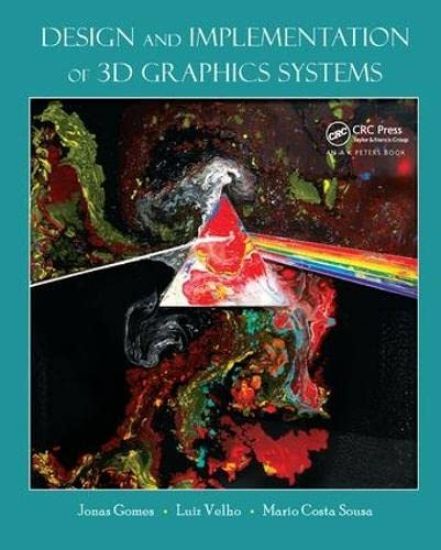
Design and Implementation of 3D Graphics Systems

Design and Implementation of 3D Graphics Systems

Jonas de Miranda Gomes; Luiz Velho; Mario Costa Sousa

CRC Press
2017
sidottu
Design and Implementation of 3D Graphics Systems covers the computational aspects of geometric modeling and rendering 3D scenes. Special emphasis is given to the architectural aspects of interactive graphics, geometric modeling, rendering techniques, the graphics pipeline, and the architecture of 3D graphics systems. The text describes basic 3D computer graphics algorithms and their implementation in the C language. The material is complemented by library routines for constructing graphics systems, which are available for download from the book‘s website. This book, along with its companion Computer Graphics: Theory and Practice, gives readers a full understanding of the principles and practices of implementing 3D graphics systems.
From Fourier Analysis to Wavelets

From Fourier Analysis to Wavelets

Jonas Gomes; Luiz Velho

Springer International Publishing AG
2016
nidottu
This text introduces the basic concepts of function spaces and operators, both from the continuous and discrete viewpoints. Fourier and Window Fourier Transforms are introduced and used as a guide to arrive at the concept of Wavelet transform. The fundamental aspects of multiresolution representation, and its importance to function discretization and to the construction of wavelets is also discussed. Emphasis is given on ideas and intuition, avoiding the heavy computations which are usually involved in the study of wavelets. Readers should have a basic knowledge of linear algebra, calculus, and some familiarity with complex analysis. Basic knowledge of signal and image processing is desirable. This text originated from a set of notes in Portuguese that the authors wrote for a wavelet course on the Brazilian Mathematical Colloquium in 1997 at IMPA, Rio de Janeiro.
From Fourier Analysis to Wavelets

From Fourier Analysis to Wavelets

Jonas Gomes; Luiz Velho

Springer International Publishing AG
2015
sidottu
This text introduces the basic concepts of function spaces and operators, both from the continuous and discrete viewpoints. Fourier and Window Fourier Transforms are introduced and used as a guide to arrive at the concept of Wavelet transform. The fundamental aspects of multiresolution representation, and its importance to function discretization and to the construction of wavelets is also discussed. Emphasis is given on ideas and intuition, avoiding the heavy computations which are usually involved in the study of wavelets. Readers should have a basic knowledge of linear algebra, calculus, and some familiarity with complex analysis. Basic knowledge of signal and image processing is desirable. This text originated from a set of notes in Portuguese that the authors wrote for a wavelet course on the Brazilian Mathematical Colloquium in 1997 at IMPA, Rio de Janeiro.
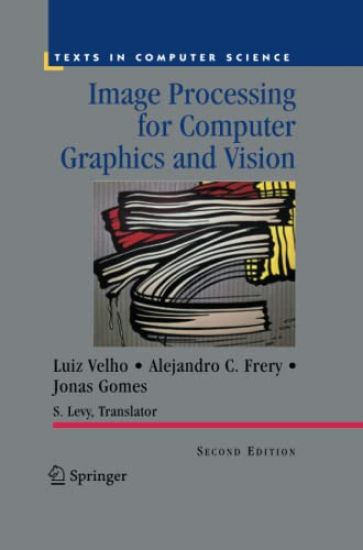
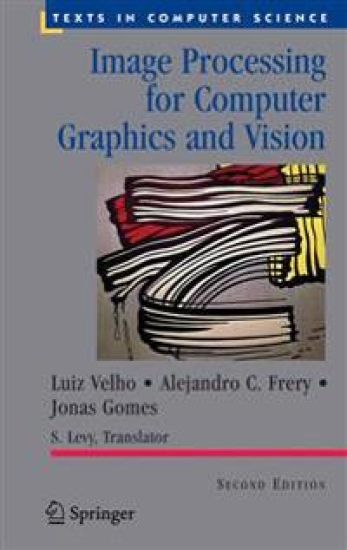
Image Processing for Computer Graphics and Vision

Image Processing for Computer Graphics and Vision

Luiz Velho; Alejandro C. Frery; Jonas Gomes

Springer London Ltd
2014
nidottu
Image processing is concerned with the analysis and manipulation of images by computer. Providing a thorough treatment of image processing with an emphasis on those aspects most used in computer graphics, the authors concentrate on describing and analyzing the underlying concepts rather than on presenting algorithms or pseudocode. As befits a modern introduction to this topic, a good balance is struck between discussing the underlying mathematics and the main topics: signal processing, data discretization, the theory of colour and different colour systems, operations in images, dithering and half-toning, warping and morphing and image processing. This second edition reflects recent trends in science andtechnology that exploit image processing in computer graphics and vision applications. Stochastic image models and statistical methods for image processing are covered as are: A modern approach and new developments in the area, Probability theory for image processing, Applications in image analysis and computer vision.
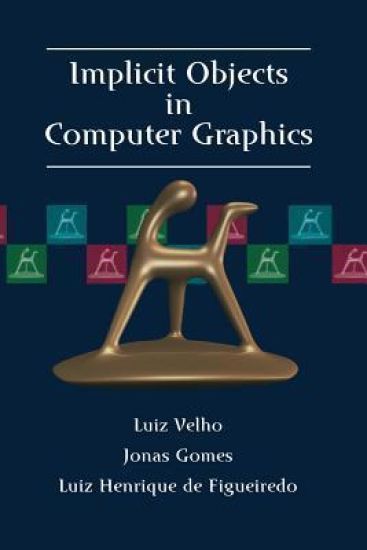
Implicit Objects in Computer Graphics

Implicit Objects in Computer Graphics

Luiz Velho; Jonas Gomes; Luiz H. de Figueiredo

Springer-Verlag New York Inc.
2013
nidottu
Implicit definition and description of geometric objects and surfaces plays a critical role in the appearance and manipulation of computer graphics. In addition, the mathematical definition of shapes, using an implicit form, has pivotal applications for geometric modeling, visualization and animation. Until recently, the parametric form has been by far the most popular geometric representation used in computer graphics and computer-aided design. Whereas parametric objects and the techniques associated with them have been exhaustively developed, the implicit form has been used as a complementary geometric representation, mainly in the restricted context of specific applications. However, recent developments in graphics are changing this situation, and the community is beginning to draw its attention to implicit objects. This is reflected in the current research of aspects related to this subject. Employing a coherent conceptual framework, Implicit Objects in Computer Graphics addresses the role of implicitly defined objects in the following parts: mathematical foundations of geometric models, implicit formulations for the specification of shapes, implicit primitives, techniques for constructing and manipulating implicit objects, modeling, rendering and animating implicit objects.
Design and Implementation of 3D Graphics Systems

Design and Implementation of 3D Graphics Systems

Jonas de Miranda Gomes; Luiz Velho; Mario Costa Sousa

A K Peters
2012
nidottu
Design and Implementation of 3D Graphics Systems covers the computational aspects of geometric modeling and rendering 3D scenes. Special emphasis is given to the architectural aspects of interactive graphics, geometric modeling, rendering techniques, the graphics pipeline, and the architecture of 3D graphics systems. The text describes basic 3D computer graphics algorithms and their implementation in the C language. The material is complemented by library routines for constructing graphics systems, which are available for download from the book’s website. This book, along with its companion Computer Graphics: Theory and Practice, gives readers a full understanding of the principles and practices of implementing 3D graphics systems.
Image Processing for Computer Graphics and Vision

Image Processing for Computer Graphics and Vision

Luiz Velho; Alejandro C. Frery; Jonas Gomes

Springer London Ltd
2008
sidottu
Image processing is concerned with the analysis and manipulation of images by computer. Providing a thorough treatment of image processing, with an emphasis on those aspects most used in computer graphics and vision, this fully revised second edition concentrates on describing and analyzing the underlying concepts of this subject. As befits a modern introduction to this topic, a good balance is struck between discussing the underlying mathematics and the main topics of signal processing, data discretization, the theory of color and different color systems, operations in images, dithering and half-toning, warping and morphing, and image processing. Significantly expanded and revised, this easy-to-follow text/reference reflects recent trends in science and technology that exploit image processing in computer graphics and vision applications. Stochastic image models and statistical methods for image processing are covered, as is probability theory for image processing, and a focus on applications in image analysis and computer vision. Features: / Includes 5 new chapters and major changes throughout / Adopts a conceptual approach with emphasis on the mathematical concepts and their applications /Introduces an abstraction paradigm that relates mathematical models with image processing techniques and implementation methods - used throughout to help understanding of the mathematical theory and its practical use / Motivates through an elementary presentation, opting for an intuitive description where needed / Contains adopted innovative formulations whenever necessary for clarity of exposition / Provides numerous examples and illustrations, as an aid to understanding / Focuses on the aspects of image processing that have importance in computer graphics and vision applications / Offers a comprehensive introductory chapter for instructors This comprehensive text imparts a good conceptual understanding of the topic, as a basis for further study, and is suitable both as a textbook and a professional reference. The current extended edition is a must-have resource and guide for all studying or interested in this field.
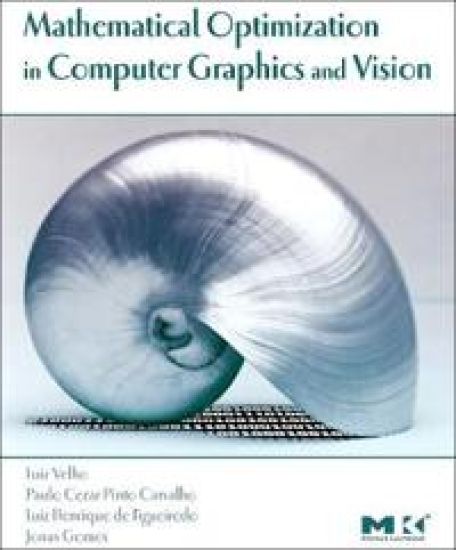
Mathematical Optimization in Computer Graphics and Vision

Mathematical Optimization in Computer Graphics and Vision

Luiz Velho; Paulo Carvalho; Jonas Gomes; Luiz de Figueiredo

Morgan Kaufmann Publishers In
2008
sidottu
Mathematical optimization is used in nearly all computer graphics applications, from computer vision to animation. This book teaches readers the core set of techniques that every computer graphics professional should understand in order to envision and expand the boundaries of what is possible in their work. Study of this authoritative reference will help readers develop a very powerful tool- the ability to create and decipher mathematical models that can better realize solutions to even the toughest problems confronting computer graphics community today.
High Dynamic Range Image Reconstruction

High Dynamic Range Image Reconstruction

Asla M. Sa; Paulo Cezar Carvalho; Luiz Velho

Springer International Publishing AG
2007
nidottu
High dynamic range imaging (HDRI) is an emerging field that has the potential to cause a great scientific and technological impact in the near future. Although new, this field is large and complex, with non-trivial relations to many different areas, such as image synthesis, computer vision, video and image processing, digital photography, special effects among others. For the above reasons,HDRI has been extensively researched over the past years and, consequently, the related scientific literature is vast. As an indication that the field is reaching maturity, tutorials and books on HDRI appeared. Moreover, this new resource has already reached interested practitioners in various application areas. In this book, we do not aim at covering the whole field of high dynamic range imaging and its applications, since it is a broad subject that is still evolving. Instead, our intent is to cover the basic principles behind HDRI and focus on one of the currently most important problems, both theoretically and practically. That is, the reconstruction of high dynamic range images from regular low dynamic range pictures. Table of Contents: Introduction / Digital Image / Imaging Devices and Calibration / HDR Reconstruction / HDRI Acquisition and Visualization / Tone Enhancement / References / Biography
Implicit Objects in Computer Graphics

Implicit Objects in Computer Graphics

Luiz Velho; Jonas Gomes; Luiz H. de Figueiredo

Springer-Verlag New York Inc.
2002
sidottu
This work examines the description of geometric shapes in implicit form and its utility in computer graphics and related areas, such as modelling, visualization, and animation. Researchers, practitioners, and professionals in computer graphics, geometric modelling, visualization, and CAD/CAM and special effects should find this a useful resource.