Kirjojen hintavertailu – 12 903 725 kirjaa ja 27 kauppaa

Kirjailija

Lutz Marten

Kirjat ja teokset yhdessä paikassa: 5 kirjaa, julkaisuja vuosilta 2002–2026, suosituimpiin kuuluu Languages, Cultures, and Health in a Global City. Vertaile teosten hintoja ja tarkista saatavuus suomalaisista kirjakaupoista.

5 kirjaa

Kirjojen julkaisuvuodet: 2002–2026.

Languages, Cultures, and Health in a Global City

Languages, Cultures, and Health in a Global City

Lutz Marten; Nana Sato-Rossberg

TAYLOR FRANCIS LTD
2026
sidottu
This collection examines how linguistically diverse diaspora communities experienced and translated the COVID-19 pandemic in London, exploring nuances of difference across them to better understand how these communities mediate public health discourses in the globalized city. Drawing on scholarship from cultural translation and an emic approach, the volume features rich and varied perspectives on the unfolding of the COVID-19 pandemic from scholars working and living in over a dozen Asian and African language communities in the city. Building on data from online surveys and face-to-face-interviews with almost 200 community members, the book charts how information about the pandemic was disseminated across these different minority communities and in turn, how these communities understood and translated it into their own cultural framework and against prevailing public discourses. The volume also looks forward to the recovery process and the needs of these communities, reinforcing the value of a socio-cultural translation approach in better understanding how to support these communities in the wake of global health crises moving forward. This book will be of interest not only to scholars in translation studies, intercultural communication, crisis communication, cultural studies, and post-colonial studies, but also to public health practitioners and community leaders.
Colloquial Swahili

Colloquial Swahili

Donovan McGrath; Lutz Marten

Routledge
2015
nidottu

Halvin toimitettuna 83,80 €

Colloquial Swahili: The Complete Course for Beginners has been carefully developed by an experienced teacher to provide a step-by-step course to Swahili as it is written and spoken today. Combining a clear, practical and accessible style with a methodical and thorough treatment of the language, it equips learners with the essential skills needed to communicate confidently and effectively in Swahili in a broad range of situations. No prior knowledge of the language is required. Colloquial Swahili is exceptional; each unit presents a wealth of grammatical points that are reinforced with a wide range of exercises for regular practice. A full answer key, a grammar summary, bilingual glossaries and English translations of dialogues can be found at the back as well as useful vocabulary lists throughout. Key features include:A clear, user-friendly format designed to help learners progressively build up their speaking, listening, reading and writing skills Jargon-free, succinct and clearly structured explanations of grammar An extensive range of focused and dynamic supportive exercises Realistic and entertaining dialogues covering a broad variety of narrative situations Helpful cultural points explaining the customs and features of life in Swahili-speaking countries. An overview of the sounds of SwahiliBalanced, comprehensive and rewarding, Colloquial Swahili is an indispensable resource both for independent learners and students taking courses in Swahili. Audio material to accompany the course is available to download free in MP3 format from www.routledge.com/cw/colloquials. Recorded by native speakers, the audio material features the dialogues and texts from the book and will help develop your listening and pronunciation skills.
Conflict and Costume: The Herero Tribe of Namibia

Conflict and Costume: The Herero Tribe of Namibia

Jim Naughten; Lutz Marten

Merrell Publishers Ltd
2013
sidottu
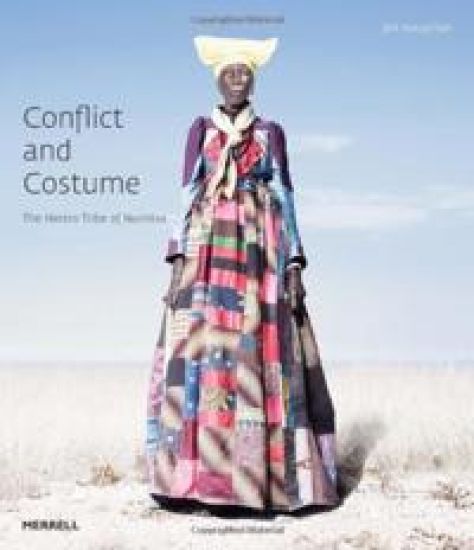
The magnificent costume of the Herero of Namibia, southern Africa, is a stark reminder of the country's tumultuous past. In the late 19th century, the influence of missionaries and traders in German Southwest Africa led to the adoption by the Herero of the European dress of the day. Over time, the voluminous gowns, completed by a cattle-horn-shaped headdress, came to represent the cultural identity of the Herero women. The men's ceremonial dress also harks back to colonial times: following the brutal war of 1904, the Herero adapted the uniforms of German soldiers for their own Otruppe ('troops') movement. In Conflict and Costume, acclaimed photographer Jim Naughten captures the colourful Herero attire in a series of spectacular portraits. Set against the Namibian landscape, these dramatic images show the striking costumes and their proud owners to full effect: men in elaborate, home-made paramilitary uniforms, and women in floor-length frocks with matching horns. Dr Lutz Marten contributes an insightful text that places the dress in its historical context.
The Dynamics of Language

The Dynamics of Language

Ronnie Cann; Ruth Kempson; Lutz Marten

Elsevier Science Publishing Co Inc
2006
sidottu
For the whole of the last half-century, most theoretical syntacticians have assumed that knowledge of language is different from the tasks of speaking and understanding. There have been some dissenters, but, by and large, this view still holds sway. This book takes a different view: it continues the task set in hand by Kempson et al (2001) of arguing that the common-sense intuition is correct that knowledge of language consists in being able to use it in speaking and understanding. The Dynamics of Language argues that interpretation is built up across as sequence of words relative to some context and that this is all that is needed to explain the structural properties of language. The dynamics of how interpretation is built up is the syntax of a language system. The authors' first task is to convey to a general linguistic audience with a minimum of formal apparatus, the substance of that formal system. Secondly, as linguists, they set themselves the task of applying the formal system to as broad an array of linguistic puzzles as possible, the languages analysed ranging from English to Japanese and Swahili. It argues that knowledge in language consists of being able to use it in speaking and understanding. It analyses a variety of languages, from English to Japanese and Swahili. It appeals to a wide audience in the disciplines of language, linguistics, anthropology, education, psychology, cognitive science, law, media studies, and medicine.