Kirjojen hintavertailu – 12 903 725 kirjaa ja 27 kauppaa
Kirjailija
Lyman Frank Baum
Kirjat ja teokset yhdessä paikassa: 247 kirjaa, julkaisuja vuosilta 1902–2026, suosituimpiin kuuluu Der Zauberer von Oz. Vertaile teosten hintoja ja tarkista saatavuus suomalaisista kirjakaupoista.
"To be sure, miss; see as far as Butterfield, if you like," said the shaggy man. "You take the branch next the willow stump, I b'lieve; or else the branch by the gopher holes; or else-" "Won't any of 'em do, miss?" "'Course not, Shaggy Man. You must take the right road to get to Butterfield." "And is that the one by the gopher stump, or-" "Dear me " cried Dorothy. "I shall have to show you the way, you're so stupid. Wait a minute till I run in the house and get my sunbonnet." The shaggy man waited. He had an oat-straw in his mouth, which he chewed slowly as if it tasted good; but it didn't. There was an apple-tree beside the house, and some apples had fallen to the ground. The shaggy man thought they would taste better than the oat-straw, so he walked over to get some. A little black dog with bright brown eyes dashed out of the farm-house and ran madly toward the shaggy man, who had already picked up three apples and put them in one of the big wide pockets of his shaggy coat. The little dog barked and made a dive for the shaggy man's leg; but he grabbed the dog by the neck and put it in his big pocket along with the apples.
I know that some of you have been waiting for this story of the Tin Woodman, because many of my correspondents have asked me, time and again what ever became of the "pretty Munchkin girl" whom Nick Chopper was engaged to marry before the Wicked Witch enchanted his axe and he traded his flesh for tin. I, too, have wondered what became of her, but until Woot the Wanderer interested himself in the matter the Tin Woodman knew no more than we did. However, he found her, after many thrilling adventures, as you will discover when you have read this story.
"Stop a minute, Scraps " she called, "Have you seen Ozma this morning?" "Not I " replied the queer girl, dancing nearer." I lost both my eyes in a tussle with the Woozy last night, for the creature scraped 'em both off my face with his square paws. So I put the eyes in my pocket, and this morning Button-Bright led me to Aunt Em, who sewed 'em on again. So I've seen nothing at all today, except during the last five minutes. So of course I haven't seen Ozma." "Very well, Scraps," said Dorothy, looking curiously at the eyes, which were merely two round, black buttons sewed upon the girl's face. There were other things about Scraps that would have seemed curious to one seeing her for the first time. She was commonly called "the Patchwork Girl" because her body and limbs were made from a gay-colored patchwork quilt which had been cut into shape and stuffed with cotton. Her head was a round ball stuffed in the same manner and fastened to her shoulders. For hair, she had a mass of brown yarn, and to make a nose for her a part of the cloth had been pulled out into the shape of a knob and tied with a string to hold it in place. Her mouth had been carefully made by cutting a slit in the proper place and lining it with red silk, adding two rows of pearls for teeth and a bit of red flannel for a tongue.
The Master Key: An Electrical Fairy Tale, Founded Upon the Mysteries of Electricity and the Optimism of Its Devotees is a 1901 novel by L. Frank Baum, author of The Wonderful Wizard of Oz. The protagonist is a boy named Rob Joslyn. Rob is an electrical experimenter whose father encourages him and sees that he "never lacked batteries, motors or supplies of any sort." A "net-work sic] of wires soon ran throughout the house". He loses track of the elaborately interconnected wires, and trying to get a cardboard house to light up, he "experimented in a rather haphazard fashion, connecting this and that wire blindly and by guesswork, in the hope that he would strike the right combination." There is a bright flash, and a being who calls himself the Demon of Electricity appears. He tells Rob that he has accidentally "touched the Master Key of Electricity" and is entitled to "to demand from me three gifts each week for three successive weeks." In 1901, the New York Times ran a brief notice calling it "a story for boys-all boys who love good wholesome adventure and exciting incident. It is a strange story of the electrical Demon, treating of powers that dominate all nature, and written for the eager, alert, and striving American boy.", and revolutionary use of the new Technicolor. This classic title has been published by RADLEY BOOKS. Each RADLEY CLASSIC is a meticulously restored, luxurious and faithful reproduction of a classic book; produced with elegant text layout, clarity of presentation, and stylistic features that make reading a true pleasure. Special attention is given to legible fonts and adequate letter sizing, correct line length for readability, generous margins and triple lead (lavish line separation); plus we do not allow any mistakes/changes/additions to creep into the author's words. Visit RADLEY BOOKS at www.radleybooks.com (or search RADLEY CLASSIC on Amazon) to see more classic book titles in this series.
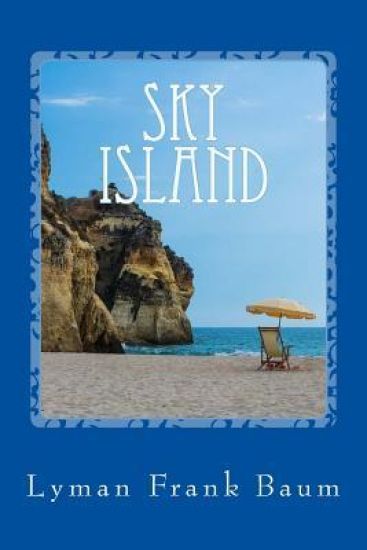
Trot is near her home on the coast of southern California when she meets a strange little boy with a large umbrella. Button Bright has been using his family's magic umbrella to take long-range journeys from his Philadelphia home, and has gotten as far as California. After an explanation of how the magic umbrella works, the two children, joined by Cap'n Bill, decide to take a trip to a nearby island; they call it "Sky island."
In which are related the Exciting Experiences of Princess Ozma of Oz, and Dorothy, in their hazardous journey to the home of the Flatheads, and to the Magic Isle of the Skeezers, and how they were rescued from dire peril by the sorcery of Glinda the Good This Book is Dedicated to My Son Robert Stanton Baum Chapter 1 The Call to Duty Glinda, the good Sorceress of Oz, sat in the grand court of her palace, surrounded by her maids of honor-a hundred of the most beautiful girls of the Fairyland of Oz. The palace court was built of rare marbles, exquisitely polished. Fountains tinkled musically here and there; the vast colonnade, open to the south, allowed the maidens, as they raised their heads from their embroideries, to gaze upon a vista of rose-hued fields and groves of trees bearing fruits or laden with sweet-scented flowers. At times one of the girls would start a song, the others joining in the chorus, or one would rise and dance, gracefully swaying to the music of a harp played by a companion. And then Glinda smiled, glad to see her maids mixing play with work. Presently among the fields an object was seen moving, threading the broad path that led to the castle gate. Some of the girls looked upon this object enviously; the Sorceress merely gave it a glance and nodded her stately head as if pleased, for it meant the coming of her friend and mistress-the only one in all the land that Glinda bowed to. Then up the path trotted a wooden animal attached to a red wagon, and as the quaint steed halted at the gate there descended from the wagon two young girls, Ozma, Ruler of Oz, and her companion, Princess Dorothy. Both were dressed in simple white muslin gowns, and as they ran up the marble steps of the palace they laughed and chatted as gaily as if they were not the most important persons in the world's loveliest fairyland. The maids of honor had risen and stood with bowed heads to greet the royal Ozma, while Glinda came forward with outstretched arms to greet her guests. "We've just come on a visit, you know," said Ozma. "Both Dorothy and I were wondering how we should pass the day when we happened to think we'd not been to your Quadling Country for weeks, so we took the Sawhorse and rode straight here." "And we came so fast," added Dorothy, "that our hair is blown all fuzzy, for the Sawhorse makes a wind of his own. Usually it's a day's journey from the Em'rald City, but I don't s'pose we were two hours on the way." "You are most welcome," said Glinda the Sorceress, and led them through the court to her magnificent reception hall. Ozma took the arm of her hostess, but Dorothy lagged behind, kissing some of the maids she knew best, talking with others, and making them all feel that she was their friend.
The Army of Children which besieged the Postoffice, conquered the Postmen and delivered to me its imperious Commands, insisted that Trot and Cap'n Bill be admitted to the Land of Oz, where Trot could enjoy the society of Dorothy, Betsy Bobbin and Ozma, while the one- legged sailor-man might become a comrade of the Tin Woodman, the Shaggy Man, Tik-Tok and all the other quaint people who inhabit this wonderful fairyland. It was no easy task to obey this order and land Trot and Cap'n Bill safely in Oz, as you will discover by reading this book. Indeed, it required the best efforts of our dear old friend, the Scarecrow, to save them from a dreadful fate on the journey; but the story leaves them happily located in Ozma's splendid palace and Dorothy has promised me that Button-Bright and the three girls are sure to encounter, in the near future, some marvelous adventures in the Land of Oz, which I hope to be permitted to relate to you in the next Oz Book.
The Wonderful Wizard of Oz is an American children's novel written by author L. Frank Baum, originally published by the George M. Hill Company in Chicago on May 17, 1900. The story chronicles the adventures of a young farm girl named Dorothy in the magical Land of Oz, after she and her pet dog Toto are swept away from their Kansas home by a cyclone. The novel is one of the best-known stories in American literature and has been widely translated. The Library of Congress has declared it "America's greatest and best-loved homegrown fairytale". The Wonderful Wizard of Oz has been adapted to other media numerous times, most famously in The Wizard of Oz, the 1939 film starring Judy Garland, Ray Bolger, Jack Haley, and Bert Lahr. Until this version, the book had inspired a number of now less well known stage and screen adaptations, including a profitable 1902 Broadway musical and three silent films. The 1939 film was considered innovative because of its songs, special effects, and revolutionary use of the new Technicolor. This classic title has been published by RADLEY BOOKS. Each RADLEY CLASSIC is a meticulously restored, luxurious and faithful reproduction of a classic book; produced with elegant text layout, clarity of presentation, and stylistic features that make reading a true pleasure. Special attention is given to legible fonts and adequate letter sizing, correct line length for readability, generous margins and triple lead (lavish line separation); plus we do not allow any mistakes/changes/additions to creep into the author's words. Visit RADLEY BOOKS at www.radleybooks.com (or search RADLEY CLASSIC on Amazon) to see more classic book titles in this series.
Here is a story with a boy hero, and a boy of whom you have never before heard. There are girls in the story, too, including our old friend Dorothy, and some of the characters wander a good way from the Land of Oz before they all assemble in the Emerald City to take part in Ozma's banquet. Indeed, I think you will find this story quite different from the other histories of Oz, but I hope you will not like it the less on that account. If I am permitted to write another Oz book it will tell of some thrilling adventures encountered by Dorothy, Betsy Bobbin, Trot and the Patchwork Girl right in the Land of Oz, and how they discovered some amazing creatures that never could have existed outside a fairy-land. I have an idea that about the time you are reading this story of Rinkitink I shall be writing that story of Adventures in Oz. Don't fail to write me often and give me your advice and suggestions, which I always appreciate. I get a good many letters from my readers, but every one is a joy to me and I answer them as soon as I can find time to do so.
WITH "The Sea Fairies," my book for 1911, I ventured into a new field of fairy literature and to my delight the book was received with much approval by my former readers, many of whom have written me that they like Trot "almost as well as Dorothy." As Dorothy was an old, old friend and Trot a new one, I think this is very high praise for Cap'n Bill's little companion. Cap'n Bill is also a new character who seems to have won approval, and so both Trot and the old sailor are again introduced in the present story, which may be called the second of the series of adventures of Trot and Cap'n Bill. But you will recognize some other acquaintances in "Sky Island." Here, for instance, is Button-Bright, who once had an adventure with Dorothy in Oz, and without Button-Bright and his Magic Umbrella you will see that the story of "Sky Island" could never have been written. As Polychrome, the Rainbow's Daughter, lives in the sky, it is natural that Trot and Button-Bright meet her during their adventures there. This story of Sky Island has astonished me considerably, and I think it will also astonish you.
No one intended to leave Martha alone that afternoon, but it happened that everyone was called away, for one reason or another. Mrs. McFarland was attending the weekly card party held by the Women's Anti-Gambling League. Sister Nell's young man had called quite unexpectedly to take her for a long drive. Papa was at the office, as usual. It was Mary Ann's day out. As for Emeline, she certainly should have stayed in the house and looked after the little girl; but Emeline had a restless nature. "Would you mind, miss, if I just crossed the alley to speak a word to Mrs. Carleton's girl?" she asked Martha. "'Course not," replied the child.
Glinda, the good Sorceress of Oz, sat in the grand court of her palace, surrounded by her maids of honor-a hundred of the most beautiful girls of the Fairyland of Oz. The palace court was built of rare marbles, exquisitely polished. Fountains tinkled musically here and there; the vast colonnade, open to the south, allowed the maidens, as they raised their heads from their embroideries, to gaze upon a vista of rose-hued fields and groves of trees bearing fruits or laden with sweet-scented flowers. At times one of the girls would start a song, the others joining in the chorus, or one would rise and dance, gracefully swaying to the music of a harp played by a companion. And then Glinda smiled, glad to see her maids mixing play with work.
Curiously enough, in the events which have taken place in the last few years in our "great outside world," we may find incidents so marvelous and inspiring that I cannot hope to equal them with stories of The Land of Oz. However, "The Magic of Oz" is really more strange and unusual than anything I have read or heard about on our side of The Great Sandy Desert which shuts us off from The Land of Oz, even during the past exciting years, so I hope it will appeal to your love of novelty.
The Road to Oz: In Which Is Related How Dorothy Gale of Kansas, The Shaggy Man, Button Bright, and Polychrome the Rainbow's Daughter Met on an Enchanted Road and Followed it All the Way to the Marvelous Land of Oz. is the fifth of L. Frank Baum's Land of Oz books. It was originally published on July 10, 1909 and documents the adventures of Dorothy Gale's fourth visit to the Land of Oz. The book was dedicated to Joslyn Stanton Baum, the author's first grandson, the child of Baum's eldest son Frank Joslyn Baum.