Kirjojen hintavertailu – 12 903 724 kirjaa ja 27 kauppaa

Kirjailija

Lynda Johnston

Kirjat ja teokset yhdessä paikassa: 8 kirjaa, julkaisuja vuosilta 2005–2023, suosituimpiin kuuluu Rethinking Transgender Identities. Vertaile teosten hintoja ja tarkista saatavuus suomalaisista kirjakaupoista.

8 kirjaa

Kirjojen julkaisuvuodet: 2005–2023.

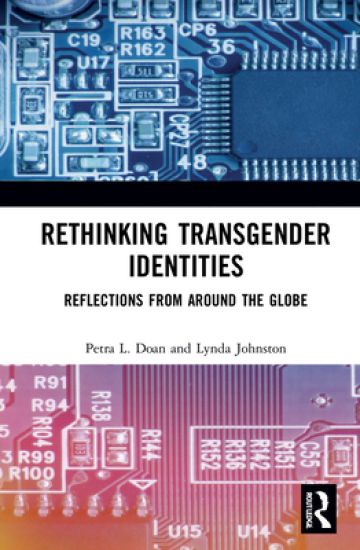
Rethinking Transgender Identities

Rethinking Transgender Identities

Petra L. Doan; Lynda Johnston

TAYLOR FRANCIS LTD
2023
nidottu
This volume explores the diversity and complexity of transgender people’s experiences and demonstrates that gendered bodies are constructed through different social, cultural and economic networks and through different spaces and places. Rethinking Transgender Identities brings together original research in the form of interviews, participatory methods, surveys, cultural texts and insightful commentary. The contributing scholars and activists are located in Aotearoa New Zealand, Brazil, Canada, Catalan, China, Japan, Scotland, Spain, and the United States. The collection explores the relationship between transgender identities and politics, lived realities, strategies, mobilizations, age, ethnicity, activisms and communities across different spatial scales and times. Taken together, the chapters extend current research and provide an uthoritative state-of-the-art review of current research, which will appeal to cholars and graduate students working within the fields of sociology, gender studies, sexuality and queer studies, family studies, media and cultural studies, psychology, health, law, criminology, politics and human geography.
Rethinking Transgender Identities

Rethinking Transgender Identities

Petra L. Doan; Lynda Johnston

Routledge
2022
sidottu

Halvin toimitettuna 240,40 €

This volume explores the diversity and complexity of transgender people’s experiences and demonstrates that gendered bodies are constructed through different social, cultural and economic networks and through different spaces and places. Rethinking Transgender Identities brings together original research in the form of interviews, participatory methods, surveys, cultural texts and insightful commentary. The contributing scholars and activists are located in Aotearoa New Zealand, Brazil, Canada, Catalan, China, Japan, Scotland, Spain, and the United States. The collection explores the relationship between transgender identities and politics, lived realities, strategies, mobilizations, age, ethnicity, activisms and communities across different spatial scales and times. Taken together, the chapters extend current research and provide an uthoritative state-of-the-art review of current research, which will appeal to cholars and graduate students working within the fields of sociology, gender studies, sexuality and queer studies, family studies, media and cultural studies, psychology, health, law, criminology, politics and human geography.
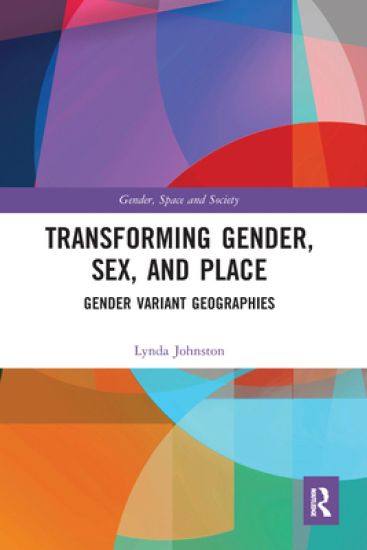
Transforming Gender, Sex, and Place

Transforming Gender, Sex, and Place

Lynda Johnston

Routledge
2020
nidottu
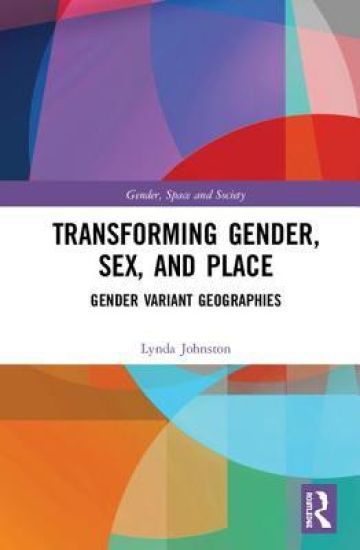
Transgender, gender variant and intersex people are in every sector of all societies, yet little is known about their relationship to place. Using a trans, feminist and queer geographical framework, this book invites readers to consider the complex relationship between transgender people, spaces and places. This book addresses questions such as, how is place and space transformed by gender variant bodies, and vice versa? Where do some gender variant people feel in and / or out of place? What happens to space when binary gender is unravelled and subverted? Exploring the diverse politics of gender variant embodied experiences through interviews and community action, this book demonstrates that gendered bodies are constructed through different social, cultural and economic networks. Firsthand stories and international examples reveal how transgender people employ practices and strategies to both create and contest different places, such as: bodies; homes; bathrooms; activist spaces; workplaces; urban night spaces; nations and transnational borders. Arguing that bodies, gender, sex and space are inextricably linked, this book brings together contemporary scholarly debates, original empirical material and popular culture to consider bodies and spaces that revolve around, and resist, binary gender. It will be a valuable resource in Geography, Gender and Sexuality studies.
Transforming Gender, Sex, and Place

Transforming Gender, Sex, and Place

Lynda Johnston

Routledge
2018
sidottu
Transgender, gender variant and intersex people are in every sector of all societies, yet little is known about their relationship to place. Using a trans, feminist and queer geographical framework, this book invites readers to consider the complex relationship between transgender people, spaces and places. This book addresses questions such as, how is place and space transformed by gender variant bodies, and vice versa? Where do some gender variant people feel in and / or out of place? What happens to space when binary gender is unravelled and subverted? Exploring the diverse politics of gender variant embodied experiences through interviews and community action, this book demonstrates that gendered bodies are constructed through different social, cultural and economic networks. Firsthand stories and international examples reveal how transgender people employ practices and strategies to both create and contest different places, such as: bodies; homes; bathrooms; activist spaces; workplaces; urban night spaces; nations and transnational borders. Arguing that bodies, gender, sex and space are inextricably linked, this book brings together contemporary scholarly debates, original empirical material and popular culture to consider bodies and spaces that revolve around, and resist, binary gender. It will be a valuable resource in Geography, Gender and Sexuality studies.
Space, Place, and Sex

Space, Place, and Sex

Lynda Johnston; Robyn Longhurst

Rowman Littlefield Publishers
2009
sidottu
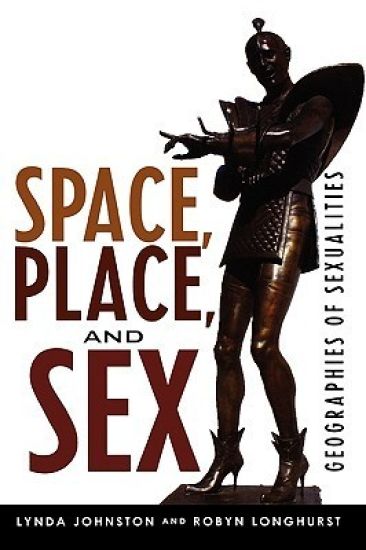
This accessible and engaging book explores the ways that "space, place, and sex" are inextricably linked from the micro to the macro level, from the individual body to the globe. Drawing on queer, feminist, gender, social, and cultural studies, Lynda Johnston and Robyn Longhurst highlight the complex nature of sex and sexuality and how they are connected to both virtual and physical spaces and places. Their aim is to enrich our understanding of sexual identities and practices—whether they be lesbian, gay, bisexual, transsexual, asexual, queer, or heterosexual. They show that bodies are defined and connected through media such as television, movies, ads, and the Internet, as well as through "real" places such as homes, churches, sports arenas, city streets, beaches, and wilderness. Drawing on a diverse array of historical and contemporary examples, the authors argue convincingly that sexual politics permeate all places and spaces at every level of geographical scale. Thus, they illustrate, sexuality affects the way people live in and interact with space and place, as space and place in turn affect people's sexuality.
Space, Place, and Sex

Space, Place, and Sex

Lynda Johnston; Robyn Longhurst

Rowman Littlefield Publishers
2009
nidottu
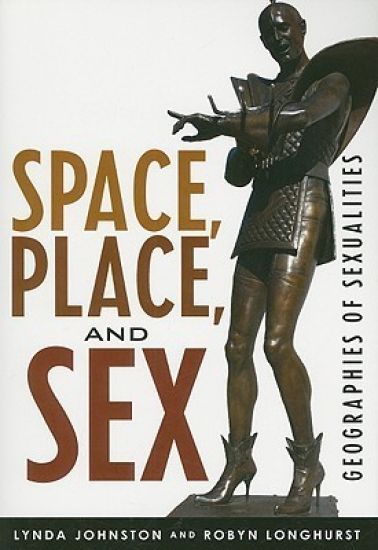
This accessible and engaging book explores the ways that "space, place, and sex" are inextricably linked from the micro to the macro level, from the individual body to the globe. Drawing on queer, feminist, gender, social, and cultural studies, Lynda Johnston and Robyn Longhurst highlight the complex nature of sex and sexuality and how they are connected to both virtual and physical spaces and places. Their aim is to enrich our understanding of sexual identities and practices—whether they be lesbian, gay, bisexual, transsexual, asexual, queer, or heterosexual. They show that bodies are defined and connected through media such as television, movies, ads, and the Internet, as well as through "real" places such as homes, churches, sports arenas, city streets, beaches, and wilderness. Drawing on a diverse array of historical and contemporary examples, the authors argue convincingly that sexual politics permeate all places and spaces at every level of geographical scale. Thus, they illustrate, sexuality affects the way people live in and interact with space and place, as space and place in turn affect people's sexuality.
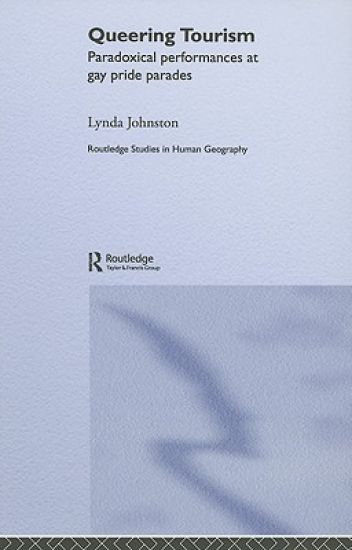
Queering Tourism

Queering Tourism

Lynda Johnston

Routledge
2009
nidottu
Gay Pride parades are annual arenas of queer public culture, where embodied notions of subjectivity are sold, enacted, transgressed and debated. From Sydney to Rome, Queering Tourism analyzes the paradoxes of gay pride parades as tourist events, exploring how the public display of queer bodies – the way they look, what they do, who watches them, and under what regulations – is profoundly important in constructing sexualized subjectivities of bodies and cities. Drawing on extensive collections of interviews, visual and written media accounts, photographs, advertisements, and her own participation in these parades, Lynda Johnston gives a vibrant account of ‘queer tourism’ in New Zealand, Australia, Scotland and Italy. For each place, she looks at how the relationship between the viewer and the viewed produces paradoxical concepts of bodily difference, and considers how the queered spaces of gay pride parades may prompt new understandings of power and tourism. Examining the intersection of sexuality, space and tourism, and using empirical data gathered at Gay Pride parades such as the Sydney Mardi Gras, New Zealand HERO Parade and World Pride Roma 2000, this important work produces a deconstructive account of tourism and presents new ways of thinking through the powerful processes of subjectivity formation.
Queering Tourism

Queering Tourism

Lynda Johnston

Routledge
2005
sidottu
Gay Pride parades are annual arenas of queer public culture, where embodied notions of subjectivity are sold, enacted, transgressed and debated. From Sydney to Rome, Queering Tourism analyses the paradoxes of gay pride parades as tourist events, exploring how the public display of queer bodies - the way they look, what they do, who watches them, and under what regulations - is profoundly important in constructing sexualized subjectivities of bodies and cities. Drawing on extensive collections of interviews, visuals and written media accounts, photographs, advertisements, and her own participation in these parades, Lynda Johnston gives a vibrant account of ‘queer tourism’ in New Zealand, Australia, Scotland and Italy. For each place, she looks at how the relationship between the viewer and the viewed produces paradoxical concepts of bodily difference, and considers how the queered spaces of gay pride parades may prompt new understandings of power and tourism. Examining the intersection of sexuality, space and tourism, and using empirical data gathered at Gay pride parades such as the Sydney Mardi Gras, New Zealand HERO Parade and World Pride Roma 2000, this important work produces a deconstructive account of tourism and presents new ways of thinking through the powerful processes of subjectivity formation.