Kirjojen hintavertailu – 12 876 530 kirjaa ja 26 kauppaa

Kirjailija

Lynne Viola

Kirjat ja teokset yhdessä paikassa: 6 kirjaa, julkaisuja vuosilta 1989–2019, suosituimpiin kuuluu A Researcher's Guide to Sources on Soviet Social History in the 1930s. Vertaile teosten hintoja ja tarkista saatavuus suomalaisista kirjakaupoista.

6 kirjaa

Kirjojen julkaisuvuodet: 1989–2019.

Stalinist Perpetrators on Trial

Stalinist Perpetrators on Trial

Lynne Viola

Oxford University Press Inc
2019
nidottu
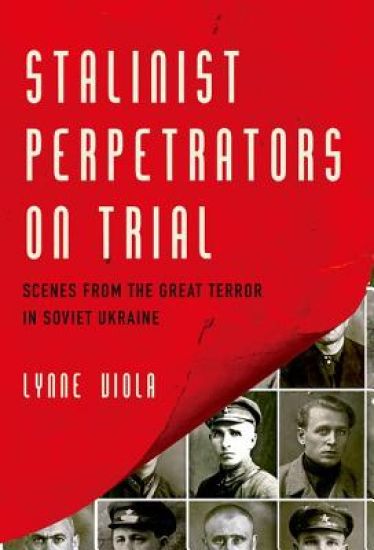
Between the summer of 1937 and November 1938, the Stalinist regime arrested over 1.5 million people for "counterrevolutionary" and "anti-Soviet" activity and either summarily executed or exiled them to the Gulag. While we now know a great deal about the experience of victims of the Great Terror, we know almost nothing about the lower- and middle-level Narodnyi Komissariat Vnutrennikh Del (NKVD), or secret police, cadres who carried out Stalin's murderous policies. Unlike the postwar, public trials of Nazi war criminals, NKVD operatives were tried secretly. And what exactly happened in those courtrooms was unknown until now. In what has been dubbed "the purge of the purgers," almost one thousand NKVD officers were prosecuted by Soviet military courts. Scapegoated for violating Soviet law, they were charged with multiple counts of fabrication of evidence, falsification of interrogation protocols, use of torture to secure "confessions," and murder during pre-trial detention of "suspects" - and many were sentenced to execution themselves. The documentation generated by these trials, including verbatim interrogation records and written confessions signed by perpetrators; testimony by victims, witnesses, and experts; and transcripts of court sessions, provides a glimpse behind the curtains of the terror. It depicts how the terror was implemented, what happened, and who was responsible, demonstrating that orders from above worked in conjunction with a series of situational factors to shape the contours of state violence. Based on chilling and revelatory new archival documents from the Ukrainian secret police archives, Stalinist Perpetrators on Trial illuminates the darkest recesses of Soviet repression -- the interrogation room, the prison cell, and the place of execution -- and sheds new light on those who carried out the Great Terror.
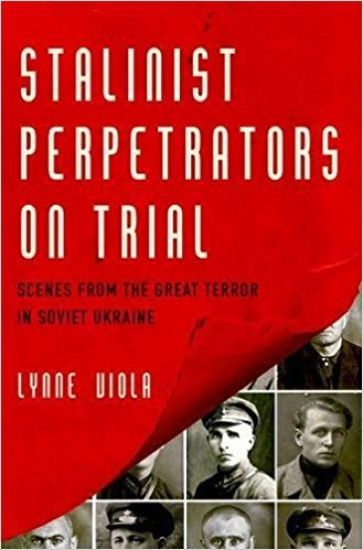
Stalinist Perpetrators on Trial

Stalinist Perpetrators on Trial

Lynne Viola

Oxford University Press Inc
2018
sidottu
Between the summer of 1937 and November 1938, the Stalinist regime arrested over 1.5 million people for "counterrevolutionary" and "anti-Soviet" activity and either summarily executed or exiled them to the Gulag. While we now know a great deal about the experience of victims of the Great Terror, we know almost nothing about the lower- and middle-level Narodnyi Komissariat Vnutrennikh Del (NKVD), or secret police, cadres who carried out Stalin's murderous policies. Unlike the postwar, public trials of Nazi war criminals, NKVD operatives were tried secretly. And what exactly happened in those courtrooms was unknown until now. In what has been dubbed "the purge of the purgers," almost one thousand NKVD officers were prosecuted by Soviet military courts. Scapegoated for violating Soviet law, they were charged with multiple counts of fabrication of evidence, falsification of interrogation protocols, use of torture to secure "confessions," and murder during pre-trial detention of "suspects" - and many were sentenced to execution themselves. The documentation generated by these trials, including verbatim interrogation records and written confessions signed by perpetrators; testimony by victims, witnesses, and experts; and transcripts of court sessions, provides a glimpse behind the curtains of the terror. It depicts how the terror was implemented, what happened, and who was responsible, demonstrating that orders from above worked in conjunction with a series of situational factors to shape the contours of state violence. Based on chilling and revelatory new archival documents from the Ukrainian secret police archives, Stalinist Perpetrators on Trial illuminates the darkest recesses of Soviet repression -- the interrogation room, the prison cell, and the place of execution -- and sheds new light on those who carried out the Great Terror.
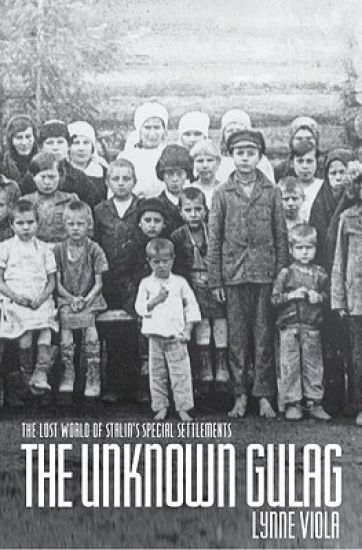
The Unknown Gulag

The Unknown Gulag

Lynne Viola

Oxford University Press Inc
2009
nidottu

Halvin toimitettuna 30,50 €

One of Stalin's most heinous acts was the ruthless repression of millions of peasants in the early 1930s, an act that established the very foundations of the gulag. Solzhenitsyn barely touched upon this brutal episode in his magisterial Gulag Archipelago and subsequent writers passed over the subject in silence. Now, with the opening of Soviet archives, an entirely new dimension of Stalin's brutality has been uncovered. The Unknown Gulag is the first book in English to explore this untold story. Historian Lynne Viola reveals how, in one of the most egregious episodes of Soviet repression, Stalin drove two million peasants into internal exile, to work as forced laborers. The book shows how entire families were callously thrown out of their homes, banished from their villages, and sent to the icy hinterlands of the Soviet Union, where in the course of a decade, almost a half million would die as a result of disease, starvation, or exhaustion. Drawing on pioneering research in the previously closed archives of the central and provincial Communist Party, the Soviet state, and the secret police, Viola documents the history of this tragic episode. She delves into what long remained an entirely hidden world within the gulag, throwing new light on Stalin's consolidation of power, the rise of the secret police as a state within the state, and the complex workings of the Soviet system. But first and foremost, she movingly captures the day-to-day life of Stalin's first victims, telling the stories of the peasant families who experienced one of the twentieth century's most horrific instances of mass repression. A compelling story of human suffering and survival in Stalin's Soviet Union, here is a new chapter in the history of the gulag, virtually hidden from sight until now.
A Researcher's Guide to Sources on Soviet Social History in the 1930s
The Stalin era has been less accessible to researchers than either the preceding decade or the postwar era. The basic problem is that during the Stalin years censorship restricted the collection and dissemination of information (and introduced bias and distortion into the statistics that were published), while in the post-Stalin years access to archives and libraries remained tightly controlled. Thus it is not surprising that one of the main manifestations of glasnost has been the effort to open up records of the 1930s. In this volume Western and Soviet specialists detail the untapped potential of sources on this period of Soviet social history and also the hidden traps that abound. The full range of sources is covered, from memoirs to official documents, from city directories to computerized data bases.
The Best Sons of the Fatherland

The Best Sons of the Fatherland

Lynne Viola

Oxford University Press Inc
1989
nidottu
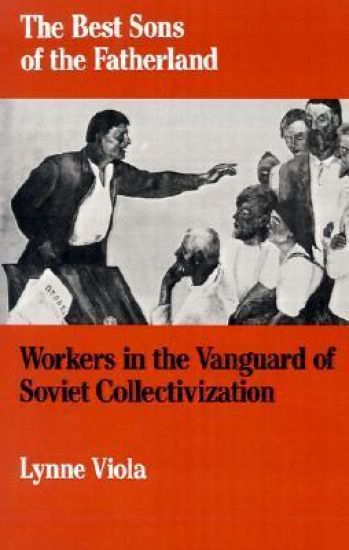
In this ground- breaking study, Lynne Viola - the first Western scholar to gain access to the Soviet state archives on collectivization - brilliantly excavates a lost chapter in the history of the Stalin revolution. This book affords an intimate look at the campaign of the `25,000ers', the industrial workers who were sent into the Soviet countryside to implement collectivization during the 1930s.