Kirjojen hintavertailu – 12 903 725 kirjaa ja 27 kauppaa

Kirjailija

M CLEMENT HALL

Kirjat ja teokset yhdessä paikassa: 33 kirjaa, julkaisuja vuosilta 2007–2018, suosituimpiin kuuluu THE MURDER OF RICHARD HUNNE London in the Early Reign of King Henry VIII. Vertaile teosten hintoja ja tarkista saatavuus suomalaisista kirjakaupoista.

Nimi esiintyy myös muodoissa: M. Clement Hall

33 kirjaa

Kirjojen julkaisuvuodet: 2007–2018.

The History of Iraq, 1900-2012

The History of Iraq, 1900-2012

M. Clement Hall; Charles River

Createspace Independent Publishing Platform
2018
nidottu
*Covers the history of Iraq from its time as part of the Ottoman Empire to today. *Explains the political, religious, ethnic, and cultural differences within Iraqi society. For much of the past 30 years, Iraq has been one of the world's greatest hotspots. The 1980s saw Ba'athist strongman Saddam Hussein go to war with Iran, as well as the Kurds, who maintained an autonomous region of their own in northern Iraq. Hussein's invasion of Kuwait touched off a Gulf War that was followed by biting sanctions. And the 2003 American led invasion against Hussein's regime provided the uninformed an all too brutal crash course on Iraq's ethnic and religious divisions, and the Middle East's as a whole. For several years, thousands of American soldiers died while fighting both Sunni groups affiliated with al-Qaeda and Shiite militias affiliated with Iran, all while the Sunnis and Shiites targeted each other across the country. Americans became all too familiar with places like Fallujah and names like al-Sadr and al-Zarqawi. Today many people know more about Iraq than they ever wanted to know, but how did Iraq get to where it is today, at the forefront of global affairs? The history of Iraq stretches back thousands of years, all the way back to the ancient civilizations in Mesopotamia, and like other Middle Eastern nations, the modern state of Iraq was forged through several turbulent decades following World War I, the disbanding of the Ottoman Empire, and conflict with imperialistic Western powers. The History of Iraq, 1900-2012 comprehensively and descriptively covers this history, progressing through a timeline to explain how the modern state of Iraq was formed and explaining the religious, ethnic, and cultural differences within Iraqi society. The History of Iraq will bring you up to speed on one of the world's crucial countries today.
The History of Iran from Ancient Persia to the Ayatollahs

The History of Iran from Ancient Persia to the Ayatollahs

M. Clement Hall; Charles River

Createspace Independent Publishing Platform
2018
nidottu
*Covers the prehistoric era to the controversy over Iran's nuclear program. *Includes maps and pictures of important people. In 2011, violence erupted across the Middle East in the form of revolts against authoritarian regimes. Across the region, from Egypt to Syria, thousands fought and died to push out despots, some successfully and others unsuccessfully. Yet despite this historic violence, much of the world's foreign policy focus has been on Iran's nuclear program, and the potential for war between Iran, Israel, and the West. Although Iran had peaceful nuclear programs with Western cooperation before the Islamic revolution, it's widely believed that the regime, headed by Ayatollah Khomeini and now Ayatollah Khameini, began to work in earnest toward a nuclear program that could result in bombs around the late '90s. Still, it was (and remains) unclear the extent to which Iran's nuclear program has progressed, with the potential date of Iran obtaining nuclear weapons constantly changing. As Graham Allison, a Harvard professor and leading security strategist, put it in November 2011, the Iranian nuclear program is a "Cuban missile crisis in slow motion." People may know what's going on in Iran today, but the obsession over its nuclear program often overlooks the unique intricacies of the nation and its people, particularly the long, illustrious history of the Persian Empire. Iranians have long been proud of their history and culture, to the extent that foreign negotiators who do not entirely understand the history and culture have referred to a "Persian psyche". How did Iran get to where it is today, at the forefront of global affairs? The history of Iran and the theme of Persian conflict with the West stretches back thousands of years, and it is a unique history of empire, culture, art, pride, and religious nationalism. The History of Iran from Ancient Persia to the Ayatollahs comprehensively and descriptively covers this history, progressing through a timeline dating back to antiquity and examining all of the different religious, political, foreign, and military issues that affect Iran and are affected by Iran today. Along with maps showing how the modern state of Iran came to be formed, The History of Iran from Ancient Persia to the Ayatollahs will bring readers up to speed on one of the world's crucial countries today.
The History of Syria: 1900-2012

The History of Syria: 1900-2012

M. Clement Hall; Charles River

Createspace Independent Publishing Platform
2018
nidottu
As one of the hottest political topics in the world today, nearly everyone is aware of the ongoing violence in Syria, between forces loyal to the regime of Bashar al-Assad and opposition looking to overthrow the regime. Within that narrative are a number of sensitive issues, including sectarian strife between the majority Sunni population and the Alawites, not to mention Christians. People may know what's going on in Syria today, but how did Syria get to where it is today, at the forefront of the Arab Spring? The history of Syria in the last century is one of turbulence, violence, and political intrigue, with local religious sects battling for control of the land while foreign powers vied to maintain influence over the region. What resulted was a toxic and twisted mess that has precipitously affected the entire region, from Israel and Lebanon to Iran and Iraq. The History of Syria: 1900-2012 comprehensively and descriptively unweaves the web, progressing through the history of Syria from the days of the Ottoman Empire to now, by examining all of the different religious, political, foreign, and military issues that affect Syria and are affected by Syria today. Along with maps showing how the modern state of Syria came to be formed, The History of Syria: 1900-2012 will bring readers up to speed on one of the world's most volatile and violent hotspots today.
The History of Modern Egypt: From Napoleon to Now

The History of Modern Egypt: From Napoleon to Now

M. Clement Hall; Charles River

Createspace Independent Publishing Platform
2018
nidottu
*Includes pictures of important people, places, and events in Egyptian history. In the last year, Egypt has undergone a revolution that expelled its authoritarian leader of nearly 30 years and implemented elections that have pitted the Egyptian military in a power struggle with the Muslim Brotherhood, the long-time Islamic opposition group with ties to Hamas and elements of al-Qaeda. Making everything that much more surreal, the events have played out before well placed television cameras with continuous "real time" coverage of the revolution and ongoing turmoil, and foreign nations around the world eagerly await or dread the end result. The situation in Egypt sounds messy today, but strife in Egypt is hardly a new occurrence. In fact, conflict has been more of a rule than exception since the end of the 18th century, when Western powers, beginning with Napoleon and the French, got involved in the territory that was at that point a part of the Ottoman Turkish Empire. Since then, European powers came into conflict with each other and local Egyptian officials in their imperialistic efforts, Egyptian nationalists tried to do away with foreign interference, and the critically important Suez Canal became a geopolitical hotspot. And when Egypt finally did receive full independence and sovereignty from the British, it was subjected to conflict between religious extremists, secular forces, pan-Arab nationalists, and oppressive strongmen. The History of Modern Egypt comprehensively covers this turbulent history, helping to explain and sort through all the different forces at play in Egypt over the last 215 years. At the same time, it examines and analyzes all of the different religious, political, foreign, and military issues that continue to affect Egypt today. The History of Modern Egypt will bring readers up to speed on one of the world's crucial countries today.
The History of Hamas

The History of Hamas

M. Clement Hall; Charles River

Createspace Independent Publishing Platform
2018
nidottu
*Discusses the origins of Hamas and important leaders like Sheikh Yassin, Khaled Meshaal, and others. *Covers the Middle East conflict from the formation of Israel to today. *Includes pictures of important people, places, and events. In 1988, a recently organized militant group issued its charter, which called upon Muslims to "raise the banner of Allah over every inch of Palestine." The group, an offshoot of the Muslim Brotherhood, declared, "Allah is its goal, the Prophet is the model, the Qur'an its constitution, jihad its path, and death for the sake of Allah its most sublime belief." Vowing to fight off the "Zionist invaders," the charter states, "The time will not come until Muslims will fight the Jews and kill them]; until the Jews hide behind rocks and trees, which will cry: Oh Muslim There is a Jew hiding behind me, come on and kill him " Despite having a charter that called for the murder of Jews across the world, Israel actually bolstered this fundamentalist religious group, universally known as Hamas, during its formative years in the 1980s. After occupying the Gaza Strip, Israel encouraged the rise of Islamists as a way of undercutting the secular Palestine Liberation Organization, which Israel had always viewed as the greater threat. One of the individuals who Israel helped was Sheikh Ahmed Yassin, leader of the Muslim Brotherhood in the Gaza Strip, who had organized a charity that built mosques, clubs, and schools there. Less than 20 years later, the political situation in the Palestinian territories became far more complicated. Although the extent of cooperation between Hamas and the Palestinian Authority during the '90s and early 2000s was disputed, Hamas was voted into power in elections in the Gaza Strip and the two sides eventually engaged in a civil war in 2007, with Hamas crushing the PA's forces in the Gaza Strip and becoming the sole power in that territory. Since Hamas' rise to power, the Gaza Strip has been subjected to war, blockades, and a tense political situation, as Israel and the U. S. have called upon Hamas to renounce violence, recognize Israel's right to exist, and honor past agreements between Israelis and Palestinians. But Hamas leaders have continued to refuse all of the preconditions and remain committed to Israel's destruction. The History of Hamas chronicles the rise of the organization to power, the influential leaders behind it, the group's fighting against Israel, and what the future might hold. Along with pictures of important people, places, and events, The History of Hamas will bring readers up to speed on one of the world's most important Middle Eastern groups today.
A Timeline History of Hezbollah

A Timeline History of Hezbollah

M. Clement Hall; Charles River

Createspace Independent Publishing Platform
2018
nidottu
*Discusses the origins of Hezbollah and important leaders like Nasrallah. *Explains Hezollah's regional relationships with various nations in the MIddle East. The phrase "east meets west" is a worn clich , but it is entirely appropriate for Lebanon, which is situated at the western end of the trade routes from Asia and the eastern end of the sea routes to Europe through the Mediterranean. It has thus bred seafarers and traders, and even today there is a widespread Diaspora of Lebanese merchants. As one of the most diverse nations in the Middle East, Lebanon has at times enjoyed a strong reputation for its cultural history (with Beirut often being compared to Paris), but it has also experienced destructive conflicts sown by social, political and religious divides, both within itself and among its neighbors. All of these factors would ultimately contribute to the formation of Hezbollah ("The Party of God"), the Shi'ite militia that is now widely considered one of the most powerful non-state groups in the world. Though their name is instantly recognizable across much of the globe, the history of Hezbollah is extremely complex. The various interests in Lebanon led to the eruption of civil war in the country in 1975, which included the participation of Syria, and the fighting was compounded when Israel invaded and occupied the southern part of Lebanon to combat members of the Palestine Liberation Organization and other Palestinians who had taken refuge in camps there. The result was a witch's brew of inter-connected alliances between forces in Lebanon, which consisted of Shiite militias, Sunni militias, Christian militias, Druze militias, Syria and Israel. In the early 1980s, Hezbollah formed with the goal of ending Israeli occupation of Lebanon, which would not fully occur until 1999, when Israel began a unilateral withdrawal from the security zone in southern Lebanon. Hezbollah filled in the vacuum in southern Lebanon and took credit for forcing Israel out, thus bolstering their standing in Lebanon, especially among the Shiite community. Far from being a local militia, however, Hezbollah has spent the past decade expanding its geopolitical influence across the Middle East. In addition to playing an important role in Lebanese politics (and recently becoming part of the government), Hezbollah cultivated ties with Syria, Iran and Hamas in opposition to Israel, which fought a controversial and deadly summer war against Hezbollah in southern Lebanon in 2006 but failed in their mission to destroy or severely damage them. And with the Arab Spring having consequences across the region and particularly in Syria, the ties between the different state and non-state actors are constantly evolving. A Timeline History of Hezbollah chronicles this complex state of affairs, charting the rise of the organization to power, the influential leaders behind it, the group's fighting against Israel, and what the future might hold. Along with pictures of important people, places, and events, This history will bring readers up to speed on one of the world's most important groups today.
The History of Afghanistan, 1600-2012

The History of Afghanistan, 1600-2012

M. Clement Hall; Charles River

Createspace Independent Publishing Platform
2017
nidottu
"We have men and we have rocks in plenty, but we have nothing else." - Dost Mohammad Khan to John Lawrence In the 21st century, as NATO's operation against the Taliban and al-Qaeda has dragged on for over a decade, the old maxim that Afghanistan is the graveyard of empires has been revived. Indeed, the rugged, desolate, and mountainous region was a place that many Westerners likely could not have found on a map before the attacks of September 11, and now the nation's border with Pakistan is one of the world's hottest spots. Thanks to Afghanistan and the "Af-Pak" theater, people continue to learn about groups like the Haqqani Network, NATO's struggles to subdue the Taliban and affiliated militants in Afghanistan are merely the latest chapter in Afghanistan's very turbulent history. Well before the current conflict, Afghanistan frustrated the Soviet Union, and various tribes and religions have attempted to gain traction there over the last several centuries. The history of Afghanistan is a lesson in convolution. How did Afghanistan get to where it is today, at the forefront of global affairs? The history of Afghanistan and its people stretch back several centuries, and it is a unique history of empire, culture, pride, and religious nationalism. The History of Afghanistan comprehensively and descriptively covers this history, progressing through a timeline dating back to antiquity and examining all of the different religious, political, foreign, and military issues that affect Afghanistan and are affected by Afghanistan today. The History of Afghanistan will bring readers up to speed on one of the world's crucial countries today.
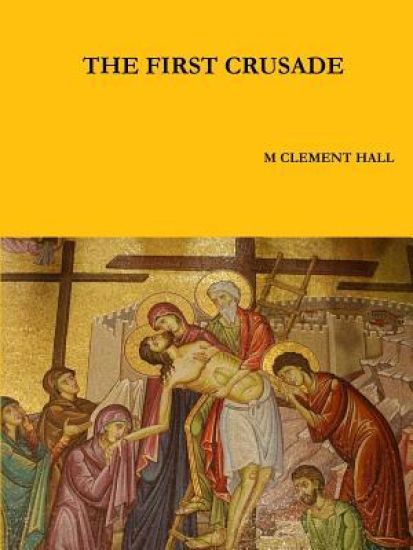
THE First Crusade

THE First Crusade

M. Clement Hall

Lulu.com
2015
nidottu
Description of the personal history and exploits of the individuals who led, recorded or were otherwise notable in the First Crusade, the only crusade that succeeded in capturing Jerusalem.
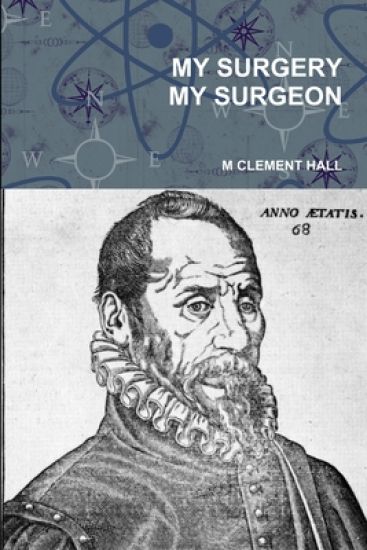
My Surgery My Surgeon

My Surgery My Surgeon

M Clement Hall

Lulu.com
2014
pokkari
If you have to have an operation you may have no choice about it. But most surgery is "elective" meaning you chose to have it. Often there is apprehension, sometimes fear amounting to a level of terror. In the opinion of the author, an experienced surgeon, fear can be greatly reduced if the patient knows what to expect, and can understand the processes passed through on the way to the actual operation, and what might be expected after the operation. The book is entirely "user friendly."
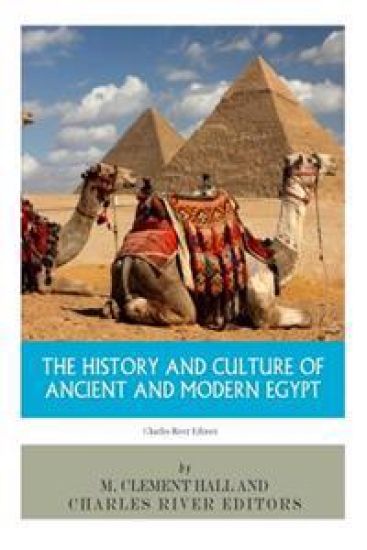
The History and Culture of Ancient and Modern Egypt

The History and Culture of Ancient and Modern Egypt

Charles River; M. Clement Hall

Createspace Independent Publishing Platform
2013
nidottu
*Covers the history and culture of Ancient Egypt from 3,000-30 B. C. *Covers the history and culture of Modern Egypt from 1800-2012. *Includes pictures of famous people, places, art, and events in Egypt. Africa may have given rise to the first human beings, and Egypt probably gave rise to the first great civilizations, which continue to fascinate modern societies across the globe nearly 5,000 years later. From the Library and Lighthouse of Alexandria to the Great Pyramid at Giza, the Ancient Egyptians produced several wonders of the world, revolutionized architecture and construction, created some of the world's first systems of mathematics and medicine, and established language and art that spread across the known world. With world-famous leaders like King Tut and Cleopatra, it's no wonder that today's world has so many Egyptologists. What makes the accomplishments of the Ancient Egyptians all the more remarkable is that Egypt was historically a place of great political turbulence. Its position made it both valuable and vulnerable to tribes across the Mediterranean and the Middle East, and Ancient Egypt had no shortage of its own internecine warfare. Its most famous conquerors would come from Europe, with Alexander the Great laying the groundwork for the Hellenic Ptolemy line and the Romans extinguishing that line after defeating Cleopatra and driving her to suicide. About 2,050 years after Cleopatra's death, Egypt still remains a volatile hotspot. In the last year, Egypt has undergone a revolution that expelled its authoritarian leader of nearly 30 years and implemented elections that have pitted the Egyptian military in a power struggle with the Muslim Brotherhood, the long-time Islamic opposition group with ties to Hamas and elements of al-Qaeda. Making everything that much more surreal, the events have played out before well placed television cameras with continuous "real time" coverage of the revolution and ongoing turmoil, and foreign nations around the world eagerly await or dread the end result. The situation in Egypt sounds messy today, but strife in Egypt is hardly a new occurrence. In fact, conflict has been more of a rule than exception since the end of the 18th century, when Western powers, beginning with Napoleon and the French, got involved in the territory that was at that point a part of the Ottoman Turkish Empire. Since then, European powers came into conflict with each other and local Egyptian officials in their imperialistic efforts, Egyptian nationalists tried to do away with foreign interference, and the critically important Suez Canal became a geopolitical hotspot. And when Egypt finally did receive full independence and sovereignty from the British, it was subjected to conflict between religious extremists, secular forces, pan-Arab nationalists, and oppressive strongmen. The History and Culture of Ancient and Modern Egypt comprehensively covers the history and culture of Ancient Egypt, looking at its religious, political, foreign and military past, and examining all the architectural and artistic achievements from 3,000-30 B. C. It also comprehensively covers this turbulent history, helping to explain and sort through all the different forces at play in Egypt over the last 215 years. Along with maps and pictures of important people, places, and events, you will learn about Ancient and Modern Egypt like you never have before.
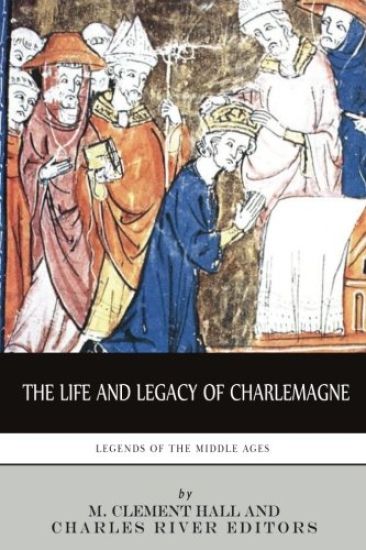
Legends of the Middle Ages: The Life and Legacy of Charlemagne

Legends of the Middle Ages: The Life and Legacy of Charlemagne

M. Clement Hall; Charles River

Createspace Independent Publishing Platform
2013
nidottu
"Right action is better than knowledge; but in order to do what is right, we must know what is right." - Charlemagne A lot of ink has been spilled covering the lives of history's most influential figures, but how much of the forest is lost for the trees? In Charles River Editors' Legends of the Middle Ages series, readers can get caught up to speed on the lives of the most important medieval men and women in the time it takes to finish a commute, while learning interesting facts long forgotten or never known. The most famous man of the Middle Ages was probably Charlemagne, and few would argue that he was also the most important man during those centuries. Upon the death of his father, Pepin the Short, in 768, Charlemagne became King of the Franks, and he proceeded to create one of the largest European empires since the collapse of Rome. Through his conquests across Western Europe and Italy, Charlemagne became the first Holy Roman Emperor after a famous imperial coronation by Pope Leo III. In becoming the first Holy Roman Emperor, Charlemagne essentially established the new order on the European continent, thereby directly influencing how European politics and royalty proceeded in the coming centuries. As if to demonstrate how large he loomed in life, Charlemagne was numbered Charles I in Germany, France, and the Holy Roman Empire. Charlemagne is also viewed as having brought about the Carolingian Renaissance, a revival of art, religion, and culture through the Catholic Church that predated the Italian Renaissance by centuries. The Carolingian Renaissance helped establish a uniform European culture, helping Charlemagne earn the title "Father of Europe". Legends of the Middle Ages: The Life and Legacy of Charlemagne chronicles Charlemagne's background, life, and influence, analyzing the legacy he left upon Europe. Along with pictures of important people, places, and events in his life, you will learn about Charlemagne like you never have before, in no time at all.
The History of Modern Egypt: From Napoleon to Now

The History of Modern Egypt: From Napoleon to Now

M. Clement Hall; Charles River

Createspace Independent Publishing Platform
2013
nidottu
*Includes pictures of important people, places, and events in Egyptian history. In the last year, Egypt has undergone a revolution that expelled its authoritarian leader of nearly 30 years and implemented elections that have pitted the Egyptian military in a power struggle with the Muslim Brotherhood, the long-time Islamic opposition group with ties to Hamas and elements of al-Qaeda. Making everything that much more surreal, the events have played out before well placed television cameras with continuous "real time" coverage of the revolution and ongoing turmoil, and foreign nations around the world eagerly await or dread the end result. The situation in Egypt sounds messy today, but strife in Egypt is hardly a new occurrence. In fact, conflict has been more of a rule than exception since the end of the 18th century, when Western powers, beginning with Napoleon and the French, got involved in the territory that was at that point a part of the Ottoman Turkish Empire. Since then, European powers came into conflict with each other and local Egyptian officials in their imperialistic efforts, Egyptian nationalists tried to do away with foreign interference, and the critically important Suez Canal became a geopolitical hotspot. And when Egypt finally did receive full independence and sovereignty from the British, it was subjected to conflict between religious extremists, secular forces, pan-Arab nationalists, and oppressive strongmen. The History of Modern Egypt comprehensively covers this turbulent history, helping to explain and sort through all the different forces at play in Egypt over the last 215 years. At the same time, it examines and analyzes all of the different religious, political, foreign, and military issues that continue to affect Egypt today. The History of Modern Egypt will bring readers up to speed on one of the world's crucial countries today.
The Canadian Health System

The Canadian Health System

M Clement Hall

Lulu.com
2013
pokkari
Canada began a health system from the time the first settlers arrived. The systems have changed. They continue to change and perhaps continued change is inevitable and perpetual. The one element that all agree about, a system of health care for all is part of the national character and will not be abandoned.
The History of Iran from Ancient Persia to the Ayatollahs

The History of Iran from Ancient Persia to the Ayatollahs

Charles River; M. Clement Hall

Createspace Independent Publishing Platform
2013
nidottu
*Covers the prehistoric era to the controversy over Iran's nuclear program. *Includes maps and pictures of important people. In 2011, violence erupted across the Middle East in the form of revolts against authoritarian regimes. Across the region, from Egypt to Syria, thousands fought and died to push out despots, some successfully and others unsuccessfully. Yet despite this historic violence, much of the world's foreign policy focus has been on Iran's nuclear program, and the potential for war between Iran, Israel, and the West. Although Iran had peaceful nuclear programs with Western cooperation before the Islamic revolution, it's widely believed that the regime, headed by Ayatollah Khomeini and now Ayatollah Khameini, began to work in earnest toward a nuclear program that could result in bombs around the late '90s. Still, it was (and remains) unclear the extent to which Iran's nuclear program has progressed, with the potential date of Iran obtaining nuclear weapons constantly changing. As Graham Allison, a Harvard professor and leading security strategist, put it in November 2011, the Iranian nuclear program is a "Cuban missile crisis in slow motion." People may know what's going on in Iran today, but the obsession over its nuclear program often overlooks the unique intricacies of the nation and its people, particularly the long, illustrious history of the Persian Empire. Iranians have long been proud of their history and culture, to the extent that foreign negotiators who do not entirely understand the history and culture have referred to a "Persian psyche". How did Iran get to where it is today, at the forefront of global affairs? The history of Iran and the theme of Persian conflict with the West stretches back thousands of years, and it is a unique history of empire, culture, art, pride, and religious nationalism. The History of Iran from Ancient Persia to the Ayatollahs comprehensively and descriptively covers this history, progressing through a timeline dating back to antiquity and examining all of the different religious, political, foreign, and military issues that affect Iran and are affected by Iran today. Along with maps showing how the modern state of Iran came to be formed, The History of Iran from Ancient Persia to the Ayatollahs will bring readers up to speed on one of the world's crucial countries today.
The World's Greatest Civilizations: The History and Culture of Ancient Egypt

The World's Greatest Civilizations: The History and Culture of Ancient Egypt

M. Clement Hall; Charles River

Createspace Independent Publishing Platform
2013
nidottu
*Includes maps and pictures of Ancient Egyptian art and architecture, including King Tut's death mask and the Great Pyramid at Giza. Africa may have given rise to the first human beings, and Egypt probably gave rise to the first great civilizations, which continue to fascinate modern societies across the globe nearly 5,000 years later. From the Library and Lighthouse of Alexandria to the Great Pyramid at Giza, the Ancient Egyptians produced several wonders of the world, revolutionized architecture and construction, created some of the world's first systems of mathematics and medicine, and established language and art that spread across the known world. With world-famous leaders like King Tut and Cleopatra, it's no wonder that today's world has so many Egyptologists. What makes the accomplishments of the Ancient Egyptians all the more remarkable is that Egypt was historically a place of great political turbulence. Its position made it both valuable and vulnerable to tribes across the Mediterranean and the Middle East, and Ancient Egypt had no shortage of its own internecine warfare. Its most famous conquerors would come from Europe, with Alexander the Great laying the groundwork for the Hellenic Ptolemy line and the Romans extinguishing that line after defeating Cleopatra and driving her to suicide. The World's Greatest Civilizations: The History and Culture of Ancient Egypt comprehensively covers the history and culture of Ancient Egypt, looking at its religious, political, foreign and military past, and examining all the architectural and artistic achievements from 3,000-30 B. C. Along with historic artwork depicting important people, places, and events, The History and Culture of Ancient Egypt will bring readers up to speed on Ancient Egypt today.
Saint Benedict of Nursia

Saint Benedict of Nursia

M Clement Hall

Lulu.com
2013
pokkari
Describes the life of St Benedict, with the description of his Life by Saint Gregory, the poem of Mark and the Rule of Benedict. The origins and development of monasticism are outlined and the legacy of Benedict discussed.
The History of Syria: 1900-2012

The History of Syria: 1900-2012

Charles River; M. Clement Hall

Createspace Independent Publishing Platform
2013
nidottu
As one of the hottest political topics in the world today, nearly everyone is aware of the ongoing violence in Syria, between forces loyal to the regime of Bashar al-Assad and opposition looking to overthrow the regime. Within that narrative are a number of sensitive issues, including sectarian strife between the majority Sunni population and the Alawites, not to mention Christians. People may know what's going on in Syria today, but how did Syria get to where it is today, at the forefront of the Arab Spring? The history of Syria in the last century is one of turbulence, violence, and political intrigue, with local religious sects battling for control of the land while foreign powers vied to maintain influence over the region. What resulted was a toxic and twisted mess that has precipitously affected the entire region, from Israel and Lebanon to Iran and Iraq. The History of Syria: 1900-2012 comprehensively and descriptively unweaves the web, progressing through the history of Syria from the days of the Ottoman Empire to now, by examining all of the different religious, political, foreign, and military issues that affect Syria and are affected by Syria today. Along with maps showing how the modern state of Syria came to be formed, The History of Syria: 1900-2012 will bring readers up to speed on one of the world's most volatile and violent hotspots today.