
Kirjailija
M. Datta
Kirjat ja teokset yhdessä paikassa: 5 kirjaa, julkaisuja vuosilta 2014–2026, suosituimpiin kuuluu Soil Acidity. Vertaile teosten hintoja ja tarkista saatavuus suomalaisista kirjakaupoista.
5 kirjaa
Kirjojen julkaisuvuodet: 2014–2026.
The book on acid soils offers a thorough analysis of the degree of soil acidity at the global level, information on the biota, chemistry, and behaviour of acid soils, as well as the mechanisms by which plants tolerate soil acidity. It also offers crop management strategies that make effective use of amendments and acid soil-specific crop management practices. Crop output, forest health, and aquatic life all suffer from acidic soil. The main causes are the toxicity of aluminium (Al) and/or manganese (Mn), as well as the deficiencies of calcium (Ca), magnesium (Mg), phosphorus (P), and molybdenum (Mo), to a lesser extent. Lack of calcium affects the health and integrity of cells, which lowers agricultural yield and quality. To achieve the highest crop productivity, management options have been provided. All concerned will find this book of great assistance in solving the global food crisis in a sustainable manner.
Soils in the Hindu Kush Himalayas
U. C. Sharma; M. Datta; Vikas Sharma
Springer International Publishing AG
2024
nidottu
This book focuses on the nature and properties of soils of Hindu Kush-Himalayas and their management for agricultural land use. It discusses all aspects of climatic variations and potential of resources in the Himalayan region including examples from Afghanistan, Bangladesh, Bhutan, China (Tibet), India, Myanmar, Nepal and Pakistan. Chapters cover the geology of the parent material of native soils, soils microbes, flora and fauna. Soil classification has been given in detail to better understand the nature of soils for judicious management strategies. The authors present land use practices and suggestions for changes in land use to benefit from the full potential of the soils in this region. Their ultimate aim is to find ways of feeding the ever-increasing population and raising the standard of life for the people living in the Himalayan mountain region.
Soils in the Hindu Kush Himalayas
U. C. Sharma; M. Datta; Vikas Sharma
Springer International Publishing AG
2023
sidottu
This book focuses on the nature and properties of soils of Hindu Kush-Himalayas and their management for agricultural land use. It discusses all aspects of climatic variations and potential of resources in the Himalayan region including examples from Afghanistan, Bangladesh, Bhutan, China (Tibet), India, Myanmar, Nepal and Pakistan. Chapters cover the geology of the parent material of native soils, soils microbes, flora and fauna. Soil classification has been given in detail to better understand the nature of soils for judicious management strategies. The authors present land use practices and suggestions for changes in land use to benefit from the full potential of the soils in this region. Their ultimate aim is to find ways of feeding the ever-increasing population and raising the standard of life for the people living in the Himalayan mountain region.
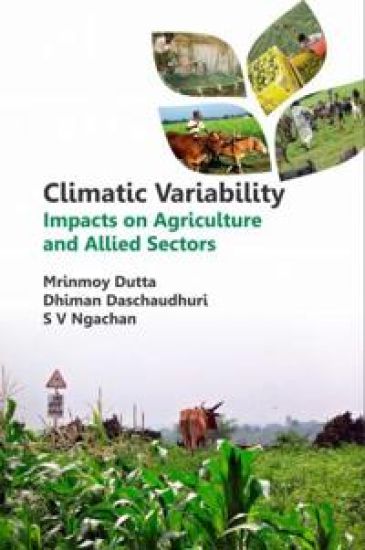
Climatic Variability
M. Datta; Dhiman Daschaudhuri; S. V. Ngachan
New India Publishing Agency
2014
nidottu
This book has been organized into five main sections: Weather and Agromet Services, Pest and Diseases, Climatic Influences on Agriculture and Horticulture, Climatic Influences on Animal Husbandry and Fisheries, and ICT Applications in Agriculture. This comprehensive guide provides detailed information on the potential effects of climate variability on various agricultural and horticultural crops, including pest and disease incidences and their corresponding remedies. The book also elucidates the impact of climate change on the animal husbandry sector, particularly in regards to summer infertility, productivity, and disease spectrum, in a clear and practical manner. Additionally, the book takes into account fisheries, both inland and marine, and discusses fish productivity and disease incidence. The book also includes a section on forecasting models with weather forecasts, with a particular focus on developing strategies for Resilient Agriculture. Furthermore, the book highlights the application of ICT in Agriculture, which serves as a comprehensive guide to the potential impacts on Agriculture and allied sectors, and suggests ways to combat weather variability.