Kirjojen hintavertailu – 12 903 724 kirjaa ja 27 kauppaa

Kirjailija

M. Dinesh Kumar

Kirjat ja teokset yhdessä paikassa: 7 kirjaa, julkaisuja vuosilta 2018–2024, suosituimpiin kuuluu Drinking Water Security in Rural India. Vertaile teosten hintoja ja tarkista saatavuus suomalaisista kirjakaupoista.

7 kirjaa

Kirjojen julkaisuvuodet: 2018–2024.

Framing a Drinking Water Supply Services Act for India, with Particular Reference to Rajasthan
The aim of the book is to make the water sector professionals working on the legal and regulatory aspects of water-related services such as drinking water supply familiarized with the nuances of framing an Act. This book discusses the process of drafting a Drinking Water Services Act for a state under a federal system of governance, by presenting what goes into identifying the various provisions of the Act, and building the rationale for keeping those provisions vis-à-vis the criteria, norms, rules, guidelines and standards pertaining to various aspects of drinking water sector. It also presents the Drinking Water Services Act drafted for the state of Rajasthan in western India. The Rajasthan case is used to explain how various data on the physical environment, socioeconomic characteristics and institutional set up can be used for evolving various provisions of the Act, especially the criteria, norms, rules, guidelines and standards. The book has five well-written chapters, including one chapter covering the draft Drinking Water Supply Services Act for Rajasthan. The final chapter investigates why many water-related Acts in India fail or become ineffective.
Groundwater Economics and Policy in South Asia

Groundwater Economics and Policy in South Asia

M. Dinesh Kumar

Elsevier - Health Sciences Division
2023
nidottu
Groundwater Economics and Policy in South Asia is a reference guide focusing on groundwater management and groundwater economics in South Asia. The author compares the regional variations across South Asia and the public policies that shaped the groundwater sector and presents the most up-to-date information on groundwater management using practical case-studies and empirical data. With the inclusion of strong methodological solutions for sustainable groundwater management, scholars in the fields of geohydrology, agricultural sciences, water resource economics, and professionals in water science and policy will get access to the latest policies and methods used in groundwater research in South Asia.
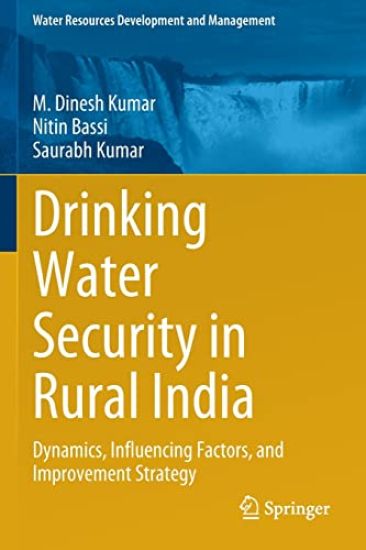
Drinking Water Security in Rural India

Drinking Water Security in Rural India

M. Dinesh Kumar; Nitin Bassi; Saurabh Kumar

SPRINGER VERLAG, SINGAPORE
2023
nidottu
This book highlights the multi-pronged strategy for achieving sustainable rural domestic water supply in India. It deepens the understanding of groundwater (predominant source of water supply) behaviour in response to natural processes in different geological settings, analyses the factors influencing the performance of water supply schemes; identifies the conditions under which groundwater-based drinking water sources become sustainable, suggests measures for improving the sustainability of drinking water wells in hard rock regions (covering 2/3rd of India’s geographical area), presents a decision-making framework for planning rural water supply schemes in the country for ensuring long-term sustainability, and suggests physical strategies and policy measures for achieving them. The analyses for development and validation of various models that explain groundwater system behaviour and performance of rural water supply schemes are undertaken for different geological settings in Maharashtra, as the state represents a microcosm of the various hydrological, topographical, and geohydrological conditions encountered in the country. The final analysis for proposing nation-wide strategies considers the various hydrological, geological, geohydrological, and topographical and climatic settings and groundwater contamination and pollution in the country.
Drinking Water Security in Rural India

Drinking Water Security in Rural India

M. Dinesh Kumar; Nitin Bassi; Saurabh Kumar

SPRINGER VERLAG, SINGAPORE
2022
sidottu
This book highlights the multi-pronged strategy for achieving sustainable rural domestic water supply in India. It deepens the understanding of groundwater (predominant source of water supply) behaviour in response to natural processes in different geological settings, analyses the factors influencing the performance of water supply schemes; identifies the conditions under which groundwater-based drinking water sources become sustainable, suggests measures for improving the sustainability of drinking water wells in hard rock regions (covering 2/3rd of India’s geographical area), presents a decision-making framework for planning rural water supply schemes in the country for ensuring long-term sustainability, and suggests physical strategies and policy measures for achieving them. The analyses for development and validation of various models that explain groundwater system behaviour and performance of rural water supply schemes are undertaken for different geological settings in Maharashtra, as the state represents a microcosm of the various hydrological, topographical, and geohydrological conditions encountered in the country. The final analysis for proposing nation-wide strategies considers the various hydrological, geological, geohydrological, and topographical and climatic settings and groundwater contamination and pollution in the country.
Water Productivity and Food Security

Water Productivity and Food Security

M. Dinesh Kumar

Elsevier - Health Sciences Division
2021
nidottu
Water Productivity and Food Security: Global Trends and Regional Patterns, Volume Three reviews the need for water productivity improvements in agriculture, addressing three distinct questions pertaining to agricultural water productivity improvement in developing countries, including what are the regions where water is a limiting factor for raising agricultural outputs and water productivity improvements, what are the technological measures in irrigation that can raise agricultural water productivity and result in water saving at various scales, and what opportunities exist in the developing economies of South Asia and Africa for raising water productivity and improving water economy at basin scale. This book provides a framework to characterize river basins based on water availability, water supplies, water uses and water demands to ascertain the need and measures available for improving crop water productivity that would be effective at various scales, i.e., plant-level, plot-level, irrigation system level and basin level. This is an essential reference for anyone interested in water management and agriculture.
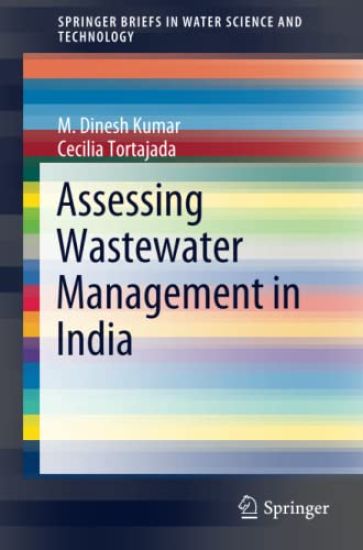
Assessing Wastewater Management in India

Assessing Wastewater Management in India

M. Dinesh Kumar; Cecilia Tortajada

Springer Verlag, Singapore
2020
nidottu
This book highlights the institutional, legal, and policy measures to manage water pollution in India, and discusses how effective they have been in improving the overall quality of the country’s surface and groundwater resources. It also reviews the status of wastewater generation, collection and treatment in urban areas to provide insights into the gaps in wastewater treatment. Further, it offers a detailed analysis of the wastewater treatment systems available and examines the human health impacts of water pollution in the country, as well as the future trajectory of investment in wastewater treatment systems and potential sectors for reuse and recycling of wastewater, briefly assessing the market demand for treated wastewater. Lastly, it investigates the factors influencing the environmental sustainability and economic viability of wastewater treatment as well as future areas of research in the field.
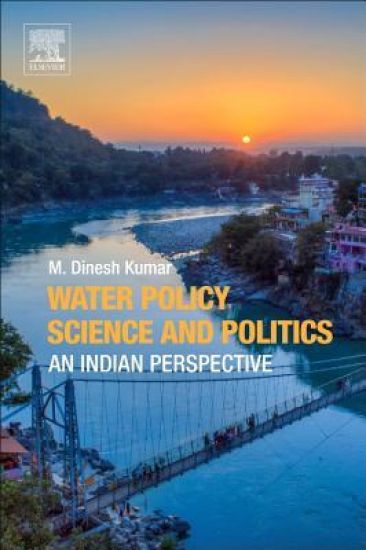
Water Policy Science and Politics

Water Policy Science and Politics

M. Dinesh Kumar

Elsevier Science Publishing Co Inc
2018
nidottu
Water Policy Science and Politics: An Indian Perspective presents the importance of politics and science working together in policymaking in the water sector. Many countries around the developed and developing world, including India, are experiencing major water scarcity problems that will undoubtedly increase with the impacts of climate change. This book discusses specific topics in India’s water, agriculture and energy sectors, focusing on scientific aspects, academic and political discourse, and policy issues. The author presents cases from the interrelated sectors of water resources, supplies, sanitation, and energy and climate, including controversial topics that illustrate how science and politics can work together.