Kirjojen hintavertailu – 12 903 735 kirjaa ja 27 kauppaa

Kirjailija

M. Godfrey

Kirjat ja teokset yhdessä paikassa: 3 kirjaa, julkaisuja vuosilta 1990–2012, suosituimpiin kuuluu The Hyperlipidaemia Handbook. Vertaile teosten hintoja ja tarkista saatavuus suomalaisista kirjakaupoista.

3 kirjaa

Kirjojen julkaisuvuodet: 1990–2012.

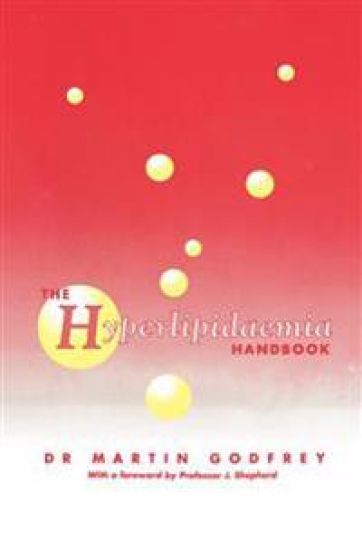
The Hyperlipidaemia Handbook

The Hyperlipidaemia Handbook

M. Godfrey

Springer
2012
nidottu
1 Shepherd Coronary artery disease, the most important cause of death in the United Kingdom, kills about 200 000 Britons each year. Many victims are struck down out of the blue and in the prime of an active working life. Others survive the fIrst attack but are so debilitated by it that they are compelled to fall back on the efforts of their family and the Social and Health Services for their future survival. The epidemic proportions of the problem and the burden which it places on the community at large has led many health care professionals to reassess their attitudes to heart disease prevention. In the past, the clinician's attention has been directed primarily at the treatment of established ischaemic heart disease rather than focussing on forestalling its appearance by attempting to tackle those life-style habits within the population which appear to predispose to it. A number of recent developments make this approach hard to sustain. First, there is now convincing evidence that action taken against cigarette smoking, hyper­ tension and hypercholesterolaemia offers signifIcant protection to the individual. Secondly, effective and apparently safe antihypertensive and lipid-lowering agents have recently become available to the practicing clinician. Thirdly, developments in computer technology and laboratory equipment manufacture have brought the measurement of coronary risk factors right into the primary health care setting. And, last, but not least, political attitudes towards prevention now favour the enthusiastic general practitioner with an interest in anticipating and averting the development of degenerative diseases like atherosclerosis.

Commonsense use of Medicines

Commonsense use of Medicines

John Fry; J.R. Trounce; M. Godfrey

Springer
2011
nidottu
We share with our colleagues the difficulties presented by the increasing volume of drugs available for our use in the care of patients. The introduction of new and effective preparations has added to our problems both in keeping up to date and, paradoxically, in their proper selection and use. There are yet further difficulties in general practice because of the nature of the diseases and situations encountered; uncer­ tainties in the preciseness of di-a.gnosis, in the likely course and outcome of diseases and in the particular characteristics of the individual patient. We have attempted to ease these difficulties by adopting a logical but Simplistic schematic approach to the choice of medicines for 14 selected common conditions. Our approach includes: • statements of knowledge and understanding of the conditions; • analyses of the most suitable available drugs; • setting objectives and principles for management; • suggested treatment plans. The suggestions are, of course, our own and may not be completely acceptable to some of our readers, but in creating this schematic approach our intention has been that those who follow it will be able to select from alternative preparations with satisfactory results.
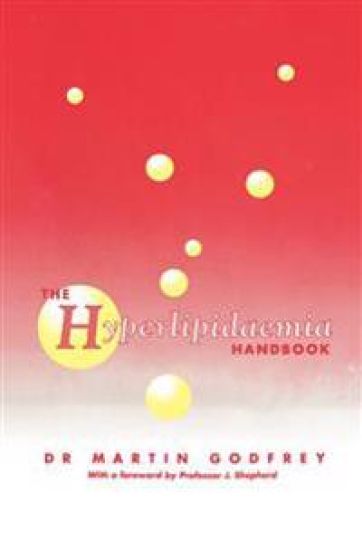
The Hyperlipidaemia Handbook

The Hyperlipidaemia Handbook

M. Godfrey

Springer
1990
sidottu
1 Shepherd Coronary artery disease, the most important cause of death in the United Kingdom, kills about 200 000 Britons each year. Many victims are struck down out of the blue and in the prime of an active working life. Others survive the fIrst attack but are so debilitated by it that they are compelled to fall back on the efforts of their family and the Social and Health Services for their future survival. The epidemic proportions of the problem and the burden which it places on the community at large has led many health care professionals to reassess their attitudes to heart disease prevention. In the past, the clinician's attention has been directed primarily at the treatment of established ischaemic heart disease rather than focussing on forestalling its appearance by attempting to tackle those life-style habits within the population which appear to predispose to it. A number of recent developments make this approach hard to sustain. First, there is now convincing evidence that action taken against cigarette smoking, hyper­ tension and hypercholesterolaemia offers signifIcant protection to the individual. Secondly, effective and apparently safe antihypertensive and lipid-lowering agents have recently become available to the practicing clinician. Thirdly, developments in computer technology and laboratory equipment manufacture have brought the measurement of coronary risk factors right into the primary health care setting. And, last, but not least, political attitudes towards prevention now favour the enthusiastic general practitioner with an interest in anticipating and averting the development of degenerative diseases like atherosclerosis.