Kirjojen hintavertailu – 12 903 725 kirjaa ja 27 kauppaa

Kirjailija

M. Guy Thompson

Kirjat ja teokset yhdessä paikassa: 8 kirjaa, julkaisuja vuosilta 2016–2025, suosituimpiin kuuluu R. D. Laing in the Twenty-First Century. Vertaile teosten hintoja ja tarkista saatavuus suomalaisista kirjakaupoista.

8 kirjaa

Kirjojen julkaisuvuodet: 2016–2025.

R. D. Laing in the Twenty-First Century

R. D. Laing in the Twenty-First Century

M. Guy Thompson; Fritjof Capra; Douglas Kirsner

TAYLOR FRANCIS LTD
2025
sidottu
In this remarkable review of the seminal contribution of the Scottish psychiatrist and psychoanalyst, R. D. Laing, the three authors, each intimately acquainted with the subject matter, explore Laing’s intellectual and clinical legacy. Written from the perspective of a psychoanalyst, a scientist, and a philosopher, this unique book thoroughly addresses the three principal themes that defined Laing’s work: his views about sanity and madness, the use of therapy with those suffering from psychotic disturbance, and the vicissitudes of love relationships. They also explore authenticity, altered states, and healing. The authors bring a broad range of viewpoints in assessing Laing’s seminal contribution to contemporary thought, from both a scholarly and personal assessment rooted in each of their diverse relationships with him, both professional and personal. This volume will be of interest to those in the worlds of psychoanalysis, philosophy, science, and anyone with an interest in the work of R. D. Laing.
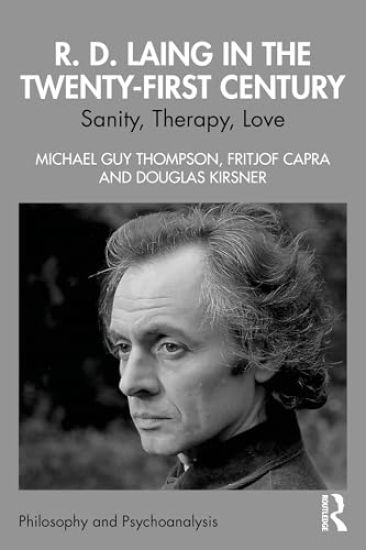
R. D. Laing in the Twenty-First Century

R. D. Laing in the Twenty-First Century

M. Guy Thompson; Fritjof Capra; Douglas Kirsner

TAYLOR FRANCIS LTD
2025
nidottu
In this remarkable review of the seminal contribution of the Scottish psychiatrist and psychoanalyst, R. D. Laing, the three authors, each intimately acquainted with the subject matter, explore Laing’s intellectual and clinical legacy. Written from the perspective of a psychoanalyst, a scientist, and a philosopher, this unique book thoroughly addresses the three principal themes that defined Laing’s work: his views about sanity and madness, the use of therapy with those suffering from psychotic disturbance, and the vicissitudes of love relationships. They also explore authenticity, altered states, and healing. The authors bring a broad range of viewpoints in assessing Laing’s seminal contribution to contemporary thought, from both a scholarly and personal assessment rooted in each of their diverse relationships with him, both professional and personal. This volume will be of interest to those in the worlds of psychoanalysis, philosophy, science, and anyone with an interest in the work of R. D. Laing.
Existential Psychoanalysis

Existential Psychoanalysis

M. Guy Thompson

TAYLOR FRANCIS LTD
2025
nidottu
A fascinating introductory volume, Existential Psychoanalysis: A Contemporary Introduction integrates existential philosophy with psychoanalysis, drawing on key theorists from both areas and expertly guiding the reader on how to incorporate these two disciplines, which may appear disparate on the surface, into their clinical and theoretical work. This unique and accessible book sees M. Guy Thompson explore key concepts, such as experience, authenticity, freedom, psychic change, agency, and the pervasive role of suffering in our lives. Throughout, he draws on a wide range of thinkers from both fields, including Sartre, Heidegger, Nietzsche, Freud, Winnicott, Bion, Laing, and Lacan. Exquisitely lucid and engaging, Thompson deftly brings the reader into thoughtful and enlightening territory typically inaccessible to the general reader. Although existential philosophy and psychoanalysis are often thought of as incompatible fields, Thompson shows how they share far more in common than is usually supposed. This volume will help clinicians, scholars, and students of all persuasions learn how integrating the two disciplines introduces a more personal and revolutionary understanding of what psychoanalysis can be in the twenty-first century. This compelling assimilation of continental philosophy and psychoanalysis will be of interest to psychoanalytic practitioners and psychotherapists, as well as philosophers, social scientists and any student of the human condition.
Existential Psychoanalysis

Existential Psychoanalysis

M. Guy Thompson

TAYLOR FRANCIS LTD
2025
sidottu
A fascinating introductory volume, Existential Psychoanalysis: A Contemporary Introduction integrates existential philosophy with psychoanalysis, drawing on key theorists from both areas and expertly guiding the reader on how to incorporate these two disciplines, which may appear disparate on the surface, into their clinical and theoretical work. This unique and accessible book sees M. Guy Thompson explore key concepts, such as experience, authenticity, freedom, psychic change, agency, and the pervasive role of suffering in our lives. Throughout, he draws on a wide range of thinkers from both fields, including Sartre, Heidegger, Nietzsche, Freud, Winnicott, Bion, Laing, and Lacan. Exquisitely lucid and engaging, Thompson deftly brings the reader into thoughtful and enlightening territory typically inaccessible to the general reader. Although existential philosophy and psychoanalysis are often thought of as incompatible fields, Thompson shows how they share far more in common than is usually supposed. This volume will help clinicians, scholars, and students of all persuasions learn how integrating the two disciplines introduces a more personal and revolutionary understanding of what psychoanalysis can be in the twenty-first century. This compelling assimilation of continental philosophy and psychoanalysis will be of interest to psychoanalytic practitioners and psychotherapists, as well as philosophers, social scientists and any student of the human condition.
Essays in Existential Psychoanalysis

Essays in Existential Psychoanalysis

M. Guy Thompson

TAYLOR FRANCIS LTD
2023
sidottu
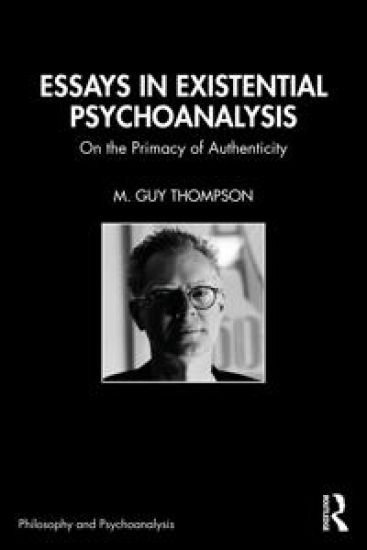
In this brilliant and revolutionary collection of 14 major essays that draw from more than 25 years of painstaking research, M. Guy Thompson regales us with a stunning revisioning of conventional psychoanalysis that deepens our understanding of the human condition. Integrating the most seminal existentialist philosophers, including Nietzsche, Heidegger, and Sartre, with the most forward-thinking psychoanalysts over the past century, including Freud, Laing, Bion, Winnicott, and Lacan, Thompson offers a profound yet deeply personal vision of what psychoanalysis can be in the 21st century. In this fascinating volume, Thompson explores such concepts as experience, authenticity, will, happiness, and agency by utilizing a wide range of thinkers, including the ancient Greeks, but always in his singular voice. Exquisitely lucid and engaging to read, Thompson deftly lures us into thoughtful and enlightening territory typically inaccessible to the general reader. This compelling integration of continental philosophy and psychoanalysis will be of interest not only to psychoanalytic practitioners of all persuasions, but to psychotherapists generally and their patients, as well as philosophers, social scientists, and any student of the human condition.
Essays in Existential Psychoanalysis

Essays in Existential Psychoanalysis

M. Guy Thompson

TAYLOR FRANCIS LTD
2023
nidottu
In this brilliant and revolutionary collection of 14 major essays that draw from more than 25 years of painstaking research, M. Guy Thompson regales us with a stunning revisioning of conventional psychoanalysis that deepens our understanding of the human condition. Integrating the most seminal existentialist philosophers, including Nietzsche, Heidegger, and Sartre, with the most forward-thinking psychoanalysts over the past century, including Freud, Laing, Bion, Winnicott, and Lacan, Thompson offers a profound yet deeply personal vision of what psychoanalysis can be in the 21st century. In this fascinating volume, Thompson explores such concepts as experience, authenticity, will, happiness, and agency by utilizing a wide range of thinkers, including the ancient Greeks, but always in his singular voice. Exquisitely lucid and engaging to read, Thompson deftly lures us into thoughtful and enlightening territory typically inaccessible to the general reader. This compelling integration of continental philosophy and psychoanalysis will be of interest not only to psychoanalytic practitioners of all persuasions, but to psychotherapists generally and their patients, as well as philosophers, social scientists, and any student of the human condition.
The Death of Desire

The Death of Desire

M. Guy Thompson

Routledge
2016
sidottu
A stunning exploration of the relation between desire and psychopathology, The Death of Desire is a unique synthesis of the work of Laing, Freud, Nietzsche, and Heidegger that renders their often difficult concepts brilliantly accessible to and usable by psychotherapists of all persuasions. In bridging a critical gap between phenomenology and psychoanalysis, M. Guy Thompson, one of the leading existential psychoanalysts of our time, firmly re-situates the unconscious – what Freud called "the lost continent of repressed desires" – in phenomenology. In so doing, he provides us with the richest, most compelling phenomenological treatment of the unconscious to date and also makes Freud’s theory of the unconscious newly comprehensible. In this revised and updated second edition to the original published in 1985, M. Guy Thompson takes us inside his soul-searching seven-year apprenticeship with radical psychiatrist R. D. Laing and his cohorts as it unfolded in counterculture London of the 1970s. This rite de passage culminates with a four-year sojourn inside one of Laing’s post-Kingsley Hall asylums, where Laing’s unorthodox conception of treatment dispenses with conventional boundaries between "doctor" and "patient." In this unprecedented exploration, Thompson reveals the secret to Laing’s astonishing alternative to the conventional psychiatric and psychoanalytic treatment schemes. Movingly written and deeply personal, Thompson shows why the very concept of "mental illness" is a misnomer and why sanity and madness should be understood instead as inherently puzzling stratagems that we devise in order to protect ourselves from intolerable mental anguish. The Death of Desire offers a provocative and challenging reappraisal of depth psychotherapy from an existential perspective that will be of interest to psychoanalysts, psychotherapists, philosophers, social scientists, and students of the human condition.
The Death of Desire

The Death of Desire

M. Guy Thompson

Routledge
2016
nidottu
A stunning exploration of the relation between desire and psychopathology, The Death of Desire is a unique synthesis of the work of Laing, Freud, Nietzsche, and Heidegger that renders their often difficult concepts brilliantly accessible to and usable by psychotherapists of all persuasions. In bridging a critical gap between phenomenology and psychoanalysis, M. Guy Thompson, one of the leading existential psychoanalysts of our time, firmly re-situates the unconscious – what Freud called "the lost continent of repressed desires" – in phenomenology. In so doing, he provides us with the richest, most compelling phenomenological treatment of the unconscious to date and also makes Freud’s theory of the unconscious newly comprehensible. In this revised and updated second edition to the original published in 1985, M. Guy Thompson takes us inside his soul-searching seven-year apprenticeship with radical psychiatrist R. D. Laing and his cohorts as it unfolded in counterculture London of the 1970s. This rite de passage culminates with a four-year sojourn inside one of Laing’s post-Kingsley Hall asylums, where Laing’s unorthodox conception of treatment dispenses with conventional boundaries between "doctor" and "patient." In this unprecedented exploration, Thompson reveals the secret to Laing’s astonishing alternative to the conventional psychiatric and psychoanalytic treatment schemes. Movingly written and deeply personal, Thompson shows why the very concept of "mental illness" is a misnomer and why sanity and madness should be understood instead as inherently puzzling stratagems that we devise in order to protect ourselves from intolerable mental anguish. The Death of Desire offers a provocative and challenging reappraisal of depth psychotherapy from an existential perspective that will be of interest to psychoanalysts, psychotherapists, philosophers, social scientists, and students of the human condition.