Kirjojen hintavertailu – 12 903 725 kirjaa ja 27 kauppaa

Kirjailija

M. Hakan Yavuz

Kirjat ja teokset yhdessä paikassa: 12 kirjaa, julkaisuja vuosilta 2003–2023, suosituimpiin kuuluu Kemal Kiliçdaroglu and the New Republican People’s Party in Turkey. Vertaile teosten hintoja ja tarkista saatavuus suomalaisista kirjakaupoista.

Nimi esiintyy myös muodoissa: M Hakan Yavuz

12 kirjaa

Kirjojen julkaisuvuodet: 2003–2023.

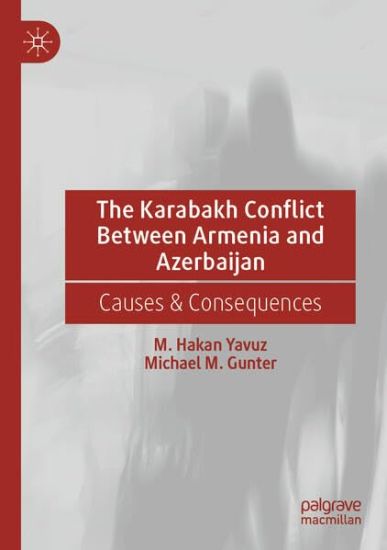
The Karabakh Conflict Between Armenia and Azerbaijan

The Karabakh Conflict Between Armenia and Azerbaijan

M. Hakan Yavuz; Michael M. Gunter

Springer International Publishing AG
2023
nidottu
This book focuses on Post-Soviet ethnic conflicts and Russia's involvement in them. In light of its significant importance for general ethnic conflict, specifically the post-Soviet Caucasus, along with the most recent war just fought over the area from September-November 2020, this book appropriately argues that it is time to reconsider Karabakh. This project deals with the historical, social and political aspects of the Karabakh issue regarding its origins, development and the current status of the conflict subsequent to the war in the autumn of 2020. Thus, the main themes will stress these points, as well as the importance of the Karabakh issue for the future, by considering its precedents and implications for other secessionist wars. This book also explores how such wars begin and end, the international legal precedents of self-determination versus territorial integrity, its implications for post-Soviet developments and conflicts, and the latest successful weaponsdevelopments lessons from the recent war involving drones, among others such as Azerbaijan’s rich oil reserves.
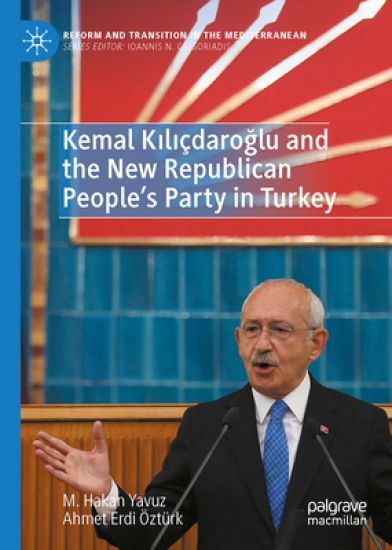
Kemal Kiliçdaroglu and the New Republican People’s Party in Turkey

Kemal Kiliçdaroglu and the New Republican People’s Party in Turkey

M. Hakan Yavuz; Ahmet Erdi Öztürk

Springer International Publishing AG
2023
sidottu
This book discusses the life and professional struggle of Kemal Kiliçdaroglu and the transformation of the CHP under his leadership. It deals with the transformational periods and phases of the CHP, up to the period when Kemal Kiliçdaroglu became prominent in the party. The CHP’s transformation and how it variously affected its popular standing in public opinion and revealed political liabilities and limitations cumulatively can indicate and explain to what extent political parties are likely to change as leadership changes and different regime governing approaches take hold. Furthermore, this book aims to answer the following questions: How and for what reasons did Kiliçdaroglu decide to ally with the center-right wing in the CHP? What was the collective impact of the center-right wing in positive and negative terms regarding the CHP’s general identity, especially in historical context? After the 2015 elections, what constituted the shifts and revisions in Kiliçdaroglu’s ideology andhow did they alter the political power of the CHP as a major opposition party? What evidence exists to shed light on his capabilities for building coalitions as a viable option for the possibility of forming a national government in elections?
The Karabakh Conflict Between Armenia and Azerbaijan

The Karabakh Conflict Between Armenia and Azerbaijan

M. Hakan Yavuz; Michael M. Gunter

Springer International Publishing AG
2022
sidottu
This book focuses on Post-Soviet ethnic conflicts and Russia's involvement in them. In light of its significant importance for general ethnic conflict, specifically the post-Soviet Caucasus, along with the most recent war just fought over the area from September-November 2020, this book appropriately argues that it is time to reconsider Karabakh. This project deals with the historical, social and political aspects of the Karabakh issue regarding its origins, development and the current status of the conflict subsequent to the war in the autumn of 2020. Thus, the main themes will stress these points, as well as the importance of the Karabakh issue for the future, by considering its precedents and implications for other secessionist wars. This book also explores how such wars begin and end, the international legal precedents of self-determination versus territorial integrity, its implications for post-Soviet developments and conflicts, and the latest successful weaponsdevelopments lessons from the recent war involving drones, among others such as Azerbaijan’s rich oil reserves.
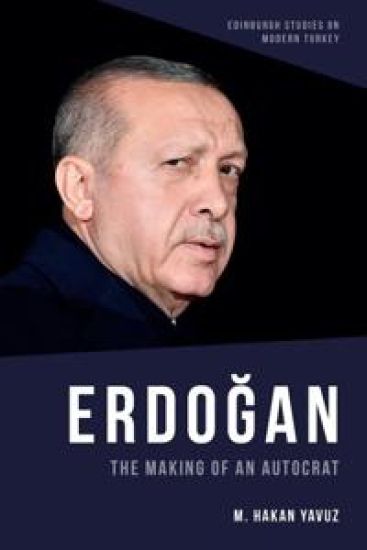
Erdoan

Erdoan

M. Hakan Yavuz

Edinburgh University Press
2021
nidottu
President Erdoan's resilience as Turkey's leader makes for an extraordinary political study of longevity, charisma and strategic decision-making. Uncovering the person behind the persona, M. Hakan Yavuz draws on 250 first-hand interviews to untangle the web of literary, religious and biographical influences that shaped Erdogan's personality, ideology and world view. With chapters covering the Gezi park protests, the clash between the AKP and Glen movement, the Kurdish question and the country's projected image as a major international power, Yavuz explores how Erdoan has created a 'New Turkey' a hybrid political entity, neither East nor West, democratic nor dictatorial, Islamic nor secular.
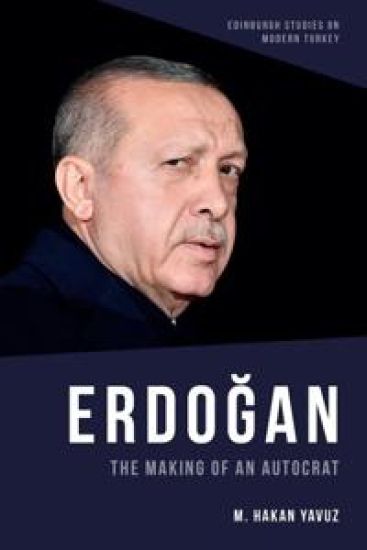
Erdoan

Erdoan

M. Hakan Yavuz

Edinburgh University Press
2021
sidottu
President Erdoan's resilience as Turkey's leader makes for an extraordinary political study of longevity, charisma and strategic decision-making. Uncovering the person behind the persona, M. Hakan Yavuz draws on 250 first-hand interviews to untangle the web of literary, religious and biographical influences that shaped Erdogan's personality, ideology and world view. With chapters covering the Gezi park protests, the clash between the AKP and Glen movement, the Kurdish question and the country's projected image as a major international power, Yavuz explores how Erdoan has created a 'New Turkey' a hybrid political entity, neither East nor West, democratic nor dictatorial, Islamic nor secular.
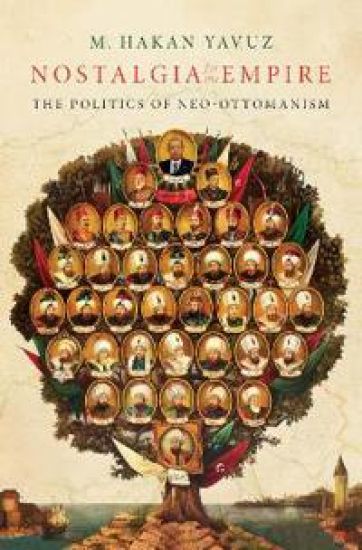
Nostalgia for the Empire

Nostalgia for the Empire

M. Hakan Yavuz

Oxford University Press Inc
2020
sidottu
Making a country great again is a theme for nationalist authoritarians. Across countries with past experience as great powers, nationalist politicians typically harken back to a golden age. In Nostalgia for Empire, Hakan Yavuz focuses on how this trend is playing out in Turkey, a nation that lost its empire a century ago and which is now ruled by a nationalist authoritarian who invokes nostalgia for the Ottoman era to buttress his power. Yavuz delves into the social and political origins of expressions of nostalgia for the Ottoman Empire among various groups in Turkey. Exploring why and how certain segments of Turkish society has selectively brought the Ottoman Empire back into public consciousness, Yavuz traces how memory of the Ottoman period has changed. He draws from Turkish literature, mainstream history books, and other cultural products from the 1940s to the twenty-first century to illustrate the transformation. He finds that two key aspects of Turkish literature are, on the one hand, its criticism of the Jacobin modernization of Turkey under Ataturk, and on the other a desire to search the Ottoman past for an alternative political language. Yavuz goes onto to explain how major political actors, including President Erdogan, utilize the concept of empire to craft distinctive conceptualizations of nationalism, Islam, and Ottomanism that exploit national nostalgia. As remembered today, the Ottoman past seems to be grounded in contemporary conservative Islamic values. The combination of these memories and values generates a portrait of Turkey as a victim of major powers, besieged by imagined enemies both internal and external. In mapping out how nostalgia is crafted and spread, this book not only sheds light on Turkey's unique case but also deepens our understanding of nationalism, religion, and modernity.
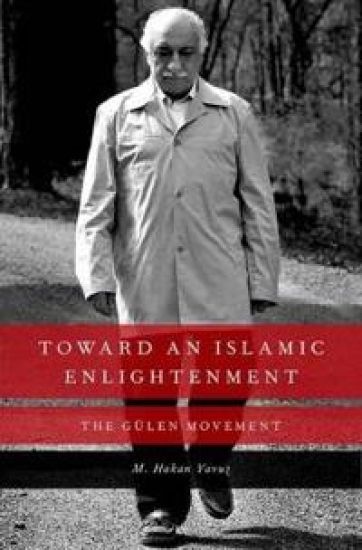
Toward an Islamic Enlightenment

Toward an Islamic Enlightenment

M. Hakan Yavuz

Oxford University Press Inc
2013
sidottu
M. Hakan Yavuz offers an insightful and wide-ranging study of the Gulen Movement, one of the most controversial developments in contemporary Islam. Founded in Turkey by the Muslim thinker Fethullah Gulen, the Gulen Movement aims to disseminate a ''moderate'' interpretation of Islam through faith-based education. Its activities have fundamentally altered religious and political discourse in Turkey in recent decades, and its schools and other institutions have been established throughout Central Asia and the Balkans, as well as western Europe and North America. Consequently, its goals and modus operandi have come under increasing scrutiny around the world. Yavuz introduces readers to the movement, its leader, its philosophies, and its practical applications. After recounting Gulen's personal history, he analyzes Gulen's theological outlook, the structure of the movement, its educational premise and promise, its financial structure, and its contributions (particularly to debates in the Turkish public sphere), its scientific outlook, and its role in interfaith dialogue. Towards an Islamic Enlightenment shows the many facets of the movement, arguing that it is marked by an identity paradox: despite its tremendous contribution to the introduction of a moderate, peaceful, and modern Islamic outlook-so different from the Iranian or Saudi forms of radical and political Islam-the Gulen Movement is at once liberal and communitarian, provoking both hope and fear in its works and influence.
Secularism and Muslim Democracy in Turkey

Secularism and Muslim Democracy in Turkey

M. Hakan Yavuz

Cambridge University Press
2009
sidottu
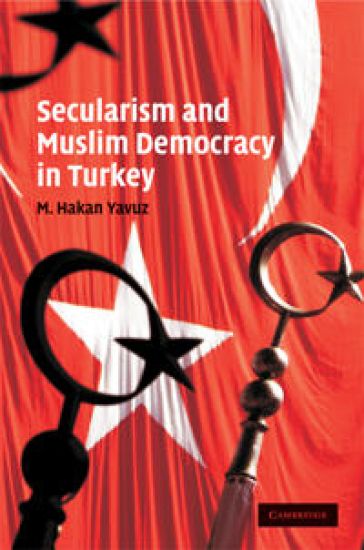
In 2002 the Islamist Justice and Development Party (AKP) swept to power in Turkey. Since then it has shied away from a hard-line ideological stance in favour of a more conservative and democratic approach. In this book, M. Hakan Yavuz negotiates this ambivalence asking whether it is possible for a political party with a deeply religious ideology to liberalise and entertain democracy or whether, as he contends, radical religious groups moderate their practices and ideologies when forced to negotiate a competitive and rule-based political system. The author explores the thesis through an analysis of the rise and evolution of the AKP and its more recent 2007 election victory. The book, which tackles a number of important issues including political participation, economics and internal security, provides a masterful survey of modern Turkish and Islamic politics, which will be of interest to a broad range of readers from students to professionals and policymakers.
Secularism and Muslim Democracy in Turkey

Secularism and Muslim Democracy in Turkey

M. Hakan Yavuz

Cambridge University Press
2009
pokkari
In 2002 the Islamist Justice and Development Party (AKP) swept to power in Turkey. Since then it has shied away from a hard-line ideological stance in favour of a more conservative and democratic approach. In this book, M. Hakan Yavuz negotiates this ambivalence asking whether it is possible for a political party with a deeply religious ideology to liberalise and entertain democracy or whether, as he contends, radical religious groups moderate their practices and ideologies when forced to negotiate a competitive and rule-based political system. The author explores the thesis through an analysis of the rise and evolution of the AKP and its more recent 2007 election victory. The book, which tackles a number of important issues including political participation, economics and internal security, provides a masterful survey of modern Turkish and Islamic politics, which will be of interest to a broad range of readers from students to professionals and policymakers.
Islamic Political Identity in Turkey

Islamic Political Identity in Turkey

M. Hakan Yavuz

Oxford University Press Inc
2005
nidottu
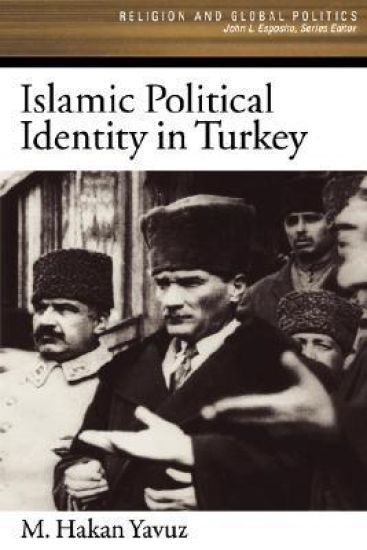
In November of 2002, the Justice and Development Party swept to victory in the Turkish parliamentary elections. Because of the party's Islamic roots, its electoral triumph has sparked a host of questions both in Turkey and in the West: Does the party harbor a secret Islamist agenda? Will the new government seek to overturn nearly a century of secularization stemming from Kemal Atatürk's early-twentieth-century reforms? Most fundamentally, is Islam compatible with democracy? In this penetrating work, M. Hakan Yavuz seeks to answer these questions, and to provide a comprehensive analysis of Islamic political identity in Turkey. He begins in the early twentieth century, when Kemal Atatürk led Turkey through a process of rapid secularization and crushed Islamic opposition to his authoritarian rule. Yavuz argues that since Atatürk's death in 1938, however, Turkey has been gradually moving away from his militant secularism and experiencing "a quiet Muslim reformation." Islamic political identity is not homogeneous, says Yavuz, but can be modern and progressive as well as conservative and potentially authoritarian. While the West has traditionally seen Kemalism as an engine for reform against "reactionary" political Islam, in fact the Kemalist establishment has traditionally used the "Islamic threat" as an excuse to avoid democratization and thus hold on to power. Yavuz offers an account of the "soft coup" of 1997, in which the Kemalist military-bureaucratic establishment overthrew the democratically elected coalition government, which was led by the pro-Islamic Refah party. He argues that the soft coup plunged Turkey into a renewed legitimacy crisis which can only be resolved by the liberalization of the political system. The book ends with a discussion of the most recent election and its implications for Turkey and the Muslim world. Yavuz argues that Islamic social movements can be important agents for promoting a democratic and pluralistic society, and that the Turkish example holds long term promise for the rest of the Muslim world. Based on extensive fieldwork and interviews, this work offers a sophisticated new understanding of the role of political Islam in one of the world's most strategically important countries.
Islamic Political Identity in Turkey

Islamic Political Identity in Turkey

M. Hakan Yavuz

Oxford University Press Inc
2003
sidottu
In November of 2002, the Justice and Development Party swept to victory in the Turkish parliamentary elections. Because of the party's Islamic roots, its electoral triumph has sparked a host of questions both in Turkey and in the West: Does the party harbor a secret Islamist agenda? Will the new government seek to overturn nearly a century of secularization stemming from Kemal Atatürk's early-twentieth-century reforms? Most fundamentally, is Islam compatible with democracy? In this penetrating work, M. Hakan Yavuz seeks to answer these questions, and to provide a comprehensive analysis of Islamic political identity in Turkey. He begins in the early twentieth century, when Kemal Atatürk led Turkey through a process of rapid secularization and crushed Islamic opposition to his authoritarian rule. Yavuz argues that, since Atatürk's death in 1938, however, Turkey has been gradually moving away from his militant secularism and experiencing "a quiet Muslim reformation." Islamic political identity is not homogeneous, says Yavuz, but can be modern and progressive as well as conservative and potentially authoritarian. While the West has traditionally seen Kemalism as an engine for reform against "reactionary" political Islam, in fact the Kemalist establishment has traditionally used the "Islamic threat" as an excuse to avoid democratization and thus hold on to power. Yavuz offers an account of the "soft coup" of 1997, in which the Kemalist military-bureaucratic establishment overthrew the democratically elected coalition government, which was led by the pro-Islamic Refah party. He argues that the soft coup plunged Turkey into a renewed legitimacy crisis which can only be resolved by the liberalization of the political system. The book ends with a discussion of the most recent election and its implications for Turkey and the Muslim world. Yavuz argues that Islamic social movements can be important agents for promoting a democratic and pluralistic society, and that the Turkish example holds long term promise for the rest of the Muslim world. Based on extensive fieldwork and interviews, this work offers a sophisticated new understanding of the role of political Islam in one of the world's most strategically important countries.