Kirjailija
M.J. Trow
Kirjat ja teokset yhdessä paikassa: 91 kirjaa, julkaisuja vuosilta 2003–2027, suosituimpiin kuuluu The Wigwam Murder. Vertaile teosten hintoja ja tarkista saatavuus suomalaisista kirjakaupoista.
Nimi esiintyy myös muodoissa: M. J. Trow, M J Trow, M J TROW
91 kirjaa
Kirjojen julkaisuvuodet: 2003–2027.
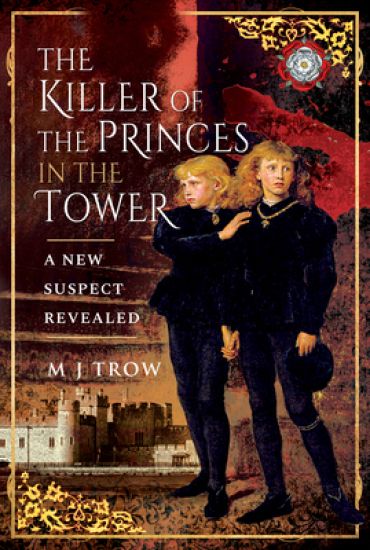
The disappearance of two boys during the summer of 1483 has never been satisfactorily explained. They were Edward, Prince of Wales, nearly thirteen at the time, and his brother, Richard of York, nearly ten. With their father, Edward IV, dying suddenly at forty, both boys had been catapulted into the spotlight of fifteenth-century politics, which was at once bloody and unpredictable. Thanks to the work of the hack 'historians' who wrote for Henry VII, the first Tudor, generations grew up believing that the boys were murdered and that the guilty party was their wicked uncle, Richard, Duke of Gloucester. Richard crowned himself King of England in July 1483, at which time the boys were effectively prisoners in the Tower of London. After that, there was no further sign of them. Over the past 500 years, three men in particular have been accused of the boys' murders - Richard of Gloucester; Henry Tudor, Earl of Richmond; and Henry Stafford, Duke of Buckingham. The evidence against them would not stand up in a court of law today, but the court of history is much less demanding and most fingers remain pointed squarely at Richard of Gloucester. This book takes a different approach, the first to follow this particular line of enquiry. It is written as a police procedural, weighing up the historical evidence without being shackled to a particular 'camp'. The supposition has always been made that the boys were murdered for political reasons. But what if that is incorrect? What if they died for other reasons entirely? What if their killer had nothing to gain politically from their deaths at all? And, even more fascinatingly, what if the princes in the Tower were not the only victims?
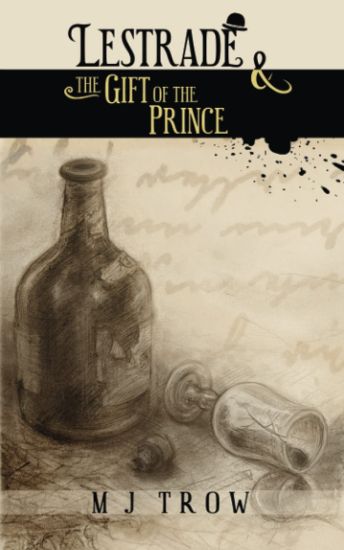
Book five in the Inspector Lestrade series. There is a new broom at Scotland Yard; Nimrod Frost. His first 'little' job for Lestrade is to investigate the reported appearance of a lion in Cornwall, a supposed savager of sheep and frightener of men. Hardly a task for an Inspector of the Criminal Investigations Department. Yet even as Lestrade questions a witness, a man is reported dead, horrifically mauled. Having solved that case to his own satisfaction, Lestrade returns to London and to another suspicious death and then another ... All old men who should have died quietly in their sleep. Is there a connection - is there a mass murderer at work? Lestrade's superiors discount his speculations and he finds himself suspended from duty, but that is a mere technicality to the doughty Inspector. He moves from workhouse to royal palace, from backstage at the Lyceum to regimental dinner in search of clues and enlightenment. When can his glory fade?
Book six in the Inspector Lestrade series. The London Underground Railway, in 1895, was described as 'dark, deadly and halfway to Hell'. Only too true, for as the last train rattled into Liverpool Street, the one remaining passenger did not get off. How could she, when her eyes stared sightless and her heart had stopped? There was another corpse at the Elephant in the morn-ing, wedged between the seats like an old suitcase. And another had missed the late-night connection at Stockwell. What was left of her lay on the floor of the 'padded cell', her shoes kicked off in the lashings of her agony as she died. There is a maniac at large and Inspector Lestrade is detailed to work with the Railway Police, something he needs a little less than vivisection. Heedless of warnings to 'mind the gap' and 'mind the doors', the doughty detective plunges through a tangled web of vicious deviants to solve a string of murders so heinous that every woman in London goes in fear of her life. Who is the legendary Blackfriars Dan? What are the secrets of the Seven Sisters? Whose body lies at Ealing? Will the London Transport System survive, or will Lestrade run out of steam?
Book four in the Inspector Lestrade series. It is 1891 and London is still reeling from the horror of the unsolved Ripper murders when Inspector Lestrade (that 'ferret-like' anti-hero so often out-detected by the legendary Sherlock Holmes) is sent to the Isle of Wight to investigate a strange corpse found walled up in Shanklin Chine. But this is only the start of the nightmare. It is merely the beginning of a series of killings so brutal, so bizarre and, apparently, so random, that only a warped genius - and a master of disguise - could be responsible. Even when Lestrade pieces together the extraordinary pattern behind the crimes from the anonymous poems sent after each murder, he is no closer to knowing the identity of the sinister, self-styled 'Agrippa', the 'great, long, red-legg'd scissor-man'. It becomes a very personal battle and Lestrade's desperate race to avert the next death in the sequence takes him all over the country, from London to the Pennines and back, resulting in a portfolio of suspects which covers the entire range of late-Victorian society.
Citizen Survivors: The Red Book
Richard Denham; M. J. Trow; Maryanne Coleman; Justin Alcala; Kyt Wright; Julia Cowan; Faye Irwin; Samantha Evergreen; Taliesin Trow; Bethan White
BLKDOG Publishing
2021
nidottu
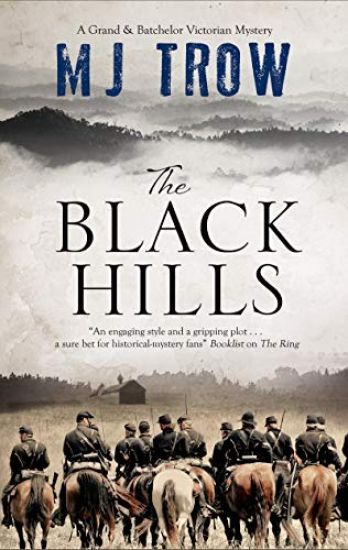
A Grand & Batchelor Victorian mysteryMarch, 1875. Although he has never had much time for George Custer, hero of the American Civil War and Commander of the 7th Cavalry, Matthew Grand feels duty bound to respond to a call for help from his West Point contemporary. Arriving at Fort Abraham Lincoln, deep in Dakota territory, private enquiry agents Grand and Batchelor discover the fort to be a powder keg of rumour and suspicion, petty rivalries, resentments - and closely-guarded secrets. When a body is discovered during a routine scouting patrol, some of those secrets rise uncomfortably close to the surface. Are the Lakota Sioux responsible? Or does the killer lie closer to home? Could it have been a case of mistaken identity - and was Custer himself the real target? The General has made many enemies - but does someone have a good enough reason to kill him?
The inaugural performance of Christopher Marlowe's controversial new play is marred by sudden, violent death in this lively 16th century mystery. December, 1592. England is entering dangerous waters as thoughts turn to the question of the ageing Queen Elizabeth's successor. Christopher Marlowe meanwhile is leading a troupe of the Lord Chamberlain's Men on tour with a controversial new play. Marlowe expects his latest play, Edward II, to ruffle feathers. What he doesn't expect is it to lead to is sudden, violent death. The morning the tour is due to begin, the newest member of the cast is found stabbed to death in the local brothel. And when a second murder, and then a third, disrupt rehearsals for the inaugural performance in the Great Hall at Scudbury Manor, it becomes clear that someone is determined to prevent this play from being performed - at any cost. But who ... and why?
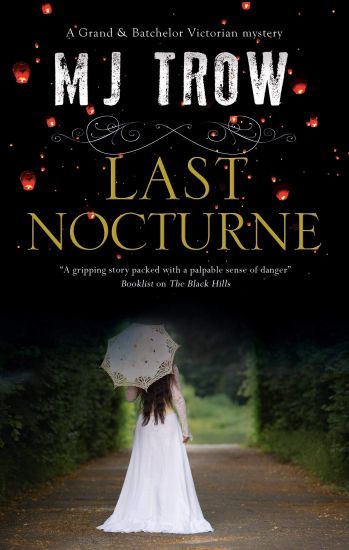
Private detectives Grand & Batchelor's latest case draws them into the arcane world of high art and high society in this compelling Victorian mystery. London. May, 1878. Private enquiry agents Matthew Grand and James Batchelor have been hired by the artist James Whistler to dig into the past of outspoken critic John Ruskin, with whom he has an ongoing feud. Not particularly optimistic of success, the two detectives are sidetracked from the investigation by the murder of a prostitute in nearby Cremorne Gardens. Her body posed on a park bench, a book on birth control sitting on her lap, Clara Jenkins is not the first young woman to have met a similarly grisly fate - and she won't be the last. Could there be a connection between the Cremorne killer and their art world case? With the investigation heading nowhere fast, Grand comes up with a decidedly unorthodox plan to ensnare the killer. But even the best-laid plans have a nasty habit of going catastrophically awry ...
A Grand & Batchelor Victorian mystery. March, 1875. Although he has never had much time for George Custer, hero of the American Civil War and Commander of the 7th Cavalry, Matthew Grand feels duty bound to respond to a call for help from his West Point contemporary. Arriving at Fort Abraham Lincoln, deep in Dakota territory, private enquiry agents Grand and Batchelor discover the fort to be a powder keg of rumour and suspicion, petty rivalries, resentments - and closely-guarded secrets. When a body is discovered during a routine scouting patrol, some of those secrets rise uncomfortably close to the surface. Are the Lakota Sioux responsible? Or does the killer lie closer to home? Could it have been a case of mistaken identity - and was Custer himself the real target? The General has made many enemies - but does someone have a good enough reason to kill him?
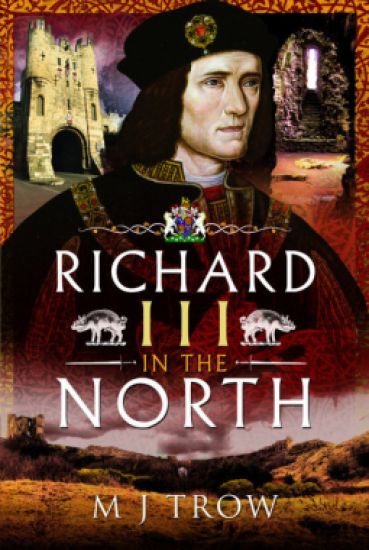
Richard III is England's most controversial king. Forever associated with the murder of his nephews, the Princes in the Tower, he divides the nation. As spectacular as his death at Bosworth in August 1485 - the last king of England to die in battle - the astonishing discovery of his bones under a Leicester car park five centuries later renewed interest in him and re-opened old debates. Is he the world's most wicked uncle; or is he (in the words of the man who most smeared him) 'a prince more sinned against than sinning'? Richard was not born in the North; neither did he die there, but this detailed look at his life, tracing his steps over the thirty-three years that he lived, focuses on the area that he loved and made his own. As Lord of the North, he had castles at Middleham and Sheriff Hutton, Penrith and Sandal. He fought the Scots along the northern border and on their own territory. His son was born at Middleham and was invested as Prince of Wales at York Minster, where Richard planned to set up a college of 100 priests. His white boar device can be found in obscure corners of churches and castles; his laws, framed in the single parliament of his short reign, gave rights to the people who served him and loved him north of the Trent. And when he felt threatened or outnumbered by his enemies during the turbulent years of the Wars of the Roses, it was to the men of the North that he turned for support and advice. They became his knights of the body; members of the Council of the North which outlived Richard by a 150 years. They died with him at Bosworth. Although we cannot divorce Richard from the violent politics of the day or from events that happened far to the South, it was in the North that Richard's heart lay. The North was his home. It was the place he loved.
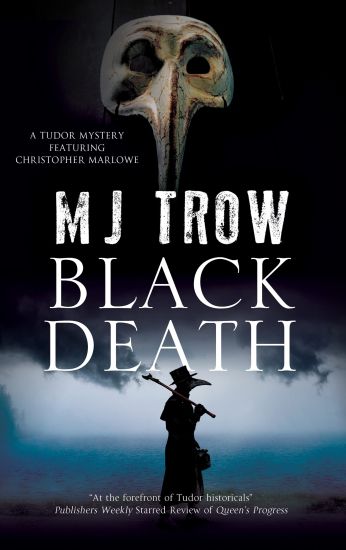
As plague stalks the streets of 16th century London, Christopher Marlowe is drawn into a baffling murder investigation where nothing is as it first appears." Kit, I know we have never been friends, but you are the only man in London to whom I can write. Someone is trying to kill me". September, 1592. Christopher Marlowe had never liked Robert Greene when he was alive. But when the former Cambridge scholar is found dead in a cheap London boarding house, shortly after sending Kit a desperate letter, Marlowe feels duty bound to find out who killed him - and why. What secrets did Robert Greene take with him to the grave? And why is the Queen's spymaster, Sir Robert Cecil, taking such a keen interest in the case? As plague stalks the streets of London and the stage manager of the Rose Theatre disappears without trace just days before the opening of Marlowe's new play, the playwright-sleuth finds himself in the midst of a baffling murder investigation - where nothing is as it first appears.
Book two in the Inspector Lestrade series It was a puzzle that faced Scotland Yard from its very begin-ning - whose was the limbless body found among the foundations? And in the murderous world of Sholto Lestrade, one question is invariably followed by another - what do a lecherous rector, a devious speculator and a plagiaristic novel-ist have in common? Answer: they're all dead, each of them with a bloody space where his skull used to be. And six others are to join them before our intrepid inspector brings the per-petrator to book. But 1886 was a bad year for the Metropolitan Police. The People of the Abyss have heard the whisper and the spectre of Communism haunts the land. There is a new Commissioner, a regular martinet, at the Yard. And then, there is that very odd couple, sometime of Baker Street ... Lestrade braves haunted houses, machine-gun bullets and two Home Secretaries in his headlong hunt for the truth. And at last, this is the book that chronicles his now legendary impersonation of the Great Sarah Bernhardt. The Police Re-vue was never the same again.
Book three in the Inspector Lestrade series. In the year 1888, London was horrified by a series of brutal killings. All the victims were discovered in the same district, Whitechapel, and they were all prostitutes. But they weren't the only murders to perplex the brains of Scotland Yard. In Brighton, the body of one Edmund Gurney was also found. Foremost among the Yard's top men was the young Inspector Sholto Lestrade and it was to his lot that the un-solved cases of a deceased colleague fell. Cases that included the murder of Martha Tabram, formerly a prostitute from Whitechapel, and that of the aforementioned Gurney. Leaving no stone unturned, Lestrade investigates with his customary expertise and follows the trail to Nottingham-shire, to a minor public school, Rhadegund Hall. It is his intention to question the Reverend Algernon Spooner. What he finds is murder. As the Whitechapel murders increase in number, so do those at Rhadegund Hall and so do the clues. What is the connection between them all? As if it weren't confusing enough, Lestrade is hampered by the parallel investigations of that great detective, Sherlock Holmes, aided by Dr Watson. Who is the murderer of Rhadegund Hall and are he and the man they call 'Jack the Ripper' one and the same?
Book one in the Inspector Lestrade series. 'In the circus, nothing is what it seems ...' Walk up Walk up This way for the greatest show on earth It is 1879. Disraeli is at Number Ten. The Zulu are being perfectly beastly to Lord Chelmsford. And Captain Boycott is having his old trouble again. What has this to do with the young Detective-Sergeant Sholto Lestrade? Absolutely nothing. Or has it? He has his work cut out investi-gating mysterious goings-on at 'Lord' George Sanger's Circus. First, the best juggler in Europe is shot in full view of a thousand people. Then Huge Hughie, the dwarf, dies an agonizing death under the Ether Trick. Finally, the Great Bolus dies by swallowing the wrong sword. And all of this after two bodies have been found with multiple slashes ... And what is the link with Mr Howard Vincent, founder of the CID? And has the Prince Imperial really been caught by the Impis? A trail of murder is laid among the llama droppings as the World's Second Greatest Detective goes undercover to solve the Case of the Sawdust Ring.
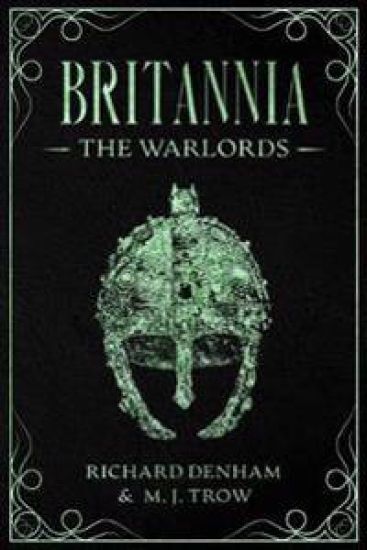
World of Britannia: Historical Companion to the Britannia Series
M. J. Trow; Richard Denham
BLKDOG Publishing
2020
nidottu
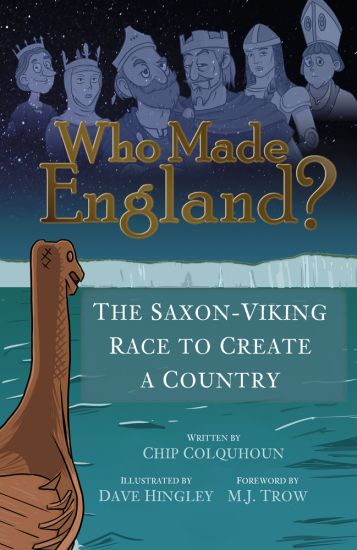
Did you know English people were around before the country of England was invented? It’s true: just over 1,000 years ago, English people lived in several smaller countries all over the island of Britain. A Saxon king called Alfred is famous for starting to bring these countries together – but who finished the job? Another Saxon king? A monk? Or was it... a Viking? In this fantastically illustrated book, storyteller Chip Colquhoun explores fact and folklore to see what they tell us about the birth of a country. After enjoying these tales of deadly battles, singing kings and miraculous queens, can you work out Who Made England?