
Kirjojen hintavertailu – 12 903 725 kirjaa ja 27 kauppaa

Kirjailija

M. Mariton

Kirjat ja teokset yhdessä paikassa: 2 kirjaa, julkaisuja vuosilta 1991–2013, suosituimpiin kuuluu Control of Complex Systems. Vertaile teosten hintoja ja tarkista saatavuus suomalaisista kirjakaupoista.

2 kirjaa

Kirjojen julkaisuvuodet: 1991–2013.

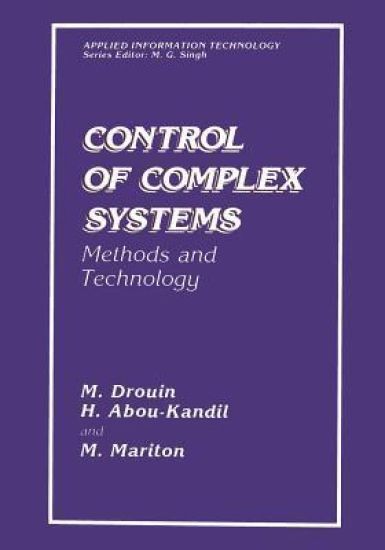
Control of Complex Systems

Control of Complex Systems

H. Abou-Kandil; M. Drouin; M. Mariton

Springer-Verlag New York Inc.
2013
nidottu
Since the begining of the sixties, control theorists have developed a large body of knowledge concerning complex or large-scale systems theory. Using the state space approach, their purpose was to extend methods to cope with the increasingly sophisticated automation needs of man-made systems. Despite several remarkable contributions, and some successful applications, it can be stated that this theory has not yet become an engineering tool. On the other hand, the emergence of cheap and reliable microprocessors has profoundly transformed industrial instrumentation and control systems. Process control equipment is organized in multilevel distributed structures, closely related to the concepts introduced by complex systems control theory. This similarity should favor a fruitful intersection for practical applications. However, a gap still exists between the literature on control theory and the world of technological achievements. In the many books on complex systems, few have given attention to the technological aspects of a practical control problem. The present book is an attempt to fill this gap. To do this, it consistently reflects the viewpoints that: - Theory and technology are two indivisible facets of the same problem. -On-line implementation for real time applications is the ultimate goal of a control study.
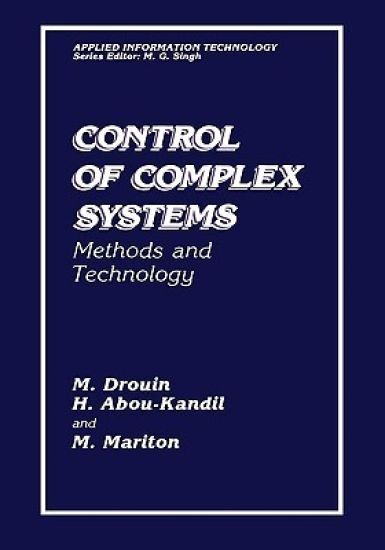
Control of Complex Systems

Control of Complex Systems

H. Abou-Kandil; M. Drouin; M. Mariton

Kluwer Academic/Plenum Publishers
1991
sidottu
Since the begining of the sixties, control theorists have developed a large body of knowledge concerning complex or large-scale systems theory. Using the state space approach, their purpose was to extend methods to cope with the increasingly sophisticated automation needs of man-made systems. Despite several remarkable contributions, and some successful applications, it can be stated that this theory has not yet become an engineering tool. On the other hand, the emergence of cheap and reliable microprocessors has profoundly transformed industrial instrumentation and control systems. Process control equipment is organized in multilevel distributed structures, closely related to the concepts introduced by complex systems control theory. This similarity should favor a fruitful intersection for practical applications. However, a gap still exists between the literature on control theory and the world of technological achievements. In the many books on complex systems, few have given attention to the technological aspects of a practical control problem. The present book is an attempt to fill this gap. To do this, it consistently reflects the viewpoints that: - Theory and technology are two indivisible facets of the same problem. -On-line implementation for real time applications is the ultimate goal of a control study.