Kirjojen hintavertailu – 12 903 737 kirjaa ja 27 kauppaa

Kirjailija

M. Susan Lindee

Kirjat ja teokset yhdessä paikassa: 6 kirjaa, julkaisuja vuosilta 1994–2020, suosituimpiin kuuluu The DNA Mystique. Vertaile teosten hintoja ja tarkista saatavuus suomalaisista kirjakaupoista.

6 kirjaa

Kirjojen julkaisuvuodet: 1994–2020.

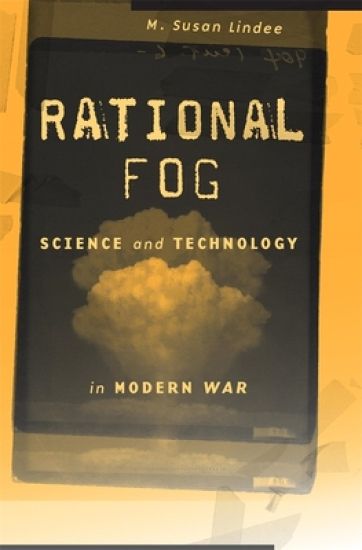
Rational Fog

Rational Fog

M. Susan Lindee

Harvard University Press
2020
sidottu
A thought-provoking examination of the intersections of knowledge and violence, and the quandaries and costs of modern, technoscientific warfare. Science and violence converge in modern warfare. While the finest minds of the twentieth century have improved human life, they have also produced human injury. They engineered radar, developed electronic computers, and helped mass produce penicillin all in the context of military mobilization. Scientists also developed chemical weapons, atomic bombs, and psychological warfare strategies. Rational Fog explores the quandary of scientific and technological productivity in an era of perpetual war. Science is, at its foundation, an international endeavor oriented toward advancing human welfare. At the same time, it has been nationalistic and militaristic in times of crisis and conflict. As our weapons have become more powerful, scientists have struggled to reconcile these tensions, engaging in heated debates over the problems inherent in exploiting science for military purposes. M. Susan Lindee examines this interplay between science and state violence and takes stock of researchers’ efforts to respond. Many scientists who wanted to distance their work from killing have found it difficult and have succumbed to the exigencies of war. Indeed, Lindee notes that scientists who otherwise oppose violence have sometimes been swept up in the spirit of militarism when war breaks out. From the first uses of the gun to the mass production of DDT and the twenty-first-century battlefield of the mind, the science of war has achieved remarkable things at great human cost. Rational Fog reminds us that, for scientists and for us all, moral costs sometimes mount alongside technological and scientific advances.
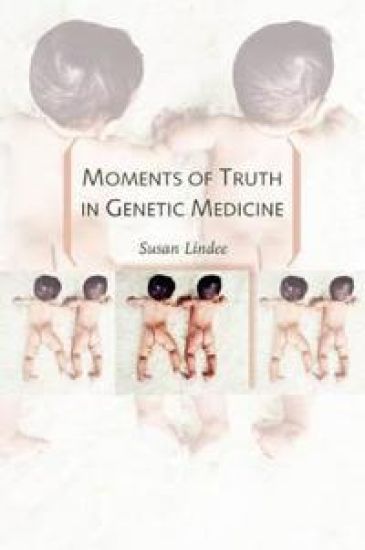
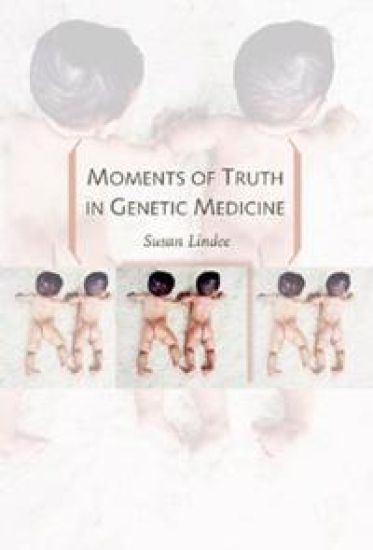
Moments of Truth in Genetic Medicine

Moments of Truth in Genetic Medicine

M. Susan Lindee

Johns Hopkins University Press
2009
pokkari
Genetic research increasingly dominates medical thought and practice in the United States and in many other industrialized nations. Susan Lindee's original study explores the institutions, disciplines, and ideas that initiated the reconfiguration of genetic medicine from a marginal field in the mid-1950s to a core research frontier of biomedicine. Tracing the work of geneticists and other experts in identifying and classifying disease during the explosive period between 1950 and 1980, Lindee identifies the individual "moments of truth" that moved the field away from its eugenic past to the center of a new world view in which nearly all disease is understood to be fundamentally genetic. She suggests that these moments of truth were experienced not only by scientists but also by those who had familial, intimate, emotional knowledge of hereditary disease: patients, family members, and research subjects. Focusing on benchmarks in the field-such as the rise of neonatal testing in the 1960s, genetic studies of unique human populations such as the Amish, the development of human cytogenetics and human behavioral genetics, and the efforts to find genes for rare diseases such as familial dysautonomia-she tracks the emergence of a biomedical consensus that nearly all disease is genetic disease. Using the success of this field as a point of entry, Lindee chronicles both the production of knowledge in biomedicine and changes in the cultural meaning of the body in the late twentieth century. She suggests that scientific knowledge is a community project that is shaped directly by people in many different social and professional locations. The power to experience and report scientific truth may be much more dispersed than it sometimes appears, because people know things about their own bodies, and their knowledge has often been incorporated into the technical infrastructure of genomic medicine. Lindee's pathbreaking study shows the interdependence of technical and social parameters in contemporary biomedicine.
Moments of Truth in Genetic Medicine

Moments of Truth in Genetic Medicine

M. Susan Lindee

Johns Hopkins University Press
2005
sidottu
Genetic research increasingly dominates medical thought and practice in the United States and in many other industrialized nations. Susan Lindee's original study explores the institutions, disciplines, and ideas that initiated the reconfiguration of genetic medicine from a marginal field in the mid-1950s to a core research frontier of biomedicine. Tracing the work of geneticists and other experts in identifying and classifying disease during the explosive period between 1950 and 1980, Lindee identifies the individual "moments of truth" that moved the field away from its eugenic past to the center of a new world view in which nearly all disease is understood to be fundamentally genetic. She suggests that these moments of truth were experienced not only by scientists but also by those who had familial, intimate, emotional knowledge of hereditary disease: patients, family members, and research subjects. Focusing on benchmarks in the field-such as the rise of neonatal testing in the 1960s, genetic studies of unique human populations such as the Amish, the development of human cytogenetics and human behavioral genetics, and the efforts to find genes for rare diseases such as familial dysautonomia-she tracks the emergence of a biomedical consensus that nearly all disease is genetic disease. Using the success of this field as a point of entry, Lindee chronicles both the production of knowledge in biomedicine and changes in the cultural meaning of the body in the late twentieth century. She suggests that scientific knowledge is a community project that is shaped directly by people in many different social and professional locations. The power to experience and report scientific truth may be much more dispersed than it sometimes appears, because people know things about their own bodies, and their knowledge has often been incorporated into the technical infrastructure of genomic medicine. Lindee's pathbreaking study shows the interdependence of technical and social parameters in contemporary biomedicine.
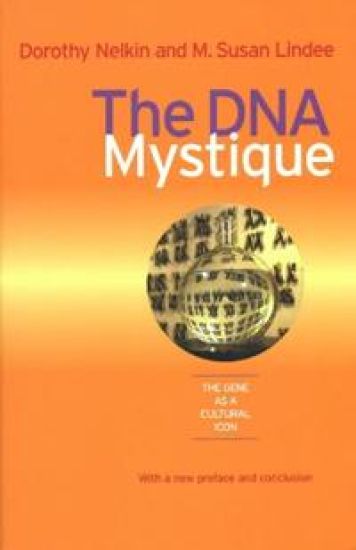
The DNA Mystique

The DNA Mystique

Dorothy Nelkin; M. Susan Lindee

The University of Michigan Press
2004
nidottu
"The DNA Mystique is a wake-up call to all who would dismiss America's love affair with 'the gene' as a merely eccentric obsession."--In These Times"Nelkin and Lindee are to be warmly congratulated for opening up this intriguing field [of genetics in popular culture] to further study."--NatureThe DNA Mystique suggests that the gene in popular culture draws on scientific ideas but is not constrained by the technical definition of the gene as a section of DNA that codes for a protein. In highlighting DNA as it appears in soap operas, comic books, advertising, and other expressions of mass culture, the authors propose that these domains provide critical insights into science itself. With a new introduction and conclusion, this edition will continue to be an engaging, accessible, and provocative text for the sociology, anthropology, and bioethics classroom, as well as stimulating reading for those generally interested in science and culture.
Suffering Made Real

Suffering Made Real

M. Susan Lindee

University of Chicago Press
1997
nidottu
The atomic bombs dropped on Hiroshima and Nagasaki in August of 1945 unleashed a force as mysterious as it was deadly - radioactivity. In 1946, the United States government created the Atomic Bomb Casualty Commission (ABCC) to serve as a permanent agency in Japan with the official mission of studying the medical effects of radiation on the survivors. The next 10 years saw the ABCC's most intensive research on the genetic effects of radiation, and up until 1974 the ABCC scientists published papers on the effects of radiation on ageing, life span, fertility, and disease. This book is a comprehensive history of the ABCC's research on how radiation affected the survivors of the atomic bomb. Arguing that Cold War politics and cultural values fundamentally shaped the work of the ABCC, the author tells the compelling story of a project that raised disturbing questions about the ethical implications of using human subjects in scientific research. How did the politics of the emerging Cold War affect the scientists' biomedical research and findings? How did the ABCC document and publicly present the effects of radiation? Why did the ABCC refuse to provide medical treatment to the survivors? Through a detailed examination of ABCC policies, archival materials, the minutes of committee meetings, newspaper accounts, and interviews with ABCC scientists, Lindee explores how political and cultural interests were reflected in the day-to-day operations of this controversial research programme. Set against a period of conflicting views of nuclear weapons and nuclear power, the book follows the course of a politically-charged research programme and reveals in detail how politics and cultural values can shape the conduct, results, and uses of science.
Suffering Made Real

Suffering Made Real

M. Susan Lindee

University of Chicago Press
1994
sidottu
The atomic bombs dropped on Hiroshima and Nagasaki in August, 1945, unleashed a force as mysterious as it was deadly. In 1946, the Atomic Bomb Casualty Commission (ABCC), under the auspices of the Atomic Energy Commission (AEC), was formed as a permanent American agency in Japan with the official mission of studying the medical effects of radiation on the survivors. The next ten years saw the ABCC's most intensive research on the genetic effects of radiation, and up until 1974 the ABCC scientists published papers on the effects of radiation on ageing, life span, fertility and disease. This text provides a comprehensive history of the ABCC's research on how radiation affected the survivors of the atomic bomb. Arguing that Cold War politics and cultural values fundamentally shaped the work of the ABCC, it describes how the project raised disturbing questions about the ethical implications of using human subjects in scientific research. How did the politics of the emerging Cold War affect the scientists' biomedical research and findings? How did the ABCC document and publicly present the effects of radiation? Why did the ABCC refuse to provide medical treatment to the survivors? Through a detailed examination of ABCC policies, archival materials, the minutes of committee meetings, newspaper accounts and interviews with ABCC scientists, Lindee explores how political and cultural interests were reflected in the day-to-day operations of the research programme.