
Kirjailija
Machado De Assis
Kirjat ja teokset yhdessä paikassa: 176 kirjaa, julkaisuja vuosilta 1991–2026, suosituimpiin kuuluu Helena. Vertaile teosten hintoja ja tarkista saatavuus suomalaisista kirjakaupoista.
176 kirjaa
Kirjojen julkaisuvuodet: 1991–2026.
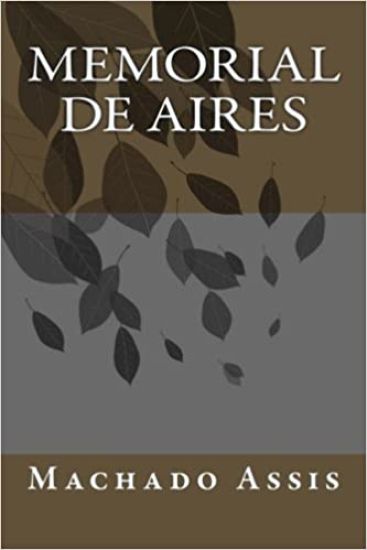
Em Memorial de Aires, ltimo romance de Machado de Assis, leitores podem voltar ao mundo de seu livro anterior "Esa e Jac ". O velho di rio do Conselheiro Aires revela um pouco mais de suas id ias e sonhos. Nas palavras de Machado: "Referia-me ao Conselheiro Aires. Tratando-se agora de imprimir o Memorial, achou-se que a parte relativa a uns dois anos (1888-1889), se for decotada de algumas circunst ncias, anedotas, descri es e reflex es, - pode dar uma narra o seguida, que talvez interesse, apesar da forma de di rio que tem. N o houve pachorra de a redigir maneira daquela outra, - nem pachorra, nem habilidade. Vai como estava, mas desbastada e estreita, conservando s o que liga o mesmo assunto. O resto aparecer um dia, se aparecer algum dia."
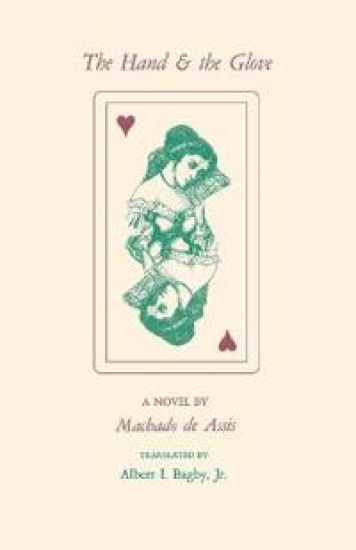
The Hand and the Glove
Machado de Assis; Albert I Bagby
The University Press of Kentucky
2014
nidottu
The later novels of Machado de Assis -- notably Dom Casmurro and Esau and Jacob -- are well known in this country, but the earlier novels have never been translated. Here, in The Hand and the Glove (the Brazilian master's second novel), rendered in English for the first time by Albert I. Bagby, Jr., readers will find a younger, gentler Assis, writing a romantic comedy that is yet permeated with the lively wit characteristic of his later works. The story is a simple one-of love lost and love found. Of love lost by Estêvão, amiable but vacillating, who is bemused by his own romantic posturing, and by Jorge, superficial and calculating. Of love found by Luis Alves, whose self-possession and determination seem destined to carry him far. The love of all three men is the proud and beautiful Guiomar, sure of her own heart but unsure, until faced by rival claims, of where to bestow it -- a foreshadowing of Capitú, the intriguing heroine of Dom Casmurro. "English-speaking readers," says Helen Caldwell in the Foreword, "who are already acquainted with Machado de Assis will welcome this latest addition to the translated novels. True, it is a period piece; but its quaintness is a charm to carry us back to the Rio de Janeiro of the 1850s -- to vanished courtly elegance arid attitudes.... Now, we too can know what drew [Assis] back to this early tale, for The Hand and the Glove recreates in English the elegant background, the charming heroine, the comedy, and the light-hearted ebullience of the Portuguese original."
J. M. Machado de Assis on brasilialaisen kirjallisuuden merkittävimpiä nimiä kautta aikojen. Psykologisesti tarkkanäköisten romaaniensa lisäksi Machado kirjoitti toistasataa lyhyempää kertomusta, joista tähän suomennoskokoelmaan on valikoitunut 12. Tarinoiden skaala ulottuu pistävästä yhteiskunnallisesta satiirista mielikuvituksellisiin fantasioihin, joiden voi nähdä enteilevän latinalaisamerikkalaista maagista realismia. Valikoiman pidemmistä novelleista, lähes pienoisromaanin mittoihin yltävä "Mielitautilääkäri" on kirpeä satiiri vallasta ja hulluudesta. "Kuolematon" vie surrealistiselle matkalle läpi aikakausien. Novellissa "Peili" kertoja paljastaa teoriansa ihmisen kahdesta sielusta. Tropiikin modernin klassikon ihailijoihin lukeutuvat mm. Salman Rushdie, Susan Sontag, sekä Woody Allen.
A Mão e a Luva: Classics of Brazilian Literature
Machado de Assis
Createspace Independent Publishing Platform
2010
nidottu
A Mao e a Luva conta a hist ria de Guiomar, uma mo a simples mas ambiciosa, que deseja a ascens o social atrav s de suas rela es amorosas. Tr s rapazes disputam o amor da mo a, mas ao final somente Guiomar poder decidir com quem casar . A M o e a Luva um dos primeiros romances de Machado de Assis, e encontra-se inserido em sua fase rom ntica. A Mao e a Luva tells the story of Guiomar, a poor and ambitious girl, who desires social advancement through her romantic relations. Three guys vie to conquer her heart, but at the end only Guiomar can decide who will marry her. A M o e a Luva is one of the first novels by Machado de Assis, and it is linked to his romantic phase.
Brasilialaisen Machado de Assisin (1839-1908) kertomusten pohjavire on pessimistinen. Hänen hienosyinen huumorinsa ja viiltävä ironiansa kohdistuu keskiluokan teeskenteleviin tapoihin, pyrkyryyteen, elämän näköalattomuuteen. KUULUISUUS on kertomus säveltäjästä, joka on saanut suurta suosiota ja kuuluisuutta iskelmänikkarina, mutta on tyytymätön, koska ei ole saavuttanut kaipaamaansa kuolemattomuutta klassisen musiikin luojana. DIPLOMAATTI kertoo konttoristista, joka tavoittelee menestystä naismaailmassa hovimaailman tuntemuksellaan ja hienoilla käytöstavoillaan, mutta joka on liian päättämätön, joten nopea syö hitaan myös näillä markkinoilla. KORTEISTA ENNUSTAJA on tragikoominen kolmiodraama, jossa usko ennustajaeukon kortteihin muodostuu syrjähyppyyn antautuneelle aviovaimolle ja hänen kokemattomalle rakastajalleen vähintään ongelmalliseksi?
Machado de Assis (1839-1908) is the great Brazilian author of Philosopher or Dog? and Epitaph of a Small Winner, whose work is admired by writers as different as Salman Rushdie, Carlos Fuentes, Woody Allen and Susan Sontag. Taken from his mature period, these dazzling stories echo Poe and Gogol, anticipate Joyce, and have been compared to the writing of Chekhov, Maupassant and Henry James, yet his modern sensibility and clear-eyed humour remain utterly unique.
'I am a deceased writer not in the sense of one who has written and is now deceased, but in the sense of one who has died and is now writing'. So begins the posthumous memoir of Braz Cubas, a wealthy nineteenth-century Brazilian. While the grave may have given Cubas the distance to examine his rather undistinguished life, it has certainly not dampened his sense of humour. Epitaph of a Small Winner is one of the wittiest self-portraits in literary history.
In these memoirs, Braz Cubas, a wealthy nineteenth-century Brazilian, examines (from beyond the grave) his rather undistinguished life in 160 short chapters that are filled with philosophical digressions and exuberant insights. A clear forerunner of Gabriel Garc a M rquez and Jorge Luis Borges, Epitaph for a Small Winner, first published in 1880, is one of the wittiest self-portraits in literary history as well as "one of the masterpieces of Brazilian literature" (Salman Rushdie).
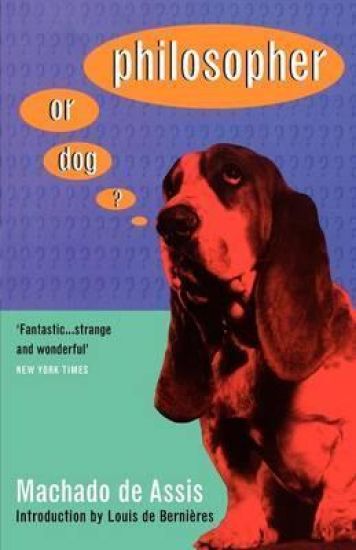
The rich and eccentric philosopher Quincas Borbas names his dog after himself because he knows his pet will outlive him. Quincas does die first, leaving his fortune to his friend Rube provided that he takes care for the dog. The dim-witted friend is hardly prepared for the life that awaits him.

Machado De Assis (1839-1908) var färgad och arbetarson, i ett Brasilien som avskaffade slaveriet först 1888. Han var epileptiker och självlärd. Som ung typograflärling började han skriva poesi. Så småningom blev han erkänd författare och slutade som "den brasilianska litteraturens fader", vald på livstid till förste ordförande i den nybildade Brasilianska Litteraturakademien. Vansinnesläkaren känns fortfarande som en universell och "modern" historia. Manin att till varje pris sätta etikett på folk var densamma då som nu. Vetenskapsmannen Simao Bacamarte drar ut som en Don Quijote, full av idealism och gravallvar, för att kämpa mot väderkvarnar, vinsäckar och sina egna hjärnspöken. Apotekaren Crispim Soares är hans tillfällige Sancho Panza. Vem är klok? Vem är galen?... Är hela samhället sjukt? Sitter de friska inspärrade, går de galna fria på gatan? Vem har makten? Är makthavarna galna? Allt detta, och mycket mera, får vi svar på i Vansinnesläkaren.
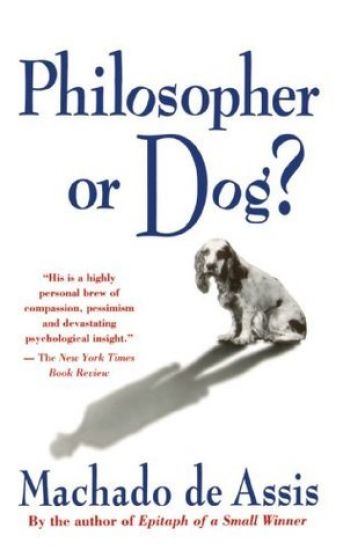
"The intellectual invention here, the worldly perception, the ultimate resignation- all give this its special interest for a special market which the earlier book will have indicated." - Kirkus Reviews
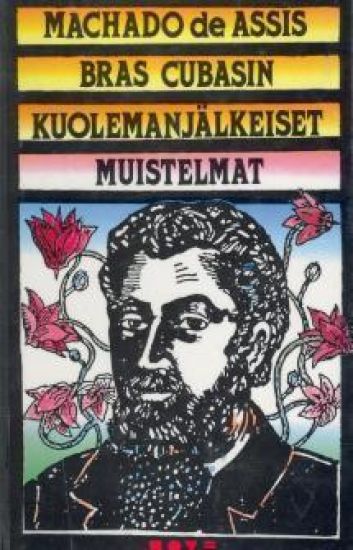
”Hilpeyden kynällä ja melankolian musteella” kirjoitettu ”muistelmateos” haudan takaa, rikkaan tyhjäntoimittajan kuvaus omasta kuolemastaan ja elämästään – ja tässä järjestyksessä. Romaani on yhtä aikaa sekä fantasia että realistinen tapainkuvaus, jossa on vanhojen romaanien viehätystä. Silmävaivoista ja epilepsiasta kärsinyt kirjailija yhdisti tässä koomisessa romaanissa omaperäisen kirjallisen tyylin huumoriin, joka saa pääkallotkin hymyilemään. Machado de Assis (1839-1908) on Brasilian kirjallisuuden merkittävimpiä nimiä, jonka laajassa tuotannossa näkyy mm. Jonathan Swiftin ja Laurence Sternen vaikutus. ”Jos Borges oli kirjailija, joka teki Garcia Marqueszin mahdolliseksi, ei ole liioittelua sanoa, että Machado oli kirjailija, joka teki Borgesin mahdolliseksi.” - Salman Rushdie -