Kirjojen hintavertailu – 12 903 725 kirjaa ja 27 kauppaa
Kirjailija
Madhuri Kulkarni
Kirjat ja teokset yhdessä paikassa: 9 kirjaa, julkaisuja vuosilta 2016–2024, suosituimpiin kuuluu Seropozitiwnost' po gepatitu V i immunnyj status u studentow-stomatologow. Vertaile teosten hintoja ja tarkista saatavuus suomalaisista kirjakaupoista.
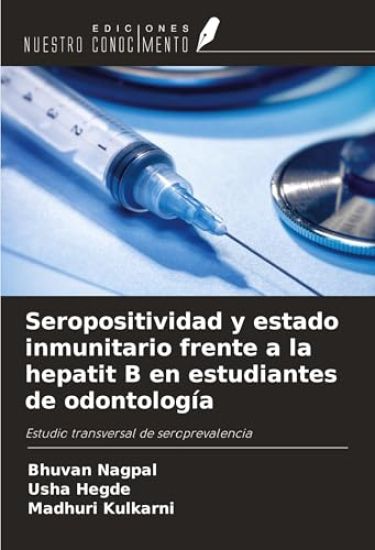
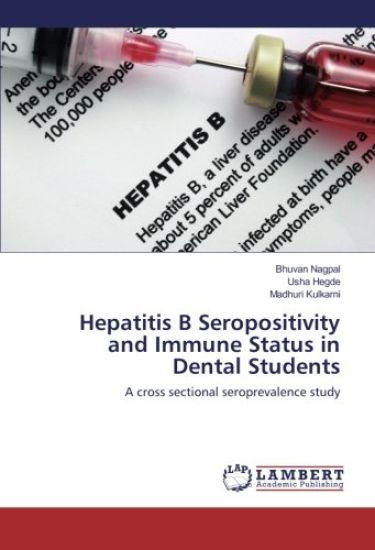
L'h patite B est la maladie professionnelle infectieuse la plus importante pour les professionnels de la sant dentaire (PSD). Ces derniers sont fr quemment en contact avec du sang et de la salive et risquent donc d' tre expos s au virus de l'h patite B (VHB). Des tudes indiquent que les PSD, du fait de leur exposition professionnelle, peuvent avoir un risque dix fois plus lev de devenir porteurs chroniques du virus de l'h patite B que le citoyen moyen. Une tude transversale de s ropr valence a t men e aupr s d' tudiants en m decine dentaire inscrits l'institut dentaire. Leurs chantillons de sang ont t pr lev s et test s par Enzyme Linked Immunosorbent assay (ELISA) pour l'antig ne de surface de l'h patite B (HBsAg) et les titres d'anticorps anti-HBsAg. Bien qu'un faible taux d'infection par le VHB ait t observ chez les tudiants en m decine dentaire, un nombre significatif d'entre eux n' taient pas vaccin s, ce qui sugg re la n cessit d'une mise en oeuvre proactive d'un programme de vaccination contre le VHB.
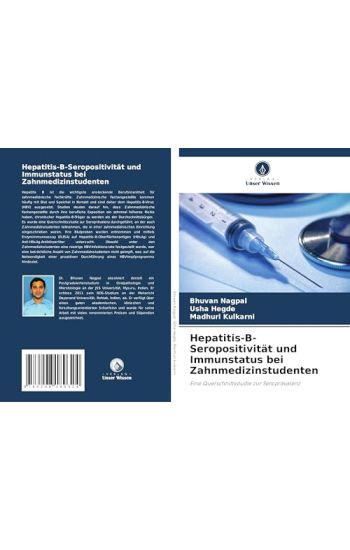
Hepatitis B ist die wichtigste ansteckende Berufskrankheit f r zahnmedizinische Fachkr fte. Zahnmedizinische Fachangestellte kommen h ufig mit Blut und Speichel in Kontakt und sind daher dem Hepatitis-B-Virus (HBV) ausgesetzt. Studien deuten darauf hin, dass Zahnmedizinische Fachangestellte durch ihre berufliche Exposition ein zehnmal h heres Risiko haben, chronischer Hepatitis-B-Tr ger zu werden als der Durchschnittsb rger. Es wurde eine Querschnittsstudie zur Seropr valenz durchgef hrt, an der auch Zahnmedizinstudenten teilnahmen, die in einer zahnmedizinischen Einrichtung eingeschrieben waren. Ihre Blutproben wurden entnommen und mittels Enzymimmunoassay (ELISA) auf Hepatitis-B-Oberfl chenantigen (HBsAg) und Anti-HBsAg-Antik rpertiter untersucht. Obwohl unter den Zahnmedizinstudenten eine niedrige HBV-Infektionsrate festgestellt wurde, war eine betr chtliche Anzahl von Zahnmedizinstudenten nicht geimpft, was auf die Notwendigkeit einer proaktiven Durchf hrung eines HBV-Impfprogramms hindeutet.
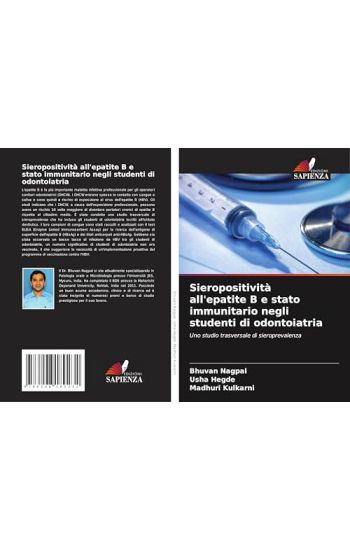
L'epatite B la pi importante malattia infettiva professionale per gli operatori sanitari odontoiatrici (DHCW). I DHCW entrano spesso in contatto con sangue e saliva e sono quindi a rischio di esposizione al virus dell'epatite B (HBV). Gli studi indicano che i DHCW, a causa dell'esposizione professionale, possono avere un rischio 10 volte maggiore di diventare portatori cronici di epatite B rispetto al cittadino medio. stato condotto uno studio trasversale di sieroprevalenza che ha incluso gli studenti di odontoiatria iscritti all'istituto dentistico. I loro campioni di sangue sono stati raccolti e analizzati con il test ELISA (Enzyme Linked Immunosorbent Assay) per la ricerca dell'antigene di superficie dell'epatite B (HBsAg) e dei titoli anticorpali anti-HBsAg. Sebbene sia stato osservato un basso tasso di infezione da HBV tra gli studenti di odontoiatria, un numero significativo di studenti di odontoiatria non era vaccinato, il che suggerisce la necessit di un'implementazione proattiva del programma di vaccinazione contro l'HBV.
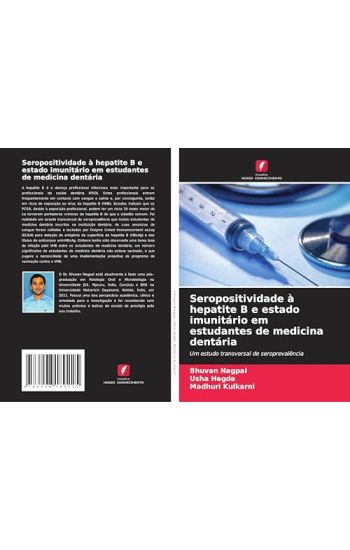
A hepatite B a doen a profissional infecciosa mais importante para os profissionais de sa de dent ria (PSD). Estes profissionais entram frequentemente em contacto com sangue e saliva e, por conseguinte, est o em risco de exposi o ao v rus da hepatite B (VHB). Estudos indicam que os PCSB, devido exposi o profissional, podem ter um risco 10 vezes maior de se tornarem portadores cr nicos de hepatite B do que o cidad o comum. Foi realizado um estudo transversal de seropreval ncia que incluiu estudantes de medicina dent ria inscritos na institui o dent ria. As suas amostras de sangue foram colhidas e testadas por Enzyme Linked Immunosorbent assay (ELISA) para dete o do antig nio de superf cie da hepatite B (HBsAg) e dos t tulos de anticorpos anti-HBsAg. Embora tenha sido observada uma baixa taxa de infe o pelo VHB entre os estudantes de medicina dent ria, um n mero significativo de estudantes de medicina dent ria n o estava vacinado, o que sugere a necessidade de uma implementa o proactiva do programa de vacina o contra o VHB.
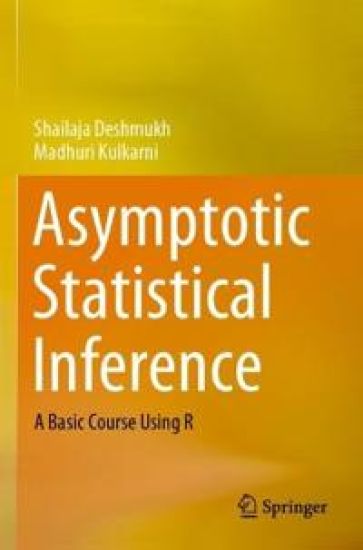
The book presents the fundamental concepts from asymptotic statistical inference theory, elaborating on some basic large sample optimality properties of estimators and some test procedures. The most desirable property of consistency of an estimator and its large sample distribution, with suitable normalization, are discussed, the focus being on the consistent and asymptotically normal (CAN) estimators. It is shown that for the probability models belonging to an exponential family and a Cramer family, the maximum likelihood estimators of the indexing parameters are CAN. The book describes some large sample test procedures, in particular, the most frequently used likelihood ratio test procedure. Various applications of the likelihood ratio test procedure are addressed, when the underlying probability model is a multinomial distribution. These include tests for the goodness of fit and tests for contingency tables. The book also discusses a score test and Wald’s test, their relationship with the likelihood ratio test and Karl Pearson’s chi-square test. An important finding is that, while testing any hypothesis about the parameters of a multinomial distribution, a score test statistic and Karl Pearson’s chi-square test statistic are identical. Numerous illustrative examples of differing difficulty level are incorporated to clarify the concepts. For better assimilation of the notions, various exercises are included in each chapter. Solutions to almost all the exercises are given in the last chapter, to motivate students towards solving these exercises and to enable digestion of the underlying concepts. The concepts from asymptotic inference are crucial in modern statistics, but are difficult to grasp in view of their abstract nature. To overcome this difficulty, keeping up with the recent trend of using R software for statistical computations, the book uses it extensively, for illustrating the concepts, verifying the properties of estimators andcarrying out various test procedures. The last section of the chapters presents R codes to reveal and visually demonstrate the hidden aspects of different concepts and procedures. Augmenting the theory with R software is a novel and a unique feature of the book. The book is designed primarily to serve as a text book for a one semester introductory course in asymptotic statistical inference, in a post-graduate program, such as Statistics, Bio-statistics or Econometrics. It will also provide sufficient background information for studying inference in stochastic processes. The book will cater to the need of a concise but clear and student-friendly book introducing, conceptually and computationally, basics of asymptotic inference.
The book presents the fundamental concepts from asymptotic statistical inference theory, elaborating on some basic large sample optimality properties of estimators and some test procedures. The most desirable property of consistency of an estimator and its large sample distribution, with suitable normalization, are discussed, the focus being on the consistent and asymptotically normal (CAN) estimators. It is shown that for the probability models belonging to an exponential family and a Cramer family, the maximum likelihood estimators of the indexing parameters are CAN. The book describes some large sample test procedures, in particular, the most frequently used likelihood ratio test procedure. Various applications of the likelihood ratio test procedure are addressed, when the underlying probability model is a multinomial distribution. These include tests for the goodness of fit and tests for contingency tables. The book also discusses a score test and Wald’s test, their relationship with the likelihood ratio test and Karl Pearson’s chi-square test. An important finding is that, while testing any hypothesis about the parameters of a multinomial distribution, a score test statistic and Karl Pearson’s chi-square test statistic are identical. Numerous illustrative examples of differing difficulty level are incorporated to clarify the concepts. For better assimilation of the notions, various exercises are included in each chapter. Solutions to almost all the exercises are given in the last chapter, to motivate students towards solving these exercises and to enable digestion of the underlying concepts. The concepts from asymptotic inference are crucial in modern statistics, but are difficult to grasp in view of their abstract nature. To overcome this difficulty, keeping up with the recent trend of using R software for statistical computations, the book uses it extensively, for illustrating the concepts, verifying the properties of estimators andcarrying out various test procedures. The last section of the chapters presents R codes to reveal and visually demonstrate the hidden aspects of different concepts and procedures. Augmenting the theory with R software is a novel and a unique feature of the book. The book is designed primarily to serve as a text book for a one semester introductory course in asymptotic statistical inference, in a post-graduate program, such as Statistics, Bio-statistics or Econometrics. It will also provide sufficient background information for studying inference in stochastic processes. The book will cater to the need of a concise but clear and student-friendly book introducing, conceptually and computationally, basics of asymptotic inference.