Kirjailija
Maggi Savin-Baden
Kirjat ja teokset yhdessä paikassa: 31 kirjaa, julkaisuja vuosilta 2004–2026, suosituimpiin kuuluu Problem-based Learning Online. Vertaile teosten hintoja ja tarkista saatavuus suomalaisista kirjakaupoista.
Nimi esiintyy myös muodoissa: Maggi Savin Baden
31 kirjaa
Kirjojen julkaisuvuodet: 2004–2026.
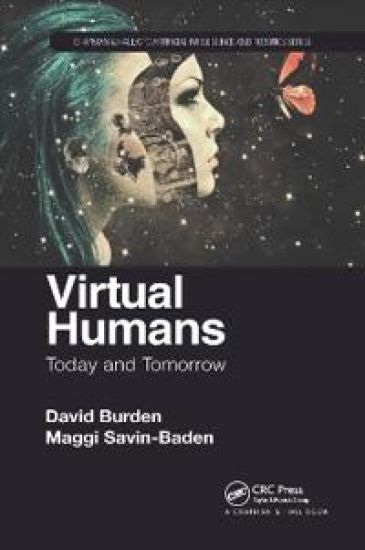
Virtual Humans provides a much-needed definition of what constitutes a ‘virtual human’ and places virtual humans within the wider context of Artificial Intelligence development. It explores the technical approaches to creating a virtual human, as well as emergent issues such as embodiment, identity, agency and digital immortality, and the resulting ethical challenges. The book presents an overview of current research and practice in this area, and outlines the major challenges faced by today’s developers and researchers. The book examines the possibility for using virtual humans in a variety of roles, from personal assistants to teaching, coaching and knowledge management, and the book situates these discussions around familiar applications (e.g. Siri, Cortana, Alexa) and the portrayal of virtual humans within Science Fiction. Features Presents a comprehensive overview of this rapidly developing field Provides an array of relevant, real-life examples from expert practitioners and researchers from around the globe in how to create the avatar body, mind, senses and ability to communicate Intends to be broad in scope yet practical in approach, so that it can serve the needs of several different audiences, including researchers, teachers, developers and anyone with an interest in where these technologies might take us Covers a wide variety of issues which have been neglected in other research texts; for example, definitions and taxonomies, the ethical challenges of virtual humans and issues around digital immortality Includes numerous examples and extensive references
Research Methods for Education in the Digital Age
Maggi Savin-Baden; Gemma Tombs
Bloomsbury Academic
2017
sidottu
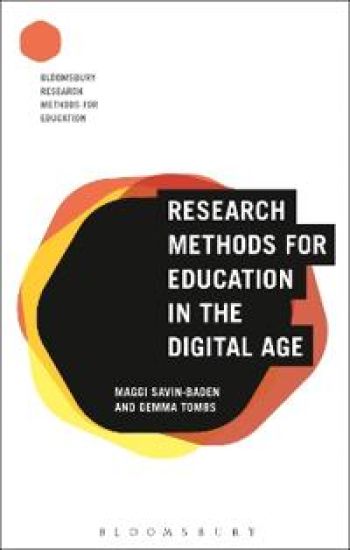
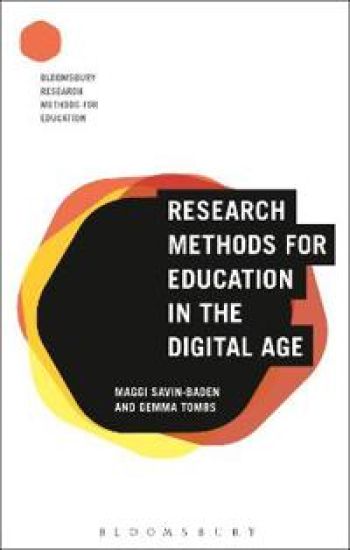
What is research in education? And what is it for in a digital age? Reflecting upon these questions, this engaging introduction provides critical discussion about the dilemmas of researching education in the digital age and ways forward for research in this complex area. Research Methods for Education in the Digital Age begins by outlining forms of education that are seen as digital, such as virtual, blended, immersive learning and examining the extent to which these are different or just adapted versions of earlier methods and approaches to education. Maggi Savin-Baden and Gemma Tombs explore current practices in research, identifying the successful adoption and adaption of theories and present practical guidance on new and emerging methodologies, methods, and analytical practices for undertaking educational research. New methodologies discussed include digital arts-based inquiry and digital visual methodologies, as well as adaptations of widely used methodologies such as ethnography, for the specific needs of researching digital teaching and learning. The book outlines the major challenges faced by today's digital researchers, exploring approaches to digital ethics, the relationship between qualitative and quantitative data in the digital age, digital data representations and portrayal and suggests helpful ways of dealing with the complexities and ethical challenges of undertaking research in and for digital spaces. Using case studies, research tips, a glossary and annotated further reading, the authors take a step by step approach from conceptualizing the research ideas, selecting the appropriate method to the dissemination of the findings. At a time when education is changing rapidly with digital and technological advances, Research Methods for Education in the Digital Age is essential reading for researchers wanting to undertake sound and rigorous research in the digital domain.
Research Methods for Education in the Digital Age
Maggi Savin-Baden; Gemma Tombs
Bloomsbury Academic
2017
nidottu
What is research in education? And what is it for in a digital age? Reflecting upon these questions, this engaging introduction provides critical discussion about the dilemmas of researching education in the digital age and ways forward for research in this complex area. Research Methods for Education in the Digital Age begins by outlining forms of education that are seen as digital, such as virtual, blended, immersive learning and examining the extent to which these are different or just adapted versions of earlier methods and approaches to education. Maggi Savin-Baden and Gemma Tombs explore current practices in research, identifying the successful adoption and adaption of theories and present practical guidance on new and emerging methodologies, methods, and analytical practices for undertaking educational research. New methodologies discussed include digital arts-based inquiry and digital visual methodologies, as well as adaptations of widely used methodologies such as ethnography, for the specific needs of researching digital teaching and learning. The book outlines the major challenges faced by today's digital researchers, exploring approaches to digital ethics, the relationship between qualitative and quantitative data in the digital age, digital data representations and portrayal and suggests helpful ways of dealing with the complexities and ethical challenges of undertaking research in and for digital spaces. Using case studies, research tips, a glossary and annotated further reading, the authors take a step by step approach from conceptualizing the research ideas, selecting the appropriate method to the dissemination of the findings. At a time when education is changing rapidly with digital and technological advances, Research Methods for Education in the Digital Age is essential reading for researchers wanting to undertake sound and rigorous research in the digital domain.
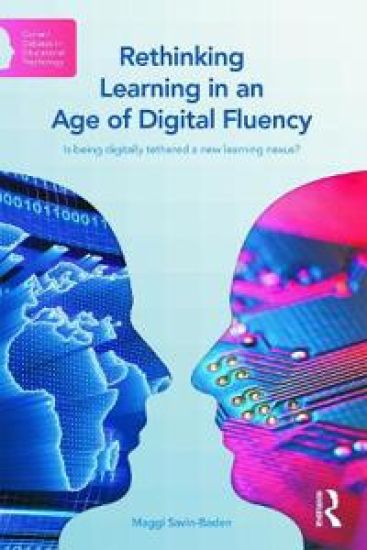
"This is a book that I am going to have to own, and will work to find contexts in which to recommend. It cuts obliquely through so many important domains of evidence and scholarship that it cannot but be a valuable stimulus" -Hamish Macleod, University of Edinburgh Digital connectivity is a phenomenon of the 21st century and while many have debated its impact on society, few have researched relationship between the changes taking place and the actual impact on learning. Rethinking Learning in an Age of Digital Fluency examines what kind of impact an increasingly connected environment is having on learning and what kind of culture it is creating within learning settings. Engagement with digital media and navigating through digital spaces with ease is something that many young people appear to do well, although the tangible benefits of this are unclear. This book, therefore, will present an overview of current research and practice in the area of digital tethering, whilst examining how it could be used to harness new learning and engagement practices that are fit for the modern age. Questions that the book also addresses include: Is being digital tethered a new learning nexus? Are social networking sites spaces for co-production of knowledge and spaces of inclusive learning? Are students who are digitally tethered creating new learning maps and pedagogies? Does digital tethering enable students to use digital media to create new learning spaces? This fascinating and at times controversial text engages with numerous aspects of digital learning amongst undergraduate students including mobile learning, individual and collaborative learning, viral networking, self-publication and identity dissemination. It will be of enormous interest to researchers and students in education and educational psychology.
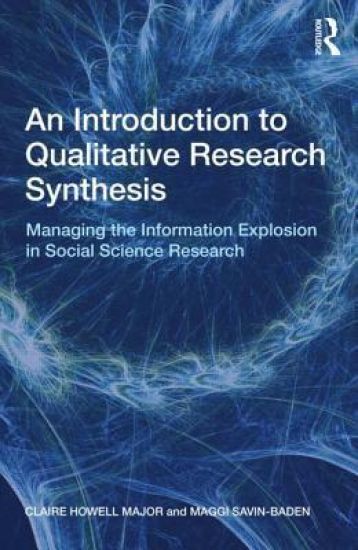
An Introduction to Qualitative Research Synthesis
Claire Howell Major; Maggi Savin-Baden
Routledge
2010
sidottu
Providing a comprehensive guide for understanding, interpreting and synthesizing qualitative studies, An Introduction to Qualitative Research Synthesis shows how data can be collated together effectively to summarise existing bodies of knowledge and to create a more complete picture of findings across different studiesThe authors describe qualitative research synthesis and argue for its use, describing the process of data analysis, synthesis and interpretation and provide specific details and examples of how the approach works in practice. This accessible book: fully explains the qualitative research synthesis approach; provides advice and examples of findings; describes the process of establishing credibility in the research process; provides annotated examples of the work in process; references published examples of the approach across a wide variety of fields. Helping researchers to understand, make meaning and synthesize a wide variety of datasets, this book is broad in scope yet practical in approach. It will be beneficial to those working in social science disciplines, including researchers, teachers, students and policy makers, especially those interested in methods of synthesis such as meta-ethnography, qualitative meta-analysis, qualitative meta-synthesis, interpretive synthesis, narrative synthesis, and qualitative systematic review.
An Introduction to Qualitative Research Synthesis
Claire Howell Major; Maggi Savin-Baden
Routledge
2009
nidottu
Providing a comprehensive guide for understanding, interpreting and synthesizing qualitative studies, An Introduction to Qualitative Research Synthesis shows how data can be collated together effectively to summarise existing bodies of knowledge and to create a more complete picture of findings across different studiesThe authors describe qualitative research synthesis and argue for its use, describing the process of data analysis, synthesis and interpretation and provide specific details and examples of how the approach works in practice. This accessible book: fully explains the qualitative research synthesis approach; provides advice and examples of findings; describes the process of establishing credibility in the research process; provides annotated examples of the work in process; references published examples of the approach across a wide variety of fields. Helping researchers to understand, make meaning and synthesize a wide variety of datasets, this book is broad in scope yet practical in approach. It will be beneficial to those working in social science disciplines, including researchers, teachers, students and policy makers, especially those interested in methods of synthesis such as meta-ethnography, qualitative meta-analysis, qualitative meta-synthesis, interpretive synthesis, narrative synthesis, and qualitative systematic review.
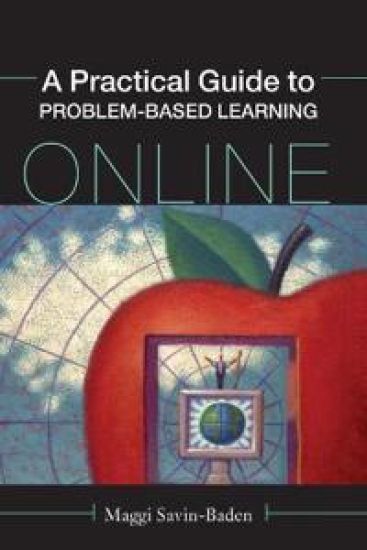
Problem-based learning online is a burgeoning area, crying out for support in all the disciplines, but particularly health, medicine, education and social care that are already advanced users of problem-based learning in higher education. This book provides highly grounded research based ways for those wanting to change problem-based learning modules and programs from face to face to online approaches, as well as those who have developed e-learning components but who want to adopt problem-based methods. Providing an overview of the current state of problem based learning online, it examines why we're moving from fact to face to online provision, considers existing forms of provision, outlines common mistakes and strategies to avoid future problems, and shows how to effectively facilitate learning. Illustrated by mini case studies and examples of international projects, it provides guidance on effective design, online collaboration and group dynamics, and explores the common, and complex, decisions faced when choosing which form of problem-based learning to adopt. Including practical information and resources for games and activities, scenarios of problem-based learning in the different disciplines, advice for supporting staff and students, and effectively evaluating the tools, skills and pedagogy needed for learning, this book is an essential guide for all practitioners involved in the design and delivery of problem based learning online.
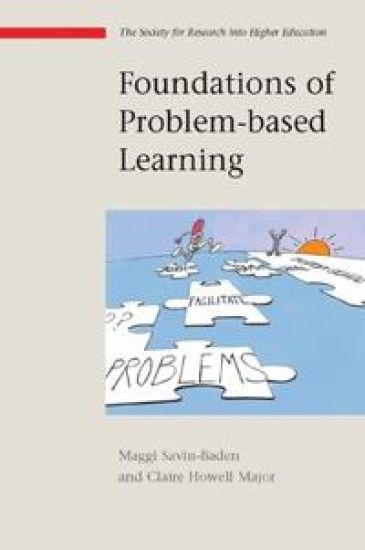
Foundations of Problem-based Learning
Maggi Savin Baden; Claire Howell Major
Open University Press
2004
nidottu
Halvin toimitettuna 47,70 €
“This book closes a gap in the PBL literature. It is a thoroughly researched, well documented and engagingly written three part harmony addressing conceptual frames, recurring themes, and broadening horizons. An essential addition to your library.” Professor Karl A. Smith, University of Minnesota“…a comprehensive guide for those new to PBL, and suitable for those new to teaching or for the more experienced looking for a new challenge.” Dr Liz Beaty, Director (Learning and Teaching), HEFCE“This book vividly articulates the key ideas of PBL and provides new PBL practitioners with key guiding posts for its implementation. It is an excellent contribution to the art of using PBL.” Associate Professor Oon-Seng Tan, Nanyang Technological University, Singapore·What is problem-based learning?·How can it be used in teaching?· How does problem-based learning affect staff and students?· How do we assess and evaluate it? Despite the growth in the use of problem-based learning since it was first popularised, there have been no resources to examine the foundations of the approach and offer straightforward guidance to those wishing to explore, understand, and implement it. This book describes the theoretical foundations of problem-based learning and is a practical source for staff wanting to implement it. The book is designed as a text that not only explores the foundations of problem-based learning but also answers many of the frequently-asked questions about its use. It develops readers understanding beyond implementation, including issues such as academic development, cultural, diversity, assessment, evaluation and curricular models of problem-based learning. Foundations of Problem-based Learning is a vital resource for lecturers in all disciplines who want to understand problem-based learning and implement it effectively in their teaching.