

Kirjojen hintavertailu – 12 903 725 kirjaa ja 27 kauppaa

Kirjailija

Maggie Thompson

Kirjat ja teokset yhdessä paikassa: 2 kirjaa, julkaisuja vuosilta 2016–2025, suosituimpiin kuuluu The Complete Funky Winkerbean, Volume 5, 1984–1986. Vertaile teosten hintoja ja tarkista saatavuus suomalaisista kirjakaupoista.

2 kirjaa

Kirjojen julkaisuvuodet: 2016–2025.

The Complete Funky Winkerbean, Volume 5, 1984–1986

The Complete Funky Winkerbean, Volume 5, 1984–1986

Tom Batiuk; Maggie Thompson

Kent State University Press
2016
sidottu
Volume 5, 1984–1986By this point in its evolution, Funky Winkerbean is resonating with its readers and its popularity is growing. Crankshaft, the irascible bus driver, and Betty, Westview High School's secretary, are introduced. Crankshaft quickly became a fan favorite, with many readers responding to the trauma-inducing, surly old curmudgeon. Not since the introduction of band director Harry L. Dinkle had a new character received such a positive response. Betty soldiers on at Westview until Batiuk finally sends her off to the cartoon character's retirement home. Almost unnoticed, another new character appears quietly and without fanfare. She didn't have a name at this point but is little by little insinuated into the strip. The students at Westview High have reached their junior year, and the prom is looming. Les needs a date, and this new character is perfect. Lisa and Les go to the prom together and continue to date. Eventually they break up when Lisa transfers to another school. It turns out that this is only the beginning of the journey with Lisa in Funky Winkerbean. Lisa returns to the strip, and when Les sees her again, she is pregnant. With this teen pregnancy story arc, Funky starts on its path to becoming an outlier on the comics page.
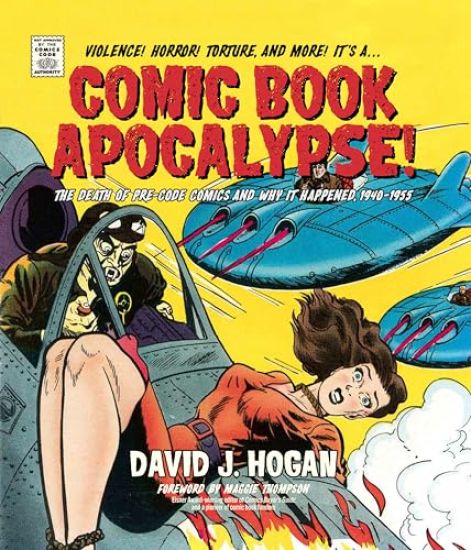
Comic Book Apocalypse!

Comic Book Apocalypse!

David J. Hogan; Maggie Thompson

SCHIFFER PUBLISHING LTD
2025
sidottu
Explore the rise and fall of pre-Code comics with 500 covers revealing America's cultural shifts, censorship, and controversy. From 1940 to 1955, American society and culture underwent dramatic changes, including the introduction of the Comics Code in October 1954, which heavily impacted comic books. The Code aimed to moderate comic content in response to public opinion, including such topics as juvenile delinquency, wartime sentiment, teenage sex, drugs, violent crime, and more. While compliance was technically voluntary, most publishers followed its strict rules. Those who didn’t faced ruin when wholesalers and distributors refused to handle noncompliant comics, returning them unopened to publishers, who soon self-destructed. Comic Book Apocalypse! explores this downfall through 500 examples of pre-Code cover art, highlighting why some deemed the Code necessary. The book also examines who decided what content was acceptable, demonstrating how pre-Code comics reflect the larger story of 1950s America.