Kirjojen hintavertailu – 12 903 725 kirjaa ja 27 kauppaa

Kirjailija

Máire Cross

Kirjat ja teokset yhdessä paikassa: 4 kirjaa, julkaisuja vuosilta 1992–2019, suosituimpiin kuuluu Early French Feminisms, 1830–1940. Vertaile teosten hintoja ja tarkista saatavuus suomalaisista kirjakaupoista.

Nimi esiintyy myös muodoissa: Maire Cross

4 kirjaa

Kirjojen julkaisuvuodet: 1992–2019.

Gender and Politics in the Age of Letter-Writing, 1750–2000
Letters have long been an outlet for political expression, whether they articulate the personal politics of the daily routine or the political views of individuals who witness or participate in dramatic events. In addition, letters can be unusually revealing records of the relations between men and women. Though letters have frequently been studied as a privileged space for literary, social, and cultural expression, the three-dimensional relationship of politics, gender, and letters has not been the focus of an entire volume. The nineteen essays in this collection examine how the gendered nature of political literacy is revealed over a 250-year period through letter writing, whether the writer is famous or unknown, the wife of a prominent politician or activist, a political prisoner or political militant. Ranging wide in terms of subject matter and geography, the contributors examine correspondence that ponders familial concerns, as well as letters providing political commentary on the effects of war or revolution on everyday life. Among the impressive group of international scholars are Jim Allen, Clare Brant, Edith Gelles, Jane Rendall, and Siân Reynolds.
Gender and Politics in the Age of Letter-Writing, 1750–2000
Letters have long been an outlet for political expression, whether they articulate the personal politics of the daily routine or the political views of individuals who witness or participate in dramatic events. In addition, letters can be unusually revealing records of the relations between men and women. Though letters have frequently been studied as a privileged space for literary, social, and cultural expression, the three-dimensional relationship of politics, gender, and letters has not been the focus of an entire volume. The nineteen essays in this collection examine how the gendered nature of political literacy is revealed over a 250-year period through letter writing, whether the writer is famous or unknown, the wife of a prominent politician or activist, a political prisoner or political militant. Ranging wide in terms of subject matter and geography, the contributors examine correspondence that ponders familial concerns, as well as letters providing political commentary on the effects of war or revolution on everyday life. Among the impressive group of international scholars are Jim Allen, Clare Brant, Edith Gelles, Jane Rendall, and Siân Reynolds.

Early French Feminisms, 1830–1940

Early French Feminisms, 1830–1940

Felicia Gordon; Máire Cross

Edward Elgar Publishing Ltd
1996
sidottu
Early French Feminisms, 1830-1940 is a source book of personal and political writings by Flora Tristan, Pauline Roland, Jeanne Deroin, Helene Brion and Madeleine Pelletier, five key individuals in the development of women's rights in France. Though their writings and political activity ranged over more than a century, these women were linked by their commitment to feminism and to socialism and can be considered as seminal figures in French political thought. Their journals, letters and diaries have not been available in print or in English translation and the same is true of many of their published works. As well as extensive extracts from the original source material, Early French Feminisms, 1830-1940 contains biographical and contextual historical material which sets the writers in their period and links them to contemporary feminist and socialist debates. Tristan, Deroin, Roland, Pelletier and Brion were active in the growth of trade union organization, Saint-Simonian utopian socialism, the birth of the parliamentary Socialist Parties, pacifism during the First World War and the neo-Malthusian or birth control movement. Ranging across personal and public genres of writings, the texts reproduced for this volume, placed in historical context, demonstrate the difficulty which these largely self-educated women faced in entering the public sphere and the political persecution which they faced courageously. Early French Feminisms, 1830-1940 clarifies an important chapter in feminist and socialist militancy which will be of interest to students and scholars of women's studies and modern French history.
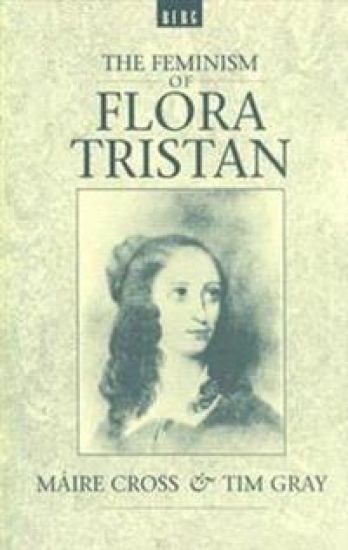
The Feminism of Flora Tristan

The Feminism of Flora Tristan

Maire Cross; Tim Gray

Berg Publishers
1992
sidottu
Flora Tristan was a most remarkable woman. Born at the begining of the 19th century, her short life was packed with adventure and achievement. An illegitimate child, she had a disastrous marriage to a husband who tried to kill her. In vain pursuit of her rightful inheritance, she sailed unchaperoned across the perilous Atlantic to Peru. Returning to France, she became a socialist, and feminist, and commited herself to a life of political radicalism. She recognized that until the economic conditions of the poor were alleviated there was little prospect of female emancipation. Her strategy was to establish a union of workers throughout France to press for socialist measures. However, linking the feminist cause to socialism proved to be fraught with difficulty. Flora Tristan found that working class organizations were indifferent, and even hostile, to the idea of female equality. In short, Flora Tristan exemplifies in her life and work, both the history of feminism, in its phases of optimism, realism and dissillusion, and the tensions between feminism and socialism.