Kirjojen hintavertailu – 12 859 828 kirjaa ja 27 kauppaa

Kirjailija

Malcolm Baker

Kirjat ja teokset yhdessä paikassa: 3 kirjaa, julkaisuja vuosilta 1995–2015, suosituimpiin kuuluu Fame and Friendship. Vertaile teosten hintoja ja tarkista saatavuus suomalaisista kirjakaupoista.

3 kirjaa

Kirjojen julkaisuvuodet: 1995–2015.

The Marble Index

The Marble Index

Malcolm Baker

Yale University Press
2015
sidottu
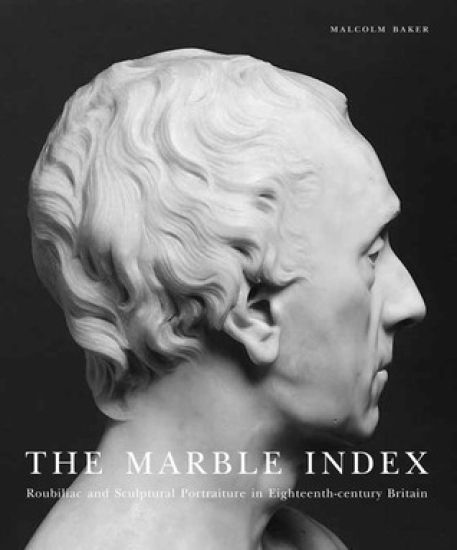
Providing the first thorough study of sculptural portraiture in 18th-century Britain, this important book challenges both the idea that portrait necessarily implies painting and the assumption that Enlightenment thought is manifest chiefly in French art. By considering the bust and the statue as genres, Malcolm Baker, a leading sculpture scholar, addresses the question of how these seemingly traditional images developed into ambitious forms of representation within a culture in which many core concepts of modernity were being formed. The leading sculptor at this time in Britain was Louis Francois Roubiliac (1702–1762), and his portraits of major figures of the day, including Alexander Pope, Isaac Newton, and George Frederic Handel, are examined here in detail. Remarkable for their technical virtuosity and visual power, these images show how sculpture was increasingly being made for close and attentive viewing. The Marble Index eloquently establishes that the heightened aesthetic ambition of the sculptural portrait was intimately linked with the way in which it could engage viewers familiar with Enlightenment notions of perception and selfhood. Published for the Paul Mellon Centre for Studies in British Art
Fame and Friendship

Fame and Friendship

Malcolm Baker

The Rothschild Foundation
2014
pokkari
No literary figure of the 18th-century was more esteemed than the poet Alexander Pope, and his sculpted portraits exemplify the celebration of literary fame at a period when authorship was being newly conceived and the portrait bust was enjoying new popularity. Accompanying an exhibition at Waddesdon Manor (The Rothschild Collection), this publication explores the convergence between authorship, portraiture, and the sculpted image in particular, by bringing together a wide range of works that foreground Pope’s celebrity status. Pope took great pains over how he was represented and carefully fashioned his public persona through images, published letters and the printed editions of his works. Examined alongside some of the most celebrated painted portraits of the poet, will be a selection of the printed texts which Pope planned with meticulous care. The core of the publication will consist of eight different versions of the same portrait bust by the leading sculptor of the period, Louis François Roubiliac. The marble bust had long been seen as a form appropriate for the celebration of literary fame and Pope’s bust in part imitates those of classical authors whose works he both translated and consciously imitated in his own poems. More than any other sculptor, Roubiliac reworked the conventions of the bust, transforming it into a genre that was considered worthy of close and sustained attention. Nowhere is this seen more tellingly than in his compelling and intense portraits of Pope. Based on a vividly modeled clay original, the variant marble versions were carved with arresting virtuosity, recalling Pope’s own phrase, “Marble, soften’d into Life”. At the same time, the image was reproduced by both the sculptor himself and by others, in a variety of materials. Multiplied and reproduced throughout the 18th century, Pope’s bust was the most familiar and visible sign of his authorial fame. At the same time, it was also used as a way of articulating friendship – a constant theme in Pope’s verse - and all the early versions of Roubiliac’s bust were probably executed for Pope’s closest friends. By bringing together the eight versions thought to have been executed by Roubiliac and his studio, and a number of other copies in marble, plaster and ceramic, this publication will offer the opportunity to explore not only the complex relationship between these various versions but the hitherto little understood processes of sculptural production and replication in eighteenth-century Britain.

Roubiliac and the Eighteenth-Century Monument

Roubiliac and the Eighteenth-Century Monument

David Bindman; Malcolm Baker

Yale University Press
1995
sidottu
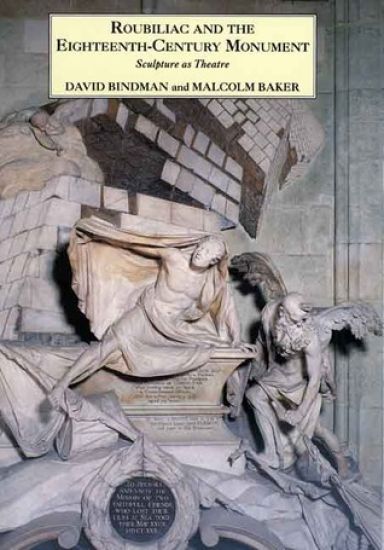
Louis François Roubiliac, the most compelling sculptor in eighteenth-century Britain, was responsible for many complex and dramatic monuments that can be seen in Westminster Abbey and churches throughout the country. This book is not only the first extended treatment of the artist since 1928 but is also an exploration of tomb sculpture in the context of the period. The first section, written by David Bindman, discusses the reasons for the commissioning of tomb sculpture, ideas of death and the afterlife, the setting of the tomb, the themes that govern its imagery, and the negotiations between sculptor and patron. The second section, written by Malcolm Baker, examines in detail the processes involved in the design and making of the monuments. Through an analysis of the monuments themselves, the surviving models, and a range of documentary evidence, Baker considers Roubiliac's technical procedures and compares them to those of other sculptors in Britain and on the continent. The volume ends with a full catalogue raisonné of Roubiliac's known monuments. Each commission is discussed in detail, with full accounts of contemporary documentation, inscriptions, physical construction, and related models. By examining the particular social and religious conditions of the time it becomes possible to account not only for the distinctive features of Roubiliac's work and practice but also for how such theatrical works came to be accepted and admired. The book is fully illustrated, all the major works having been newly photographed to make visible details that are impossible to see under normal viewing conditions. Published for the Paul Mellon Center for Studies in British Art