Kirjojen hintavertailu – 12 859 818 kirjaa ja 27 kauppaa

Kirjailija

Malcolm J. Hawkesford

Kirjat ja teokset yhdessä paikassa: 3 kirjaa, julkaisuja vuosilta 2011–2024, suosituimpiin kuuluu Instant Insights: Nitrogen-Use Efficiency. Vertaile teosten hintoja ja tarkista saatavuus suomalaisista kirjakaupoista.

3 kirjaa

Kirjojen julkaisuvuodet: 2011–2024.

Instant Insights: Nitrogen-Use Efficiency

Instant Insights: Nitrogen-Use Efficiency

Various Authors; J. F. Angus; Samantha Earl-Goulet; Claudia Wagner-Riddle; Laura Van Eerd; Kate Congreves; Dinesh Kumar Jaiswal; Nandula Raghuram; Malcolm J. Hawkesford; William R. Whalley; Jacques Le Gouis

Burleigh Dodds Science Publishing Limited
2024
pokkari
This book features five peer-reviewed reviews on improving nitrogen-use efficiency (NUE). The first chapter provides an overview of the recent advances in optimising NUE in crop production, focussing on broadacre cereals and oilseeds. The chapter also addresses the impact of underfertilisation and overfertilisation on crop yield, grain quality and profit. The second chapter outlines recent advances in understanding nitrogen (N) cycling in soil, as well as the main issues researchers and farmers are presented with when attempting to optimise productivity while minimising environmental impacts. The third chapter considers the ways in which molecular interventions can be used to optimise crop NUE in rice and how these interventions can contribute towards producing rice genotypes with high yields at low N-inputs. The fourth chapter reviews the principal mechanisms of N-uptake and efficient capture by crop root systems. The chapter also details the impact of abiotic stress factors on N-uptake and proliferation, such as soil structure and overall health. The final chapter reviews the role of traits related to N-uptake, N-assimilation and N-remobilisation in breeding more efficient varieties of wheat. The chapter also discusses future major research trends, such as high-throughput phenotyping.
Instant Insights: Improving Crop Nutrient Use Efficiency

Instant Insights: Improving Crop Nutrient Use Efficiency

Ulrike Mathesius; Jian Jin; Yansheng Li; Michelle Watt; J. F. Angus; Ajit S. Nehe; M. John Foulkes; Jacques Le Gouis; Malcolm J. Hawkesford

Burleigh Dodds Science Publishing Limited
2021
pokkari
This specially curated collection features four reviews of current and key research on improving crop nutrient use efficiency. The first chapter explores the relationship between rhizobacteria and plant roots, looking primarily at the recruitment of rhizobacteria by the plant to carry out particular functions, such as nutrient acquisition. The chapter highlights our current understanding of the molecular determinants of legume nodulation as well as challenges for improvements of biological nitrogen fixation in legumes and non-legumes. The second chapter considers the rising use of nitrogen (N) fertilizer in agriculture and its role in the shrinking contribution of soil organic N. The chapter explores the impact of the inefficient management of N (low nitrogen-use efficiency) and the consequent developments of major environmental issues, such as pollution to groundwater, oceans and the atmosphere. The third chapter addresses key issues in using N fertilizers in wheat production, such as product cost and environmental impact. The chapter summarises the development of N-efficient cultivars and their economic benefits, as well as their role in reducing the environmental impact of excessive N fertilizer inputs, whilst maintaining respectable yields. The final chapter considers the use of breeding techniques, including genetic variability, to develop more efficient wheat varieties with improved traits related to nitrogen capture, nitrogen assimilation and nitrogen remobilization.
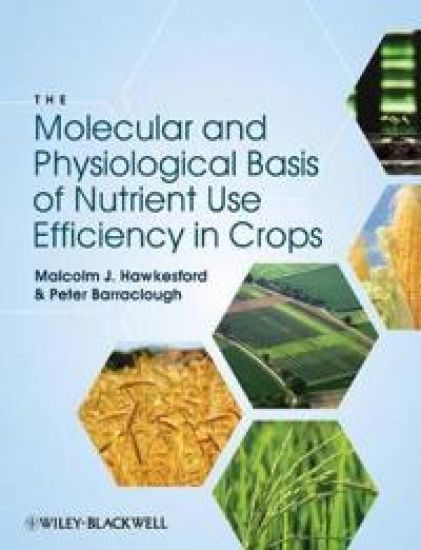
The Molecular and Physiological Basis of Nutrient Use Efficiency in Crops

The Molecular and Physiological Basis of Nutrient Use Efficiency in Crops

Malcolm J. Hawkesford; Peter Barraclough

Iowa State University Press
2011
sidottu
Efforts to increase efficient nutrient use by crops are of growing importance as the global demand for food, fibre and fuel increases and competition for resources intensifies. The Molecular and Physiological Basis of Nutrient Use Efficiency in Crops provides both a timely summary of the latest advances in the field as well as anticipating directions for future research. The Molecular and Physiological Basis of Nutrient Use Efficiency in Crops bridges the gap between agronomic practice and molecular biology by linking underpinning molecular mechanisms to the physiological and agronomic aspects of crop yield. These chapters provide an understanding of molecular and physiological mechanisms that will allow researchers to continue to target and improve complex traits for crop improvement. Written by leading international researchers, The Molecular and Physiological Basis of Nutrient Use Efficiency in Crops will be an essential resource for the crop science community for years to come. Special Features: coalesces current knowledge in the areas of efficient acquisition and utilization of nutrients by crop plants with emphasis on modern developmentsaddresses future directions in crop nutrition in the light of changing climate patterns including temperature and water availabilitybridges the gap between traditional agronomy and molecular biology with focus on underpinning molecular mechanisms and their effects on crop yieldincludes contributions from a leading team of global experts in both research and practical settings