Kirjojen hintavertailu – 12 903 724 kirjaa ja 27 kauppaa

Kirjailija

Malcolm Lyne

Kirjat ja teokset yhdessä paikassa: 7 kirjaa, julkaisuja vuosilta 2001–2022, suosituimpiin kuuluu The Roman Pottery Production Site at Wickham Barn Chiltington East Sussex. Vertaile teosten hintoja ja tarkista saatavuus suomalaisista kirjakaupoista.

7 kirjaa

Kirjojen julkaisuvuodet: 2001–2022.

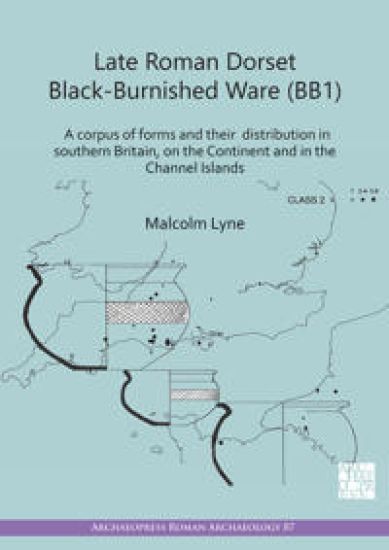
Late Roman Dorset Black-Burnished Ware (BB1)
Much has been written about Roman Dorset Black-Burnished Ware (BB1) and its Late Iron Age Durotrigian origins since the industry was first recognised by Farrar, Gillam and Peacock at the end of the 1960s. However, most of this study has focused on the forms produced and distributed during the 1st to 3rd centuries. Late Roman Dorset Black-Burnished Ware (BB1) covers the late 3rd to early 5th centuries forms produced by the industry, with a corpus and phased distribution of the various products across South-Central and South-Eastern Britain, as well as the Channel Islands, France, Belgium and the Netherlands. The various phases of BB1 production indicate that the distribution zone for the industry reached its maximum extent in Britain during the late 3rd century before a decline set in during the 4th and early 5th centuries. On the Continent, however, there was a considerable increase in supply to Northern French sites and those in Normandy and down the Seine valley in particular. The mechanisms behind late BB1 production, supply and the reasons for its disappearance are also discussed and evidence presented for the industry continuing to function on a much-reduced scale after the Roman abandonment of Britannia until the mid-5th century.

The Archaeological Activities of James Douglas in Sussex between 1809 and 1819
James Douglas (1753-1819) was a polymath, well ahead of his time in both the fields of archaeology and earth-sciences. His examinations of fossils from the London Clay and other geological formations caused him to conclude that the Earth was much older than the 4004 BC allotted to it by his contemporaries. He had come to this conclusion by 1785 and published these findings in that year, long before other researchers in the same field. His Nenia Britannica, published in 1793, reveals a remarkably accurate grasp of the dating of Anglo- Saxon burials; further illuminated by the contents of his common-place book for 1814-16, discovered by the author in a second-hand bookshop. This common-place book, correspondence with his contemporaries and other sources resulted in the present publication recounting his archaeological and other activities in Sussex during the first two decades of the 19th century.
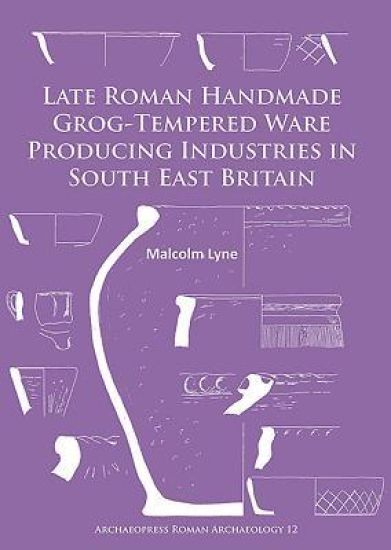
Late Roman Handmade Grog-Tempered Ware Producing Industries in South East Britain
The appearance and revival of handmade grog-tempered ware producing pottery industries during the late 3rd and 4th centuries using technology more appropriate to the Late Iron Age in the south and south-east of Britain is something of an enigma. This revival in the popularity of such primitive pottery took place on the Isle of Wight and in the Hampshire Basin, East Sussex and Kent at a time when the production of Romanised wheel-turned grey and fine colour-coated wares was still on a large scale in the south of Britain and elsewhere in the British provinces. This publication is the result of 25 years research into these grog-tempered wares: it presents corpora of forms associated with the various industries and discusses the distributions of their products at different periods. It also discusses the possible reasons for the revival of such wares, increasing popularity during the 4th century and disappearance during the 5th century AD.
Archaeological Research in Binsted Kingsley and Alice Holt Forest Hampshire
This publication deals with the archaeological and documentary evidence for mans' activities in Binsted and Kingsley (Hampshire/Surrey, S. England) during this period between the last Ice Age and the post-medieval period. An interim publication on the Alice Holt Roman potteries contains a short section on the contemporary landscape, accompanied by a rather rudimentary map of the distribution of Roman sites in Binsted and Kingsley parishes between Alton and the Hampshire/Surrey county boundary in north-east Hampshire. The ten years following this publication saw an intensive programme of landscape study in order to explore and understand the changing pattern of human settlement and land utilisation within the area over the last 10000 years or so. Conclusions of the current research reported in this volume are based on seven years of field-walking between 1981 and 1988, as well as some carried out during the early 1970s. All but about half a dozen of the arable fields within the 42 square kilometres of land encompassed by the two parishes were walked and most of the permanent pasture and woodland was also examined. This fieldwork was backed up by the survey of a number of vernacular buildings dating from before AD 1300 to c. AD 1700. Five flights were also carried out between 1981 and 1983 for the purpose of air photography. Excavations were carried out on Alice Holt Roman pottery waste dumps and other sites of all periods in and around the forest.
Excavations at Pevensey Castle, 1936 to 1964
This volume presents and reasseses the hitherto unpublished excavations which took place at Pevensey Castle in 1936-39 and 1964. Pevensey was part of the Saxon Shore defences, and was subsequently the site of a major Norman castle, although semi-ruinous by the end of the fourteenth century. As well as detailing the Roman and post-Roman structures, chapters cover the landscape, coins, small finds and pottery.
A Narrow View Across the Upper Thames Valley in Late Prehistoric and Roman Times

A Narrow View Across the Upper Thames Valley in Late Prehistoric and Roman Times

Paul Booth; Kate Brayne; Derek Cater; Hilary Cool; Rowena Gale; John Giorgi; Malcolm Lyne; Hilary Major; Gemma Martin; James Rackham; Stephen Rowland; Susan Tyler; Alan Vince; Tania Wilson; Tom Wilson

BAR Publishing
2008
nidottu
The report on excavations which took place as a result of the laying of a gas pipeline from Charlgrove to Ilsley. Two large and thirty-two small sites were identified, predominantly late prehistoric in date, with Iron Age deposits being the most abundant. The two larger sites were occupied from the Iron Age into the early Roman period.