Kirjailija
Malcolm M. Feeley
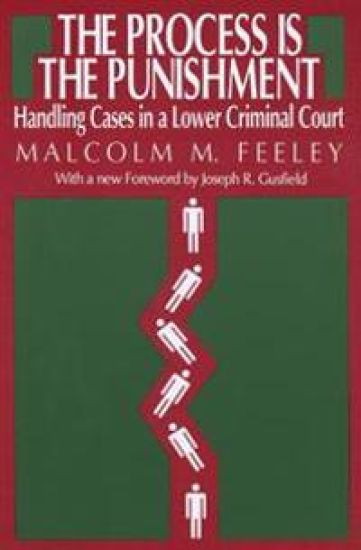
Kirjat ja teokset yhdessä paikassa: 6 kirjaa, julkaisuja vuosilta 1992–2016, suosituimpiin kuuluu The Process is the Punishment. Vertaile teosten hintoja ja tarkista saatavuus suomalaisista kirjakaupoista.
Nimi esiintyy myös muodoissa: Malcolm M Feeley
6 kirjaa
Kirjojen julkaisuvuodet: 1992–2016.
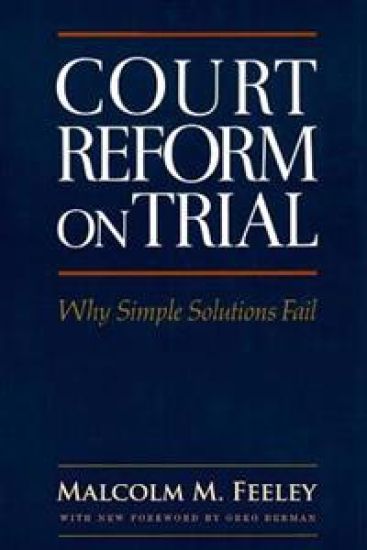
Malcolm Feeley’s work is well-known to scholars around the world and has influenced two generations of criminologists and legal scholars. He has written extensively on crime and the legal process and has published numerous articles in law, history, social science and philosophy journals; two of his books, The Process is the Punishment and Court Reform on Trials, have won awards. This volume brings together many of his better-known articles and essays, as well as some of his lesser-known but nevertheless important contributions, all of which share the common theme of the value of the rule of law, albeit a more sophisticated concept than is commonly embraced. The selections also reveal the full range of his interests and the way in which his research interests have developed.
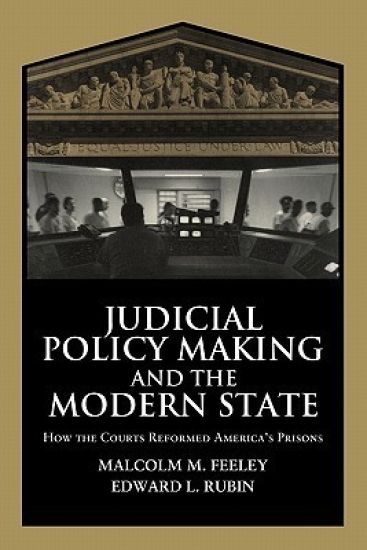
Judicial Policy Making and the Modern State
Malcolm M. Feeley; Edward L. Rubin
Cambridge University Press
2000
pokkari
Between 1965 and 1990, federal judges in almost all of the states handed down sweeping rulings that affected virtually every prison and jail in the United States. Without a doubt judges were the most important prison reformers during this period. This book provides an account of this process, and uses it to explore the more general issue of the role of courts in the modern bureaucratic state. In doing so, it provides detailed accounts of how the courts formulated and sought to implement their orders, and how this action affected the traditional conception of federalism, separation of powers, and the rule of law.
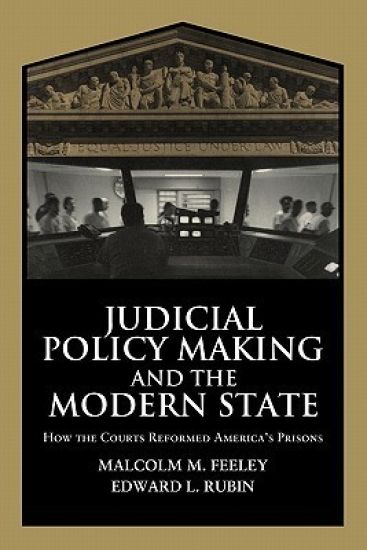
Judicial Policy Making and the Modern State
Malcolm M. Feeley; Edward L. Rubin
Cambridge University Press
1998
sidottu
Between 1965 and 1990, federal judges in almost all of the states handed down sweeping rulings that affected virtually every prison and jail in the United States. Without a doubt judges were the most important prison reformers during this period. This book provides an account of this process, and uses it to explore the more general issue of the role of courts in the modern bureaucratic state. In doing so, it provides detailed accounts of how the courts formulated and sought to implement their orders, and how this action affected the traditional conception of federalism, separation of powers, and the rule of law.