Kirjojen hintavertailu – 12 903 725 kirjaa ja 27 kauppaa

Kirjailija

Malcolm Rutherford

Kirjat ja teokset yhdessä paikassa: 22 kirjaa, julkaisuja vuosilta 1989–2017, suosituimpiin kuuluu Institutions in Economics. Vertaile teosten hintoja ja tarkista saatavuus suomalaisista kirjakaupoista.

22 kirjaa

Kirjojen julkaisuvuodet: 1989–2017.

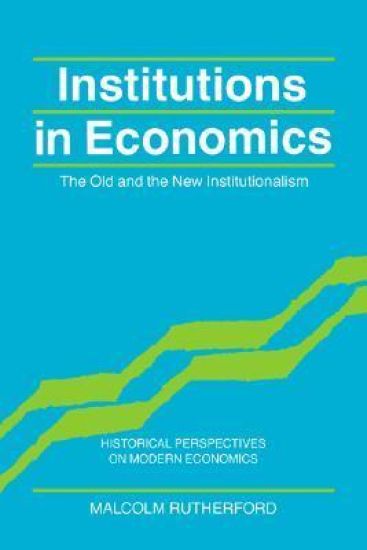
Institutions in Economics

Institutions in Economics

Malcolm Rutherford

Cambridge University Press
1996
pokkari
This book examines and compares the two major traditions of institutionalist thinking in economics: the ‘old’ institutionalism of Veblen, Mitchell, Commons, and Ayres, and the ‘new’ institutionalism developed more recently from neoclassical and Austrian sources and including the writings of Coase, Williamson, North, Schotter, and many others. The discussion is organized around a set of key methodological, theoretical, and normative problems that necessarily confront any attempt to incorporate institutions (defined to include organizations, laws, and social norms) into economics. These are identified in terms of the issues surrounding the use of formal or non-formal analytical methods, individualist or holistic approaches, the respective roles of rational choice and rule-following behavior, the relative importance of the spontaneous evolution and deliberative design of institutions, and questions concerning the normative appraisal of institutions. The old and the new institutionalism have often been paired on opposite sides of these issues, and the issues themselves presented in a series of sharp dichotomies. Professor Rutherford argues, however, that matters are both more complex and more challenging. Although each tradition embodies fascinating insights into the study of economic institutions - their functioning, evolution, and impact on human welfare - neither has as yet provided fully satisfactory answers to the problems identified.
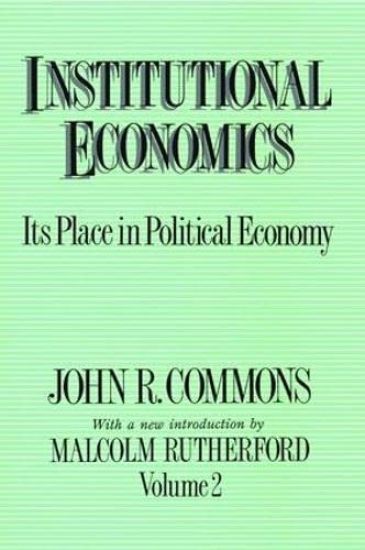
Institutional Economics

Institutional Economics

Malcolm Rutherford

Routledge
2017
sidottu
This book deals with a variety of issues including matters of method, particularly John R. Commons' pragmatism, the role of scarcity and conflict in economics as opposed to a presumed harmony of interest, and the importance of custom and common law as opposed to individual pleasures and pains.
The Institutionalist Movement in American Economics, 1918–1947

The Institutionalist Movement in American Economics, 1918–1947

Malcolm Rutherford

Cambridge University Press
2013
pokkari
This book provides a detailed picture of the institutionalist movement in American economics concentrating on the period between the two World Wars. The discussion brings a new emphasis on the leading role of Walton Hamilton in the formation of institutionalism, on the special importance of the ideals of 'science' and 'social control' embodied within the movement, on the large and close network of individuals involved, on the educational programs and research organizations created by institutionalists and on the significant place of the movement within the mainstream of interwar American economics. In these ways the book focuses on the group most closely involved in the active promotion of the movement, on how they themselves constructed it, on its original intellectual appeal and promise and on its institutional supports and sources of funding.
The Institutionalist Movement in American Economics, 1918–1947

The Institutionalist Movement in American Economics, 1918–1947

Malcolm Rutherford

Cambridge University Press
2011
sidottu
This book provides a detailed picture of the institutionalist movement in American economics concentrating on the period between the two World Wars. The discussion brings a new emphasis on the leading role of Walton Hamilton in the formation of institutionalism, on the special importance of the ideals of 'science' and 'social control' embodied within the movement, on the large and close network of individuals involved, on the educational programs and research organizations created by institutionalists and on the significant place of the movement within the mainstream of interwar American economics. In these ways the book focuses on the group most closely involved in the active promotion of the movement, on how they themselves constructed it, on its original intellectual appeal and promise and on its institutional supports and sources of funding.
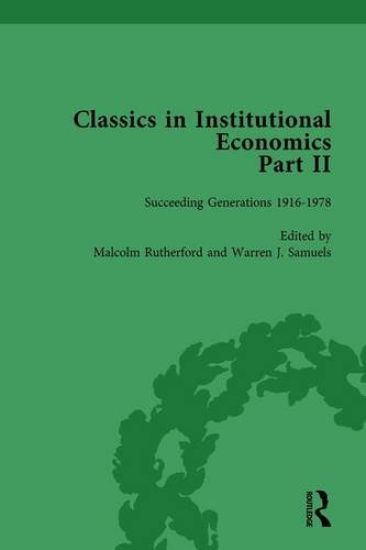
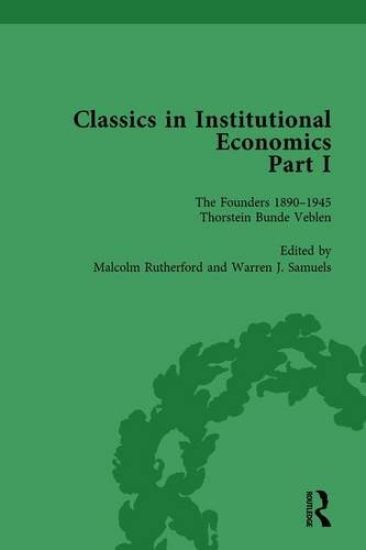
Classics in Institutional Economics, Part I, Volume 4

Classics in Institutional Economics, Part I, Volume 4

Warren J Samuels; Malcolm Rutherford

Routledge
1997
sidottu
Institutional economics is recognised as a peculiarly American development in economics — nothing quite like it emerged in Britain or continental Europe. As such, a knowledge of the literature of institutionalism is a necessary part of understanding the history of American economics and American social thought more broadly. The work of the authors featured in this collection served to create and define the American institutionalist tradition in economics: Thorstein Veblen, Richard Theodore Ely, John Rogers Commons, Robert Franklin Hoxie, Wesley Clair Mitchell and Walton Hale Hamilton. These figures were also central to institutionalism’s numerous debates on the unifying characteristics of the movement and its principal contributions — making this collection of their most important works a convenient vehicle to assess these issues. It is also of increasing value given the fact that the main concerns of institutionalists, such as the role of institutions and development of an evolutionary approach, having been coming back into prominence as important issues in economics.
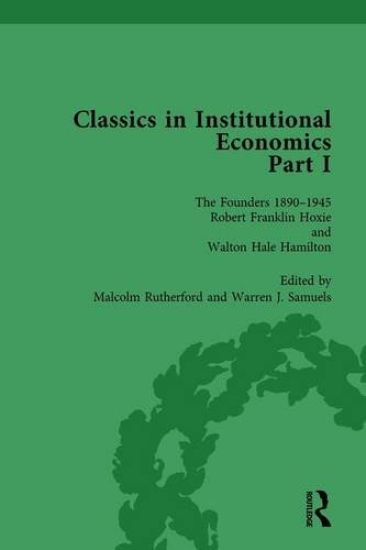
Classics in Institutional Economics, Part I, Volume 3

Classics in Institutional Economics, Part I, Volume 3

Warren J Samuels; Malcolm Rutherford

Routledge
1997
sidottu
Institutional economics is recognised as a peculiarly American development in economics — nothing quite like it emerged in Britain or continental Europe. As such, a knowledge of the literature of institutionalism is a necessary part of understanding the history of American economics and American social thought more broadly. The work of the authors featured in this collection served to create and define the American institutionalist tradition in economics: Thorstein Veblen, Richard Theodore Ely, John Rogers Commons, Robert Franklin Hoxie, Wesley Clair Mitchell and Walton Hale Hamilton. These figures were also central to institutionalism’s numerous debates on the unifying characteristics of the movement and its principal contributions — making this collection of their most important works a convenient vehicle to assess these issues. It is also of increasing value given the fact that the main concerns of institutionalists, such as the role of institutions and development of an evolutionary approach, having been coming back into prominence as important issues in economics.
Classics in Institutional Economics, Part I, Volume 2

Classics in Institutional Economics, Part I, Volume 2

Warren J Samuels; Malcolm Rutherford

Routledge
1997
sidottu
Institutional economics is recognised as a peculiarly American development in economics — nothing quite like it emerged in Britain or continental Europe. As such, a knowledge of the literature of institutionalism is a necessary part of understanding the history of American economics and American social thought more broadly. The work of the authors featured in this collection served to create and define the American institutionalist tradition in economics: Thorstein Veblen, Richard Theodore Ely, John Rogers Commons, Robert Franklin Hoxie, Wesley Clair Mitchell and Walton Hale Hamilton. These figures were also central to institutionalism’s numerous debates on the unifying characteristics of the movement and its principal contributions — making this collection of their most important works a convenient vehicle to assess these issues. It is also of increasing value given the fact that the main concerns of institutionalists, such as the role of institutions and development of an evolutionary approach, having been coming back into prominence as important issues in economics.
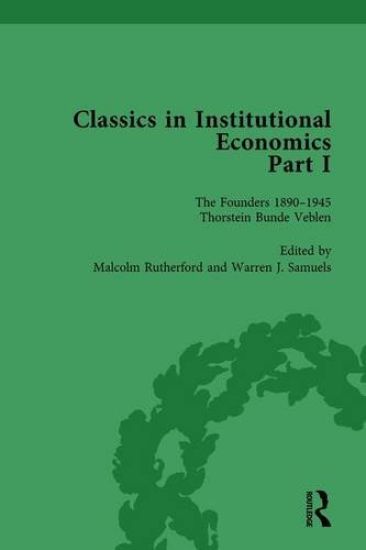
Classics in Institutional Economics, Part I, Volume 1

Classics in Institutional Economics, Part I, Volume 1

Warren J Samuels; Malcolm Rutherford

Routledge
1997
sidottu
Institutional economics is recognised as a peculiarly American development in economics — nothing quite like it emerged in Britain or continental Europe. As such, a knowledge of the literature of institutionalism is a necessary part of understanding the history of American economics and American social thought more broadly. The work of the authors featured in this collection served to create and define the American institutionalist tradition in economics: Thorstein Veblen, Richard Theodore Ely, John Rogers Commons, Robert Franklin Hoxie, Wesley Clair Mitchell and Walton Hale Hamilton. These figures were also central to institutionalism’s numerous debates on the unifying characteristics of the movement and its principal contributions — making this collection of their most important works a convenient vehicle to assess these issues. It is also of increasing value given the fact that the main concerns of institutionalists, such as the role of institutions and development of an evolutionary approach, having been coming back into prominence as important issues in economics.