
Kirjailija
Malcolm Wanklyn
Kirjat ja teokset yhdessä paikassa: 6 kirjaa, julkaisuja vuosilta 2010–2022, suosituimpiin kuuluu Decisive Battles of the English Civil War. Vertaile teosten hintoja ja tarkista saatavuus suomalaisista kirjakaupoista.
6 kirjaa
Kirjojen julkaisuvuodet: 2010–2022.
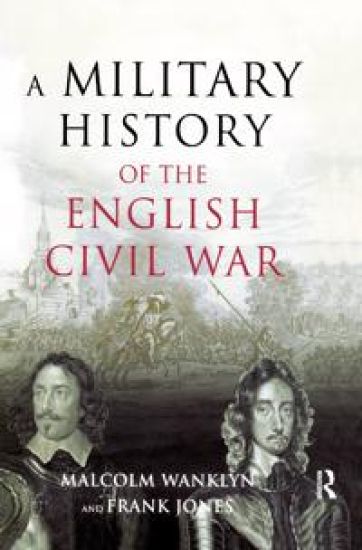
A Military History of the English Civil War examines how the civil war was won, who fought for whom, and why it ended. With a straightforward style and clear chronology that enables readers to make their own judgements and pursue their own interests further, this original history provides a thorough critique of the reasons that have been cited for Parliament's victory and the King's defeat in 1645/46. It discusses the strategic options of the Parliamentary and Royalist commanders and councils of war and analyses the decisions they made, arguing that the King’s faulty command structure was more responsible for his defeat than Sir Thomas Fairfax's strategic flair. It also argues that the way that resources were used, rather than the resources themselves, explain why the war ended when it did.
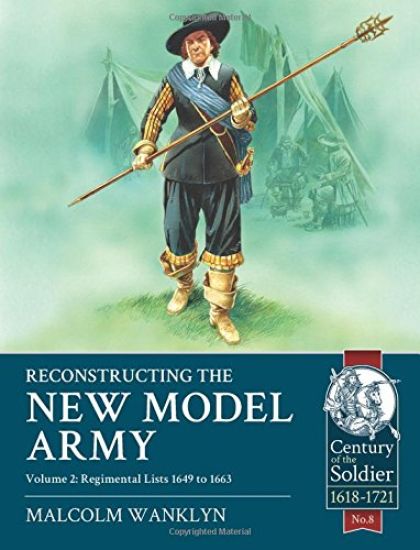
A major gap in the body of work available in print to researchers into the military history of the English Civil War is army lists of the New Model Army. Reconstructing the New Model Army, of which this is the second volume, presents for the first time listings by regiment of the commissioned officers who fought in the New Model Army from the invasion of Ireland in August 1649 to the disbandment of many of its units in 1660 and the embedding of the remainder into the new royal army in the years that followed. In Parts II and III of the volume snapshots are provided of the army in June 1650, October 1651, Autumn 1656, April 1659, September 1659 and April 1660, and for the army in Ireland in 1649-50, 1651-3, 1653-5, 1656-9, and 1659-60. What happened to the officer corps in between the snapshots is provided by extensive notes all of which are fully referenced. This division into two armies is largely because they were very largely distinct from one another. Regiments stationed in Ireland stayed there and there was very little movement of officers between the Irish army and the army in England and Scotland. Part I of the volume contains a number of short essays reflecting on aspects of the army on which the snapshots shed new light or cause earlier historians’ work to be questioned. They include reflections on changes in the officer corps over time, on whether or not the New Model could be described as a meritocracy, on its new Imperial role post 1650, and on the survival of New Model Army units beyond the winter of 1660, which was more extensive than has been supposed. At the end of the volume there are a number of appendices the most extensive of which contains listings of the regiments raised for or during the Scottish campaign of 1650-51 and disbanded immediately afterwards.
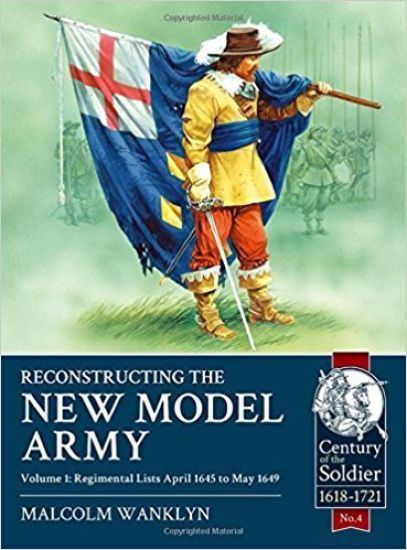
This book provides a full listing of the troop and company commanders who served in the New Model Army during the first four years of its existence. A second volume covering the final years of the army’s existence is currently very close to completion. It will be published during 2016. This is the first time that the officer corps of the New Model Army has been pieced together on such a scale and with such an extensive range of source materials. Unsurprisingly it corrects numerous errors to be found in more general histories of the army. The book is therefore an essential tool for studying the officer corps of the first English army in which social status was not the prime pre-requisite for attaining a senior military rank. Additionally, it is fully indexed and referenced. This will allow readers, whether military historians, local historians or family historians, to progress their particular interests through further exploration of archival and printed sources. In part one the data concerning the careers of troop and company commanders is presented in the form of snapshots of the army taken on six occasions between April 1645 and May 1649. However, the information to be found in the very extensive footnotes will enable the reader to create a highly accurate reconstruction of the names of the troop and company commanders at any date in that period. In part two a similar exercise is conducted with respect to the junior commissioned officers. In their case the surviving documentary evidence makes a complete reconstruction impossible. It is, however, important that their names are recorded as considerable numbers went on to serve as troop and company commanders, and indeed field officers and colonels, during the last ten years of the New Model Army’s existence. Finally, in appendix one regimental lists are presented for the first time of the Earl of Essex’s army at the time of its incorporation into the New Model Army, thus complementing the work of Laurence Spring on the New Model’s other two progenitors, the armies of the Earl of Manchester and Sir William Waller. The book is not a new history of the New Model Army, but it does include chapters on topics that are not addressed head-on in Ian Gentles, The New Model Army 1645-1653 (1992). One examines the extent to which the New Model Army was an English Army, an issue first raised by Mark Stoyle in Soldiers and Strangers (Yale, 2005). Another discusses the positions held by the officers before they became troop or company commanders in the New Model Army, and the effect this may have had on their subsequent military careers. A third explores the circumstances under which officers left the army in the period 1645-1649, whist a fourth questions the notion of pinning numbers to the New Model Army regiments as was the practice in the British Army of the late eighteenth and nineteenth centuries.
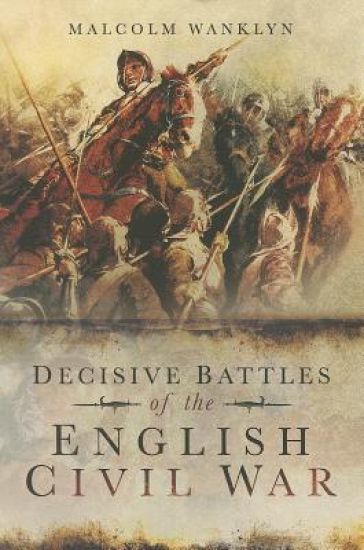
In this stimulating and original investigation of the decisive battles of the English Civil War, Malcolm Wanklyn reassesses what actually happened on the battlefield and as a result sheds new light on the causes of the eventual defeat of Charles I. Taking each major battle in turn -Edgehill, Newbury I, Cheriton, Marston Moor, Newbury II, Naseby, and Preston - he looks critically at contemporary accounts and at historians' narratives, explores the surviving battlegrounds and retells the story of each battle from a new perspective. His lucid, closely argued analysis questions traditional assumptions about each battle and the course of the war itself.
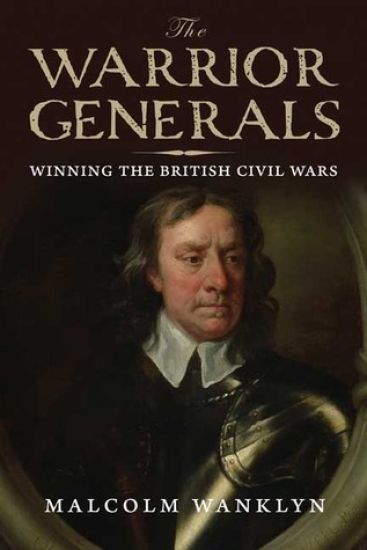
In this bold history of the men who directed and determined the outcome of the mid-seventeenth-century British wars—from Cromwell, Fairfax, and Essex to many more lesser-known figures—military historian Malcolm Wanklyn offers the first assessment of leadership and the importance of command in the civil wars.