Kirjojen hintavertailu – 12 859 828 kirjaa ja 27 kauppaa
Kirjailija
Malcolm Warner
Kirjat ja teokset yhdessä paikassa: 21 kirjaa, julkaisuja vuosilta 1992–2022, suosituimpiin kuuluu Management Training and Development in China. Vertaile teosten hintoja ja tarkista saatavuus suomalaisista kirjakaupoista.
One of the critical issues facing both the Chinese government and businesses operating in China is the lack of trained managers. This book, with contributions by internationally-known scholars from a wide range of countries, examines the Chinese response to the challenges of management training and development. It considers the development of business schools in the PRC and the impact of foreign partnerships on their operation. It summarizes the current trends in management training and development and outlines the likely course of future developments. Overall, this book is a comprehensive account of management training and development in China, and is an important resource in an area that has hitherto seen little substantive research.
One of the critical issues facing both the Chinese government and businesses operating in China is the lack of trained managers. This book, with contributions by internationally-known scholars from a wide range of countries, examines the Chinese response to the challenges of management training and development. It considers the development of business schools in the PRC and the impact of foreign partnerships on their operation. It summarizes the current trends in management training and development and outlines the likely course of future developments. Overall, this book is a comprehensive account of management training and development in China, and is an important resource in an area that has hitherto seen little substantive research.
This book explores the importance of entrepreneurs in driving economic growth as the world economy grows and becomes more integrated and more challenging. It examines the situation in both advanced and developing countries and shows how the entrepreneurial orientation of the founders of small and medium sized enterprises has resulted in phenomenal growth, often fuelled by innovation and new technologies. It contrasts the experiences of Chinese family business in China and among the overseas Chinese with the experiences of family businesses in the United States and Europe. One important conclusion is that there has been a noticeable fall in entrepreneurial proclivity in the advanced economies, in contrast to the position in emerging economies.
This book explores the importance of entrepreneurs in driving economic growth as the world economy grows and becomes more integrated and more challenging. It examines the situation in both advanced and developing countries and shows how the entrepreneurial orientation of the founders of small and medium sized enterprises has resulted in phenomenal growth, often fuelled by innovation and new technologies. It contrasts the experiences of Chinese family business in China and among the overseas Chinese with the experiences of family businesses in the United States and Europe. One important conclusion is that there has been a noticeable fall in entrepreneurial proclivity in the advanced economies, in contrast to the position in emerging economies.
The quality of its business leadership is a key issue for the future development of Asia’s economies. Although Asia’s economies have grown spectacularly in recent decades, they are currently facing increasing challenges. This book explores the current state of business leaders and leadership in Asia. It demonstrates that there is no single model of Asian business leadership, and that Western models often do not fit easily alongside Asian cultural values. It discusses how relatively developed Asian economies – Japan, Korea, Taiwan and Singapore, and former socialist economies – China and Vietnam – all have different types of business leadership challenges at present. The book concludes by assessing how business leadership in Asia is likely to develop in future.
The quality of its business leadership is a key issue for the future development of Asia’s economies. Although Asia’s economies have grown spectacularly in recent decades, they are currently facing increasing challenges. This book explores the current state of business leaders and leadership in Asia. It demonstrates that there is no single model of Asian business leadership, and that Western models often do not fit easily alongside Asian cultural values. It discusses how relatively developed Asian economies – Japan, Korea, Taiwan and Singapore, and former socialist economies – China and Vietnam – all have different types of business leadership challenges at present. The book concludes by assessing how business leadership in Asia is likely to develop in future.
Business Networks in East Asian Capitalisms: Enduring Trends, Emerging Patterns builds on the foundational studies conducted in the 1990s by gathering contemporary empirical and theoretical chapters which explore these themes in a comparative perspective. The book includes contributions from authors working on the relationship between personal and business networks in countries including China, Singapore, Malaysia, Taiwan, Japan, South Korea, Vietnam, Laos, Cambodia, and Thailand. Authors emphasize enduring trends in social and business networks and/or track new emerging patterns, both within East Asian nations or between East Asia and other regions such as Europe, Africa, and the Americas.
This book presents a comprehensive analysis of the similarities and differences of contemporary human resource management systems, processes and practices in the two increasingly important economic great powers in Asia. It covers the full range of human resource management activities, including recruitment, retention, performance management, renumeration, and career development, discusses changing industrial relations systems, and sets the subject in its historical, social and cultural contexts. It examines newly emerging strategies, and asssesses the extent to which human resource management systems in the two countries are coverging or diverging.
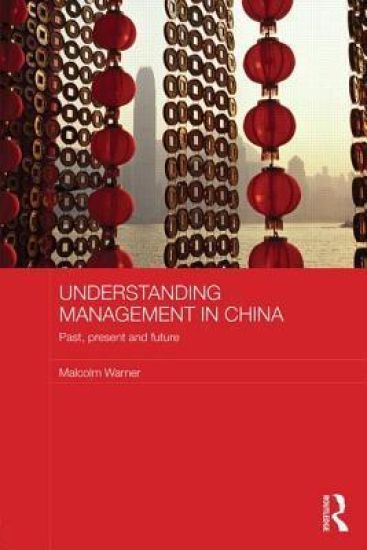
China has become one of the fastest-growing economies ever seen in the world in recent times. In the last three decades, China has transformed itself from a command economy to a market one, albeit a nominally socialist one, and its management systems have been reformed accordingly. In the light of these changes, Malcolm Warner, one of the leading authorities on management in China, explores the past, present and future of Chinese management. The first part of the work examines the history of management practices in the ‘Middle Kingdom’, outlining the influence of traditional Chinese values, especially the Confucian inheritance, and the legacy of the imperial bureaucracy with its meritocratic examination system, as well as the role of industrialization and the influx of foreign-owned businesses in the late nineteenth century and the twentieth century. It next goes on to consider the current state of China’s management, showing how a new breed of manager has evolved since the beginning of Deng Xiaoping’s reforms in the late 1970s and 1980s. The resulting impact of this strategy which has continued into the 1990s and the 2000s, up to the present day, is then examined. The final part of the book concludes with reflections on how management in China is likely to develop in the near future, especially on how far it will converge with global practices or to what degree an indigenous form of management 'with Chinese characteristics' will prevail.
China has become one of the fastest-growing economies ever seen in the world in recent times. In the last three decades, China has transformed itself from a command economy to a market one, albeit a nominally socialist one, and its management systems have been reformed accordingly. In the light of these changes, Malcolm Warner, one of the leading authorities on management in China, explores the past, present and future of Chinese management. The first part of the work examines the history of management practices in the ‘Middle Kingdom’, outlining the influence of traditional Chinese values, especially the Confucian inheritance, and the legacy of the imperial bureaucracy with its meritocratic examination system, as well as the role of industrialization and the influx of foreign-owned businesses in the late nineteenth century and the twentieth century. It next goes on to consider the current state of China’s management, showing how a new breed of manager has evolved since the beginning of Deng Xiaoping’s reforms in the late 1970s and 1980s. The resulting impact of this strategy which has continued into the 1990s and the 2000s, up to the present day, is then examined. The final part of the book concludes with reflections on how management in China is likely to develop in the near future, especially on how far it will converge with global practices or to what degree an indigenous form of management 'with Chinese characteristics' will prevail.
This book presents a comprehensive analysis of the similarities and differences of contemporary human resource management systems, processes and practices in the two increasingly important economic great powers in Asia. It covers the full range of human resource management activities, including recruitment, retention, performance management, renumeration, and career development, discusses changing industrial relations systems, and sets the subject in its historical, social and cultural contexts. It examines newly emerging strategies, and asssesses the extent to which human resource management systems in the two countries are coverging or diverging.
This book discusses the political economy of the SARS epidemic and its impact on human resources in East Asia, as it occurred in 2003. The epidemic spread from the People’s Republic of China, to Hong Kong, Singapore and Taiwan, amongst other countries in East Asia and as far away as North America, particularly Canada, the EU and elsewhere. The book looks first at earlier precedents, such as the Black Death and the way in which the potential threats of the recent epidemic were diffused across the world in ‘instant news’ reports; examining why it was dubbed the first ‘global epidemic’ due to its media coverage and how far the threat started a psychological ‘tsunami’ of fear and panic. Next, it examines the anticipated economic consequences arising from this phenomenon and how it affected the business of everyday life, market behaviour and human resources in the Chinese and Overseas Chinese economies. It focuses in particular detail on the cases of the PRC, Hong Kong, Singapore and Taiwan. It concludes with a discussion of the issues involved and lessons to be learnt, and draws conclusions both for theory and practice vis-à-vis future pandemics that may threaten the global economy in the coming decade and the public policy issues involved
This book discusses the political economy of the SARS epidemic and its impact on human resources in East Asia, as it occurred in 2003. The epidemic spread from the People’s Republic of China, to Hong Kong, Singapore and Taiwan, amongst other countries in East Asia and as far away as North America, particularly Canada, the EU and elsewhere. The book looks first at earlier precedents, such as the Black Death and the way in which the potential threats of the recent epidemic were diffused across the world in ‘instant news’ reports; examining why it was dubbed the first ‘global epidemic’ due to its media coverage and how far the threat started a psychological ‘tsunami’ of fear and panic. Next, it examines the anticipated economic consequences arising from this phenomenon and how it affected the business of everyday life, market behaviour and human resources in the Chinese and Overseas Chinese economies. It focuses in particular detail on the cases of the PRC, Hong Kong, Singapore and Taiwan. It concludes with a discussion of the issues involved and lessons to be learnt, and draws conclusions both for theory and practice vis-à-vis future pandemics that may threaten the global economy in the coming decade and the public policy issues involved
Based on extensive research, this comparative study examines the past, present and future of management in the transitional economies of East and Central Europe, Russia, the People's Republic of China, and Vietnam. It discusses the nature of the transition process, identifying different transition paths, highlighting common features and outlining useful theoretical approaches. Each chapter covers a wide range of aspects of management in the countries covered, including details of the historical and cultural background, the transition process, and both external and internal factors, and the macro and micro situation. Its multidisciplinary approach, makes this book suitable for both a practitioner and an academic readership
Based on extensive research, this comparative study examines the past, present and future of management in the transitional economies of East and Central Europe, Russia, the People's Republic of China, and Vietnam. It discusses the nature of the transition process, identifying different transition paths, highlighting common features and outlining useful theoretical approaches. Each chapter covers a wide range of aspects of management in the countries covered, including details of the historical and cultural background, the transition process, and both external and internal factors, and the macro and micro situation. Its multidisciplinary approach, makes this book suitable for both a practitioner and an academic readership
The virtual organization is a new and dynamic form of organization which is threatening to challenge more conventional forms of business organization. The benefits of this form of working are enormous, but these organizations can be very complex to manage. Managing in Virtual Organizations explores and simplifies the challenges of managing virtually and explains how the virtual firm can best be employed. Starting from the basic building blocks of these organizations - technology, knowledge and virtual ‘space’ - the book conceptualises virtual organizations as human, knowledge-based organizations enabled but not dominated by technology, and looks at the three-way interaction between people, knowledge and machines. In particular the book considers knowledge, its nature and role in organizations, and how it is managed; at how technology functions as a tool of virtual organizations, and how people can be managed in virtual terms. It then reflects on the use of the virtual organization as a strategic option, how general managers of virtual organizations should be trained, how they should operate, and the new skills they require. This will be a key text for undergraduate, postgraduate and MBA modules on virtual management, knowledge management, and management information systems, and highly recommended on organizational behaviour and strategy modules at all levels. It will also be ideal reading for managers who need to know about the issues involved with managing virtual organizations.
Since publication in 1996 there have been tremendous advances in business and management which have necessitated the development of a new, improved second edition. IEBM 2nd Edition addresses these advances by updating all existing material as well as adding a great deal more. This revision means that the printed encyclopedia now fills 8 volumes with fifty percent more entries and four million words. Additional countries are profiled in the new edition and there are even more biographical profiles of influential management thinkers, making IEBM 2nd Edition bigger and better than ever. Full-length entries, equivalent to any secondary critical work or journal paper, serve as excellent introductions to the debates and literature of a given topic or concept. Each entry is fully cross-referenced and a further reading section is carefully annotated to indicate the level and importance of the work cited which proves especially useful for the student to take their research further.
Awarded CHOICE Magazine Outstanding Academic Book 1999 'This volume will be of most value to students seeking effortless access to up-to-date and authoritative overviews of topics of term essays and module assignments.' David Buchanan, Human Resource Management Journal This major work is invaluable to anybody with an interest in human resource management; integrating theory, research and practice, this handbook provides an overview of the two main strands of HRM. The first focuses on the links with strategy and the role of HRM in furthering the competitive advantage of the firm. The second builds on human relations and stresses the importance of the individual well-being to the enhancement of company performance. Comprehensive and global in scope and content, this one volume edition is fully-indexed and cross-referenced to provide the reader with a collection of original essays by renowned international experts, including Frank Heller, Yoko Sano, Randall S. Schuler, George Strauss and Rosalie Tung, amongst many others.
The IEBM Handbook of Management Thinking comprehensively covers the people, concepts, terminology, methodology and practice that have shaped the modern management world. Accessible and informative, this one volume edition profiles international 'management gurus', theorists, researchers and practitioners, both historical and contemporary and evaluates their contribution to the field. Comprehensive and global in scope and content, this Handbook has been written by renowned international experts, including Jerald Hage, Charles Hampden-Turner, Bruce Kogut, Derek Pugh, Rosemary Stewart and Milan Zeleny, amongst many others. From Sun Tzu in ancient China right the way through to Gary Hamel and C. K. Prahalad on Strategy, Taichi Ohno on Just-In-Time and the contribution of Michael Hammer on Re-engineering, The IEBM Handbook of Management Thinking guides you through the evolution of management thinking and practice and to modern management as we know it today.
The IEBM Handbook of Organizational Behavior is a unique, ground-breaking reference guide to organizational behavior thinking and practice. It brings together original essays from the world’s leading OB experts and presents them in an accessible, single volume publication. Drawing from material provided in the highly acclaimed six volume International Encyclopedia of Business and Management, The IEBM Handbook of Organizational Behavior presents exclusive in-depth, global coverage of a wide range of OB topics and approaches.