Kirjojen hintavertailu – 12 903 735 kirjaa ja 27 kauppaa

Kirjailija

Mandy Savitz-Romer

Kirjat ja teokset yhdessä paikassa: 4 kirjaa, julkaisuja vuosilta 2012–2019, suosituimpiin kuuluu Fulfilling the Promise. Vertaile teosten hintoja ja tarkista saatavuus suomalaisista kirjakaupoista.

4 kirjaa

Kirjojen julkaisuvuodet: 2012–2019.

Fulfilling the Promise

Fulfilling the Promise

Mandy Savitz-Romer

Harvard Educational Publishing Group
2019
nidottu
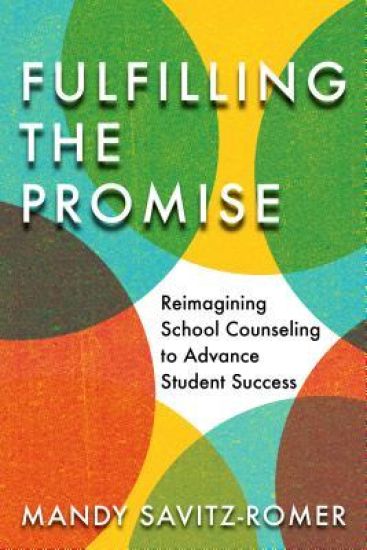
In Fulfilling the Promise, Mandy Savitz-Romer shows what is possible when schools and districts draw upon the talents of their counselors and put them at the center of students' school experience. Savitz-Romer offers a strategic approach to school counseling that enables educational leaders to draw on existing staff to create supportive contexts and programs for students. In this model of the “academic home,” counselors serve as the first point of contact for student support, connecting and coordinatingservices much like primary care physicians coordinate patient care in medical settings. They serve as the hub of a network of supports to prevent students from falling between the cracks. By highlighting promising practices in schools, districts, and states, and the efforts of individual school counselors and leaders, Fulfilling the Promise presents a conceptualization of school counseling that is relevant for all educators, as well as policy makers and funders. In order to create the conditions for school counselors to be most effective, however, systemic barriers must be addressed. This book brings together research, practical experience, and policy recommendations to envision a focused and practical role for school counselors in the twentyfirst century.
Technology and Engagement

Technology and Engagement

Heather T. Rowan-Kenyon; Ana M. Martínez Alemán; Mandy Savitz-Romer

Rutgers University Press
2018
nidottu
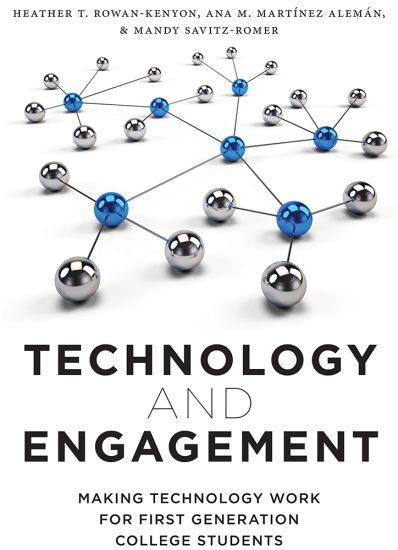
Winner of the 2018 Association for the Study of Higher Education Outstanding Book Award? Technology and Engagement is based on a four-year study of how first generation college students use social media, aimed at improving their transition to and engagement with their university. Through web technology, including social media sites, students were better able to maintain close ties with family and friends from home, as well as engage more with social and academic programs at their university. This ‘ecology of transition’ was important in keeping the students focused on why they were in college, and helped them become more integrated into the university setting. By showing the gains in campus capital these first-generation college students obtained through social media, the authors offer concrete suggestions for how other universities and college-retention programs can utilize the findings to increase their own retention of first-generation college students.
Ready, Willing and Able

Ready, Willing and Able

Mandy Savitz-Romer; Suzanne M. Bouffard

Harvard Educational Publishing Group
2012
nidottu
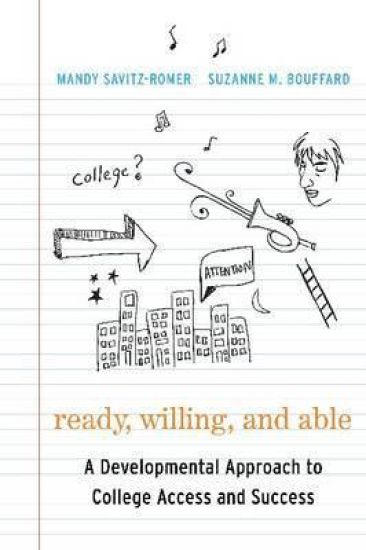
How can an understanding of adolescent development inform strategies and practices for supporting first-generation college goers? In Ready, Willing, and Able, Mandy Savitz-Romer and Suzanne Bouffard focus on the developmental tasks and competencies that young people need to develop in order to plan for and succeed in higher education. These include identity development, articulating aspirations and expectations, forming and maintaining strong peer and adult relationships, motivation and goal-setting, and self-regulatory skills, such as planning. The authors challenge the predominant approach of giving young people information and leaving it to them to figure out how to apply it. They show how well-intended college-access efforts can miss the mark—for instance, by focusing on students who already see themselves as college material, rather than working to help all students develop a “college-going identity.” In addition, most college-access programs and practices focus almost exclusively on providing academic preparation and financial support. In Ready, Willing, and Able, Savitz-Romer and Bouffard call for a new approach: one that emphasizes the key developmental tasks and processes of adolescence and integrates them into existing college-access practices in meaningful ways. Rather than treating young people as passive recipients of services, they argue, adults can engage them as active agents in the construction of their own futures.
Ready, Willing and Able

Ready, Willing and Able

Mandy Savitz-Romer; Suzanne M. Bouffard

Harvard Educational Publishing Group
2012
sidottu
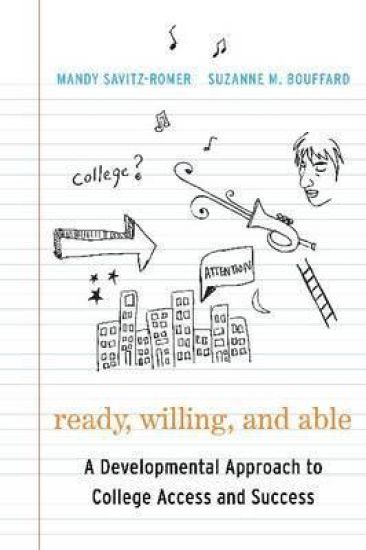
How can an understanding of adolescent development inform strategies and practices for supporting first-generation college goers? In Ready, Willing, and Able, Mandy Savitz-Romer and Suzanne Bouffard focus on the developmental tasks and competencies that young people need to develop in order to plan for and succeed in higher education. These include identity development, articulating aspirations and expectations, forming and maintaining strong peer and adult relationships, motivation and goal-setting, and self-regulatory skills, such as planning. The authors challenge the predominant approach of giving young people information and leaving it to them to figure out how to apply it. They show how well-intended college-access efforts can miss the mark—for instance, by focusing on students who already see themselves as college material, rather than working to help all students develop a “college-going identity.” In addition, most college-access programs and practices focus almost exclusively on providing academic preparation and financial support. In Ready, Willing, and Able, Savitz-Romer and Bouffard call for a new approach: one that emphasizes the key developmental tasks and processes of adolescence and integrates them into existing college-access practices in meaningful ways. Rather than treating young people as passive recipients of services, they argue, adults can engage them as active agents in the construction of their own futures.