Kirjojen hintavertailu – 12 859 829 kirjaa ja 27 kauppaa

Kirjailija

Maneka Jayasinghe

Kirjat ja teokset yhdessä paikassa: 4 kirjaa, julkaisuja vuosilta 2022–2024, suosituimpiin kuuluu Poverty, Food Consumption, and Economic Development. Vertaile teosten hintoja ja tarkista saatavuus suomalaisista kirjakaupoista.

4 kirjaa

Kirjojen julkaisuvuodet: 2022–2024.

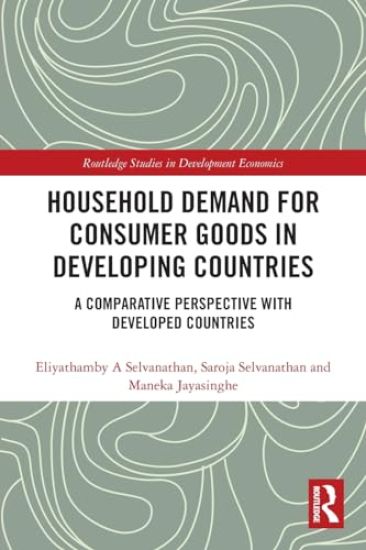
Household Demand for Consumer Goods in Developing Countries

Household Demand for Consumer Goods in Developing Countries

Eliyathamby A. Selvanathan; Saroja Selvanathan; Maneka Jayasinghe

TAYLOR FRANCIS LTD
2024
nidottu
This book analyses the household demand for consumer goods using a diverse database, consisting of 45 developed and developing countries. Household consumption patterns have undergone dramatic changes due to rapid economic growth, increasing household income and changing demographics. Using the most recent data available and the latest econometric techniques, the authors model demand for 12 different commodities such as food, alcohol and tobacco, housing, health, transport, health communication, and recreation and provide insightful comparisons of consumption patterns in developed and developing countries. The analysis presented in this book highlights valuable policy insights for planning government budgetary allocations and implementing policies towards an enhanced standard of living for people. The book also provides some important guidance for researchers interested in the theory and empirical application of the analysis of consumer demand.
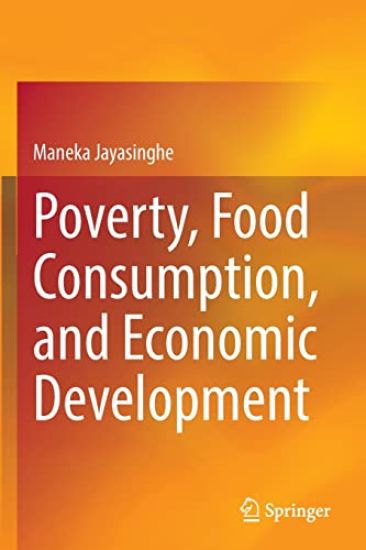
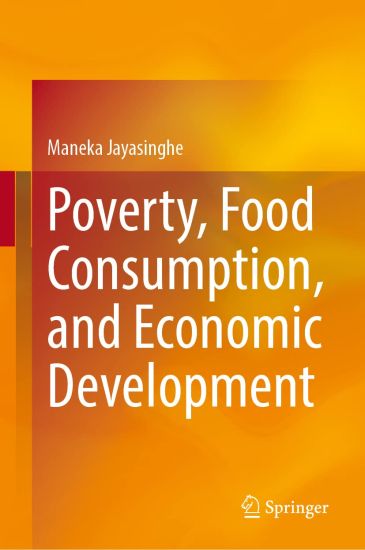
Poverty, Food Consumption, and Economic Development

Poverty, Food Consumption, and Economic Development

Maneka Jayasinghe

SPRINGER VERLAG, SINGAPORE
2023
nidottu
This book investigates the relationships between economies of scale in food consumption and a number of socio-economic and demographic characteristics of households and household behavioural choices since food is the major share of household expenditure for poor households. The characteristics considered comprise household size, location, income, and gender of the head of household while the behavioural choices considered comprise the decision to consume home-grown food and the decision to adopt domestic technology to aid food preparation and consumption. The book proposes two theoretical models to rationalize the role of the consumption of home-grown food and the adoption of domestic technology in enhancing economies of scale in food consumption. Econometric models are also used to empirically test the validity of the two theoretical models while adjusted poverty estimations are derived numerically using the estimated equivalence scales. Although data used inapplying these techniques are based on four Household Income and Expenditure Surveys conducted by the Department of Census and Statistics (DCS) in Sri Lanka, the methodology can be used for similar analysis in relation to any other country.
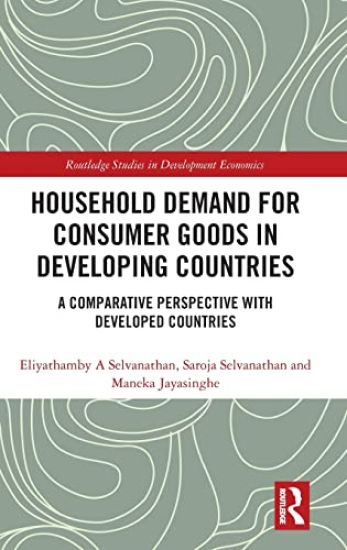
Household Demand for Consumer Goods in Developing Countries

Household Demand for Consumer Goods in Developing Countries

Eliyathamby A. Selvanathan; Saroja Selvanathan; Maneka Jayasinghe

TAYLOR FRANCIS LTD
2022
sidottu
This book analyses the household demand for consumer goods using a diverse database, consisting of 45 developed and developing countries. Household consumption patterns have undergone dramatic changes due to rapid economic growth, increasing household income and changing demographics. Using the most recent data available and the latest econometric techniques, the authors model demand for 12 different commodities such as food, alcohol and tobacco, housing, health, transport, health communication, and recreation and provide insightful comparisons of consumption patterns in developed and developing countries. The analysis presented in this book highlights valuable policy insights for planning government budgetary allocations and implementing policies towards an enhanced standard of living for people. The book also provides some important guidance for researchers interested in the theory and empirical application of the analysis of consumer demand.
Poverty, Food Consumption, and Economic Development

Poverty, Food Consumption, and Economic Development

Maneka Jayasinghe

SPRINGER VERLAG, SINGAPORE
2022
sidottu
This book investigates the relationships between economies of scale in food consumption and a number of socio-economic and demographic characteristics of households and household behavioural choices since food is the major share of household expenditure for poor households. The characteristics considered comprise household size, location, income, and gender of the head of household while the behavioural choices considered comprise the decision to consume home-grown food and the decision to adopt domestic technology to aid food preparation and consumption. The book proposes two theoretical models to rationalize the role of the consumption of home-grown food and the adoption of domestic technology in enhancing economies of scale in food consumption. Econometric models are also used to empirically test the validity of the two theoretical models while adjusted poverty estimations are derived numerically using the estimated equivalence scales. Although data used inapplying these techniques are based on four Household Income and Expenditure Surveys conducted by the Department of Census and Statistics (DCS) in Sri Lanka, the methodology can be used for similar analysis in relation to any other country.