Kirjojen hintavertailu – 12 903 725 kirjaa ja 27 kauppaa

Kirjailija

Manel Lacorte

Kirjat ja teokset yhdessä paikassa: 8 kirjaa, julkaisuja vuosilta 2016–2023, suosituimpiin kuuluu The Changing Landscape of Spanish Language Curricula. Vertaile teosten hintoja ja tarkista saatavuus suomalaisista kirjakaupoista.

8 kirjaa

Kirjojen julkaisuvuodet: 2016–2023.

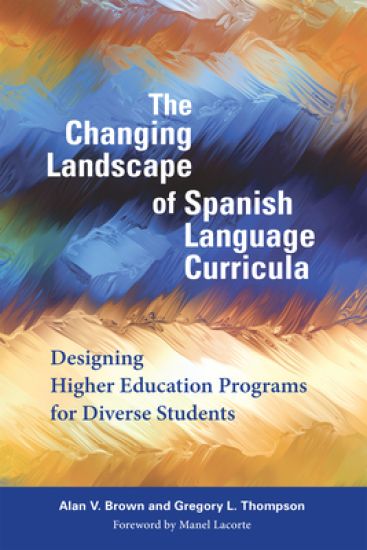
The Changing Landscape of Spanish Language Curricula

The Changing Landscape of Spanish Language Curricula

Alan V. Brown; Gregory L. Thompson; Manel Lacorte
Georgetown University Press
2018
pokkari
Spanish remains a large and constant fixture in the foreign language learning landscape in the United States. As Spanish language study has grown, so too has the diversity of students and contexts of use, placing the field in the midst of a curricular identity crisis. Spanish has become a second, rather than a foreign, language in the US, which leads to unique opportunities and challenges for curriculum and syllabus design, materials development, individual and program assessment, and classroom pedagogy. In their book, Brown and Thompson address these challenges and provide a vision of Spanish language education for the twenty-first century. Using data from the College Board, ETS, and the authors’ own institutions, as well as responses to their national survey of almost seven hundred Spanish language educators, the authors argue that the field needs to evolve to reflect changes in the sociocultural, socioeducational, and sociopolitical landscape of the US. The authors provide coherent and compelling discussion of the most pressing issues facing Spanish post-secondary education and strategies for converting these challenges into opportunities. Topics that are addressed in the book include: Heritage learners, service learning in Spanish-speaking communities, Spanish for specific purposes, assessment, unique needs for Spanish teacher training, online and hybrid teaching, and the relevance of ACTFL’s national standards for Spanish post-secondary education. An essential read for Spanish language scholars, especially those interested in curriculum design and pedagogy, that includes supporting reflection questions and pedagogical activities for use in upper-level undergraduate and graduate-level courses.
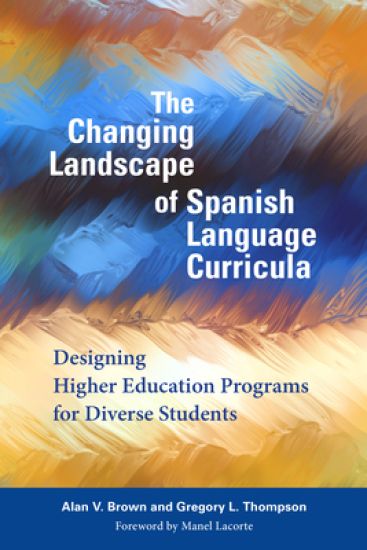
The Changing Landscape of Spanish Language Curricula

The Changing Landscape of Spanish Language Curricula

Alan V. Brown; Gregory L. Thompson; Manel Lacorte
Georgetown University Press
2018
sidottu
Spanish remains a large and constant fixture in the foreign language learning landscape in the United States. As Spanish language study has grown, so too has the diversity of students and contexts of use, placing the field in the midst of a curricular identity crisis. Spanish has become a second, rather than a foreign, language in the US, which leads to unique opportunities and challenges for curriculum and syllabus design, materials development, individual and program assessment, and classroom pedagogy. In their book, Brown and Thompson address these challenges and provide a vision of Spanish language education for the twenty-first century. Using data from the College Board, ETS, and the authors’ own institutions, as well as responses to their national survey of almost seven hundred Spanish language educators, the authors argue that the field needs to evolve to reflect changes in the sociocultural, socioeducational, and sociopolitical landscape of the US. The authors provide coherent and compelling discussion of the most pressing issues facing Spanish post-secondary education and strategies for converting these challenges into opportunities. Topics that are addressed in the book include: Heritage learners, service learning in Spanish-speaking communities, Spanish for specific purposes, assessment, unique needs for Spanish teacher training, online and hybrid teaching, and the relevance of ACTFL’s national standards for Spanish post-secondary education. An essential read for Spanish language scholars, especially those interested in curriculum design and pedagogy, that includes supporting reflection questions and pedagogical activities for use in upper-level undergraduate and graduate-level courses.
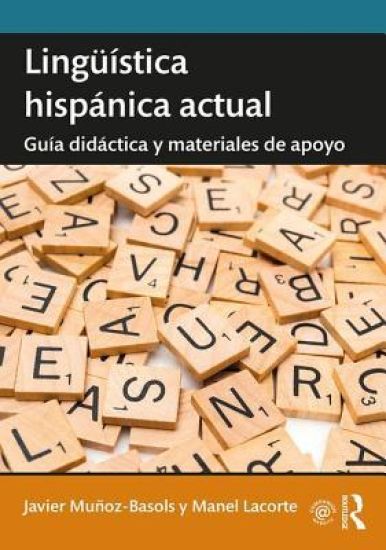
Lingüística hispánica actual

Lingüística hispánica actual

Javier Muñoz-Basols; Manel Lacorte

Routledge
2017
sidottu
Lingüística hispánica actual provides step-by-step instructions on how to plan, design, and teach introductory Hispanic Linguistics courses. It is a versatile resource, which can be used in conjunction with Introducción a la lingüística hispánica actual: teoría y práctica. It contains an answer key for all the activities in the main textbook. It also includes additional activities, with clear and accessible explanations for students and instructors, and can accompany other existing texts and courses on Hispanic Linguistics. Features include:• A comprehensive selection of materials which gradually introduce students to the main areas of Hispanic Linguistics: General Linguistics, Phonology and Phonetics, Morphology, Syntax, Semantics and Pragmatics, History of the Spanish Language, Language Variation, and Second Language Acquisition and Language Teaching.• A wide range of carefully-crafted classroom and homework activities, essay questions and research projects to engage students and enrich their learning of Hispanic Linguistics.• Detailed guidance on how to successfully implement each activity in the classroom, suggestions for how to expand and adapt activities for different needs, and a full annotated answer key for instructors to save time planning and implementing lessons.• An extensive bilingual glossary of terms for each of the disciplines covered in the guide helps teachers introduce key concepts and terms in the classroom. Lingüística hispánica actual provides a wealth of activities specially designed to make learning Hispanic Linguistics more dynamic and enjoyable for students.
Lingüística hispánica actual

Lingüística hispánica actual

Javier Muñoz-Basols; Manel Lacorte

Routledge
2017
nidottu
Lingüística hispánica actual provides step-by-step instructions on how to plan, design, and teach introductory Hispanic Linguistics courses. It is a versatile resource, which can be used in conjunction with Introducción a la lingüística hispánica actual: teoría y práctica. It contains an answer key for all the activities in the main textbook. It also includes additional activities, with clear and accessible explanations for students and instructors, and can accompany other existing texts and courses on Hispanic Linguistics. Features include:• A comprehensive selection of materials which gradually introduce students to the main areas of Hispanic Linguistics: General Linguistics, Phonology and Phonetics, Morphology, Syntax, Semantics and Pragmatics, History of the Spanish Language, Language Variation, and Second Language Acquisition and Language Teaching.• A wide range of carefully-crafted classroom and homework activities, essay questions and research projects to engage students and enrich their learning of Hispanic Linguistics.• Detailed guidance on how to successfully implement each activity in the classroom, suggestions for how to expand and adapt activities for different needs, and a full annotated answer key for instructors to save time planning and implementing lessons.• An extensive bilingual glossary of terms for each of the disciplines covered in the guide helps teachers introduce key concepts and terms in the classroom. Lingüística hispánica actual provides a wealth of activities specially designed to make learning Hispanic Linguistics more dynamic and enjoyable for students.
Introducción a la lingüística hispánica actual

Introducción a la lingüística hispánica actual

Javier Muñoz-Basols; Nina Moreno; Inma Taboada; Manel Lacorte
Routledge
2016
sidottu
Introducción a la lingüística hispánica actual: teoría y práctica has been specially designed for students of Spanish with little or no linguistic background, who need to understand the key concepts and constructs of Hispanic Linguistics. The book has been carefully crafted to introduce the reader to the main areas of linguistics, both theoretical and applied. General Linguistics, Phonology and Phonetics, Morphology, Syntax, Semantics and Pragmatics, History of the Spanish Language, Language Variation, and Second Language Acquisition are concisely and accurately outlined, providing a comprehensive foundation in the field. Features include: written entirely in Spanish sequenced exercises and engaging activities which facilitate the learning of each area of linguistics; emphasis on the connections between theory and the actual use of the language throughout the book;a selection of possible research projects and guidance on further reading in each chapter, giving students the necessary tools for in-depth exploration of each of the areas presented in the book;a bilingual glossary of key linguistic terms;a comprehensive e-resource with a wealth of additional materials, including audio clips and videos of the varieties of Spanish around the world, available at www.routledge.com/products/9780415631570. Written in a clear and accessible manner, Introducción a la lingüística hispánica actual is the ideal introduction for all undergraduate students of Hispanic Linguistics. The book will also be of interest to graduate students with no prior exposure to linguistics.
Introducción a la lingüística hispánica actual

Introducción a la lingüística hispánica actual

Javier Muñoz-Basols; Nina Moreno; Inma Taboada; Manel Lacorte

Routledge
2016
nidottu

Halvin toimitettuna 108,50 €

Introducción a la lingüística hispánica actual: teoría y práctica has been specially designed for students of Spanish with little or no linguistic background, who need to understand the key concepts and constructs of Hispanic Linguistics. The book has been carefully crafted to introduce the reader to the main areas of linguistics, both theoretical and applied. General Linguistics, Phonology and Phonetics, Morphology, Syntax, Semantics and Pragmatics, History of the Spanish Language, Language Variation, and Second Language Acquisition are concisely and accurately outlined, providing a comprehensive foundation in the field. Features include: written entirely in Spanish sequenced exercises and engaging activities which facilitate the learning of each area of linguistics; emphasis on the connections between theory and the actual use of the language throughout the book;a selection of possible research projects and guidance on further reading in each chapter, giving students the necessary tools for in-depth exploration of each of the areas presented in the book;a bilingual glossary of key linguistic terms;a comprehensive e-resource with a wealth of additional materials, including audio clips and videos of the varieties of Spanish around the world, available at www.routledge.com/products/9780415631570. Written in a clear and accessible manner, Introducción a la lingüística hispánica actual is the ideal introduction for all undergraduate students of Hispanic Linguistics. The book will also be of interest to graduate students with no prior exposure to linguistics.