Kirjojen hintavertailu – 12 878 362 kirjaa ja 26 kauppaa

Kirjailija

Manfred J. Holler

Kirjat ja teokset yhdessä paikassa: 18 kirjaa, julkaisuja vuosilta 1992–2026, suosituimpiin kuuluu Strategic Games on Stage. Vertaile teosten hintoja ja tarkista saatavuus suomalaisista kirjakaupoista.

Nimi esiintyy myös muodoissa: Manfred J Holler

18 kirjaa

Kirjojen julkaisuvuodet: 1992–2026.

Strategic Games on Stage

Strategic Games on Stage

Manfred J. Holler; Klose-Ullmann Barbara

Springer International Publishing AG
2026
Nidottu
This book illustrates how strategic thinking and game theory can be applied to study and enjoy theater plays. By offering various case studies on plays such as Antigone, Medea, Hamlet, Schiller’s Wallenstein, Ibsen’s Hedda Gabler, Tennessee Williams’ A Streetcar Named Desire, Arthur Miller’s The Crucible, and Elfriede Jelinek’s Rechnitz, the authors analyze the dynamics of player choices, including their misperceptions, deceptions, and various power games. Plays are examined according to their strategic contexts and, if appropriate, analyzed by means of game theory. This book is written for anyone interested in theater and who wants to learn about strategic behavior on stage but also for readers who are looking for an exciting field for applying game theoretical reasoning.

Strategic Games on Stage

Strategic Games on Stage

Manfred J. Holler; Barbara Klose-Ullmann

Springer International Publishing AG
2025
sidottu
This book illustrates how strategic thinking and game theory can be applied to study and enjoy theater plays. By offering various case studies on plays such as Antigone, Medea, Hamlet, Schiller’s Wallenstein, Ibsen’s Hedda Gabler, Tennessee Williams’ A Streetcar Named Desire, Arthur Miller’s The Crucible, and Elfriede Jelinek’s Rechnitz, the authors analyze the dynamics of player choices, including their misperceptions, deceptions, and various power games. Plays are examined according to their strategic contexts and, if appropriate, analyzed by means of game theory. This book is written for anyone interested in theater and who wants to learn about strategic behavior on stage but also for readers who are looking for an exciting field for applying game theoretical reasoning.
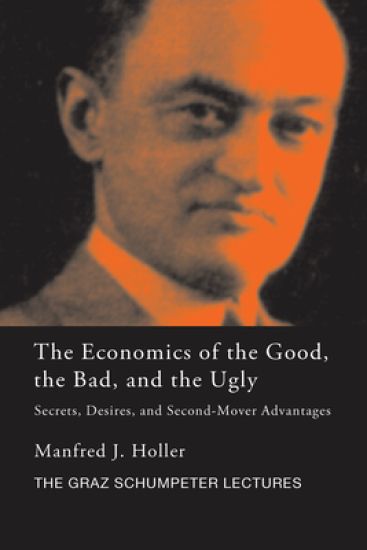
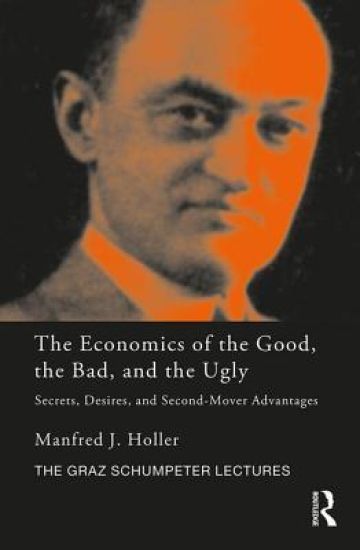
The Economics of the Good, the Bad and the Ugly
The highly praised Western, The Good, the Bad, and the Ugly, has been used in many game-theory courses over the years and has also found its way into leading journals of this field. Using the rich material offered by this movie, alongside other elements from popular culture, literature and history, this book furthers this exploration into a fascinating area of economics. In his series of Schumpeter lectures, Manfred J. Holler uses his analysis of Sergio Leone’s movie as a starting point to argue that combinations of desires, secrets and second-mover advantages trigger conflicts but also allow for conflict resolution. Many people and organizations have a desire for secrecy, and this is often motivated by a desire to create a second-mover advantage, and by undercutting the second-mover advantage of others. This book demonstrates that the interaction of these three ingredients account for a large share of social problems and failures in politics and business but, somewhat paradoxically, can also help to overcome some of the problems that result by applying one or two of them in isolation. This book has been written for curious readers who want to see the world from a different perspective and who like simple mathematics alongside story telling. Its accessible approach means that it will be of use to students and academics alike, especially all those interested in decision making, game theory, and market entry.
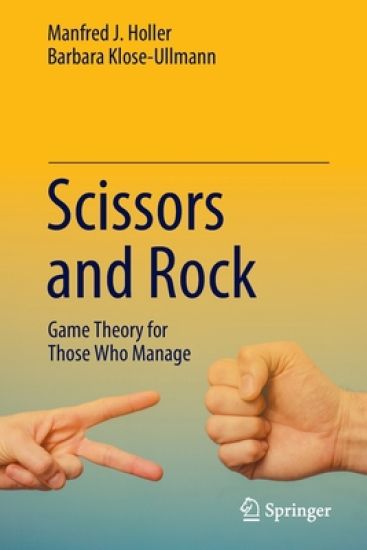
Scissors and Rock

Scissors and Rock

Manfred J. Holler; Barbara Klose-Ullmann

Springer
2020
nidottu
This book introduces readers to basic game theory as a tool to deal with strategic decision problems, helping them to understand the complexity of such problems – to extract a solution, if possible – and to manage the complexity by revising the game if appropriate. The authors discuss basic decision situations modeled as Prisoners’ Dilemma, Chicken Game, and Stag Hunt Game, as well as concepts like the Nash equilibrium, Trembling Hand Perfectness, Rationalizable Strategies and the Theory of Moves to introduce game theoretic thinking. Further, the book presents pioneers of strategic thinking, e.g., Sun Tzu, Machiavelli, Adam Smith, and Goethe, and includes cases of conflict and cooperation to illustrate practical applications. Readers learn to apply game theory in business and in daily life – to manage their decision problems and to better understand the decision problems of others.
Einführung in die Spieltheorie

Einführung in die Spieltheorie

Manfred J. Holler; Gerhard Illing; Stefan Napel

Springer-Verlag Berlin and Heidelberg GmbH Co. K
2019
nidottu
Was hat Hamlet falsch gemacht? In diesem Buch lernen Sie Instrumente kennen, mit denen Sie dieser Frage systematisch nachgehen können – die Ihnen helfen, Entscheidungssituationen zu durchdenken, die sich durch Konflikte und Koordinationsprobleme auszeichnen. Mit Hilfe spieltheoretischer Konzepte und Ansätze werden Sie Ihre Antwort darauf finden, was Hamlet falsch gemacht hat, warum der Kalte Krieg „kalt" blieb und warum Michelin seinen Eintritt in den US-Markt besser vermieden hätte. Die Spieltheorie ist aus der heutigen Ökonomik nicht mehr wegzudenken. Auch in der Politikwissenschaft, Soziologie und Philosophie findet sich inzwischen ein breites Band sehr unterschiedlicher Anwendungen. Diese Einführung in die Spieltheorie liefert die theoretischen Grundlagen und schult beim Leser die spieltheoretische Argumentationsweise. Für die vorliegende 8. Auflage wurden große Teile der Kapitel 1 bis 4 gründlich überarbeitet und ergänzt. Das neue Kapitel 9 bietet unterhaltsame Einblicke in die spannende (Vor-)Geschichte der Spieltheorie. Eine gut lesbare Einführung!
The Economics of the Good, the Bad and the Ugly
The highly praised Western, The Good, the Bad, and the Ugly, has been used in many game-theory courses over the years and has also found its way into leading journals of this field. Using the rich material offered by this movie, alongside other elements from popular culture, literature and history, this book furthers this exploration into a fascinating area of economics. In his series of Schumpeter lectures, Manfred J. Holler uses his analysis of Sergio Leone’s movie as a starting point to argue that combinations of desires, secrets and second-mover advantages trigger conflicts but also allow for conflict resolution. Many people and organizations have a desire for secrecy, and this is often motivated by a desire to create a second-mover advantage, and by undercutting the second-mover advantage of others. This book demonstrates that the interaction of these three ingredients account for a large share of social problems and failures in politics and business but, somewhat paradoxically, can also help to overcome some of the problems that result by applying one or two of them in isolation. This book has been written for curious readers who want to see the world from a different perspective and who like simple mathematics alongside story telling. Its accessible approach means that it will be of use to students and academics alike, especially all those interested in decision making, game theory, and market entry.
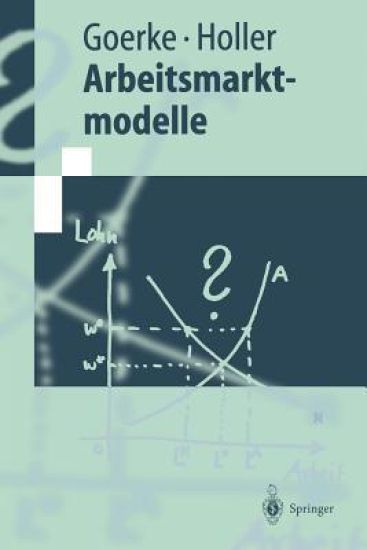
Arbeitsmarktmodelle

Arbeitsmarktmodelle

Laszlo Goerke; Manfred J. Holler

Springer-Verlag Berlin and Heidelberg GmbH Co. K
1997
nidottu
Modelle helfen uns, die Welt zu beschreiben, zu interpretieren und zu verstehen. Dieses Buch fuhrt in die Grundmodelle der Arbeitsmarkttheorie ein. Es handelt von Gewerkschaften, Selbstverwaltungsbetrieben, gewinnmaximierenden Unternehmen und nutzenmaximierenden Arbeitnehmern, Arbeitszertifikaten, Arbeitsmotivation und Lohnverhandlungen, Steuern, Loehnen und Arbeitslosigkeit. Im Mittelpunkt stehen Modelle zur Bestimmung der Unternehmensform, die sich aus der Beziehung zwischen Arbeitnehmer und Kapitaleigentumer ergeben; Theorien des Arbeitnehmerunternehmens und der Verhandlungen zwischen Arbeitgebern und Gewerkschaften sowie Effizienzlohnansatze in mikrooekonomischen und makrooekonomischen Zusammenhangen.
Ökonomische Theorie der Verhandlungen

Ökonomische Theorie der Verhandlungen

Manfred J Holler

Walter de Gruyter
1992
sidottu
diese Theorie beginnt dort, wo der Preismechanismus versagt. Diese Einf hrung ist f r alle geschrieben, die ihr VWL-Grundwissen aktuell erweitern wollen. F r die dritte Auflage wurde der Text weitgehend neu verfa t, um neuere Entwicklungen und j ngste Forschungsergebnisse auf diesem Gebiet einzuarbeiten.