Kirjojen hintavertailu – 12 903 725 kirjaa ja 27 kauppaa

Kirjailija

Manfred Oeming

Kirjat ja teokset yhdessä paikassa: 5 kirjaa, julkaisuja vuosilta 2006–2021, suosituimpiin kuuluu Das Buch der Psalmen. Vertaile teosten hintoja ja tarkista saatavuus suomalaisista kirjakaupoista.

5 kirjaa

Kirjojen julkaisuvuodet: 2006–2021.

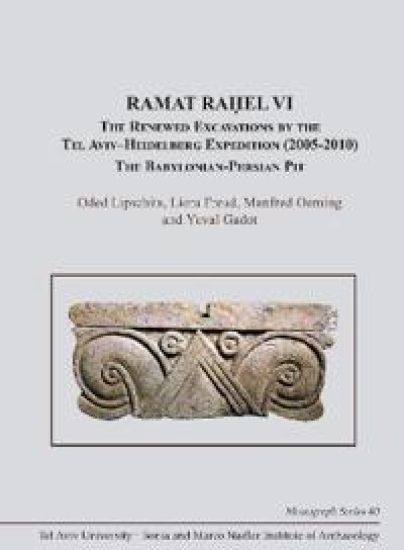
Ramat Ra?el VI

Ramat Ra?el VI

Oded Lipschits; Liora Freud; Manfred Oeming; Yuval Gadot

Eisenbrauns
2021
sidottu
This is part of a three-volume final report of the renewed excavations at Ramat Ra?el by the Tel Aviv–Heidelberg Expedition (2005-2010). It presents the finds from the Babylonian-Persian pit, one of the most dramatic find-spots at Ramat Ra?el. The pit yielded a rich assemblage of pottery vessels and yhwd, lion, and sixth-century “private” stamp impressions, including, for the first time, complete restored stamped jars, jars bearing two handles stamped with different yhwd impressions, and jars bearing both lion and “private” stamp impressions on their bodies. Residue analysis was conducted on many of the vessels excavated from the pit to analyze their contents, yielding surprising results. The finds contribute to our understanding of the pottery of the Babylonian and early Persian periods (6th-5th centuries BCE) and to the study of the development of the stamped-jar administration in the province of Yehud under Babylonian and Persian rule. Also available from Eisenbrauns: Ramat Ra?el III: Final Publication of Aharoni'’s Excavations at Ramat Ra?el (1954, 1959–1962) by Oded Lipschits, Yuval Gadot, and Liora Freud; and Ramat Ra?el IV: The Renewed Excavations by the Tel Aviv–Heidelberg Expedition (2005–2010): Stratigraphy and Architecture, by Oded Lipschits, Mandred Oeming, and Yuval Gadot.
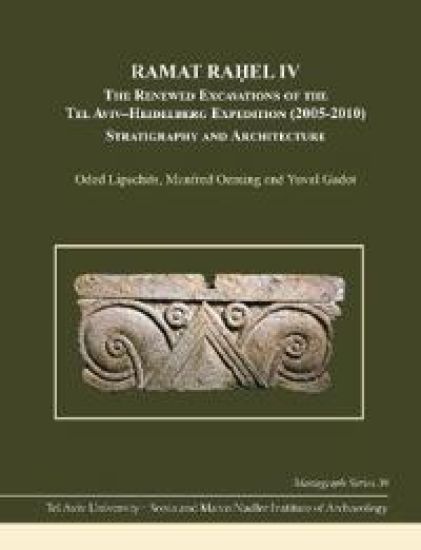
Ramat Ra?el IV

Ramat Ra?el IV

Oded Lipschits; Manfred Oeming; Yuval Godot

Eisenbrauns
2020
sidottu
This is the first of a three-volume final report on the Tel Aviv–Heidelberg Renewed Excavations at Ramat Ra?el, 2005–2010. It presents the stratigraphy and architecture of the excavation areas, including portions of the palatial compound, the subterranean columbarium complex, and the Late Roman cemetery; site formation of the tell; twentieth-century fortifications at the site; and the ancient garden and its water installations.
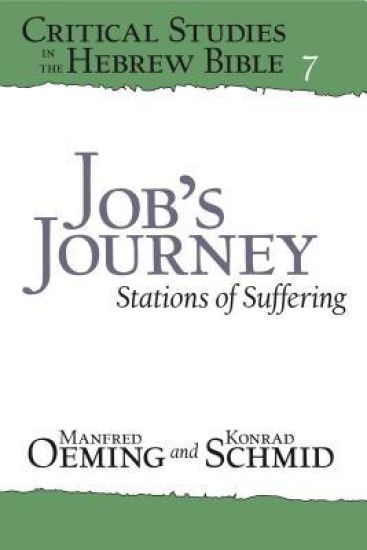
Job's Journey

Job's Journey

Manfred Oeming; Konrad Schmid

Eisenbrauns
2015
pokkari
From the Introduction: “The book of Job does not promote silence about God because we cannot say anything about him. Otherwise, this book would never have been written. But the book of Job does bid farewell to certain types of theology—and we need not bemoan their loss: theology as the wisdom of the world projected into heaven; theology as pious reflection on a higher being that then mistakes traditional or innovative ideas about God entirely for God himself; theology that purports to communicate direct revelation from God. The book of Job distrusts and disbelieves all this to its core. Instead, it states clearly that this is not God; these are only graven images. Such fundamental criticism of all pseudo-theology is—and here we can only agree with the book of Job—not the end but the very beginning of theology.” This book is not an attempt to cover every angle and answer every question that we have about the book of Job. Instead, Konrad Schmid, in the introductory chapter, provides us with an analysis of the structure of the book that helps us to see the book as a whole. And Manfred Oeming, in the chapters that follow, provides clear snapshots of various elements of the book, including a summary of the dialogues, Job’s monologue, Elihu’s speech (“the Anti-Monologue”), Job’s encounter with God, and the destination (of Job’s journey). Between them, the two authors provide an accessible scholarly and theological approach to the book that is richly satisfying.
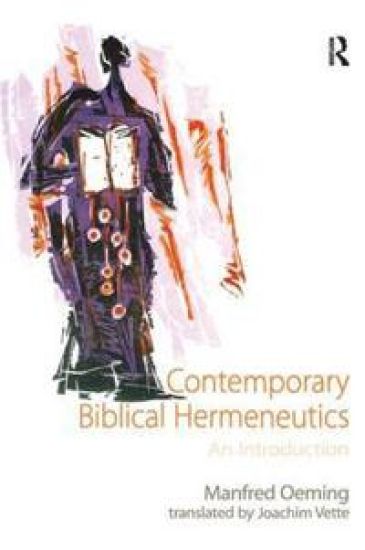
Contemporary Biblical Hermeneutics

Contemporary Biblical Hermeneutics

Manfred Oeming; translated by Joachim Vette

Ashgate Publishing Limited
2006
nidottu
Appearing in English for the first time, this classic introduction to the field of hermeneutics covers a wide range of approaches to biblical interpretation. Presenting a brief history of philosophical hermeneutics, Manfred Oeming uses a clear structure to emphasize why there are, and why there must be, different and differing approaches to the interpretation of a text, in this case particularly the biblical text. The often confusing multiplicity of approaches to biblical interpretation are introduced along accessible lines, concluding with an argument for an acceptance of a multiplicity of approaches to account for the many layers of the biblical text. Incorporating discussion of the German hermeneutical tradition, exemplified by the work of Heidegger, Bultmann, and Gadamer, this book helps to bridge Anglo-American and German scholarly traditions. It will be of great assistance to students, teachers and preachers.