Kirjojen hintavertailu – 12 903 724 kirjaa ja 27 kauppaa

Kirjailija

Maninder Singh

Kirjat ja teokset yhdessä paikassa: 21 kirjaa, julkaisuja vuosilta 2018–2025, suosituimpiin kuuluu Effect of different herbicides on transplanted Basmati rice. Vertaile teosten hintoja ja tarkista saatavuus suomalaisista kirjakaupoista.

21 kirjaa

Kirjojen julkaisuvuodet: 2018–2025.

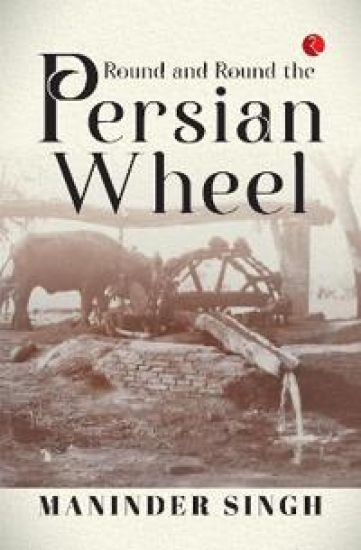
ROUND AND ROUND THE PERSIAN WHEEL

ROUND AND ROUND THE PERSIAN WHEEL

MANINDER SINGH

Rupa Publications India Pvt. Ltd
2024
nidottu
In the aftermath of Partition, millions are uprooted from their moorings as they find themselves on the wrong side of the hastily drawn line. Round and Round the Persian Wheel is a moving narrative about the struggles of one such family whose lives have forever been altered. Maninder Singh presents a poignant portrayal of resilience, focussing on the inherent ability of humans to rise from the ashes and rebuild. Kishen, toiling in his elder brother Tej Singh's workshop, repairing Persian wheels, finds his family'sdynamics upended when his mother-in-law Bibi seeks refuge with her young children after fleeingfrom the violence in West Punjab. Kishen's wife Daya is unable to cope with the sudden disappearance of her father, who had left to protect the honour of some abducted women, never to return or be heard of. As Kishen grapples with the weight of newfound responsibilities, Daya retreats into herself until thearrival of their son Tejpal brings a glimmer of hope. Determined to create a better future, Kishenworks tirelessly, dreaming that Tejpal will one day make him proud. In a world of shattered dreams, will Tejpal be able to fulfil his father's wishes? Find out in this storyanchored by the essential ingredient that sustains human life-hope.
Wirkung verschiedener Herbizide auf verpflanzten Basmati-Reis

Wirkung verschiedener Herbizide auf verpflanzten Basmati-Reis

Anita Jaswal; Arshdeep Singh; Maninder Singh

Verlag Unser Wissen
2023
pokkari
Reis ist das wichtigste Grundnahrungsmittel f r die meisten asiatischen L nder, einschlie lich Indien. Basmati-Reis ist eine einzigartige Reissortengruppe, die sich von anderen aromatischen Reissorten unterscheidet. Das Haupthindernis f r den Ertrag von Reis ist derzeit der Befall mit Unkraut. Die wichtigsten Unkr uter im Reis sind Echinochloa crusgalli, Cynodon dactylon und Cyperus rotundus. Da es in Indien an Arbeitskr ften mangelt, gelingt es den Landwirten nicht, das Unkraut in einem fr hen Stadium von Hand zu entfernen, da die morphologischen hnlichkeiten zwischen Unkraut und Reissetzlingen gro sind. Heutzutage ist die chemische Unkrautbek mpfung im Vergleich zur manuellen Unkrautbek mpfung besser geeignet. Diese Herbizide werden vor und nach dem Auflaufen in der Stagnation des Wassers zur Unkrautbek mpfung eingesetzt. Dieses Buch wurde von den Assistenzprofessoren f r Agronomie an der School of Agriculture der Lovely Professional University, Phagwara (Punjab), Indien, verfasst und soll als Lehrbuch zum Thema "Wirkung verschiedener Herbizide auf transplantierten Basmati-Reis" f r Studenten und Postgraduierte an landwirtschaftlichen Universit ten sowie als Grundlage f r die Verbreitung von Informationen ber Herbizide an Landwirte dienen.
Effet de différents herbicides sur le riz Basmati repiqué

Effet de différents herbicides sur le riz Basmati repiqué

Anita Jaswal; Arshdeep Singh; Maninder Singh

Editions Notre Savoir
2023
pokkari
Le riz est le principal aliment de base pour la majeure partie de l'Asie, y compris l'Inde. Le riz Basmati est un groupe vari tal unique qui se distingue des autres riz aromatiques. Actuellement, le principal obstacle au rendement du riz est l'infestation de mauvaises herbes. Dans le cas du riz, les principales mauvaises herbes sont Echinochloa crusgalli, Cynodon dactylon et Cyperus rotundus. En Inde, la main-d'oeuvre est rare et les agriculteurs ne parviennent pas liminer les mauvaises herbes la main un stade pr coce en raison des similitudes morphologiques entre les gramin es adventices et les plantules de riz. De nos jours, le d sherbage chimique est plus efficace que le d sherbage manuel. Ces herbicides sont utilis s en pr - et post-lev e dans la stagnation de l'eau pour tuer les mauvaises herbes. Ce livre a t crit par les professeurs assistants d'agronomie de l' cole d'agriculture de la Lovely Professional University, Phagwara (Punjab), Inde, pour servir de manuel sur "l'effet de diff rents herbicides sur le riz Basmati repiqu " pour les tudiants de premier et de second cycle des universit s agricoles et pour diffuser des informations sur les herbicides aupr s des agriculteurs.
Effetto di diversi erbicidi sul riso Basmati trapiantato

Effetto di diversi erbicidi sul riso Basmati trapiantato

Anita Jaswal; Arshdeep Singh; Maninder Singh

Edizioni Sapienza
2023
pokkari
Il riso il principale alimento di base per la maggior parte dell'Asia, compresa l'India. Il riso Basmati un gruppo varietale unico che si differenzia dagli altri risi aromatici. Attualmente il principale ostacolo alla resa del riso l'infestazione di erbe infestanti. Nel riso le principali infestanti sono Echinochloa crusgalli, Cynodon dactylon e Cyperus rotundus. In India c' scarsit di manodopera e gli agricoltori non riescono a rimuovere le erbacce a mano nelle fasi iniziali a causa della somiglianza morfologica tra le erbe infestanti e le piantine di riso. Al giorno d'oggi, il diserbo chimico adatto a controllare le erbe infestanti rispetto al diserbo manuale. Questi erbicidi vengono utilizzati in pre e post emergenza nel ristagno d'acqua per uccidere le infestanti. Questo libro stato scritto dai professori aggiunti di Agronomia della Scuola di Agricoltura della Lovely Professional University, Phagwara (Punjab), India, per servire come libro di testo su "Effetto di diversi erbicidi sul riso Basmati trapiantato per gli studenti universitari e post-laureati delle Universit di Agraria e come base per diffondere informazioni sugli erbicidi agli agricoltori.
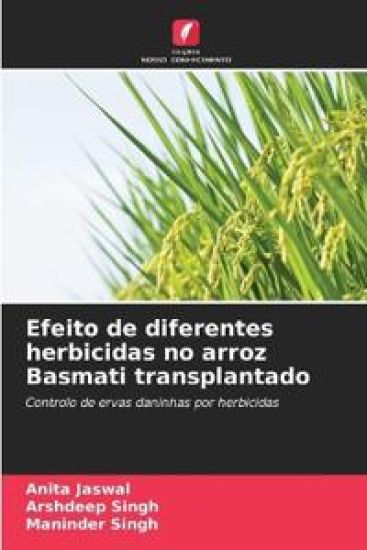
Efeito de diferentes herbicidas no arroz Basmati transplantado

Efeito de diferentes herbicidas no arroz Basmati transplantado

Anita Jaswal; Arshdeep Singh; Maninder Singh

Edicoes Nosso Conhecimento
2023
pokkari
O arroz o principal alimento de base para a maior parte da sia, incluindo a ndia. O arroz Basmati um grupo varietal nico que se diferencia de outros arrozes arom ticos. Atualmente, o principal obst culo ao rendimento do arroz a infesta o de ervas daninhas. No arroz, as principais ervas daninhas s o Echinochloa crusgalli, Cynodon dactylon e Cyperus rotundus. Na ndia, onde h escassez de m o de obra, os agricultores n o conseguem remover as ervas daninhas m o na fase inicial devido s semelhan as morfol gicas entre as ervas daninhas gram neas e as pl ntulas de arroz. Atualmente, o controlo qu mico das ervas daninhas mais adequado do que a monda manual. Estes herbicidas s o utilizados como pr e p s-emerg ncia na estagna o da gua para matar as ervas daninhas. Este livro foi escrito pelo Professor Assistente de Agronomia na Escola de Agricultura da Lovely Professional University, Phagwara (Punjab), ndia, para servir como livro de texto sobre "Efeito de diferentes herbicidas no arroz Basmati transplantado para os estudantes de gradua o e p s-gradua o das Universidades Agr colas e bases para a divulga o de informa es sobre herbicidas aos agricultores.
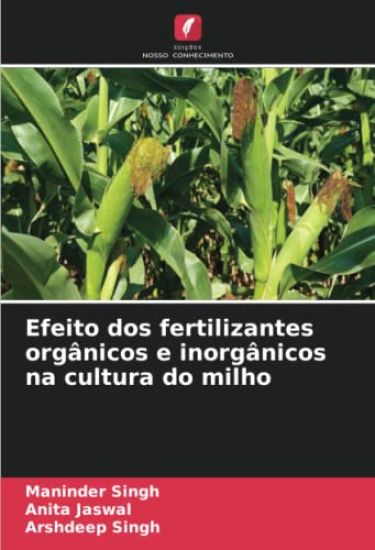
Efeito dos fertilizantes orgânicos e inorgânicos na cultura do milho

Efeito dos fertilizantes orgânicos e inorgânicos na cultura do milho

Maninder Singh; Anita Jaswal; Arshdeep Singh

Edicoes Nosso Conhecimento
2023
pokkari
Os cereais de milho s o a cultura mais importante depois do trigo e do arroz. O milho (Zea mays L.) pertence fam lia das gram neas. A origem do milho o M xico. O milho tem um cromossoma diploide n mero 10 (2n=20). O milho uma planta de dia curto com sistema radicular pouco profundo. uma cultura polinizada cruzada. A altura da planta do milho de 250 cm. A folha tem cerca de 9 cm de largura e 120 cm de comprimento e cresce geralmente a partir de cada inter-n . O milho utilizado para muitos fins como a produ o de etanol para fins culin rios, uso medicinal, fabrico de calos pop, saladas e em bebidas alimentares. O uso medicinal do milho na redu o das pedras nos rins. Na ndia, o padr o actual de consumo de milho (52%) para alimenta o de aves, su nos e peixes, (55%) para consumo humano, (24%) para alimenta o do gado e (1%) para a ind stria cervejeira. O etanol de milho produzido a partir de milho que utilizado como etanol de milho da guerra do babete principalmente utilizado como um oxigenado na gasolina para produzir uma faixa de baixo n vel. As fontes de fertilizantes org nicos mant m um bom arejamento do solo, melhorando a sua estrutura e fornecendo alimentos nutritivos s plantas, sem qualquer res duo qu mico. Mas os fertilizantes org nicos s o de liberta o lenta, caros e reduzem o rendimento global da cultura.
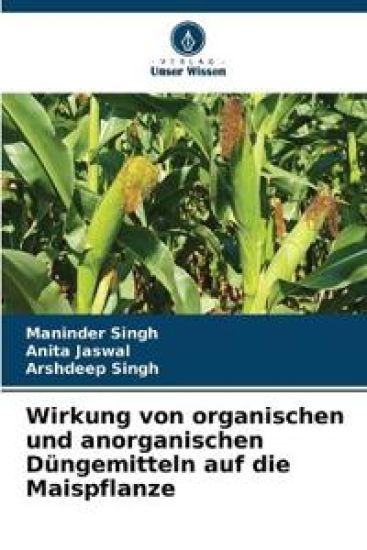
Wirkung von organischen und anorganischen Düngemitteln auf die Maispflanze

Wirkung von organischen und anorganischen Düngemitteln auf die Maispflanze

Maninder Singh; Anita Jaswal; Arshdeep Singh

Verlag Unser Wissen
2023
pokkari
Mais ist nach Weizen und Reis die wichtigste Getreideart. Der Mais (Zea mays L.) geh rt zur Familie der Gramineae. Der Ursprung des Mais liegt in Mexiko. Der Mais hat ein diploides Chromosom mit der Nummer 10 (2n=20). Mais ist eine Kurztagspflanze mit flachem Wurzelsystem. Es handelt sich um eine fremdbest ubte Pflanze. Die H he der Maispflanze betr gt 250 cm. Das Blatt ist etwa 9 cm breit und 120 cm lang und w chst im Allgemeinen aus jedem Zwischenknoten. Mais wird f r viele Zwecke verwendet, z. B. f r die Herstellung von Ethanol, f r medizinische Zwecke, zur Herstellung von Popcorn, Salaten und in Getr nken. Die medizinische Verwendung von Mais dient der Verringerung von Nierensteinen. In Indien wird Mais derzeit zu 52 % als Gefl gel-, Schweine- und Fischfutter, zu 55 % f r den menschlichen Verzehr, zu 24 % als Viehfutter und zu 1 % f r die Brauereiindustrie verwendet. Mais-Ethanol wird aus Mais hergestellt, der als L tzchen verwendet wird. Mais-Ethanol wird haupts chlich als Sauerstoffzusatz in Benzin verwendet, um ein niedriges Band zu erzeugen. Organische D ngemittel sorgen f r eine gute Durchl ftung des Bodens, indem sie die Bodenstruktur verbessern und den Pflanzen n hrstoffreiche Nahrung ohne chemische R ckst nde liefern. Organische D ngemittel werden jedoch nur langsam freigesetzt, sind kostspielig und verringern den Gesamtertrag der Pflanzen.
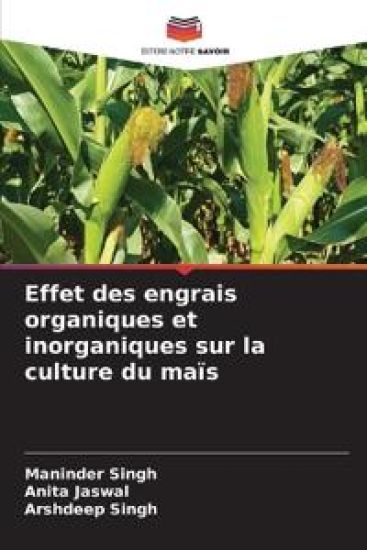
Effet des engrais organiques et inorganiques sur la culture du maïs

Effet des engrais organiques et inorganiques sur la culture du maïs

Maninder Singh; Anita Jaswal; Arshdeep Singh

Editions Notre Savoir
2023
pokkari
Le ma s est la culture c r ali re la plus importante apr s le bl et le riz. Le ma s (Zea mays L.) appartient la famille des gramin es. L'origine du ma s est le Mexique. Le ma s a un chromosome diplo de num ro 10 (2n=20). Le ma s est une plante jours courts avec un syst me racinaire peu profond. C'est une culture pollinisation crois e. La hauteur du plant de ma s est de 250 cm. Les feuilles mesurent environ 9 cm de large et 120 cm de long et poussent g n ralement partir de chaque entre-noeud. Le ma s est utilis de nombreuses fins, comme la production d' thanol des fins culinaires, l'utilisation m dicinale, la fabrication de pop corn, de salades et de boissons alimentaires. L'utilisation m dicinale du ma s permet de r duire les calculs r naux. En Inde, le ma s est actuellement consomm 52 % pour l'alimentation des volailles, des porcs et des poissons, 55 % pour la consommation humaine, 24 % pour l'alimentation du b tail et 1 % pour l'industrie brassicole. L' thanol de ma s est produit partir du ma s qui est utilis comme guerres de bible; l' thanol de ma s est principalement utilis comme oxyg nat dans l'essence pour produire une bande de faible niveau. Les sources d'engrais organiques maintiennent une bonne a ration du sol en am liorant sa structure et fournissent des aliments nutritifs aux plantes sans aucun r sidu chimique. Mais les engrais organiques se lib rent lentement, sont co teux et r duisent le rendement global des cultures.
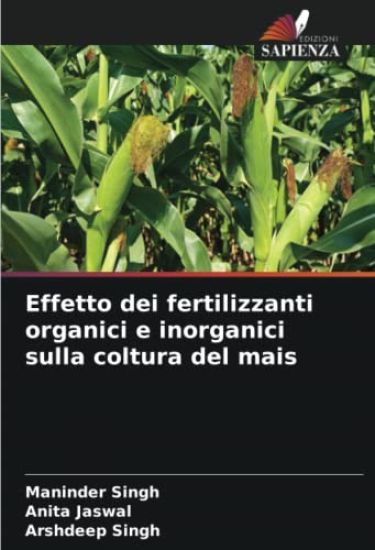
Effetto dei fertilizzanti organici e inorganici sulla coltura del mais

Effetto dei fertilizzanti organici e inorganici sulla coltura del mais

Maninder Singh; Anita Jaswal; Arshdeep Singh

Edizioni Sapienza
2023
pokkari
Il mais la coltura pi importante dopo il grano e il riso. Il mais (Zea mays L.) appartiene alla famiglia delle graminacee. L'origine del mais il Messico. Il mais ha un cromosoma diploide numero 10 (2n=20). Il mais una pianta a giorno corto con un apparato radicale poco profondo. una coltura a impollinazione incrociata. L'altezza della pianta di mais di 250 cm. La foglia ha una larghezza di circa 9 cm e una lunghezza di 120 cm e cresce generalmente da ogni nodo intermedio. Il mais viene utilizzato per molti scopi, come la produzione di etanolo a scopo culinario, l'uso medicinale, la produzione di pop corn, insalate e bevande alimentari. L'uso medicinale del mais la riduzione dei calcoli renali. In India, il consumo attuale di mais (52%) per l'alimentazione di pollame, maiali e pesci, (55%) per il consumo umano, (24%) per l'alimentazione del bestiame e (1%) per l'industria della birra. L'etanolo di mais prodotto dal mais usato come bavetta L'etanolo di mais usato principalmente come ossigenato nella benzina per produrre una banda di basso livello. Le fonti di fertilizzanti organici mantengono una buona aerazione del suolo migliorandone la struttura e forniscono nutrimento alle piante senza alcun residuo chimico. Tuttavia, i fertilizzanti organici sono a lento rilascio, costosi e riducono la resa complessiva delle colture.
A Proactive Network Surveillance Framework

A Proactive Network Surveillance Framework

Maninder Singh

INDEPENDENT PUBLISHER
2023
pokkari
Network security paradigm should be the one that permeates the enterprise, including people, processes and technology. Security failures occur when there is presence of weak spots among any of these. An organization which can not detect and remove such weak spots is going to perish. As can be seen around, most of the organizations today apply a few or many of the existing tools and techniques like firewalls, intrusion detection systems, anti-viruses, anti-spywares etc., to safe-guard the systems against hacking community. But as the number of network breaches, from outside as well from inside, are still on rise, much works needs to be done. This work analyzes trends in network security through an investigation of reactive and proactive network security strategies. Many of common practices have been studied, analyzed, compared and reported in this work. Prior to proactive security research, there existed a meager know how about the "who is our enemy?", "what tools and techniques they use to attack networks?", "what are their motives to do so?"etc. This knowledge was quite limited and primarily anecdotal. This made it difficult to create, test and deploy integrated security solutions, for better and efficient Network Security.