Kirjojen hintavertailu – 12 903 724 kirjaa ja 27 kauppaa

Kirjailija

Manish Yadav

Kirjat ja teokset yhdessä paikassa: 34 kirjaa, julkaisuja vuosilta 2013–2026, suosituimpiin kuuluu Control Strategies for Non-minimum Phase Systems. Vertaile teosten hintoja ja tarkista saatavuus suomalaisista kirjakaupoista.

34 kirjaa

Kirjojen julkaisuvuodet: 2013–2026.

Control Strategies for Non-minimum Phase Systems

Control Strategies for Non-minimum Phase Systems

Manish Yadav; Ashutosh K. Giri; Stepan Ozana

Springer Nature Switzerland AG
2026
Nidottu
This book provides overview of numerous control schemes for non-minimum phase and dead-time systems. The inverse response arises from the conflict of two first-order systems with opposite effects. This feature of the system is known as non-minim phase (NMP) process. The opposite response initiates from odd multiplicity of NMP open-loop zeros. As a result, the controller shows a limited gain margin and bandwidth, implying a robustness restriction. If the user tries to increase the gain, system sometimes gets unstable. Thus, the fundamental notion of providing a suitable balance control theory can potentially improve the performance of those processes. This book is useful to researchers working in the field of control system. The book provides comprehensive philosophy of different control schemes used for the non-minimum phase zeros and dead-time systems. The researcher working on non-minimum phase zeros can find innovative algorithms and novel schemes. Further, they can design innovative control schemes by referring to the content of chapters and specifically tuning after encountering NMP zeros and delay terms.
Control Strategies for Non-minimum Phase Systems

Control Strategies for Non-minimum Phase Systems

Manish Yadav; Ashutosh K. Giri; Stepan Ozana

Springer Nature Switzerland AG
2025
sidottu
This book provides overview of numerous control schemes for non-minimum phase and dead-time systems. The inverse response arises from the conflict of two first-order systems with opposite effects. This feature of the system is known as non-minim phase (NMP) process. The opposite response initiates from odd multiplicity of NMP open-loop zeros. As a result, the controller shows a limited gain margin and bandwidth, implying a robustness restriction. If the user tries to increase the gain, system sometimes gets unstable. Thus, the fundamental notion of providing a suitable balance control theory can potentially improve the performance of those processes. This book is useful to researchers working in the field of control system. The book provides comprehensive philosophy of different control schemes used for the non-minimum phase zeros and dead-time systems. The researcher working on non-minimum phase zeros can find innovative algorithms and novel schemes. Further, they can design innovative control schemes by referring to the content of chapters and specifically tuning after encountering NMP zeros and delay terms.
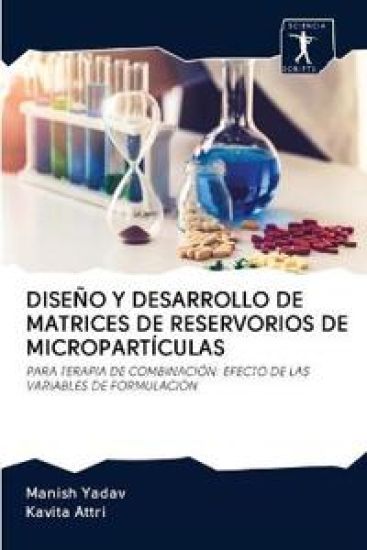
Entwurf Und Entwicklung Von Mikropartikel-Reservoir-Matrizen

Entwurf Und Entwicklung Von Mikropartikel-Reservoir-Matrizen

Manish Yadav; Kavita Attri

Sciencia Scripts
2020
pokkari
Die Medikamentenresorption im Gastrointestinaltrakt ist ein sehr variables Verfahren, und die Verl ngerung der Magenretention der Darreichungsform verl ngert die Zeit f r die Resorption. Gastro-retentive schwimmende Verabreichungssysteme f r Medikamente haben sich als ein effizientes Mittel zur Verbesserung der Bioverf gbarkeit und kontrollierten Verabreichung vieler Medikamente erwiesen. Es wurden verschiedene Techniken f r die gastro-retentive, ortsspezifische Verabreichung von Medikamenten berichtet. Alle diese Techniken haben jedoch ihre eigenen Vor- und Nachteile. Zu den Vorteilen eines schwimmenden Verabreichungssystems geh ren: Erh hung der Verweildauer im Magen aufgrund des Auftriebs, ortsspezifische Verabreichung von Arzneimitteln in den Magen, kontrollierte Freisetzung von Arzneimitteln ber einen l ngeren Zeitraum, geringere Dosierungsh ufigkeit, gezielte Therapie von lokalen Beschwerden im oberen GIT-Bereich, bessere therapeutische Wirkung von Arzneimitteln mit kurzer Halbwertszeit, erh hte Absorption von im Magen l slichen Arzneimitteln und geringere Schwankungen der Arzneimittelkonzentration.

Diseño Y Desarrollo de Matrices de Reservorios de Micropartículas
La absorci n de medicamentos en el tracto gastrointestinal es un procedimiento muy variable y la prolongaci n de la retenci n g strica de la forma de dosificaci n prolonga el tiempo de absorci n. El sistema de administraci n de drogas flotantes gastro-retentivas ha surgido como un medio eficiente de mejorar la biodisponibilidad y la administraci n controlada de muchas drogas. Se ha informado de varias t cnicas para la administraci n de drogas en sitios espec ficos de retenci n g strica. Sin embargo, todas estas t cnicas tienen sus propias ventajas y desventajas. Las ventajas del sistema de administraci n flotante de drogas incluyen: el tiempo de retenci n g strica se incrementa debido a la flotabilidad, se puede obtener la administraci n de drogas en un sitio espec fico del est mago, la liberaci n controlada de drogas por un per odo prolongado, la disminuci n de la frecuencia de las dosis, la terapia dirigida a dolencias locales en la parte superior del GIT, un mejor efecto terap utico de las drogas de vida media corta, el aumento de la absorci n de drogas solubles en el est mago y la reducci n de las fluctuaciones de la concentraci n de drogas.