Kirjailija
Manuel Castells
Kirjat ja teokset yhdessä paikassa: 47 kirjaa, julkaisuja vuosilta 1974–2026, suosituimpiin kuuluu Die digitale Gesellschaft. Vertaile teosten hintoja ja tarkista saatavuus suomalaisista kirjakaupoista.
47 kirjaa
Kirjojen julkaisuvuodet: 1974–2026.
Taking a hard look at the crisis afflicting Western economies in recent years, Manuel Castells suggests that the very structures that fostered economic growth since 1945 are the same structures that are now undermining these economics. Pinpointing the new forms of the capitalist mode of production and the contradictory nature of its class relations as the root of the problem, he offers a comprehensive critique of American society and its economy. Originally published in 1980. The Princeton Legacy Library uses the latest print-on-demand technology to again make available previously out-of-print books from the distinguished backlist of Princeton University Press. These editions preserve the original texts of these important books while presenting them in durable paperback and hardcover editions. The goal of the Princeton Legacy Library is to vastly increase access to the rich scholarly heritage found in the thousands of books published by Princeton University Press since its founding in 1905.
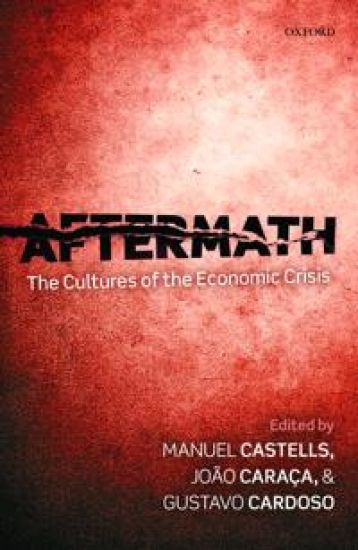
The crisis of global capitalism that has unfolded since 2008 is more than an economic crisis. It is structural and multidimensional. The sequence of events that have taken place in its aftermath show that we are entering a world that is very different from the social and economic conditions that characterized the rise of global, informational capitalism in the preceding three decades. The policies and strategies that were intended to manage the crisis--with mixed results depending on the country--may usher in a distinctly different economic and institutional system, as the New Deal, the construction of the European Welfare State, and the Bretton Woods global financial architecture all gave rise to a new form of capitalism in the aftermath of the 1930s Depression, and World War II. This volume examines the cultures and institutions at the root of the crisis, as well as the conflicts and debates that may lead to a new social landscape, including the rise of alternative economic cultures in the social movements that have sprung up around the world. This collection of essays presents the results of a shared project of reflection by a group of international sociologists and social scientists, led by Manuel Castells. They conclude that to address life beyond the crisis, we need nothing less than a complete transformation of the mind-set that led to bankruptcy and despair, and to economies and societies based on an unsustainable model of speculative finance and political irresponsibility.
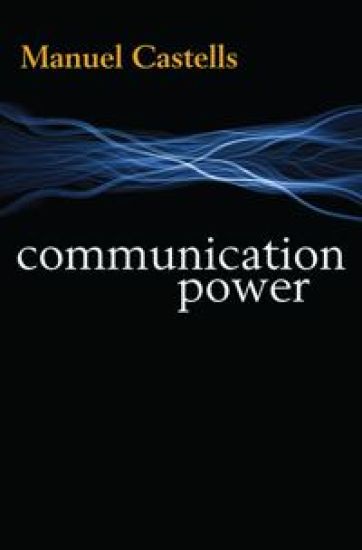
We live in the midst of a revolution in communication technologies that affects the way in which people feel, think, and behave. The media have become the space where power strategies are played out. In the current technological context mass communication goes beyond traditional media and includes the Internet and mobile communication. In this wide-ranging and powerful book, Manuel Castells analyses the transformation of the global media industry by this revolution in communication technologies. He argues that a new communication system, mass self-communication, has emerged, and power relationships have been profoundly modified by the emergence of this new communication environment. Created in the commons of the Internet this communication can be locally based, but globally connected. It is built through messaging, social networks sites, and blogging, and is now being used by the millions around the world who have access to the Internet. Drawing on a wide range of social and psychological theories, Castells presents original research on political processes and social movements. He applies this analysis to numerous recent events--the misinformation of the American public on the Iraq War, the global environmental movement to prevent climate change, the control of information in China and Russia, Barak Obama's internet-based presidential campaigns, and (in this new edition) responses to recent political and economic crises such as the Arab Spring and the Occupy movement. On the basis of these case studies he proposes a new theory of power in the information age based on the management of communication networks Justly celebrated for his analysis of the network society, Castells here builds on that work, offering a well grounded and immensely challenging picture of communication and power in the 21st century. This is a book for anyone who wants to understand the dynamics and character of the modern world.
Im zweiten Band seines Werkes ,Das Informationszeitalter' zeigt Castells die beiden großen einander entgegen gesetzten Trends in unserer Welt: Globalisierung und Identität. Die Revolution der Informationstechnologie und die Erneuerung des Kapitalismus haben die Netzwerkgesellschaft begründet, gekennzeichnet durch die global agierende Wirtschaft, durch Flexibilisierung und Unsicherheit von Arbeit und durch eine Kultur der ,realen Virtualität'. Aber daneben schafft sich kollektive Identität machtvoll Ausdruck. Sie stemmt sich gegen die Globalisierung und beharrt auf kultureller Eigenständigkeit, auf Selbstbestimmung über Leben und Umwelt. Castells beschreibt und analysiert Ursprünge, Ziele und Wirkungen übergreifender Bewegungen wie Feminismus und Ökologie ebenso wie begrenzter Bewegungen, die sich auf Religion, Nation, Ethnie oder Familie beziehen.
Dieser Band beschließt zwölf Forschungsjahre, in denen ich daran gearbeitet habe, eine empirisch fundierte, kulturübergreifende soziologische Theorie des Informationszeitalters vorzulegen. Am Ende dieser Reise, die mein Leben deut lich gezeichnet, in gewissem Sinne gar ausgelaugt hat, möchte ich einigen Leu ten und Institutionen gegenüber, deren Beitrag zur Vollendung dieses dreibän digen Buches entscheidend war, meine Dankbarkeit ausdrücken. Meine tiefster Dank gilt meiner Frau Emma Kiselyova, deren Liebe und Unterstützung mich mit Leben und der Energie erfüllt hat, die ich brauchte, um das Buch zu schreiben; ihre ergiebige Forschungsarbeit war für einige Kapitel insbesondere für Kapitel 1 wesentlich. Dieses Kapitel über den Zusammen bruch der Sowjetunion wurde von uns beiden recherchiert, sowohl in Russland wie auch in Kalifornien. Ich hätte es nicht geschrieben, ohne ihr persönliches Wissen vom Leben in der Sowjetunion, ohne ihre Analyse russischsprachiger Quellen und ihre Berichtigung der vielen Fehler, die ich in den diversen Ent würfen immer wieder gemacht habe. Außerdem ist sie die wichtigste Recher cheurin der Grundlagen für das Kapitel 3 über die globale kriminelle Ökono nue.
Der Aufstieg der Netzwerkgesellschaft
Manuel Castells
Vs Verlag Fur Sozialwissenschaften
2012
nidottu
Der Band, den Sie in Händen halten, ist eine erheblich veränderte Fassung die ses Buches, das ursprünglich im November 1996 erschienen ist. Die gegenwär tige Version wurde im zweiten Halbjahr 1999 ausgearbeitet und geschrieben. Sie setzt sich zum Ziel, die technologischen, wirtschaftlichen und gesellschaftli chen Entwicklungen einzubauen, die während der späten 1990er Jahre einge treten sind und insgesamt die Diagnose und Prognosen bestätigt haben, die ich in der ersten Ausgabe vorgelegt habe. Ich habe die zentralen, substanziellen Elemente der Gesamtanalyse nicht verändert: hauptsächlich, weil ich glaube, dass der Kern meiner Argumentation nach wie vor zutreffend ist, aber auch, weil alle Bücher Kinder ihrer Zeit sind und am Ende von der Entwicklung und von der Berichtigung der in ihnen enthaltenen Ideen überholt werden müssen, wenn die gesellschaftliche Erfahrung und die Forschung neue Informationen und neues Wissen hervorbringen. Außer der Aktualisierung eines Teils der In formationen habe ich ein paar Fehler korrigiert und versucht, die Argumentati on wo immer möglich klarer und überzeugender zu machen. Dabei waren mir viele Bemerkungen, Kritiken und Beiträge aus der ganzen Welt nützlich, die allgemein in konstruktiver und kooperativer Weise vorge bracht wurden. Ich kann dem Reichtum der Debatte, die dieses Buch zu meiner großen Überraschung ausgelöst hat, nicht gerecht werden.
END OF MILLENNIUM This final volume in Manuel Castells’ trilogy studies the key defining processes taking place in the last decade of the twentieth century as an expression of the crises resulting from the transition between the old industrial society and the emerging global network society. “Every now and then one reads a book of social science that is uplifting and mind expanding. These books are ambitious and lustrous, teaching us much about our world. Such is this work from the brilliant sociologist Manuel Castells. There is no other sociological work today that brings together in one panoramic expanse so many of the changes now occurring. This is a story not simply of global economic change, but of cultural upheavals. It is a tale not simply of the decline of sovereign states, but of the emergence of the new bases of power. And it is a narrative not merely about computer technology or the media, but of the very terms in which those agents work.” Anthony M. Orum, Contemporary Sociology “A magnum opus if ever there was one. In my view, the finest piece of contemporary social analysis for at least a generation.” Frank Webster, British Journal of Sociology “A truly stunning achievement. A scholar who, with remarkable mastery, has brought his experience over a lifetime to bear on astonishingly diversified data set, pulling them together into a compelling account of the complex relationship between the progressive and the reactionary, the globalizing and particularizing forces that are transforming our perplexing world.” Benjamin Barber, The Los Angeles Times Sunday Book Reviews
The Power of Identity
Manuel Castells
Wiley-Blackwell (an imprint of John Wiley Sons Ltd)
2009
nidottu
In this second volume of The Information Age trilogy, with an extensive new preface following the recent global economic crisis, Manuel Castells deals with the social, political, and cultural dynamics associated with the technological transformation of our societies and with the globalization of the economy. Extensive new preface examines how dramatic recent events have transformed the socio-political landscape of our worldApplies Castells’ hypotheses to contemporary issues such as Al Qaeda and global terrorist networks, American unilateralism and the crisis of political legitimacy throughout the worldA brilliant account of social, cultural, and political conflict and struggle all over the worldAnalyzes the importance of cultural, religious, and national identity as sources of meaning for people, and its implications for social movementThrows new light on the dynamics of global and local change
The Rise of the Network Society
Manuel Castells
Wiley-Blackwell (an imprint of John Wiley Sons Ltd)
2009
nidottu
This first book in Castells' groundbreaking trilogy, with a substantial new preface, highlights the economic and social dynamics of the information age and shows how the network society has now fully risen on a global scale. Groundbreaking volume on the impact of the age of information on all aspects of societyIncludes coverage of the influence of the internet and the net-economyDescribes the accelerating pace of innovation and social transformationBased on research in the USA, Asia, Latin America, and Europe
We live in the midst of a revolution in communication technologies that affects the way in which people feel, think, and behave. The media have become the space where power strategies are played out. In the current technological context mass communication goes beyond traditional media and includes the Internet and mobile communication. In this wide-ranging and powerful book, Manuel Castells analyses the transformation of the global media industry by this revolution in communication technologies. He argues that a new communication system, mass self-communication, has emerged, and power relationships have been profoundly modified by the emergence of this new communication environment. Created in the commons of the Internet this communication can be locally based, but globally connected. It is built through messaging, social networks sites, and blogging, and is now being used by the millions around the world who have access to the Internet. Drawing on a wide range of social and psychological theories, Castells presents original research on political processes and social movements, including the misinformation of the American public on the Iraq War, the global environmental movement to prevent climate change, the control of information in China and Russia, and Internet-based political campaigns, such as the Obama campaign in the United States. On the basis of these case studies he proposes a new theory of power in the information age based on the management of communication networks Justly celebrated for his analysis of the network society, Castells here builds on that work, offering a well grounded and immensely challenging picture of communication and power in the 21st century. This is a book for anyone who wants to understand the dynamics and character of the modern world.
Voisi luulla, että Diplon tämänkertaiset aiheet – ihmiskaappaukset, Hizbollah, Hamas, Palestiina, Kosovo, Darfur tai Uruguayn ja Argentiinan välinen kiista – ovat niin kaukaisia, ettei niillä olisi suomalaisille juurikaan merkitystä. Globaalisaation myötä fyysiset ja henkiset välimatkat ovat kuitenkin lyhentyneet siinä määrin, että kaukaisetkin kriisit kannattaisi sovitella ennen räjähdystä.
Le Monde Diplomatique 1/07
Manuel Castells; Ignacio Ramonet
Into Kustannus
2007
nidottu
Halvin toimitettuna 9,90 €
The Information Society and the Welfare State
Manuel Castells; Pekka Himanen
Oxford University Press
2004
nidottu
Silicon Valley has been considered as the model that societies must imitate to succeed in the information age. However, recently another alternative has attracted strong international interest: the Finnish model. This is equally dynamic in technological and economic terms, but combines the information society with the welfare state. The Information Society and the Welfare State is the first accessible academic study of what the Finnish model really is. The authors analyse the factors that have enabled Nokia to become the world's leading telecommunications company, for example, and Linux to become the biggest challenger to Microsoft in the operating systems market. They discuss the development of Nokia and the Finnish innovation model, with important lesssons for businesses and national technology policies. However, the Finnish model's most radical and interesting feature is its attempt to combine technological and economic success with social justice and equality. The book shows how Finland has uniquely created a 'virtuous cycle' out of the information society and the welfare state: the successful information society makes the continued financing of the welfare state possible and the welfare state generates well-educated people in good shape for the information society's continued success. This model has significant implications for all societies where policy debates about the information society and/or public policy are on the agenda. Ultimately, the Finnish model proves that there is no one model for the information age, but that there is room for different policies and values.
Manuel Castells is one of the world's best-known social scientists. His work is often compared, in scope and ambition, with that of Marx or Weber. In this text, he explains and expands his work in a series of conversations with British journalist Martin Ince.
In a series of conversations Manuel Castells, one of the world's best known social scientists, explains and expands his work. He builds on his earlier thinking, opening it to new audiences and taking it into new areas in a highly accessible way. Manuel Castells explains and expands his work in a series of conversations with British journalist Martin Ince. Castells builds on his earlier work, opening it to new audiences, and taking it into new areas in a highly accessible way. Includes new thinking on social organisations and identity; new areas of innovation, including biotechnology and nanotechnology; education, knowledge and culture; and his analysis of areas of the world (Africa, Russia, Europe, the Americas and Asia) of which he has specialist knowledge. Contains a detailed biography of Castells and a bibliography of his voluminous scholarly work.
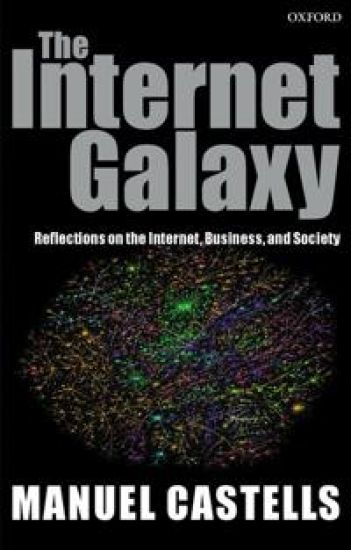
How much do we know about the Internet - its history, its technology, its culture, and its uses? What are its implications for the business world and society at large? Manuel Castells brings his experience and knowledge to bear on the Internet galaxy.
The Information Society and the Welfare State
Manuel Castells; Pekka Himanen
Oxford University Press
2002
sidottu
Finland has moved into the limelight of the information and communication technology world. Yet its social and cultural values and institutional arrangements are in marked contrast to Silicon Valley, another and better known model of an innovative region. In this book the authors explain the features and context of the Finnish Information Society.
The Web has been with us for less than a decade. The popular and commercial diffusion of the Internet has been extraordinary-instigating and enabling changes in virtually every area of human activity and society. We have new systems of communication, new businesses, new media and sources of information, new forms of political and cultural expression, new forms of teaching and learning, and new communities. But how much do we know about the Internet-its history, its technology, its culture, and its uses? What are its implications for the business world and society at large? The diffusion has been so rapid that it has outpaced the capacity for well-grounded analysis. Some say everything will change, others that little will change. Manuel Castells is widely regarded as the leading analyst of the Information Age and the Network Society. In addition to his academic work, he acts as adviser at the highest inter-national levels. In this short, accessible, and informative book he brings his experience and knowledge to bear on the Internet Galaxy. How did it all begin? What are the cultures that make up and contest the Internet? How is it shaping the new business organization and re-shaping older business organizations? What are the realities of the digital divide? How has the Internet affected social and cultural organization, political participation and communication, and urban living? These are just some of the questions addressed in this much needed book. Castells avoids any predictions or prescriptions-there have been enough of those-but instead draws on an extraordinary range of detailed evidence and research to describe what is happening, and to help us understand how the Internet has become the medium of the new network society.
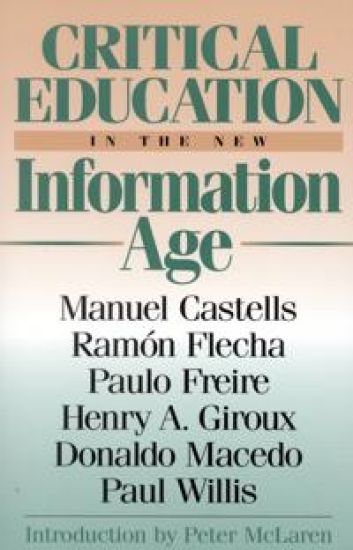
Critical Education in the New Information Age
Manuel Castells; Ramón Flecha; Paulo Freire; Henry A. Giroux; Donaldo Macedo
Rowman Littlefield
1999
nidottu
Essays by some of the world's leading educators provide a revolutionary portrait of new ideas and developments in education that can influence the possibility of social and political change. The authors take into account such diverse terrain as feminism, ecology, media, and individual liberty in their pursuit of new ideas that can inform the fundamental practice of education and promote a more humane civil society. The book consolidates recent thinking just as it reflects on emerging new lines of critical theory.