Kirjojen hintavertailu – 12 903 725 kirjaa ja 27 kauppaa

Kirjailija

Manuel DeLanda

Kirjat ja teokset yhdessä paikassa: 15 kirjaa, julkaisuja vuosilta 2006–2021, suosituimpiin kuuluu The Rise of Realism. Vertaile teosten hintoja ja tarkista saatavuus suomalaisista kirjakaupoista.

15 kirjaa

Kirjojen julkaisuvuodet: 2006–2021.

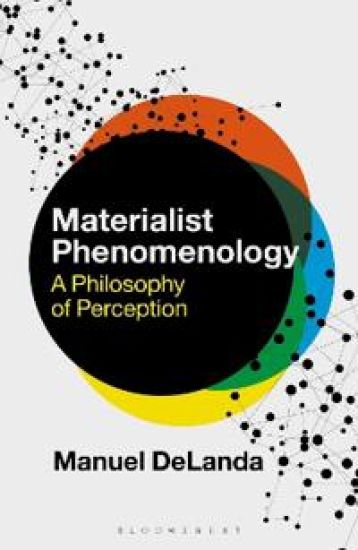
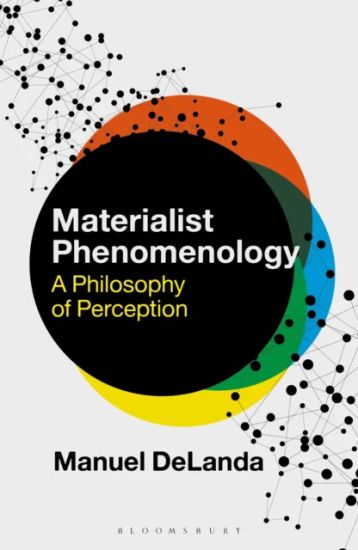
Materialist Phenomenology

Materialist Phenomenology

Manuel DeLanda

Bloomsbury Academic
2021
sidottu
Bringing together phenomenology and materialism, two perspectives seemingly at odds with each other, leading international theorist, Manuel DeLanda, has created an entirely new theory of visual perception. Engaging the scientific (biology, ecological psychology, neuroscience and robotics), the philosophical (idea of 'the embodied mind') and the mathematical (dynamic systems theory) to form a synthesis of how to see in the 21st century. A transdisciplinary and rigorous analysis of how vision shapes what matters.
Materialist Phenomenology

Materialist Phenomenology

Manuel DeLanda

Bloomsbury Academic
2021
nidottu
Bringing together phenomenology and materialism, two perspectives seemingly at odds with each other, leading international theorist, Manuel DeLanda, has created an entirely new theory of visual perception. Engaging the scientific (biology, ecological psychology, neuroscience and robotics), the philosophical (idea of 'the embodied mind') and the mathematical (dynamic systems theory) to form a synthesis of how to see in the 21st century. A transdisciplinary and rigorous analysis of how vision shapes what matters.
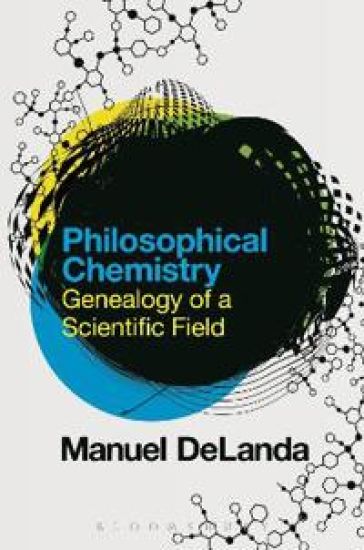
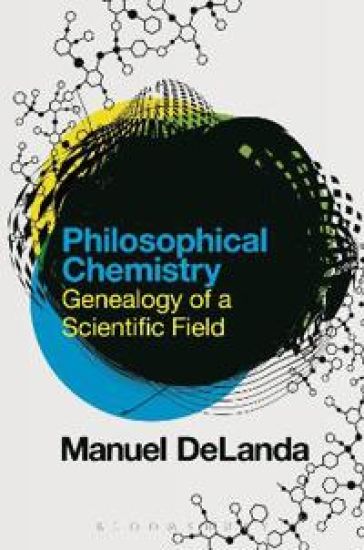
Philosophical Chemistry

Philosophical Chemistry

Manuel DeLanda

Bloomsbury Academic
2019
nidottu
Philosophical Chemistry furthers Manuel DeLanda’s revolutionary intervention in the philosophy of science and science studies. Against a monadic and totalizing understanding of science, DeLanda’s historicizing investigation traces the centrality of divergence, specialization and hybridization through the fields and subfields of chemistry. This book creates a model of a scientific field capable of accommodating the variation and differentiation evident in the history of scientific practice. The three chapters deal with one subfield of chemistry in the century in which it was developed: eighteenth-century inorganic chemistry, nineteenth-century organic chemistry, and nineteenth-century physical chemistry. DeLanda proposes a model that is made of three components: a domain of phenomena, a community of practitioners, and a set of instruments and techniques connecting the community to the domain. Philosophical Chemistry will be essential reading for those engaged in emergent, radical and contemporary strands of thought in the philosophy of science and for those scholars and students who strive to practice a productive dialogue between the two disciplines.
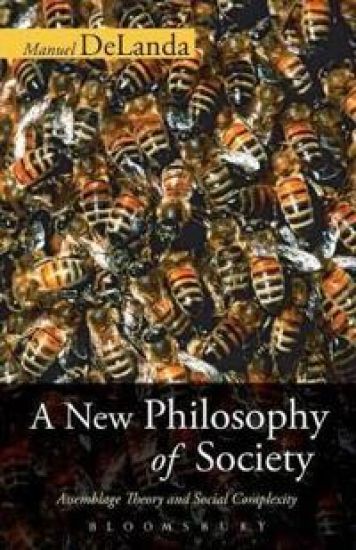
A New Philosophy of Society

A New Philosophy of Society

Manuel DeLanda

Bloomsbury Academic
2019
nidottu
In A New Philosophy of Society Manuel DeLanda offers a fascinating look at how the contemporary world is characterized by an extraordinary social complexity. Since most social entities, from small communities to large nation-states would disappear altogether if our cognitive abilities ceased to exist, DeLanda proposes a novel approach to social ontology that asserts the autonomy of social entities from the conceptions we have of them. He argues that Gilles Deleuze’s theory of assemblages provides a framework in which sociologists and geographers studying social networks and regions can properly locate their work and fully elucidate the connections between them. Indeed, assemblage theory, as DeLanda argues, can be used to model any community, from interpersonal networks and institutional organizations, to central governments, cities and nation states.
Philosophy and Simulation

Philosophy and Simulation

Manuel DeLanda

Bloomsbury Academic
2019
nidottu
In this groundbreaking book, Manuel DeLanda analyzes different genres of simulation, from cellular automata and generic algorithms to neural nets and multi-agent systems, as a means to conceptualize the space of possibilities associated with casual and other capacities. This remarkably clear philosophical discussion of a rapidly growing field, from a thinker at the forefront of research at the interface of science and the humanities, is a must-read for anyone interested in the philosophies of technology, emergence and science at all levels.
Manuel DeLanda - ISM ISM

Manuel DeLanda - ISM ISM

Manuel Delanda

J L Books
2018
nidottu
Economically downtrodden New York City in the mid-to-late 1970s was like the end of the world, but only if you chose to see it that way. For young artists running amok in the collapsing capital, the possibilities seemed endless. For Manuel DeLanda (born 1952), a Mexican transplant enrolled at the School of Visual Arts, overcrowded sidewalks and decrepit subway stations were blank canvases for inspired mayhem. Widely recognized today as a philosopher, professor and author (of A Thousand Years of Nonlinear History, Assemblage Theory and The Rise of Realism, among other titles), DeLanda initially came to prominence as one of the premiere experimental filmmakers of his generation. Fueled by the gonzo humor and graphic audacity of Frank Zappa and Zap Comix, DeLanda’s fevered productions were among the most deliriously innovative movies of the punk era. While films like Raw Nerves: A Lacanian Thriller and Incontinence: A Diarrhetic Flow of Mismatches are certified underground classics, DeLanda’s visually striking, virtually unknown graffiti work (signed with the tag Ism Ism) has long remained more urban legend than legendary. ISM ISM presents a comprehensive overview of DeLanda’s ephemeral street collages through a colorful frame-by-frame breakdown of a Super-8 short film made in 1979 to document his sweetly subversive activities. Extensive still images, an expansive interview and copious contextual materials combine to illustrate the story of DeLanda’s aesthetic attack on 23rd St, including his friendly competition with fellow taggers Keith Haring and Jean-Michel Basquiat.
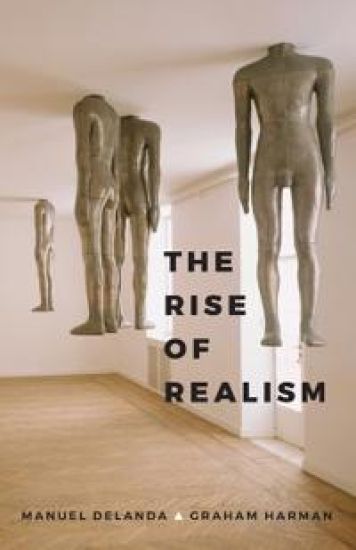
The Rise of Realism

The Rise of Realism

Manuel DeLanda; Graham Harman

Polity Press
2017
nidottu
Until quite recently, almost no philosophers trained in the continental tradition saw anything of value in realism. The situation in analytic philosophy was always different, but in continental philosophy realism was usually treated as a pseudo-problem. That is no longer the case. In this provocative new book, two leading philosophers examine the remarkable rise of realism in the continental tradition. While exploring the similarities and differences in their own positions, they also consider the work of others and assess rival trends in contemporary philosophy. They begin by discussing the relation between realism and materialism, which DeLanda links closely but which Harman tries to separate. Part Two covers the many different meanings of realism, with the two authors working together to develop an expanded definition of the term. Part Three features a spirited exchange on the respective virtues and drawbacks of DeLanda's realism of attractors and singularities and Harman's object-oriented theory. Part Four shifts to the question of the knowability of the real, as the authors discuss whether scientific knowledge does full justice to reality. In Part Five, they shift the focus to space, time, and science more generally, and here Harman offers a defence of actor-network theory despite its obvious anti-realist elements. Lively, accessible and engaging, this book is the best attempt so far to clarify the different paths for realism in continental philosophy. It will be of great value to students and scholars of continental philosophy and to anyone interested in the cutting-edge debates in philosophy and critical theory today.

The Rise of Realism

The Rise of Realism

Manuel DeLanda; Graham Harman

Polity Press
2017
sidottu
Until quite recently, almost no philosophers trained in the continental tradition saw anything of value in realism. The situation in analytic philosophy was always different, but in continental philosophy realism was usually treated as a pseudo-problem. That is no longer the case. In this provocative new book, two leading philosophers examine the remarkable rise of realism in the continental tradition. While exploring the similarities and differences in their own positions, they also consider the work of others and assess rival trends in contemporary philosophy. They begin by discussing the relation between realism and materialism, which DeLanda links closely but which Harman tries to separate. Part Two covers the many different meanings of realism, with the two authors working together to develop an expanded definition of the term. Part Three features a spirited exchange on the respective virtues and drawbacks of DeLanda's realism of attractors and singularities and Harman's object-oriented theory. Part Four shifts to the question of the knowability of the real, as the authors discuss whether scientific knowledge does full justice to reality. In Part Five, they shift the focus to space, time, and science more generally, and here Harman offers a defence of actor-network theory despite its obvious anti-realist elements. Lively, accessible and engaging, this book is the best attempt so far to clarify the different paths for realism in continental philosophy. It will be of great value to students and scholars of continental philosophy and to anyone interested in the cutting-edge debates in philosophy and critical theory today.
Assemblage Theory

Assemblage Theory

Manuel DeLanda

Edinburgh University Press
2016
nidottu

Halvin toimitettuna 29,00 €

Manuel DeLanda provides the first detailed overview of the assemblage theory found in germ in Deleuze and Guattari's writings. Through a series of case studies, DeLanda shows how the concept can be applied to economic, linguistic, and military history as well as to metaphysics, science, and mathematics. DeLanda then presents the real power of assemblage theory by advancing it beyond its original formulation allowing for the integration of communities, institutional organizations, cities and urban regions. And he challenges Marxist orthodoxy with a Leftist politics of assemblages.
Assemblage Theory

Assemblage Theory

Manuel DeLanda

Edinburgh University Press
2016
sidottu
Manuel DeLanda provides the first detailed overview of the assemblage theory found in germ in Deleuze and Guattari's writings. Through a series of case studies, DeLanda shows how the concept can be applied to economic, linguistic, and military history as well as to metaphysics, science, and mathematics. DeLanda then presents the real power of assemblage theory by advancing it beyond its original formulation allowing for the integration of communities, institutional organizations, cities and urban regions. And he challenges Marxist orthodoxy with a Leftist politics of assemblages.
Philosophical Chemistry

Philosophical Chemistry

Manuel DeLanda

Bloomsbury Academic
2015
sidottu
Philosophical Chemistry furthers Manuel DeLanda’s revolutionary intervention in the philosophy of science and science studies. Against a monadic and totalizing understanding of science, DeLanda’s historicizing investigation traces the centrality of divergence, specialization and hybridization through the fields and subfields of chemistry. The strategy followed uses a series of chemical textbooks, separated from each other by fifty year periods (1750, 1800, 1850, and 1900), to follow the historical formation of consensus practices. The three chapters deal with one subfield of chemistry in the century in which it was developed: eighteenth-century inorganic chemistry, nineteenth-century organic chemistry, and nineteenth-century physical chemistry. This book creates a model of a scientific field capable of accommodating the variation and differentiation evident in the history of scientific practice. DeLanda proposes a model that is made of three components: a domain of phenomena, a community of practitioners, and a set of instruments and techniques connecting the community to the domain. Philosophical Chemistry will be essential reading for those engaged in emergent, radical and contemporary strands of thought in the philosophy of science and for those scholars and students who strive to practice a productive dialogue between the two disciplines.
Intensive Science and Virtual Philosophy

Intensive Science and Virtual Philosophy

Manuel DeLanda

Bloomsbury Academic
2013
nidottu
First published 10 years ago, Manuel DeLanda's Intensive Science and Virtual Philosophy rapidly established itself as a landmark text in contemporary continental thought. DeLanda here draws on the realist philosophy of Gilles Deleuze to the domain of philosophy of science. As well as contemporary philosophical insights, the book also tackles new developments in geometry, complexity theory and chaos theory to bring new insights to our understanding of a scientific knowledge liberated from traditional ideas of essence. Now available in the Bloomsbury Revelations series, this edition includes a new preface by Delanda, revisiting the themes of his book ten years on.
A New Philosophy of Society

A New Philosophy of Society

Manuel DeLanda

BLOOMSBURY PUBLISHING PLC
2006
sidottu
Manuel DeLanda is a distinguished writer, artist and philosopher. In his new book, he offers a fascinating look at how the contemporary world is characterized by an extraordinary social complexity. Since most social entities, from small communities to large nation-states, would disappear altogether if human minds ceased to exist, Delanda proposes a novel approach to social ontology that asserts the autonomy of social entities from the conceptions we have of them.
A New Philosophy of Society

A New Philosophy of Society

Manuel DeLanda

Continuum International Publishing Group Ltd.
2006
nidottu
Manuel DeLanda is a distinguished writer, artist and philosopher. In his new book, he offers a fascinating look at how the contemporary world is characterized by an extraordinary social complexity. Since most social entitles, from small communities to large nation-states, would disappear altogether if human minds ceased to exist, Delanda proposes a novel approach to social ontology that asserts the autonomy of social entities from the conceptions we have of them. This highly original and important book takes the reader on a journey that starts with personal relations and climbs up one scale at a time all the way to territorial states and beyond. Only by experiencing this upward movement can we get a sense of the irreducible social complexity that characterizes the contemporary world.